Tag Archives: Flowers

Summers past

Having experienced this long hot summer we can be forgiven for developing a sense of nostalgia for times past, when summers were generally more temperate and pleasant and trees and plants could flourish instead of scorching in the unrelenting heat. We have therefore searched out depictions of summer from nineteenth- and early -twentieth-century books in our collections and present a selection here as a tribute to our summers of old.

We begin with the pages for the summer months from several charming little almanacks by the celebrated children’s illustrator Kate Greenaway (1846-1901). Her tiny almanacks, measuring around 11cm tall, were published every year (bar one) between 1883 and 1897. Each has beautiful colour illustrations representing each season alongside illustrated calendar pages for the months of the year. A copy of the very first almanack produced in this series (pictured below) is held in the Rylands Collection. This little book was incredibly popular, selling 90,000 copies across Europe and America. The illustrations were printed first and then text was added in English, German or French as required. The Library also holds copies of the 1885 and 1887 editions, images from which also appear below.
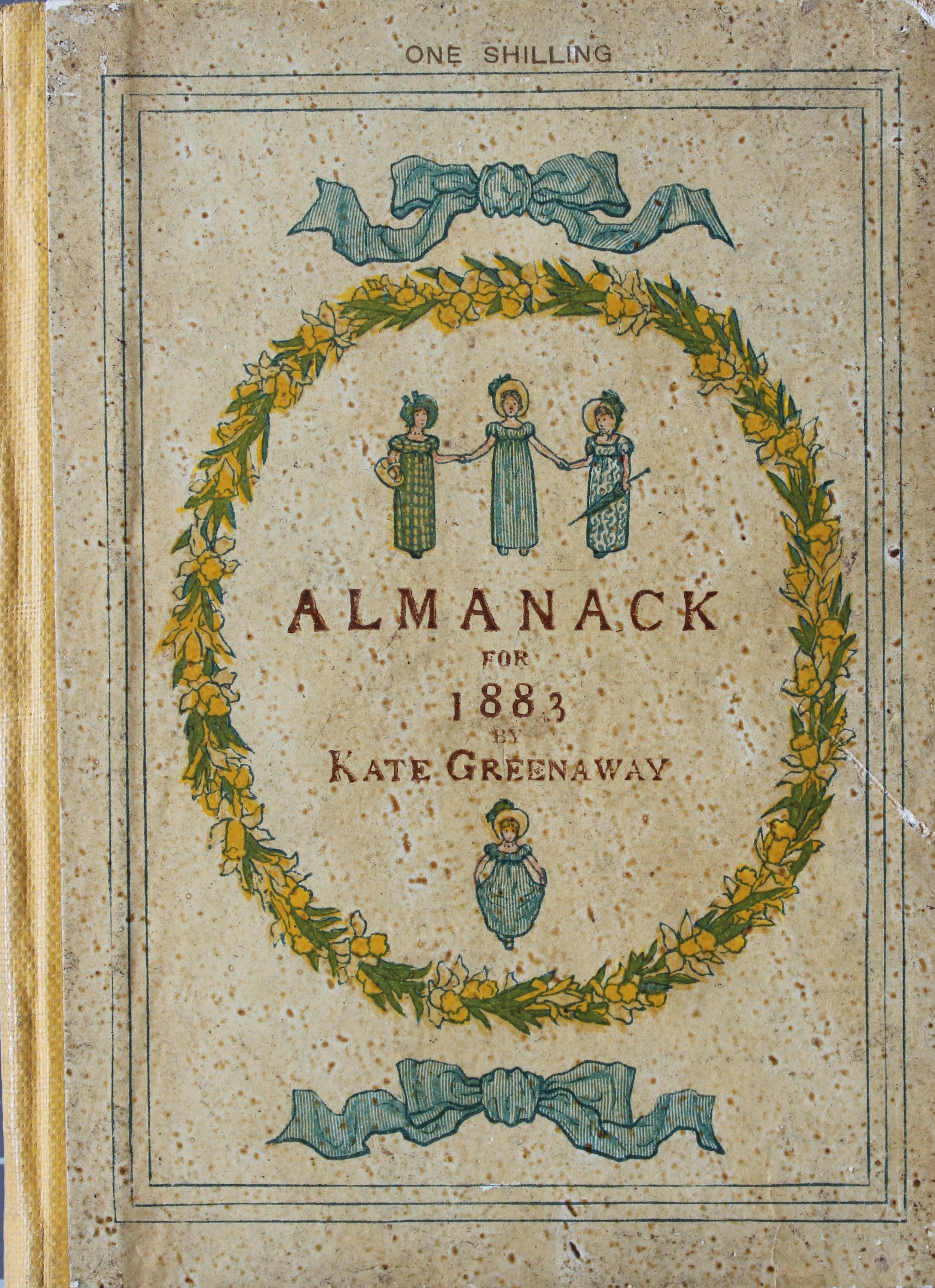
Almanack cover illustrated with four girls in summer dresses inside a wreath

Cover of Almanack for 1883 by Kate Greenaway, London, George Routledge and Sons: 1883. Shelfmark: Rylands.C.GREE.Alm.1883
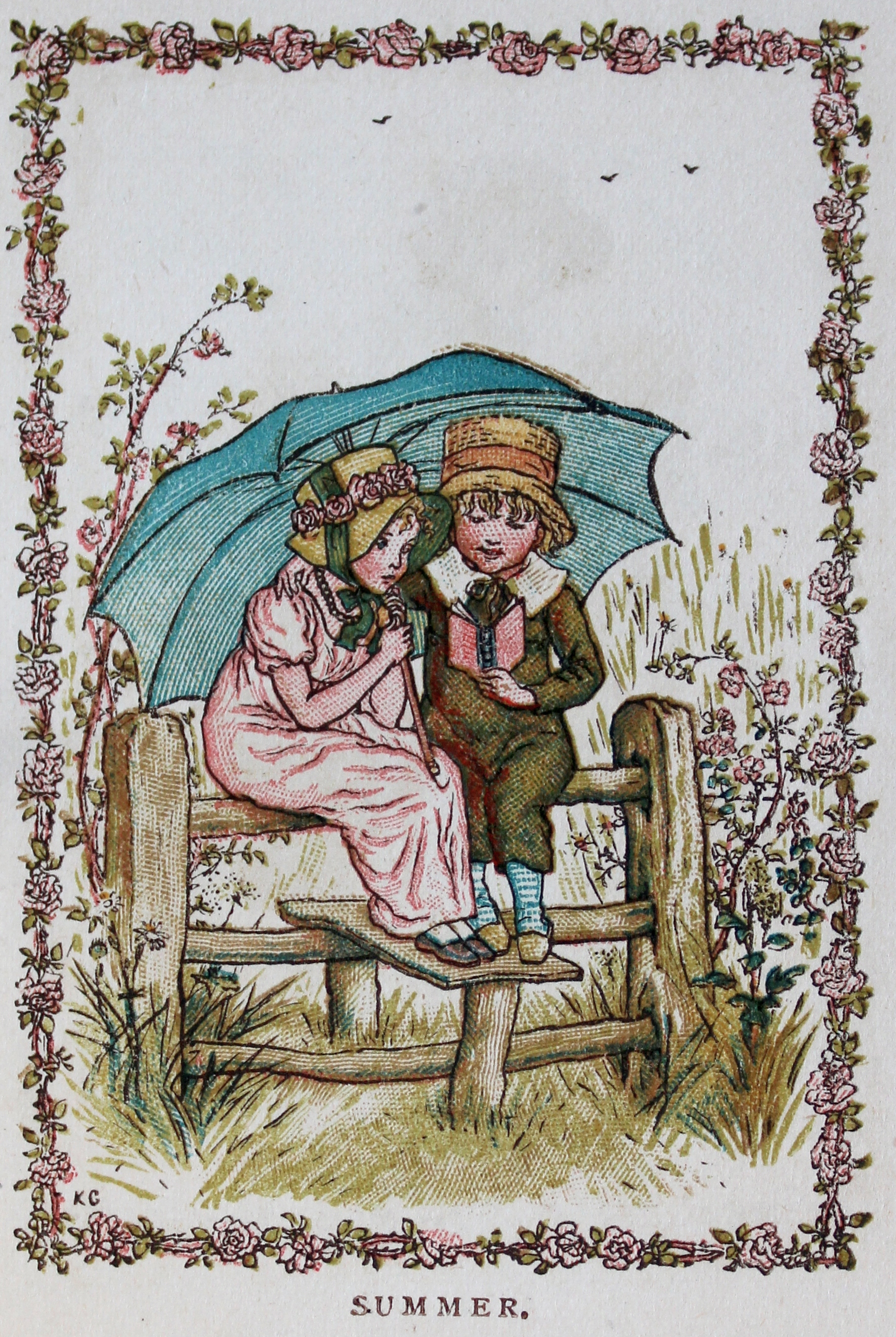
A girl and a boy sitting together on a stile underneath a blue umbrella

Illustration representing summer from Almanack for 1883
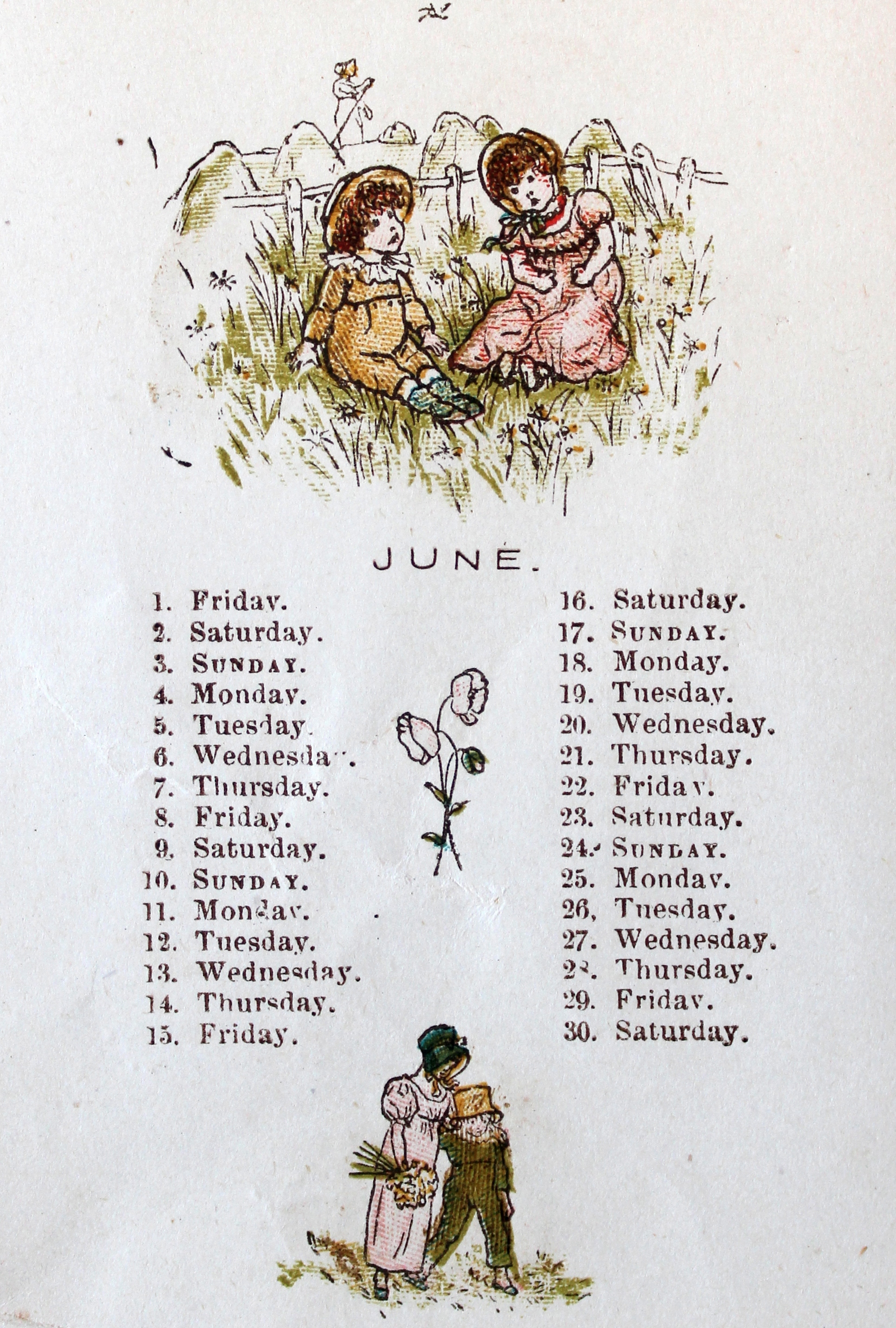
Calendar page for June with an illustration of a small boy and girl sitting in the grass

Page for June from Almanack for 1883


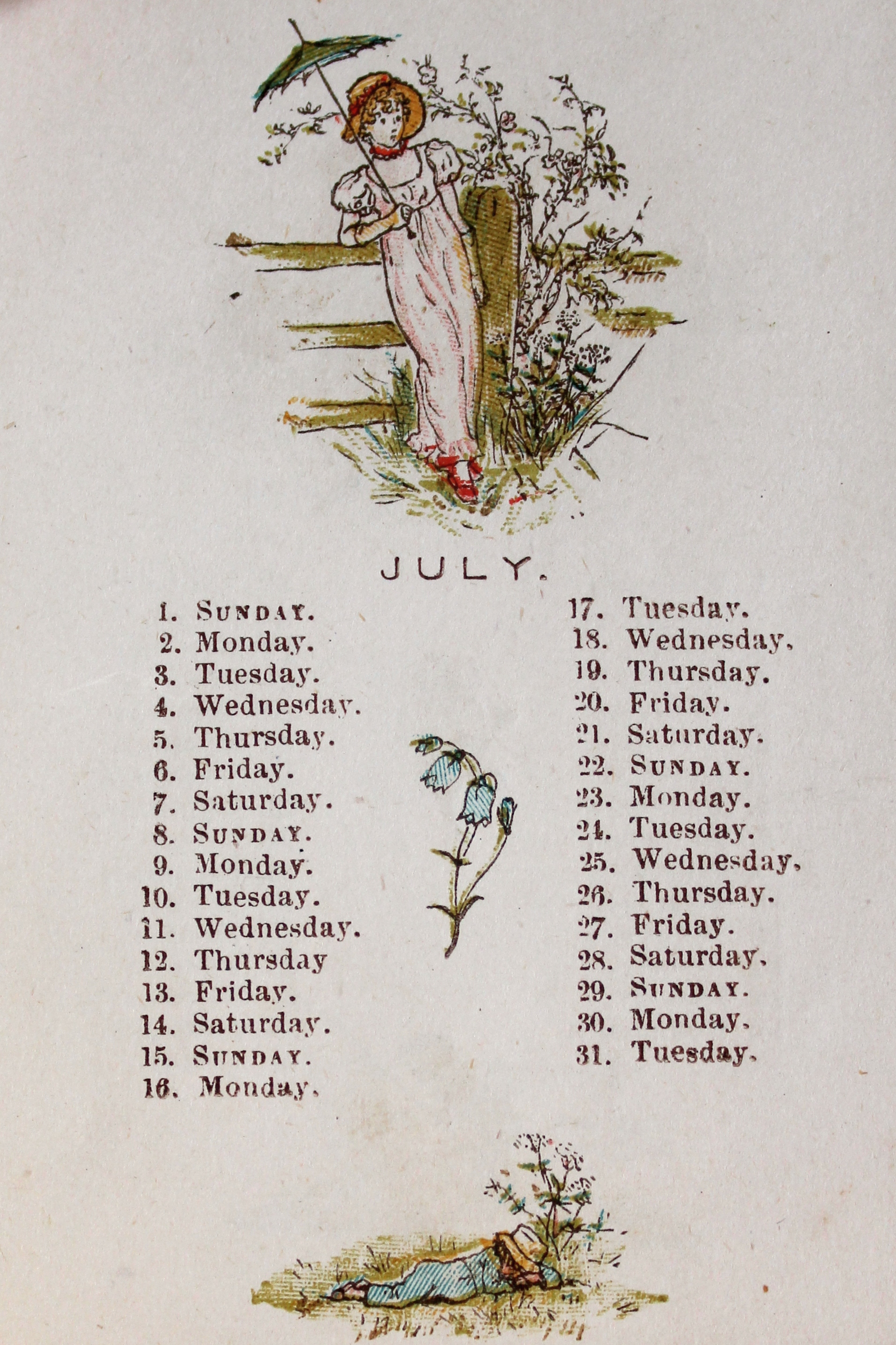
Page for July from Almanack for 1883
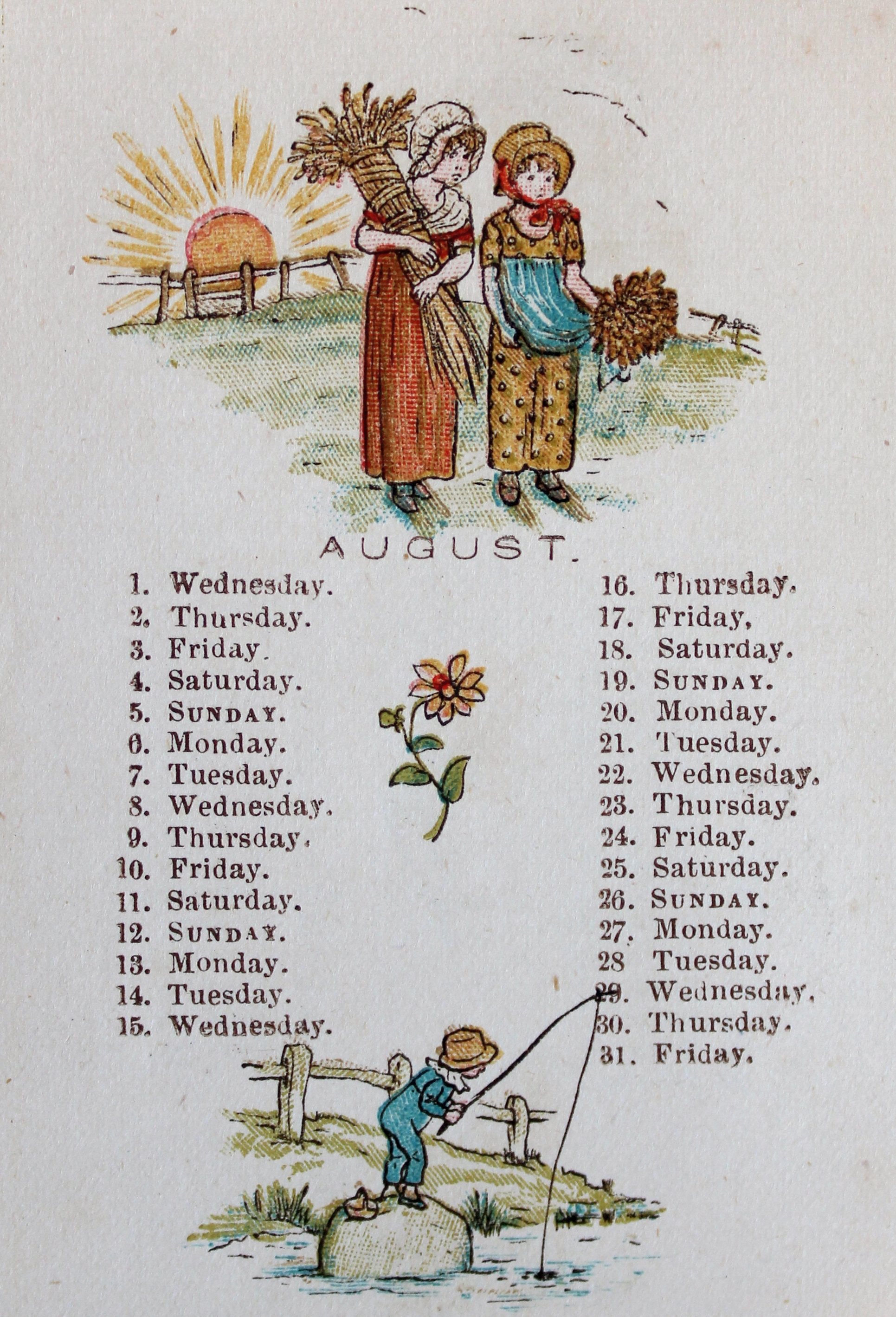
Page for August from Almanack for 1883
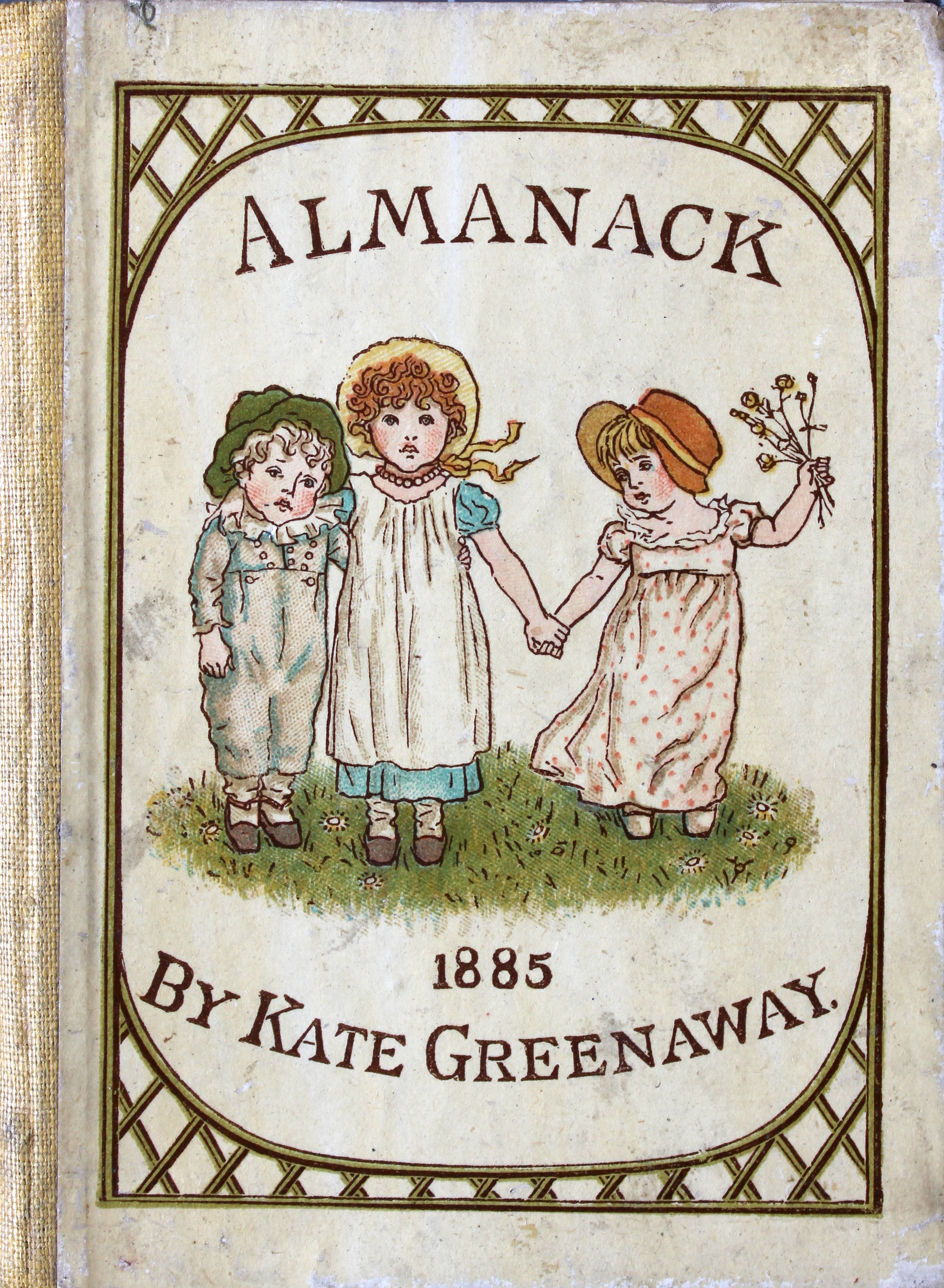
Cover showing three children

Cover of Almanack for 1885 by Kate Greenaway, London: George Routledge and Sons, 1885. Shelfmark: Walser.GRE.Alm.1885
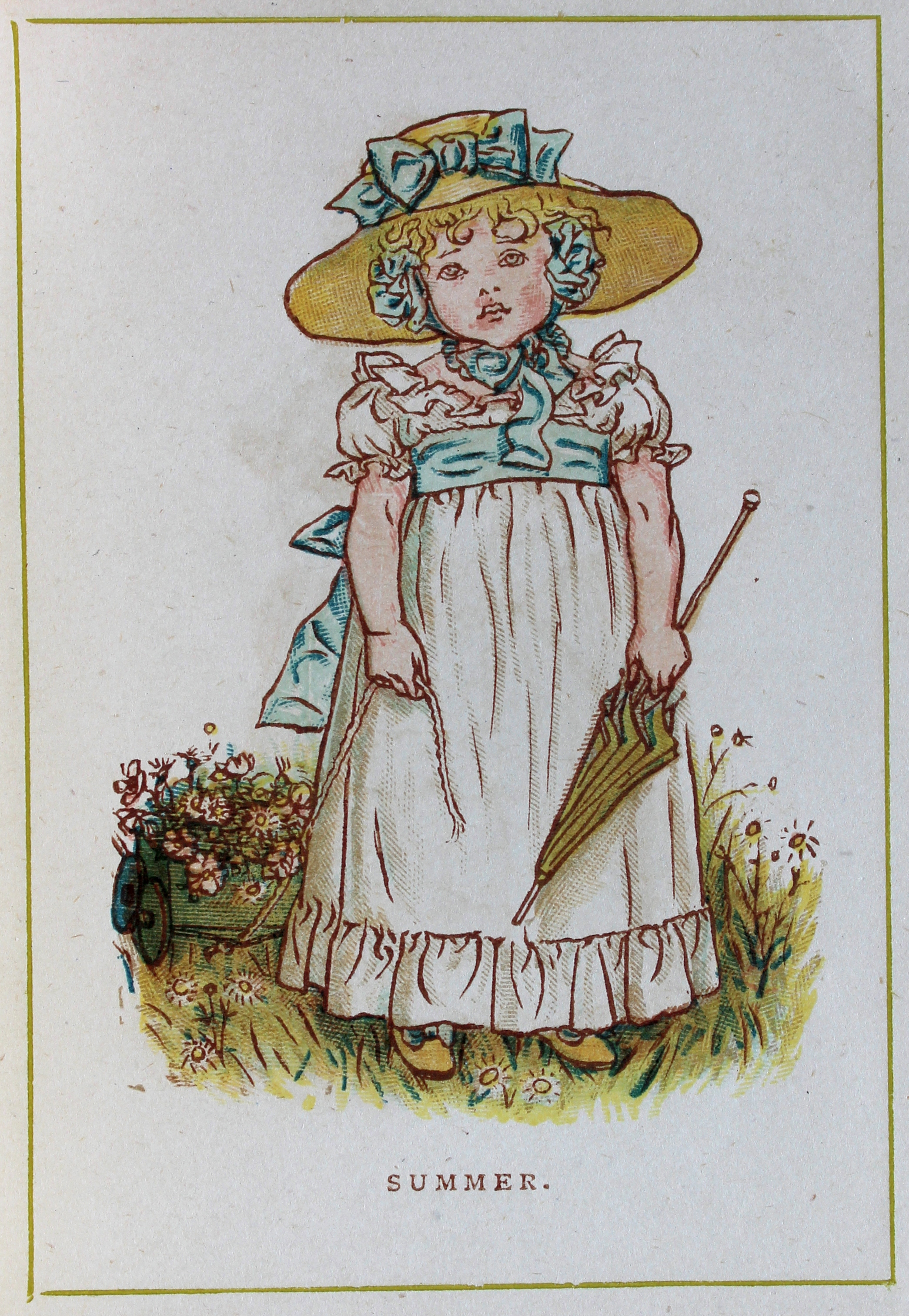
small girl in a white dress with a furled parasol

Illustration representing summer from Almanack 1885
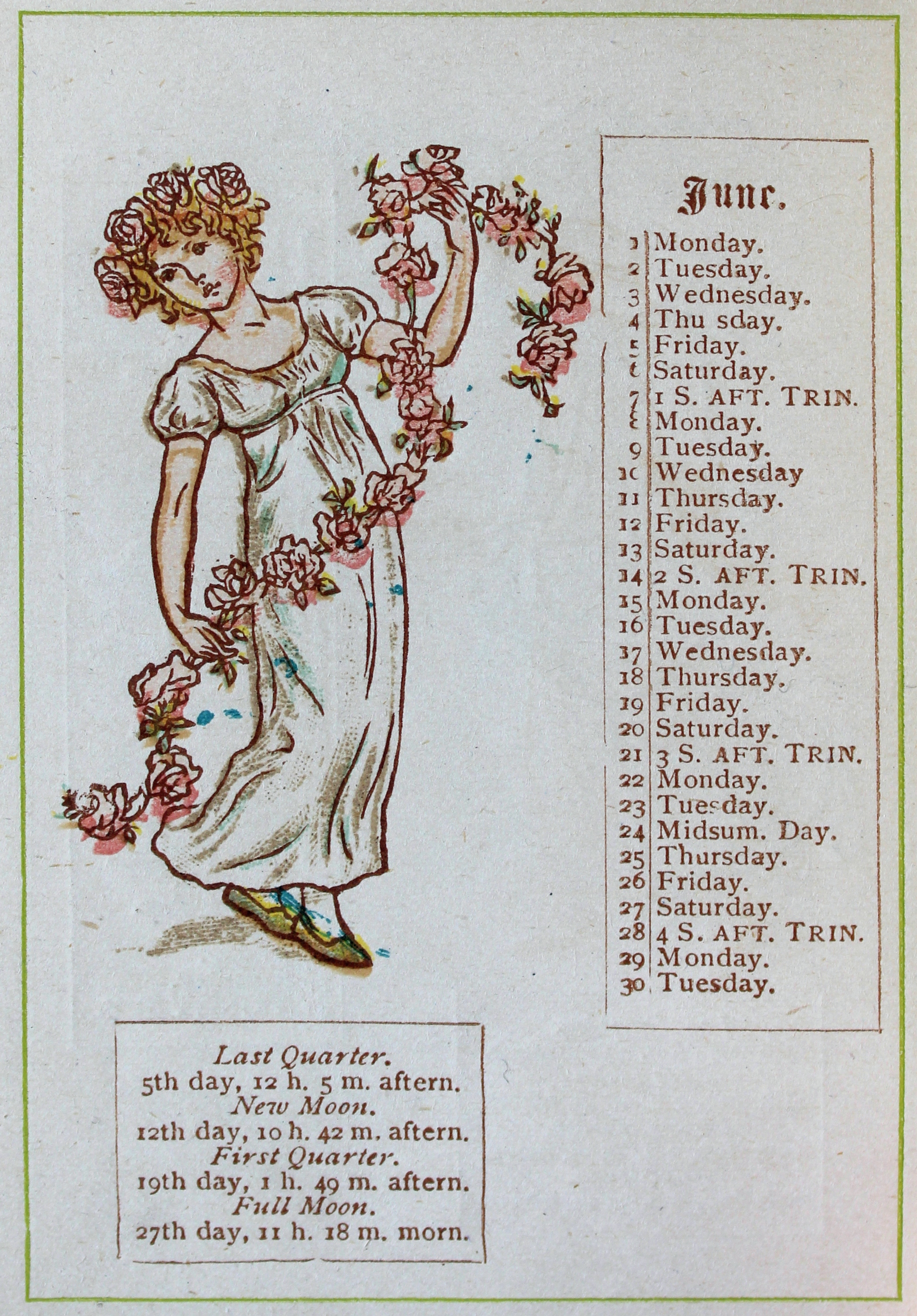
Girl n a white dress carrying a flower garland and wearing a flower crown

Page for June from Almanack for 1885

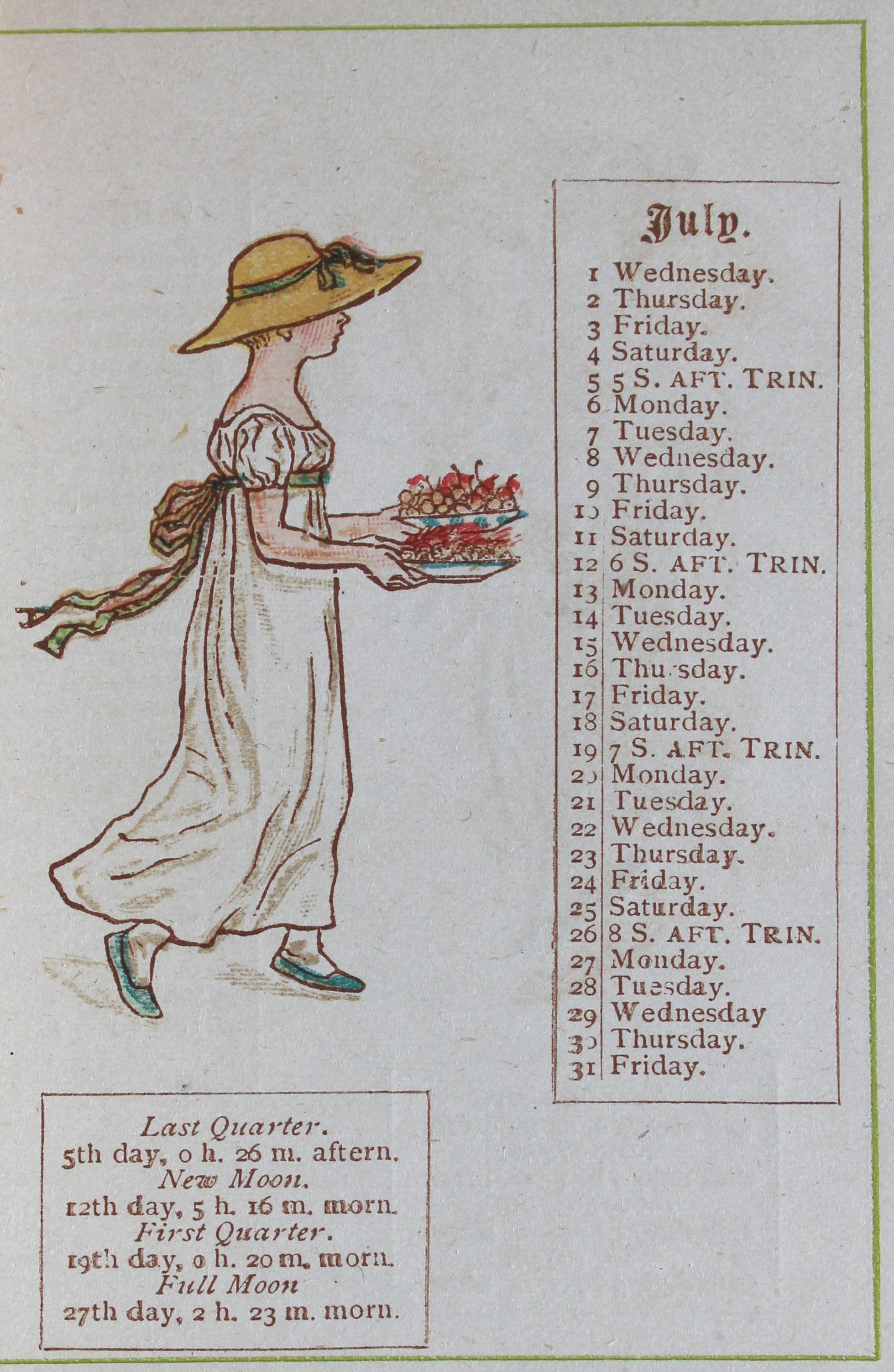
Girl in a white dress bearing plates of food

Page for July from Almanack for 1885


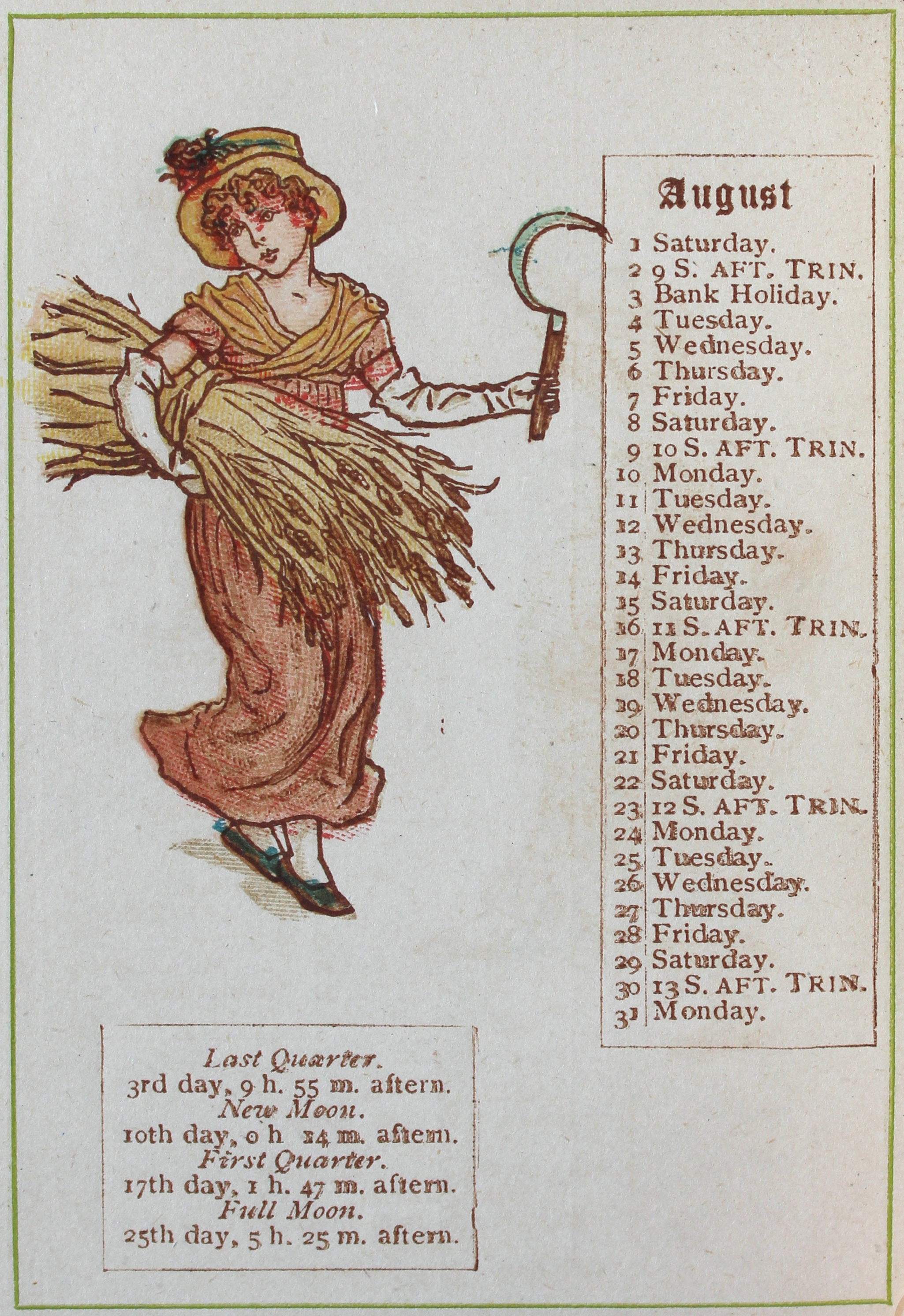
Girl holding a scythe and a sheaf of corn

Page for August from Almanack for 1885
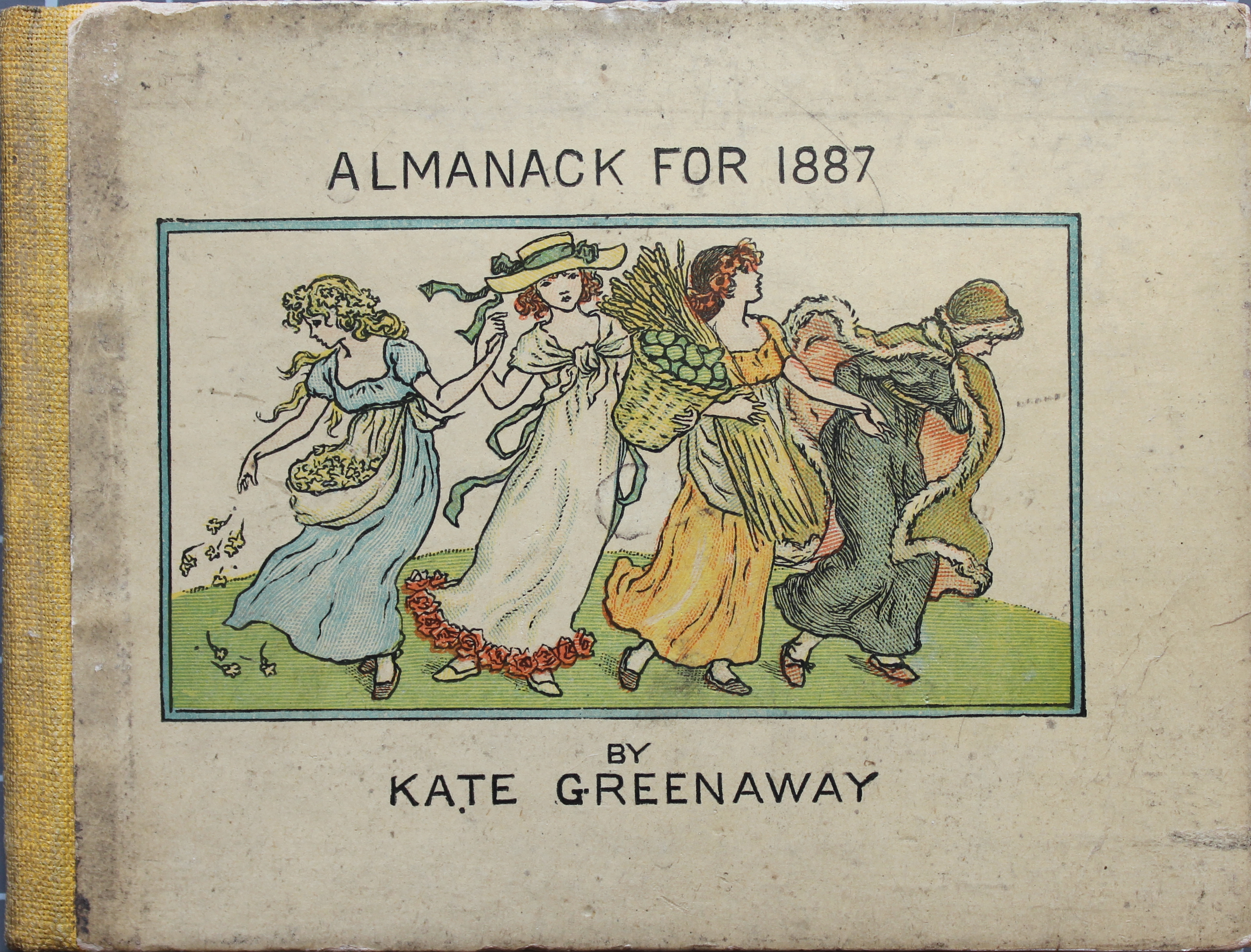
cover depicting girls representing all four seasons

Cover of Almanack for 1887 by Kate Greenaway, London, George Routledge and Sons: 1887. Shelfmark: Walser.GRE.Alm.1887
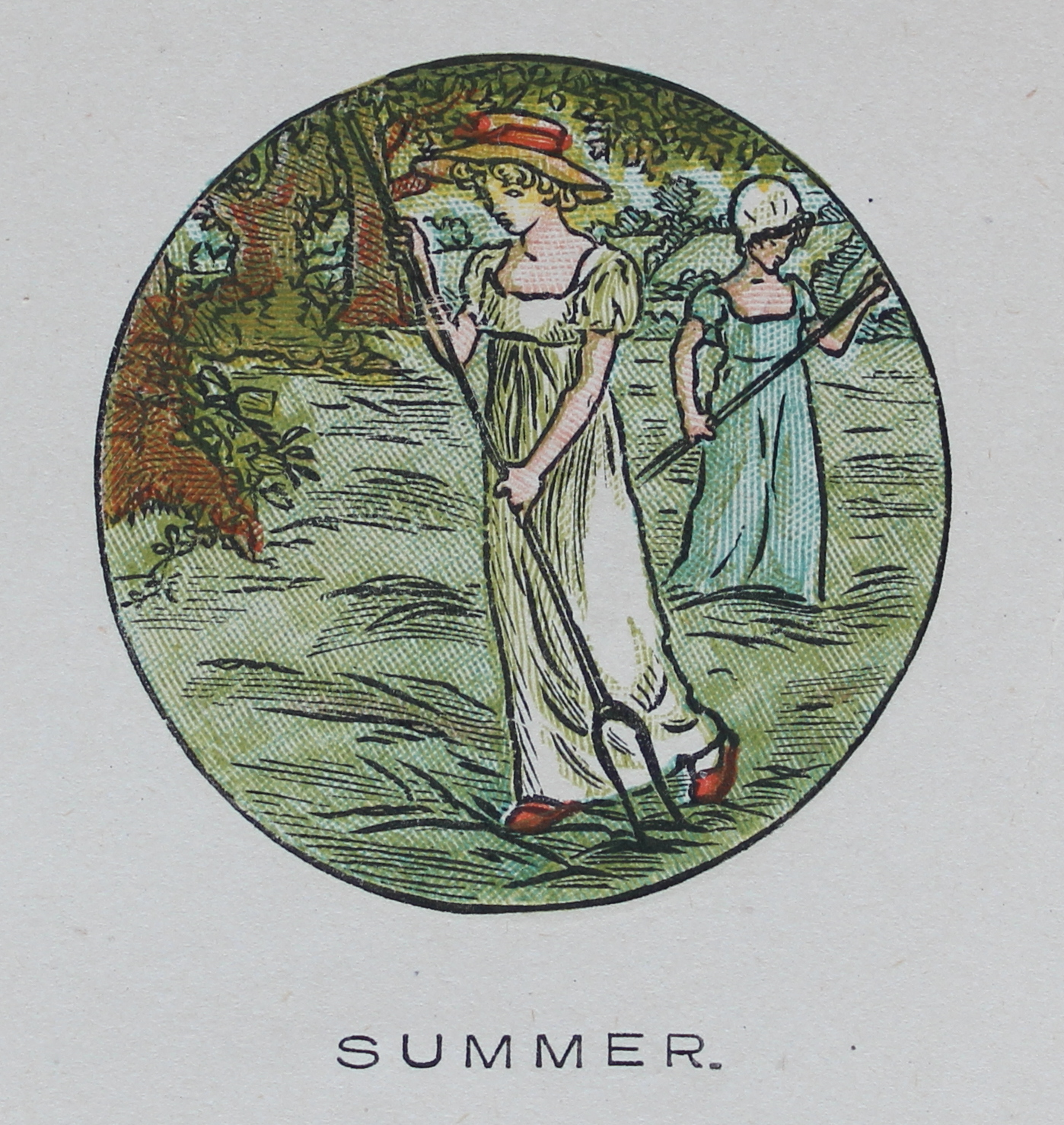
Girls raking hay

Illustration representing summer from Almanack for 1887
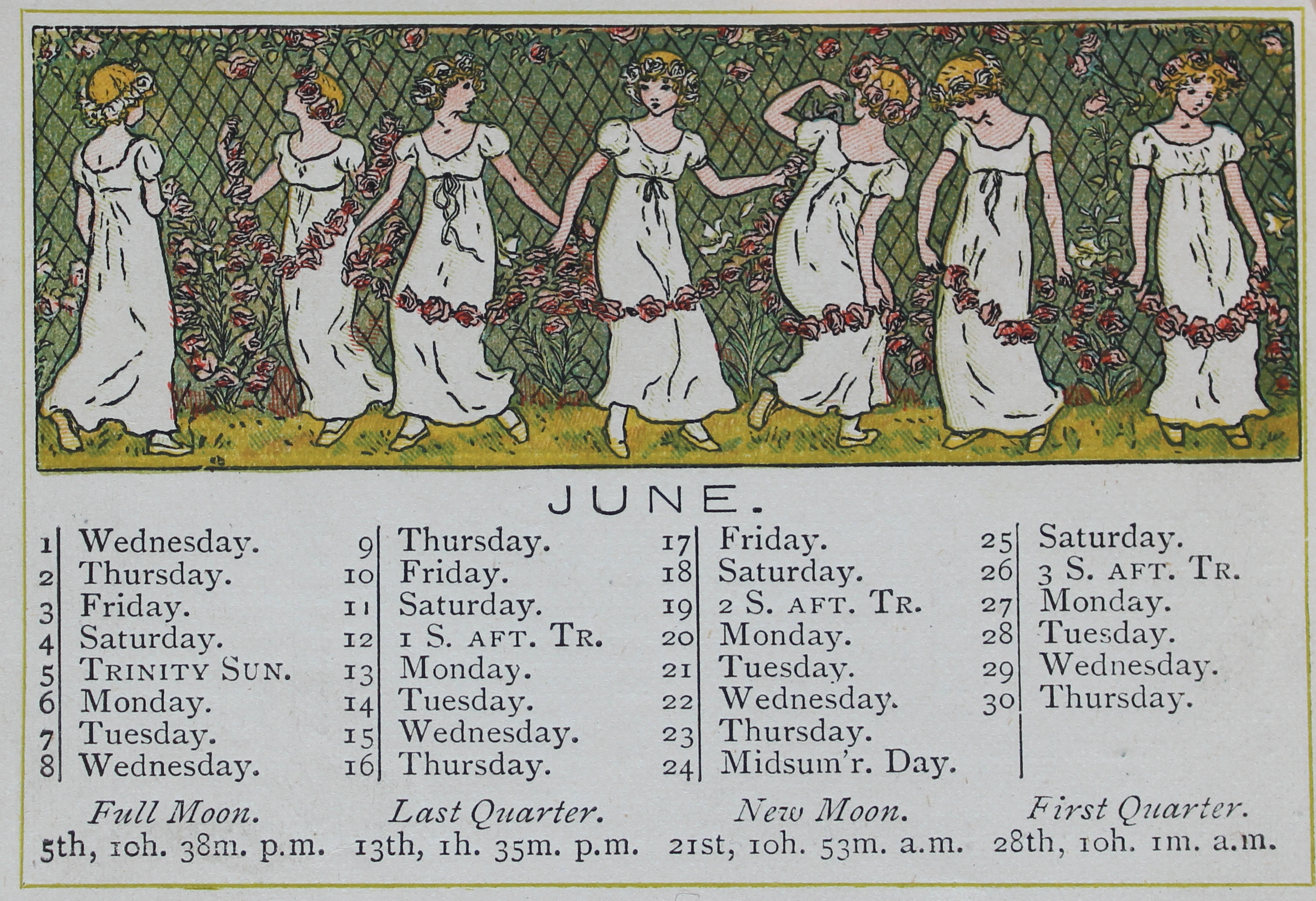
Page for June, showing seven girls dressed in white carrying a red garland

Page for June from Almanack for 1887

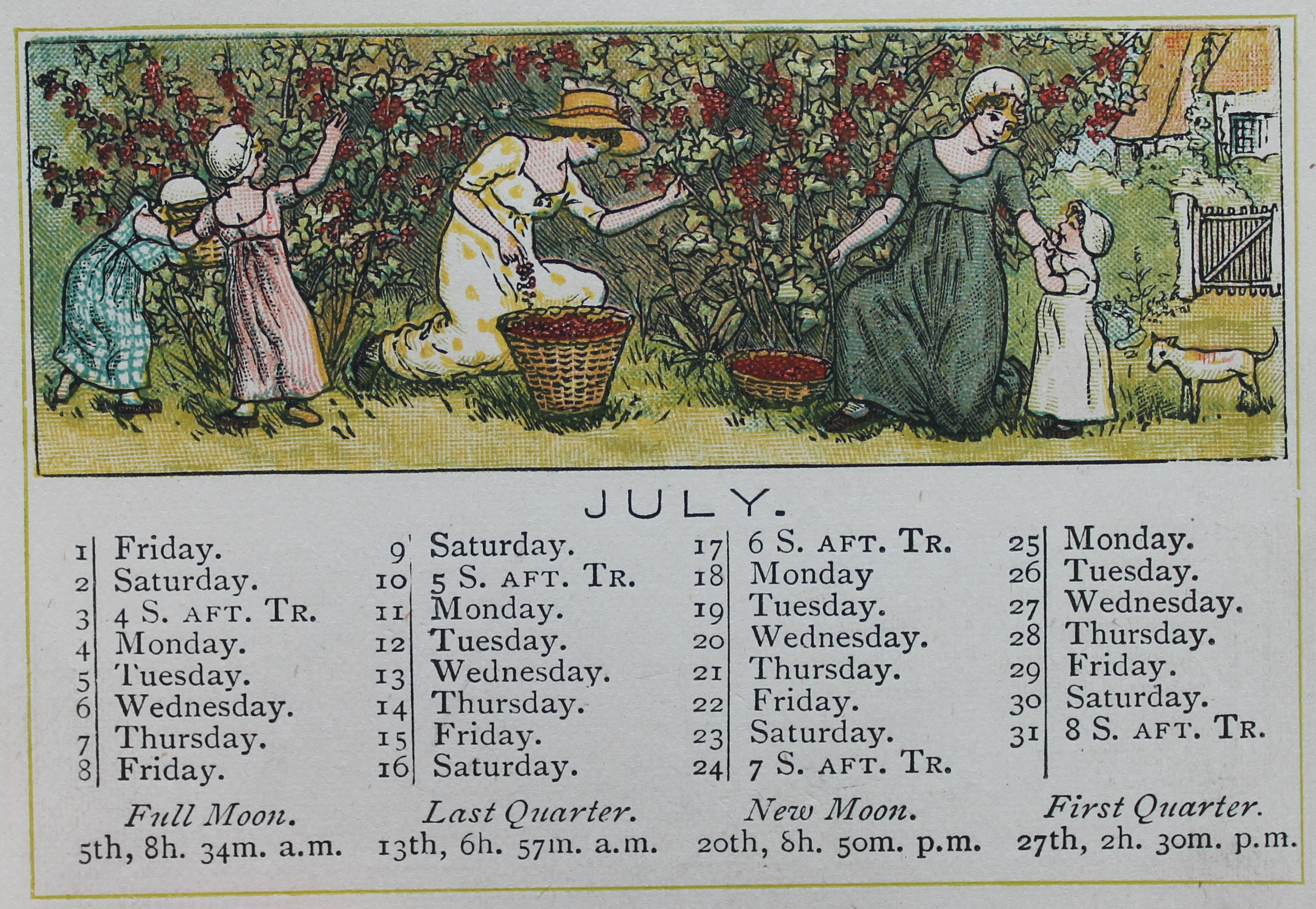
Page for July showing children and adults picking fruit

Page for July from Almanack for 1887

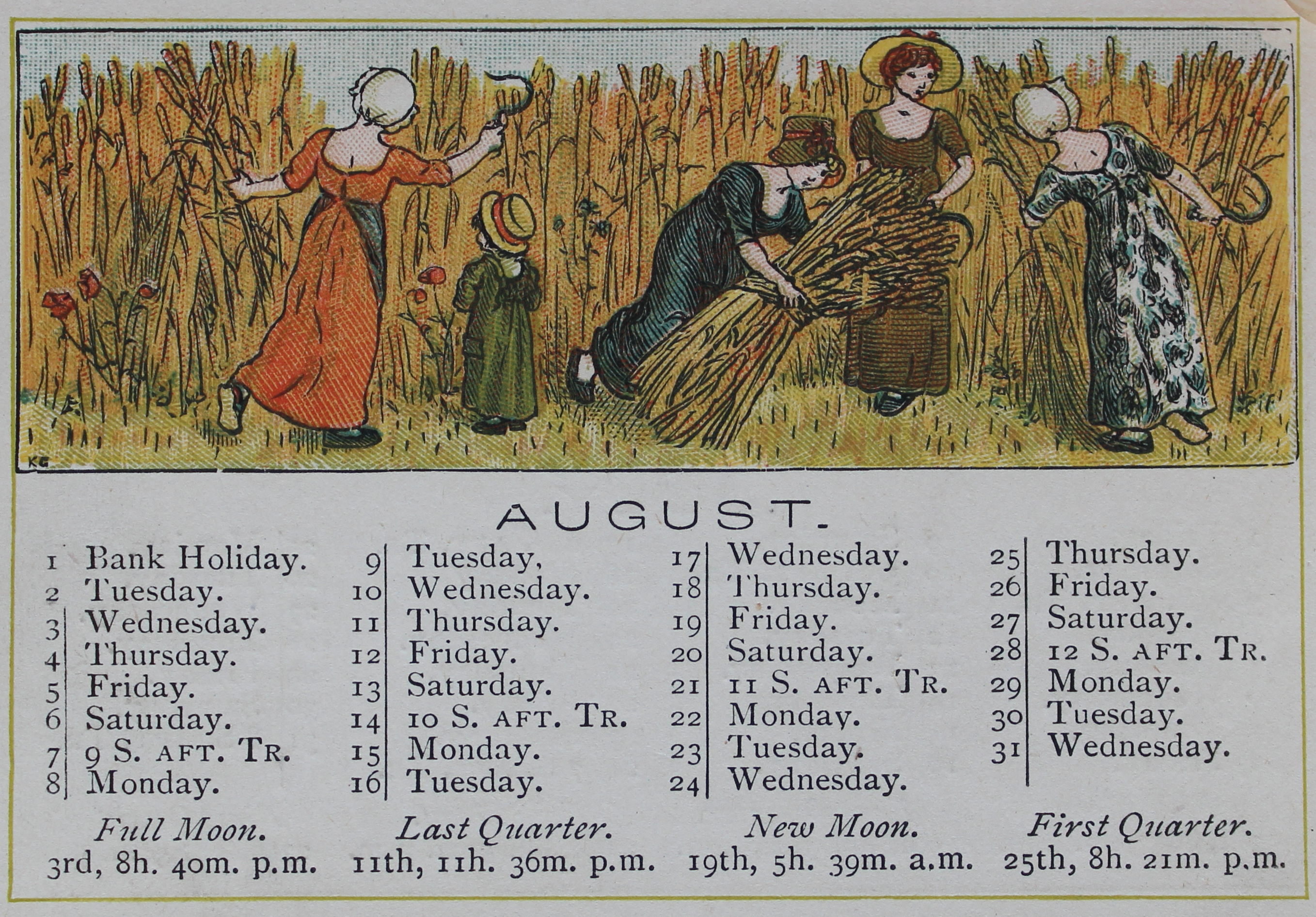
Women and a child in a field cutting hay

Page for August from Almanack for 1887

A number of books in the Rylands Collection celebrate the seasons with a mixture of botanical information and poetic description. Below are the pages for June, July and August from The Garland of the Year, illustrated by artist and amateur botanist Frederick Edward Hulme (1841-1909). Some of the poems included in this book are, in contrast to the vibrant flower illustrations, a touch melancholic, especially the one for June which speaks of the withering of daisies as mirroring the eventual fate of all humanity!
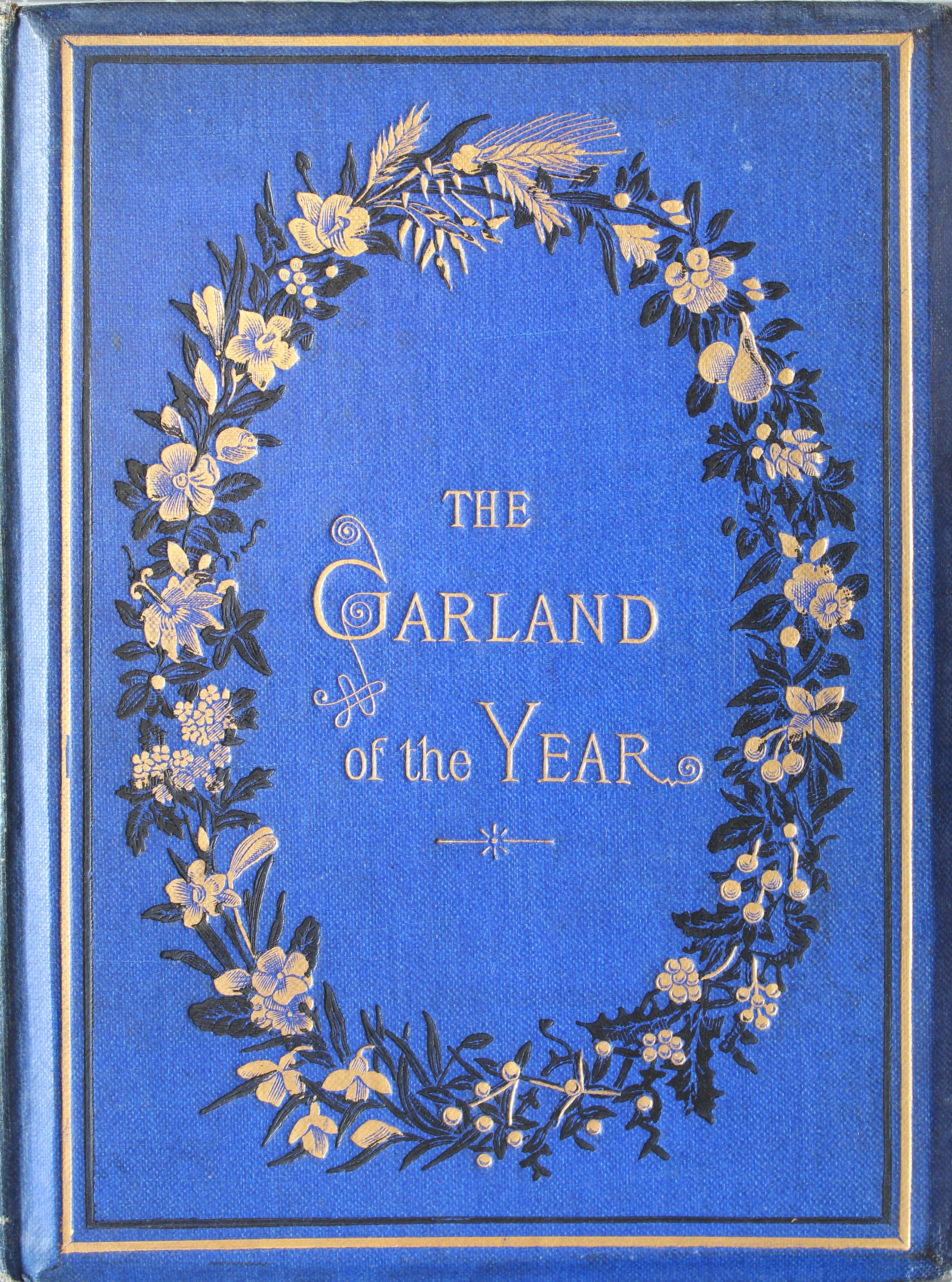
Blue binding with a wreath decoration

Cover of The Garland of the Year, or The Months: Their Poetry and Flowers, London: Marcus Ward & Co, circa 1870s. Shelfmark: Rylands.GAR
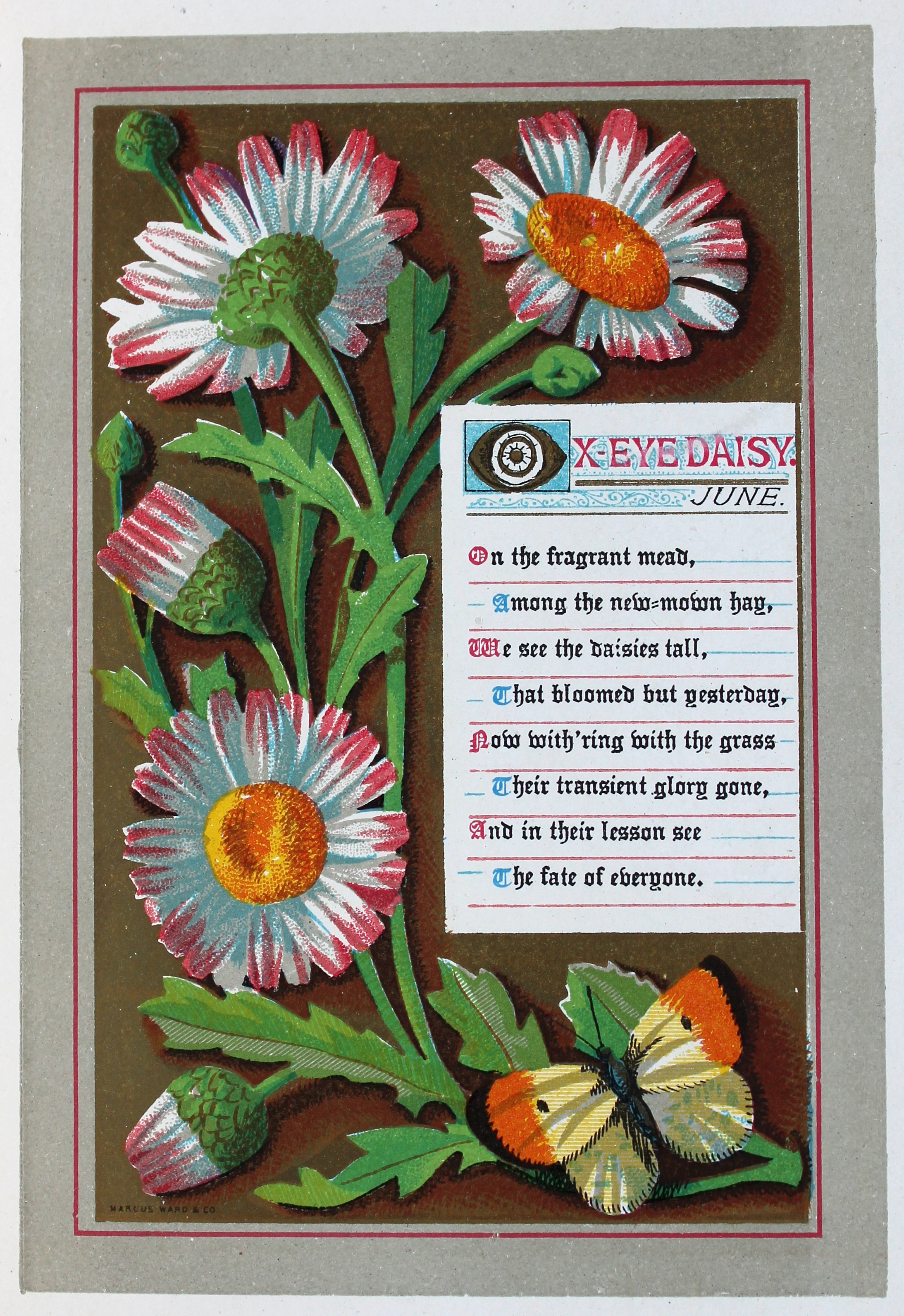
Illustration of an Ox-eye daisy and a butterfly, with an inset poem

Illustration and poem for June from The Garland of the Year 
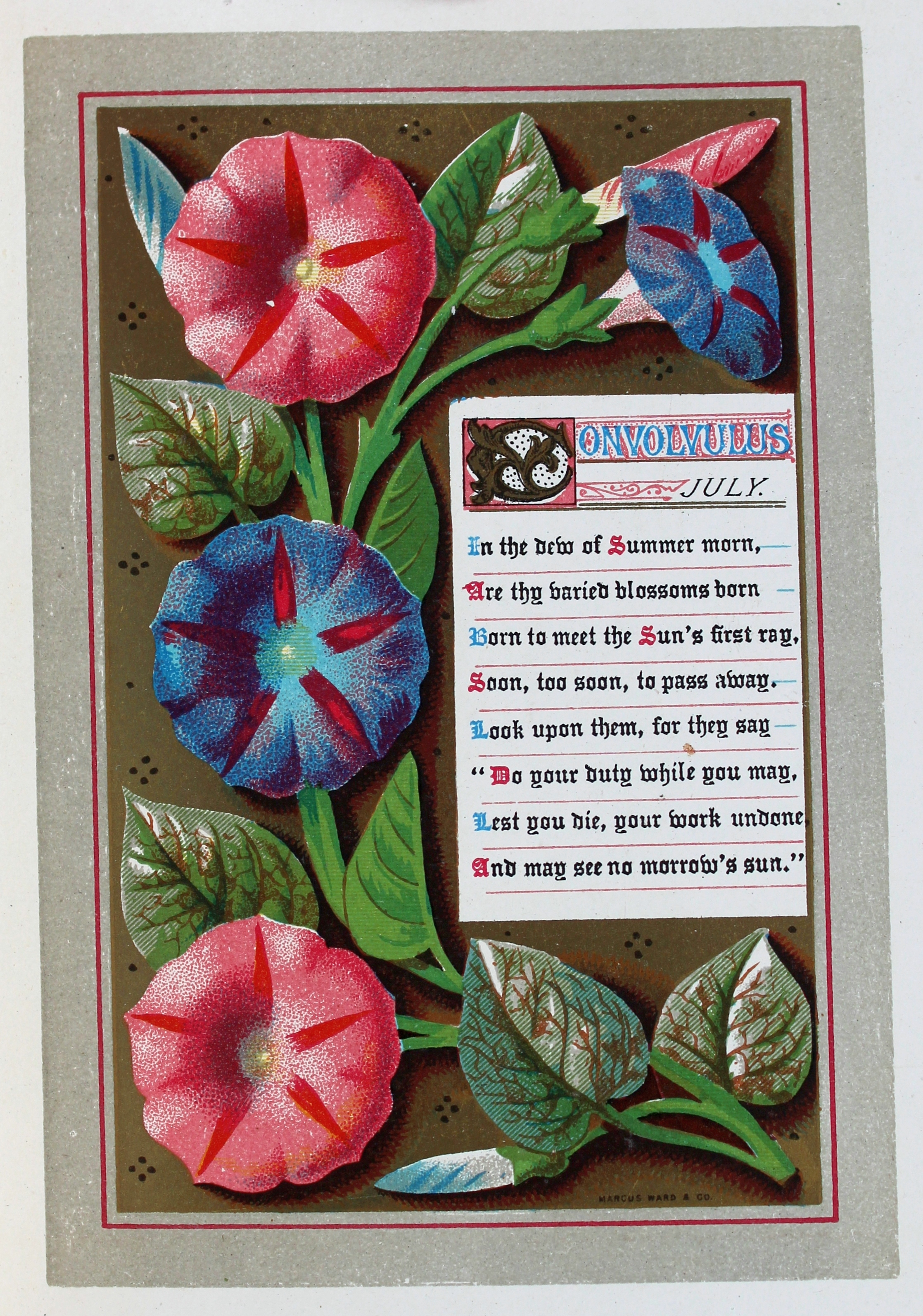
Flowers for July with an inset poem

Illustration and poem for July from The Garland of the Year 
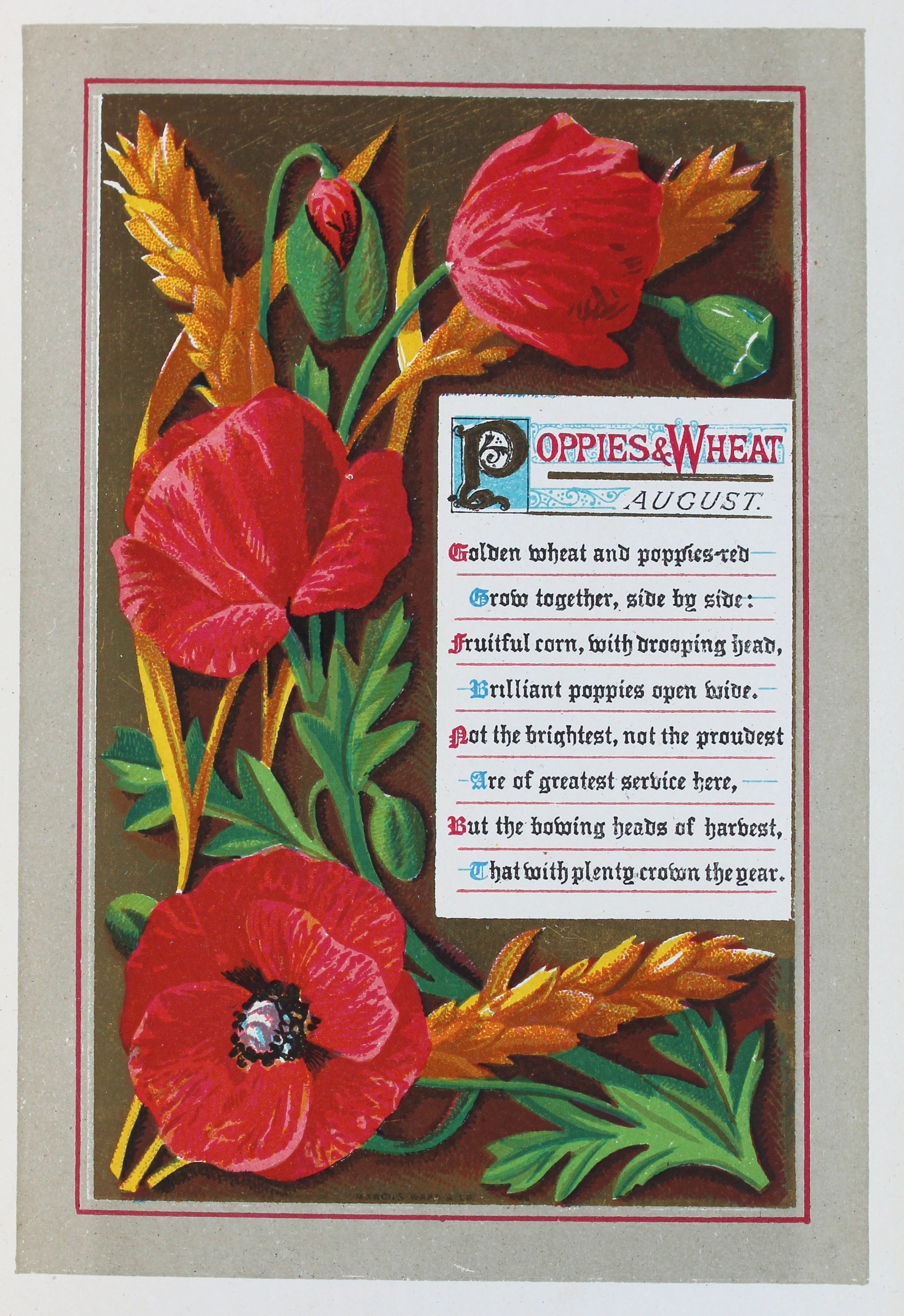
Poppies and wheat with an inset poem

Illustration and poem for August from The Garland of the Year 

A similar volume, The Songs of the Seasons and Wild Flowers of the Months, provides further colourful depictions of the flowers which flourish in the summertime.
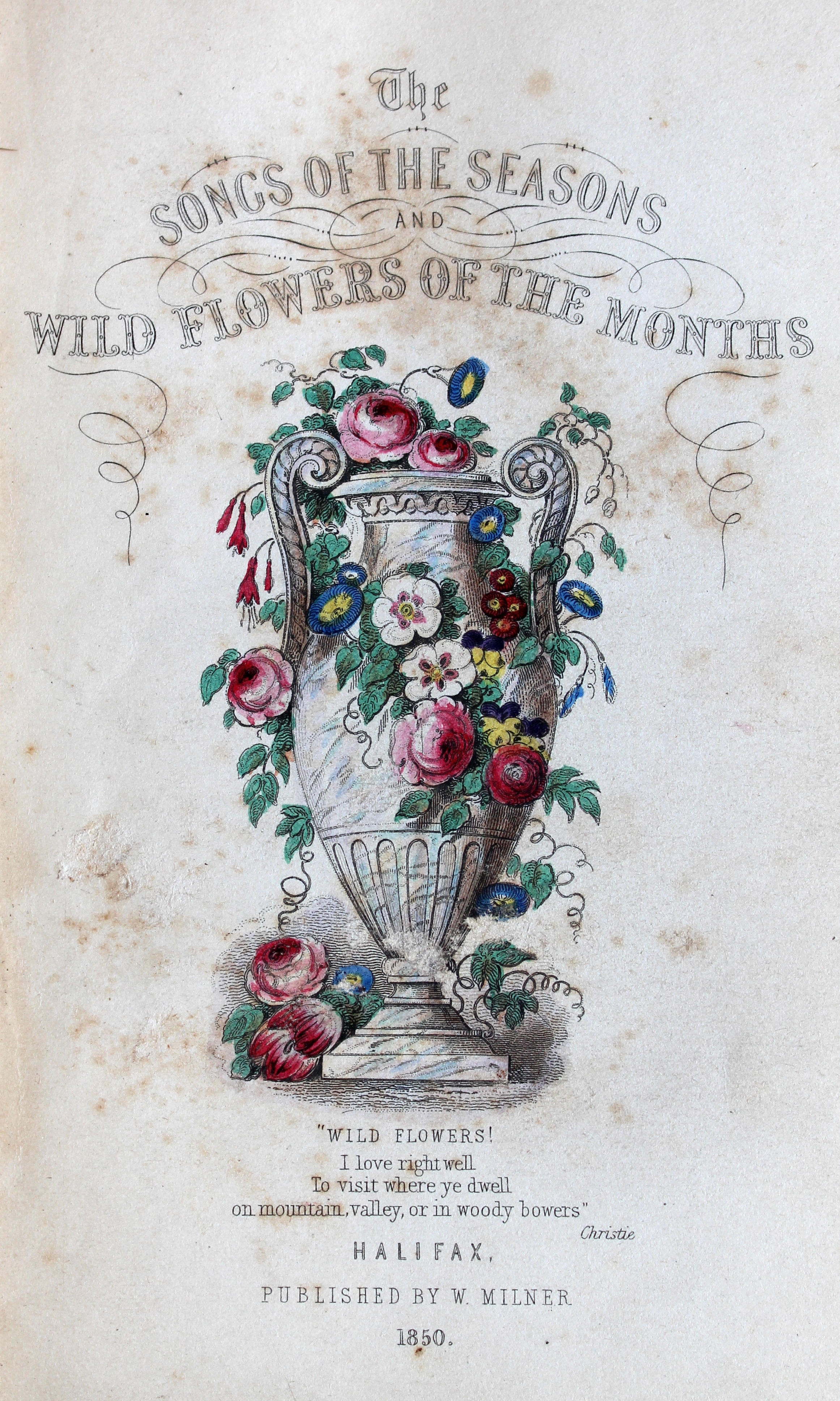
Added title page (dated 1850, unlike the actual title page) of Songs of the Seasons and Wild Flowers of the Months by J.H. Clark: Halifax, Milner & Sowerby, 1851. Shelfmark: Rylands.CLA.Son.1851
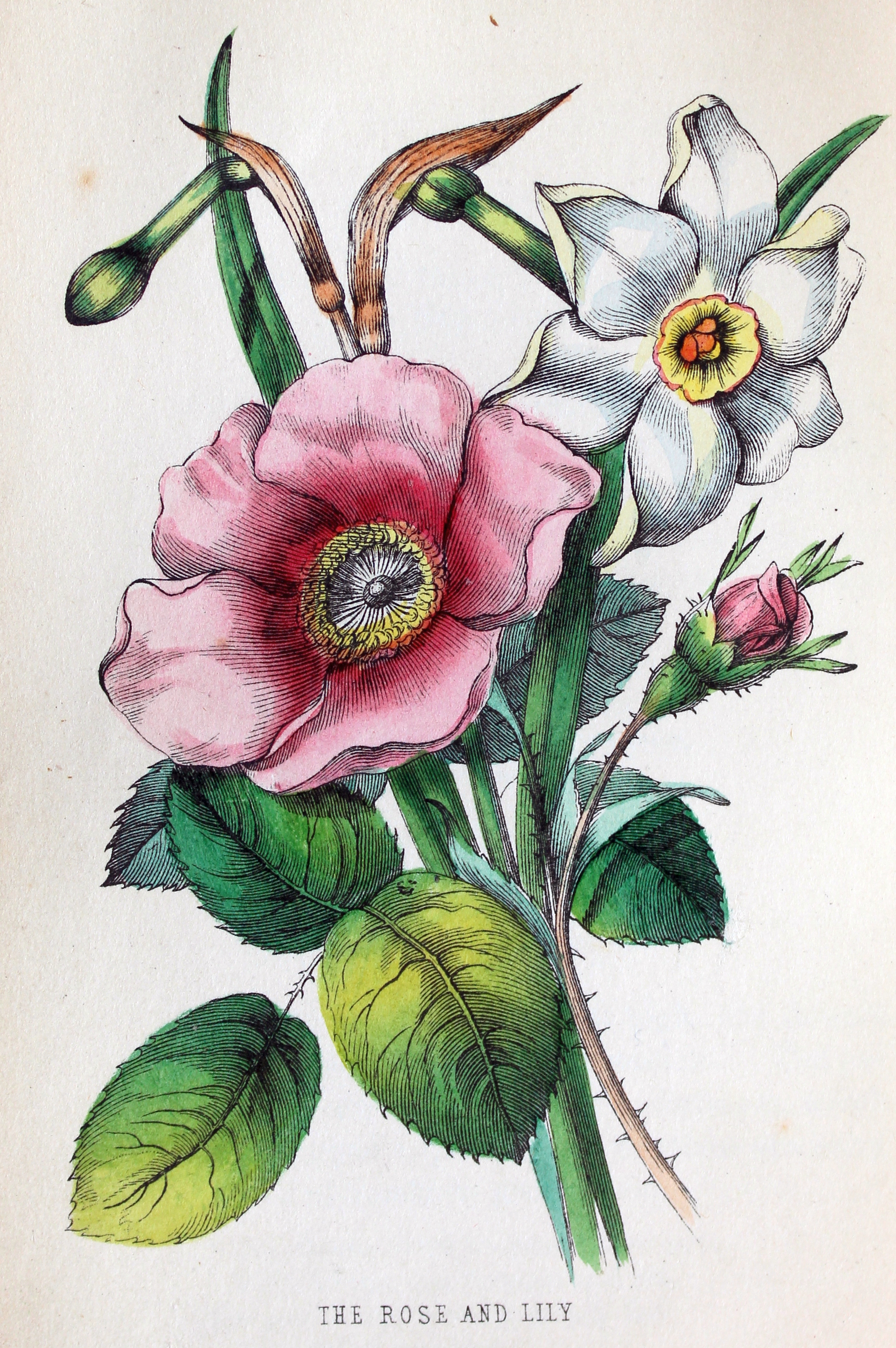
Rose and Lily illustration from Songs of the Seasons and Wild Flowers of the Months
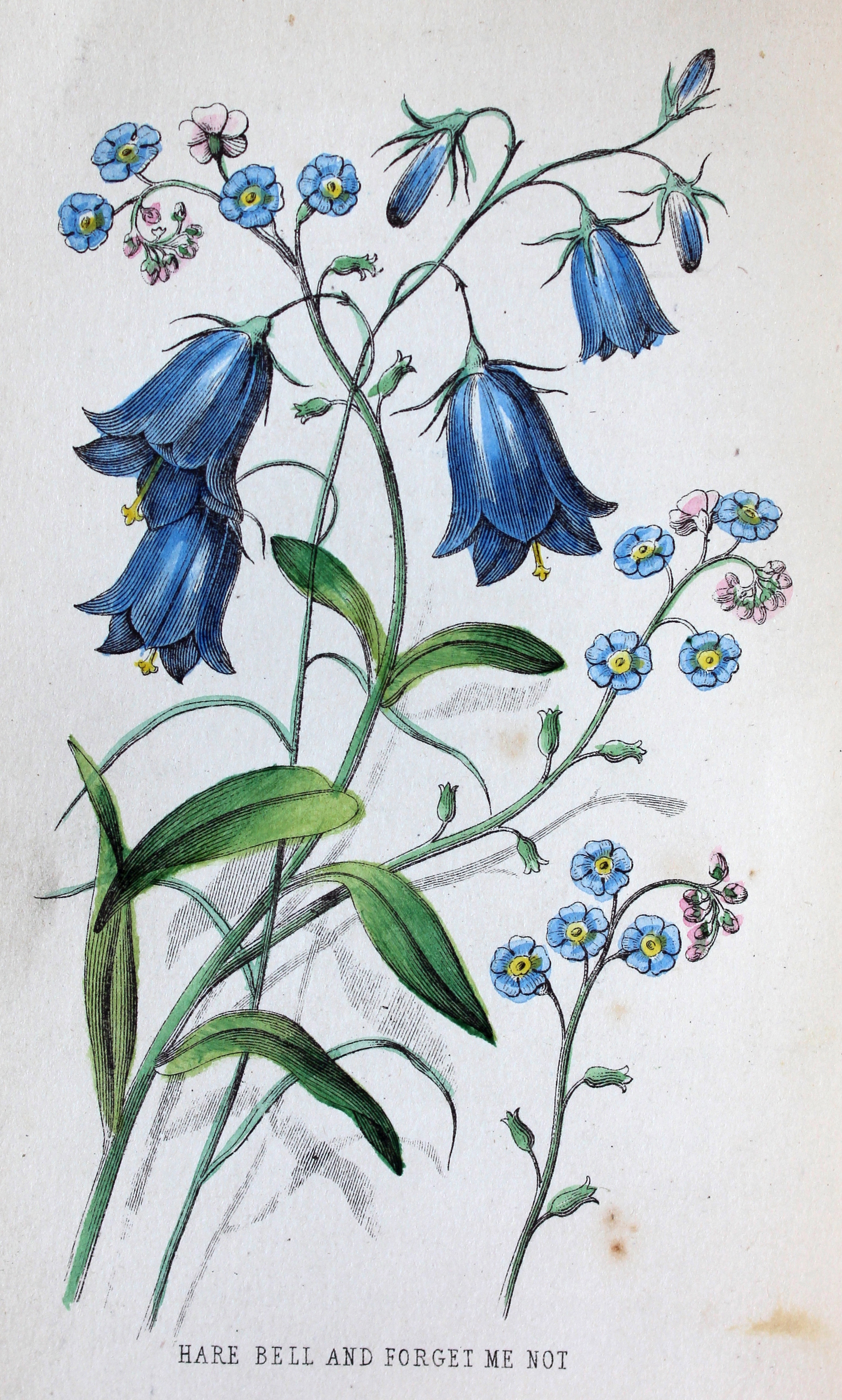
Hare Bell and Forget Me Not illustration from Songs of the Seasons and Wild Flowers of the Months

The cover of Voices of the Garden, the Woods and the Fields, or, The Teachings of Nature as Seasons Change is decorated with little figures representing each season, the one for summer being a boy sleeping amongst foliage. The internal illustration provides a bucolic image of harvest time and cattle wading in a stream.
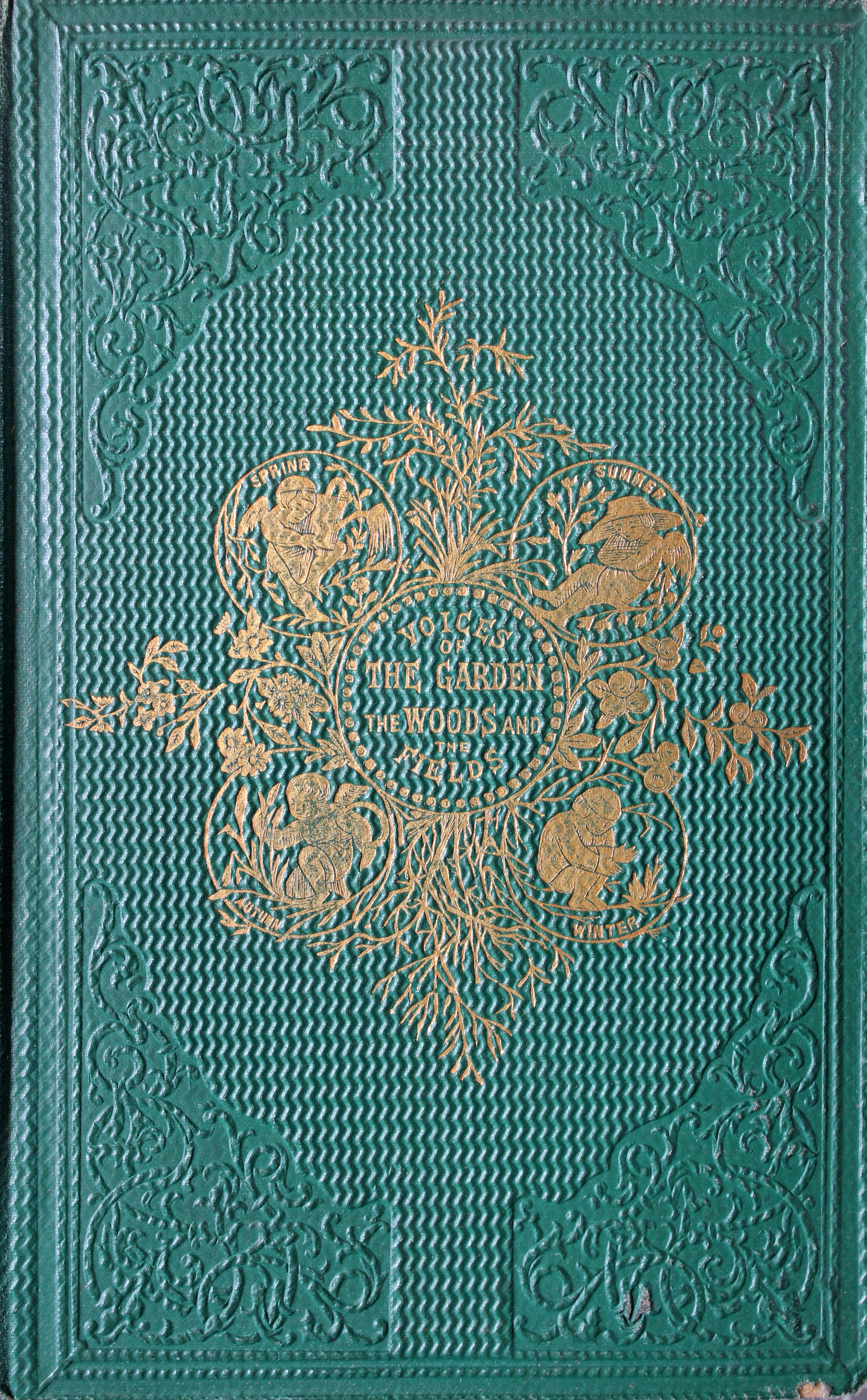
Green binding with title and title decoration in gold

Cover of Voices of the Garden, the Woods and the Fields, or, The Teachings of Nature as Seasons Change, London: T. Nelson & Sons, 1860. Shelfmark: Rylands.VOI.1860
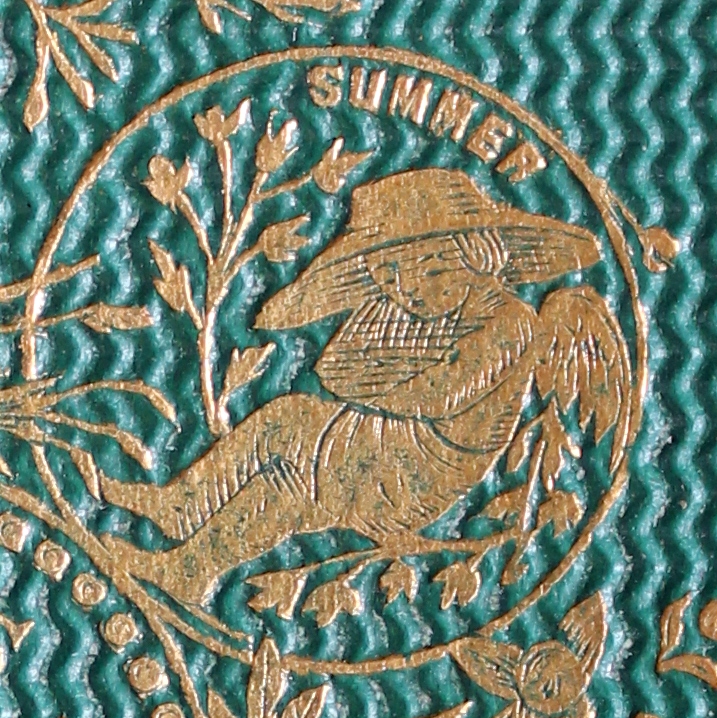
Detail from cover depicting summer. A small boy asleep amongst foliage

Detail from the cover of Voices of the Garden, the Woods and the Fields 
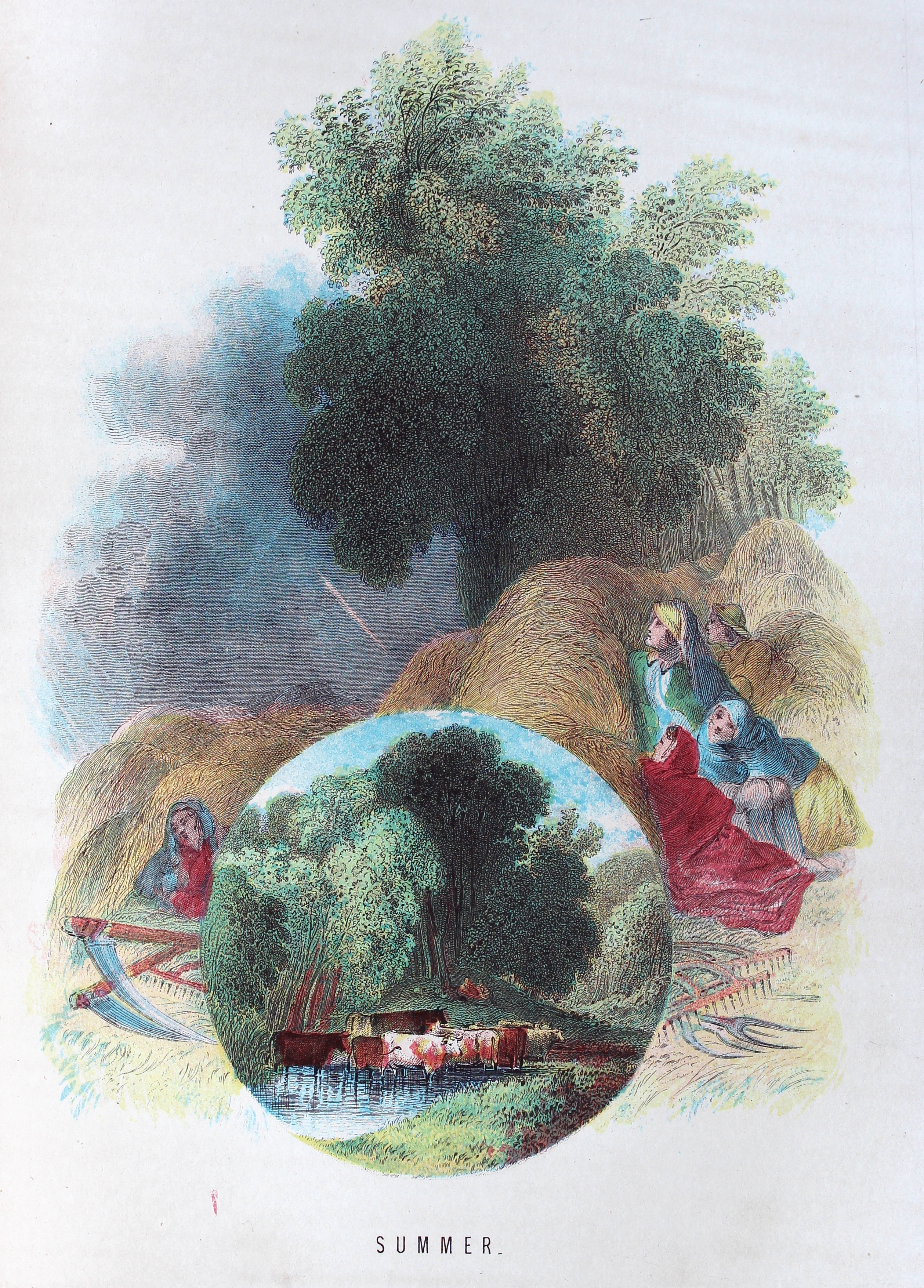
Illustration representing summer from Voices of the Garden, the Woods and the Fields 

The artist Walter Crane (1845-1915) was a significant figure in the Arts and Crafts movement of the late nineteenth century. Between 1886 and 1906 he produced  a series of fantastical flower-themed books with glorious colour illustrations. In the first of these, Flora’s Feast: A Masque of Flowers, published in 1889, Crane presents a troop of floral figures who have been awakened by their Queen and who process through the year accompanied by a rhyming commentary. The figures representing the summer months are pictured below.
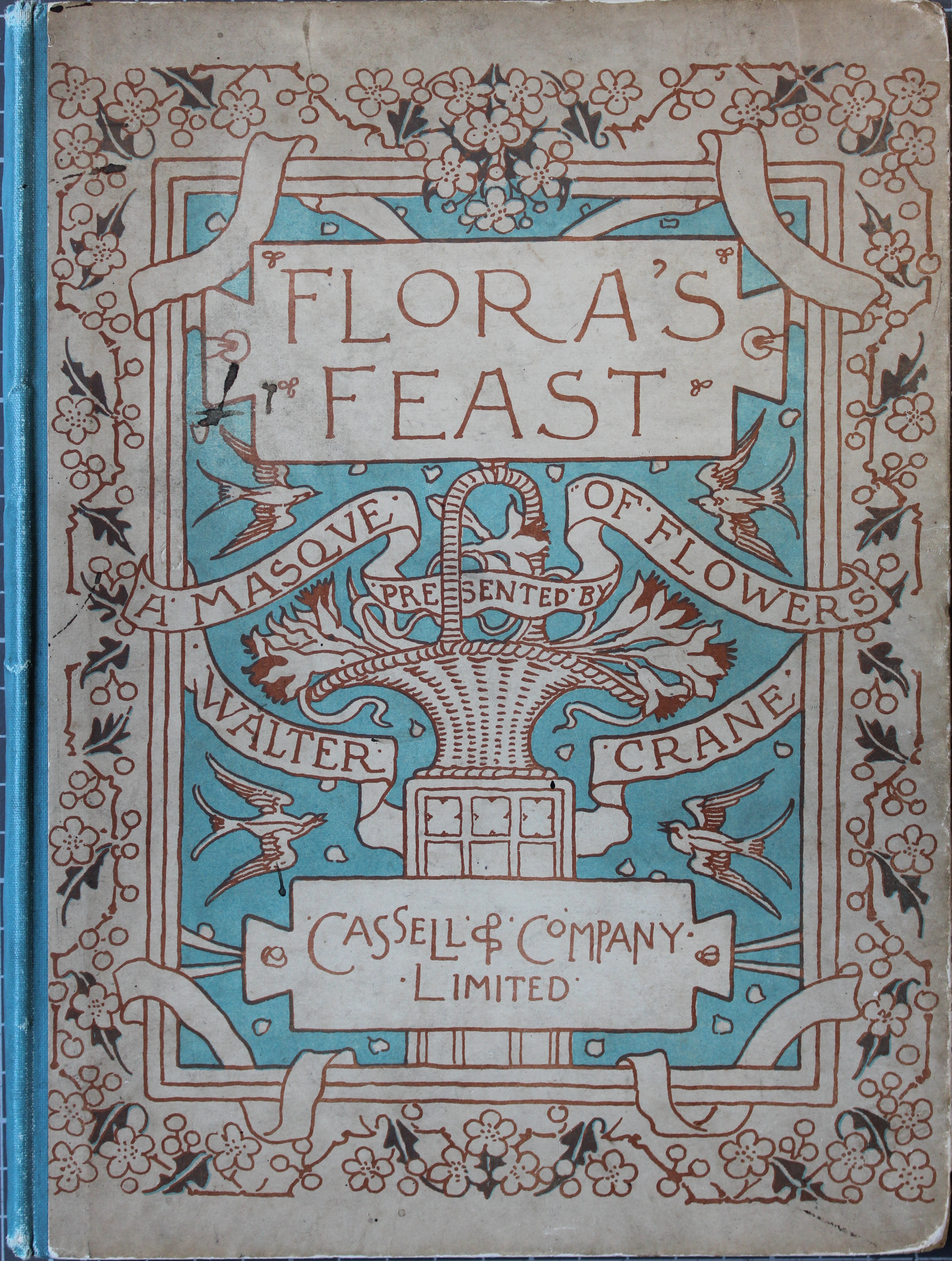
Decorative cover with flowers and a blue background

Cover of Flora’s Feast: A Masque of Flowers by Walter Crane, London: Cassell and Company Limited, 1889. Shelfmark: Rylands.C.CRA.Flor.1889
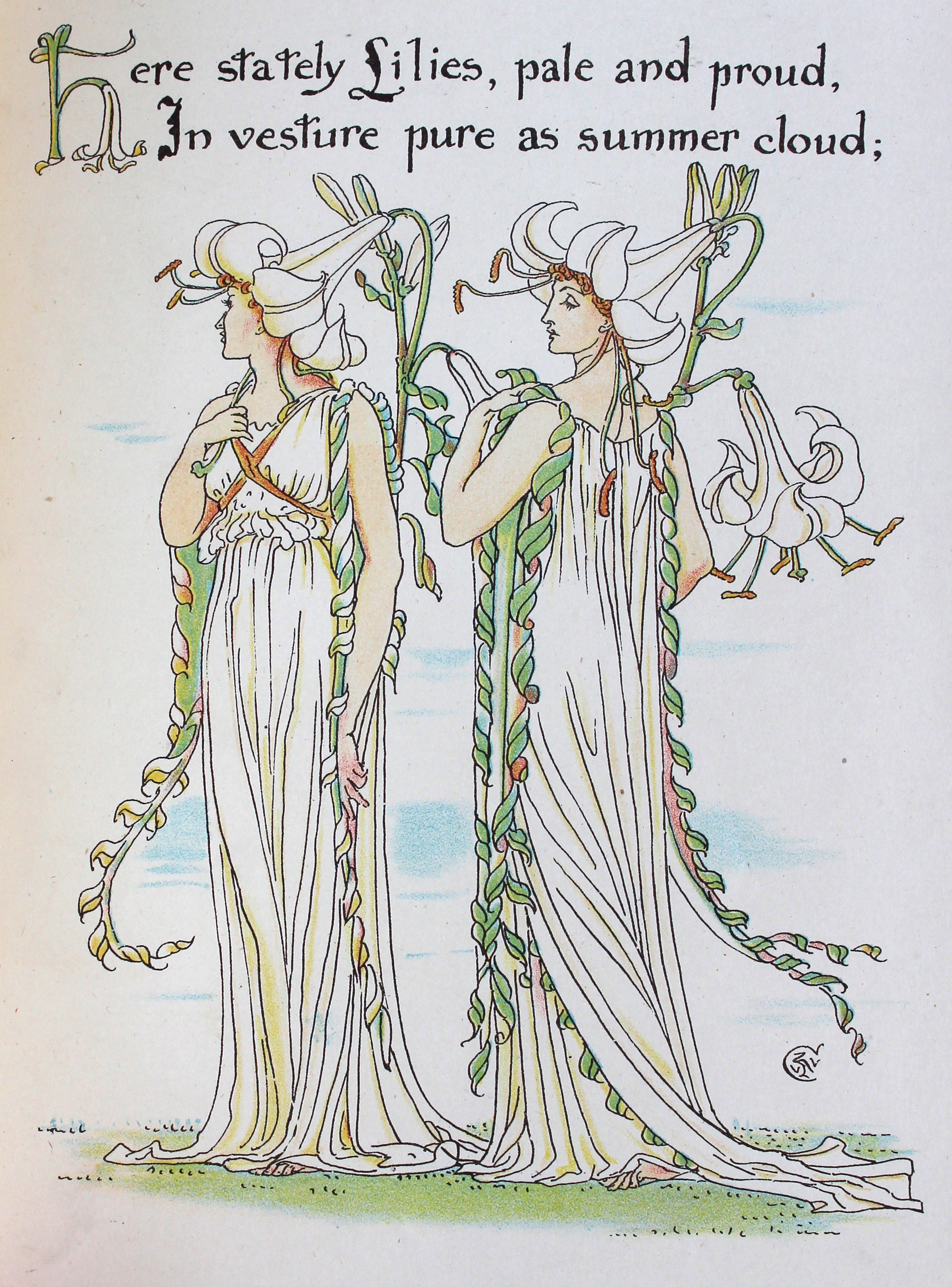
Two women in white with flowered headdresses, representing lilies

Illustration on page 25 of Flora’s Feast 
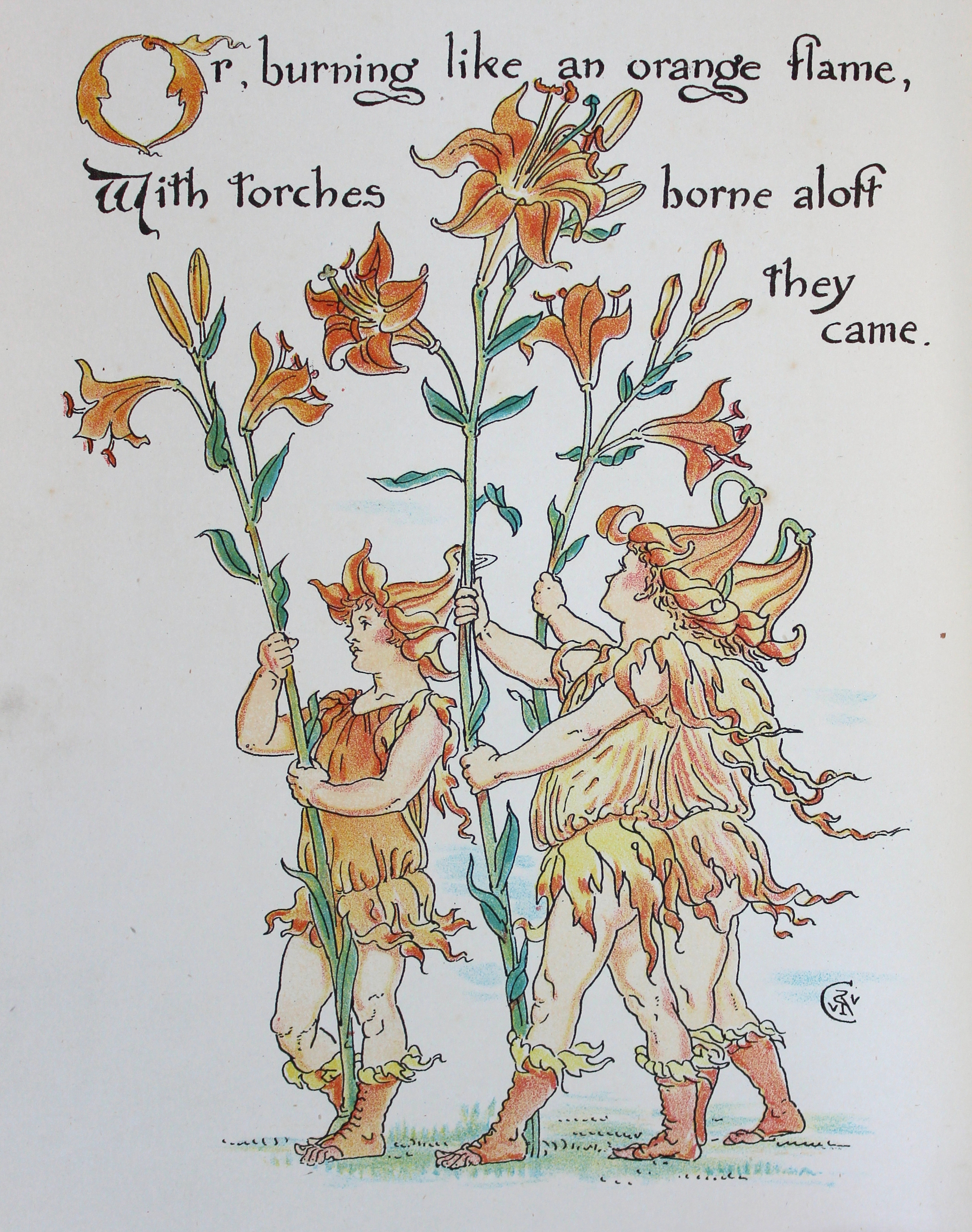
Organge flowers held aloft by small boys dressed in orange

Illustration on page 26 of Flora’s Feast 
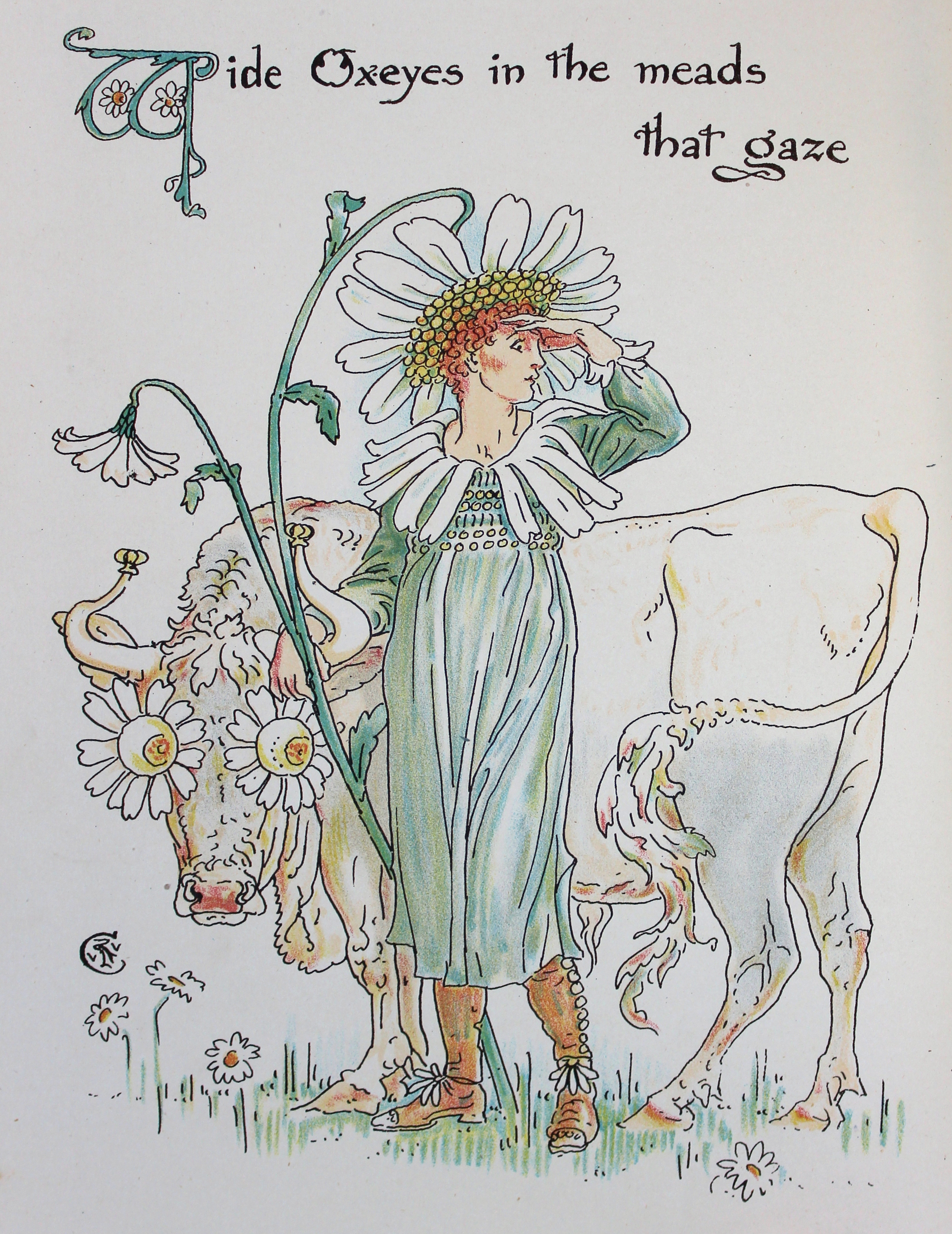
A boy dressed as a daisy, in front of an ox with flowers for eyes

Illustration on page 28 of Flora’s Feast 
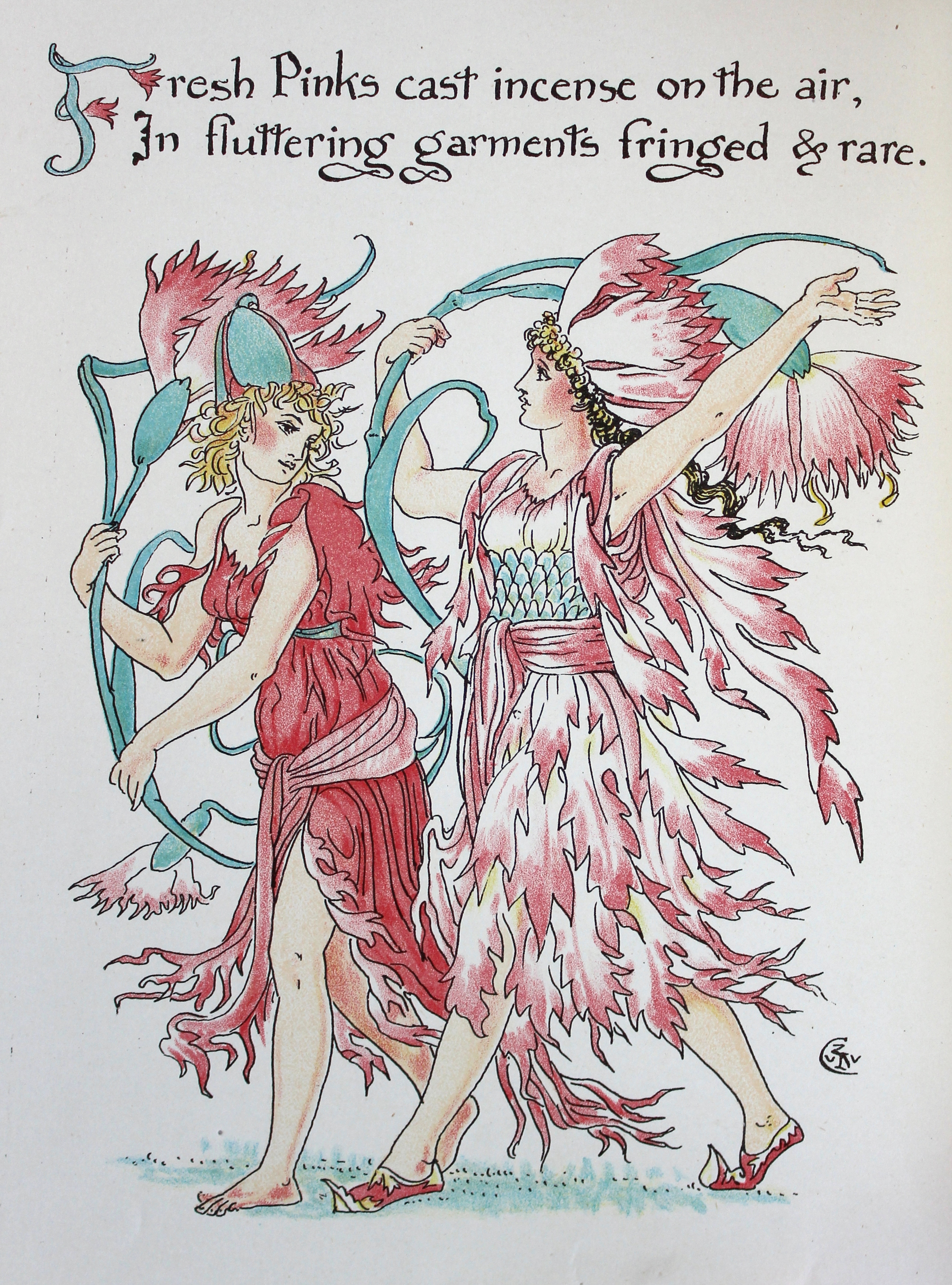
Illustration on page 32 of Flora’s Feast 

The Boy’s Summer Book describes the activities and escapades of a group of schoolboys during their summer holidays. Girls, presumably, were expected to confine themselves to more domestic pursuits. The illustrations below show the boys participating in cricket matches and boating excursions, helping with the harvest and washing sheep in the river.
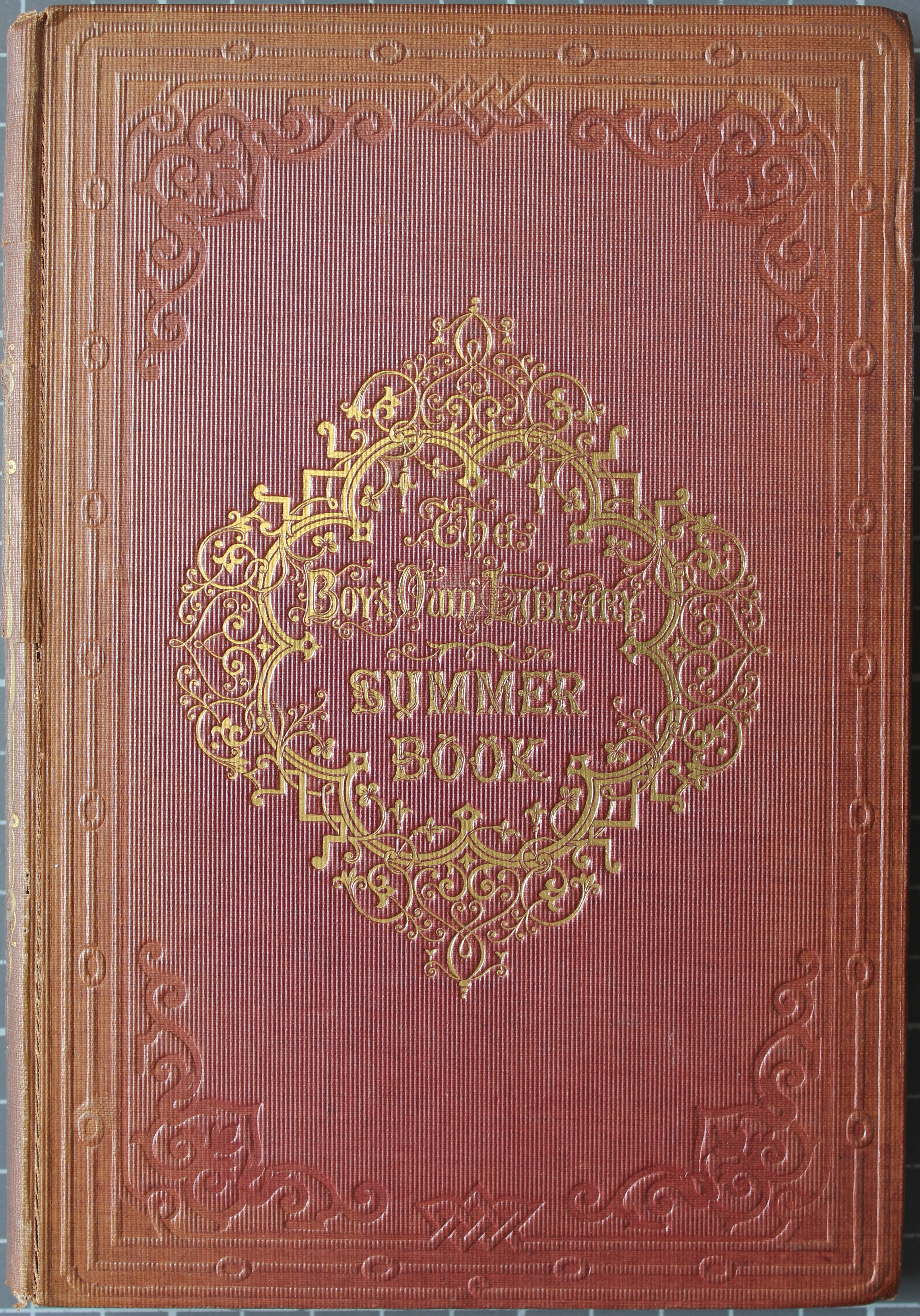
Brown cloth cover with title and decoration in gold

Cover of The Boy’s Summer Book: Descriptive of the Season, Scenery, Rural Life and Country Amusements by Thomas Miller, London: Chapman and Hall, 1846. Shelfmark: Rylands.C.MIL.Sum.1846
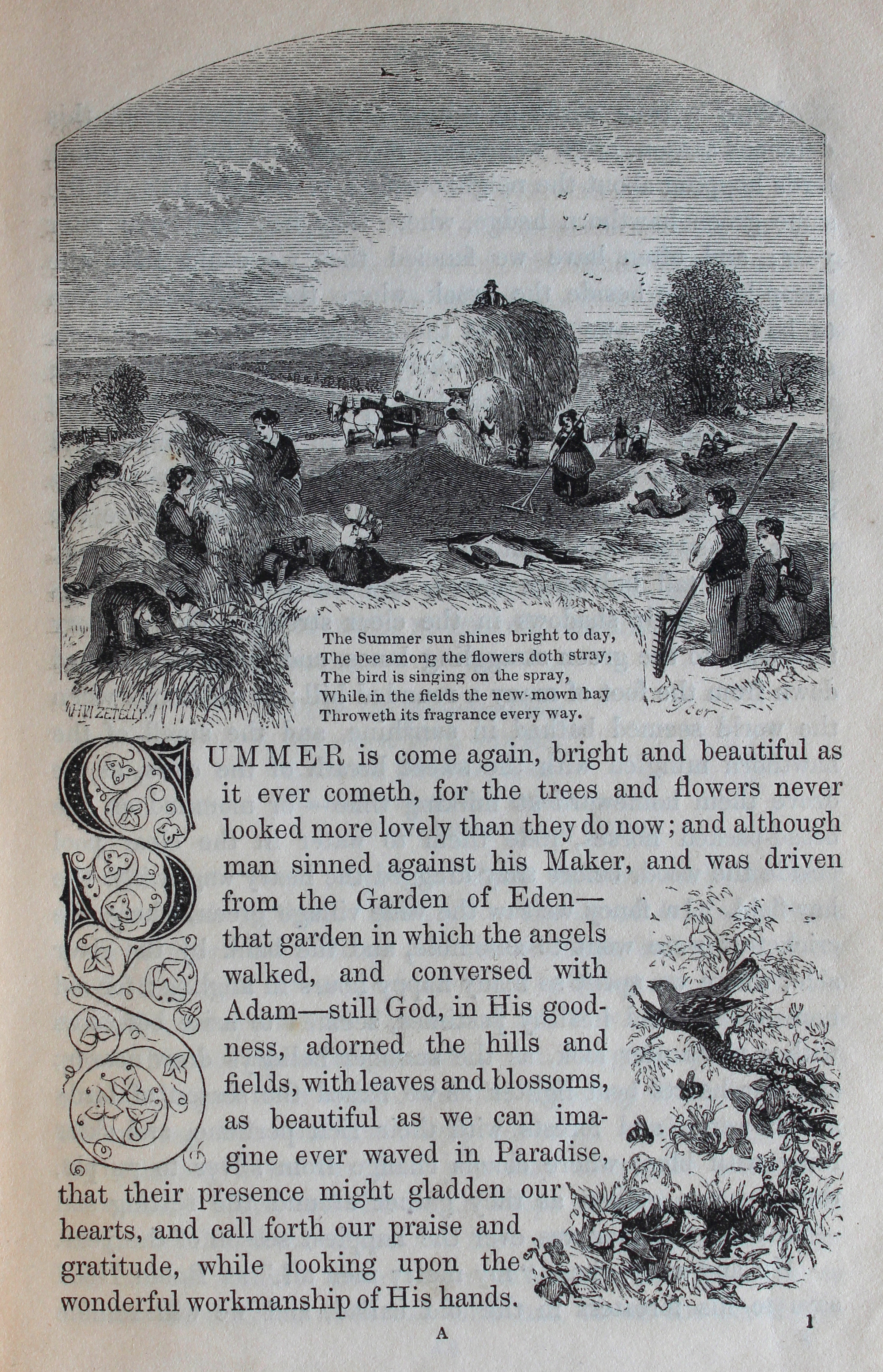
Page 1 of The Boy’s Summer Book 
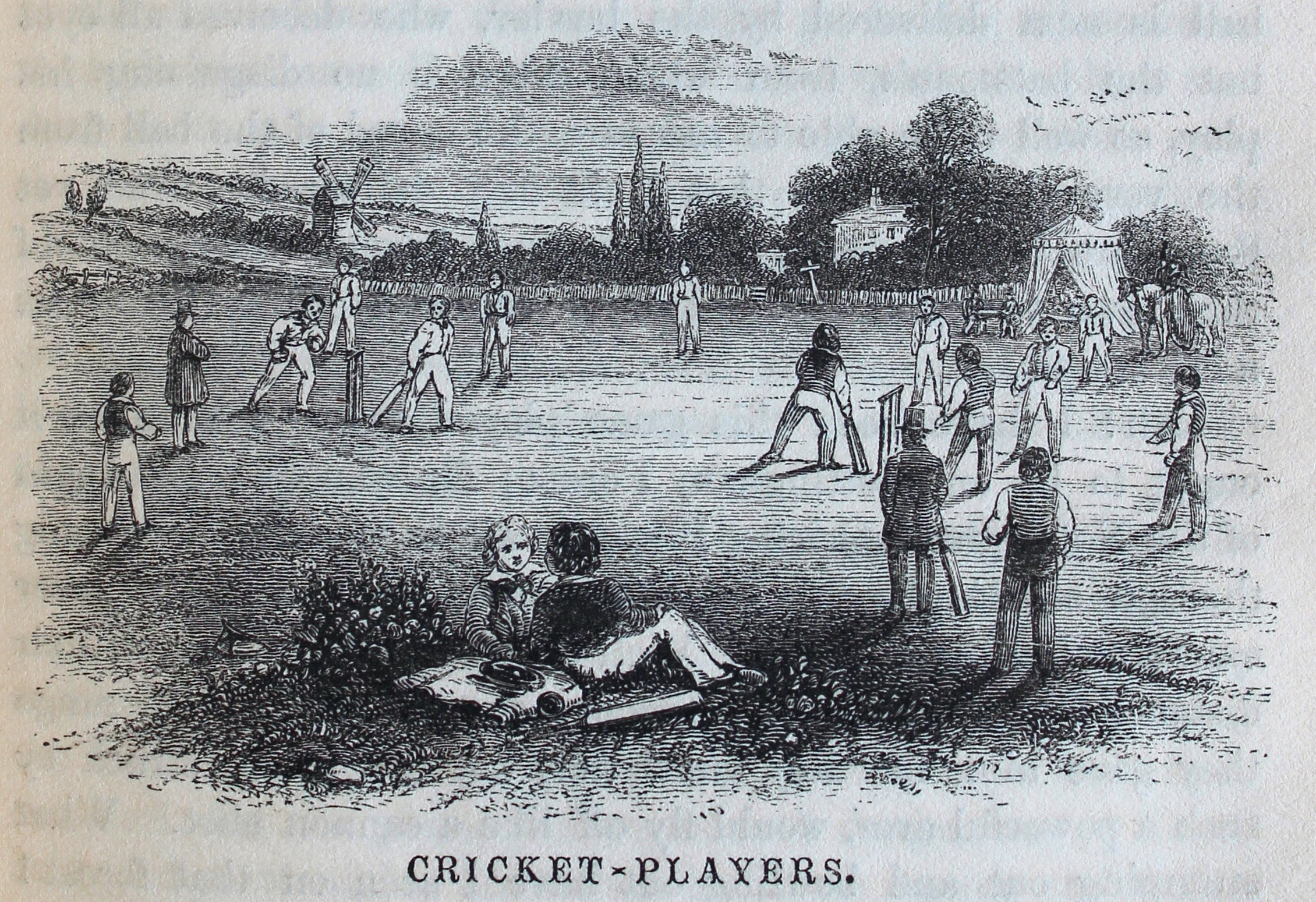
Black and white illustration of a cricket match on a village green

Illustration from page 83 of The Boy’s Summer Book 
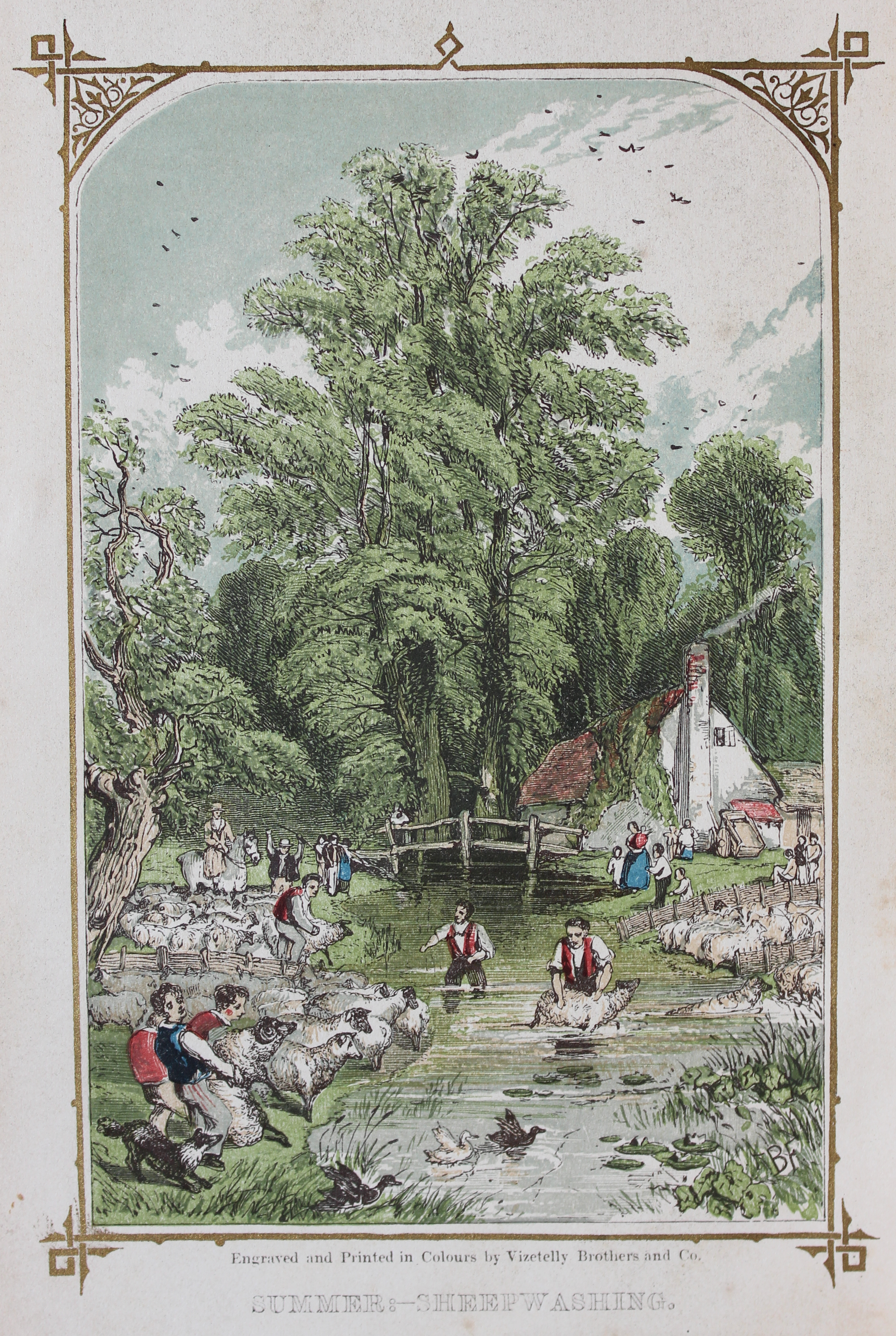
Colour illustration of sheep washing in a stream

Frontispiece of The Boy’s Summer Book 
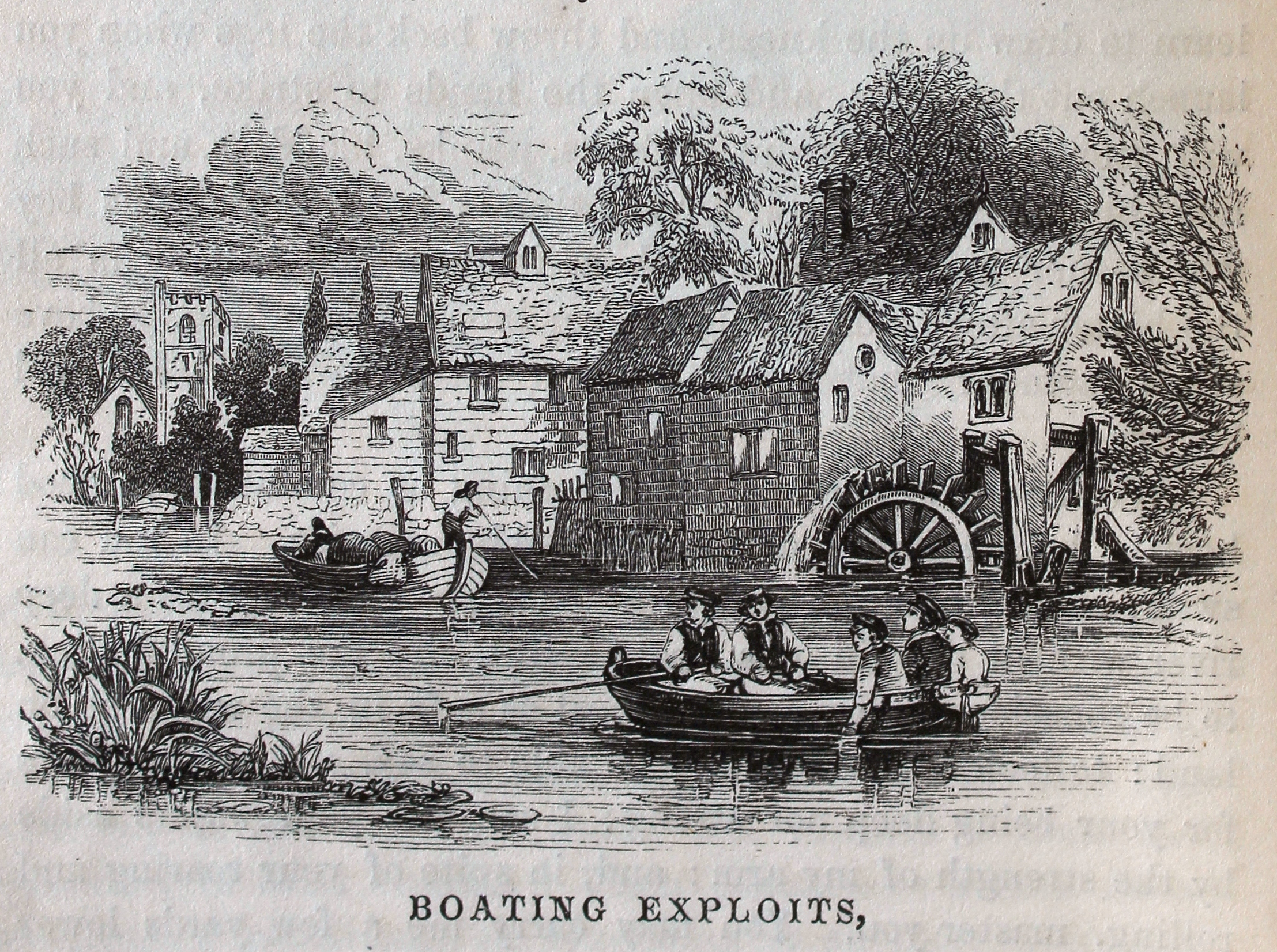
Black and white illustration of boys boating on a river in front of a water mill

Illustration from page 14 of The Boy’s Summer Book 

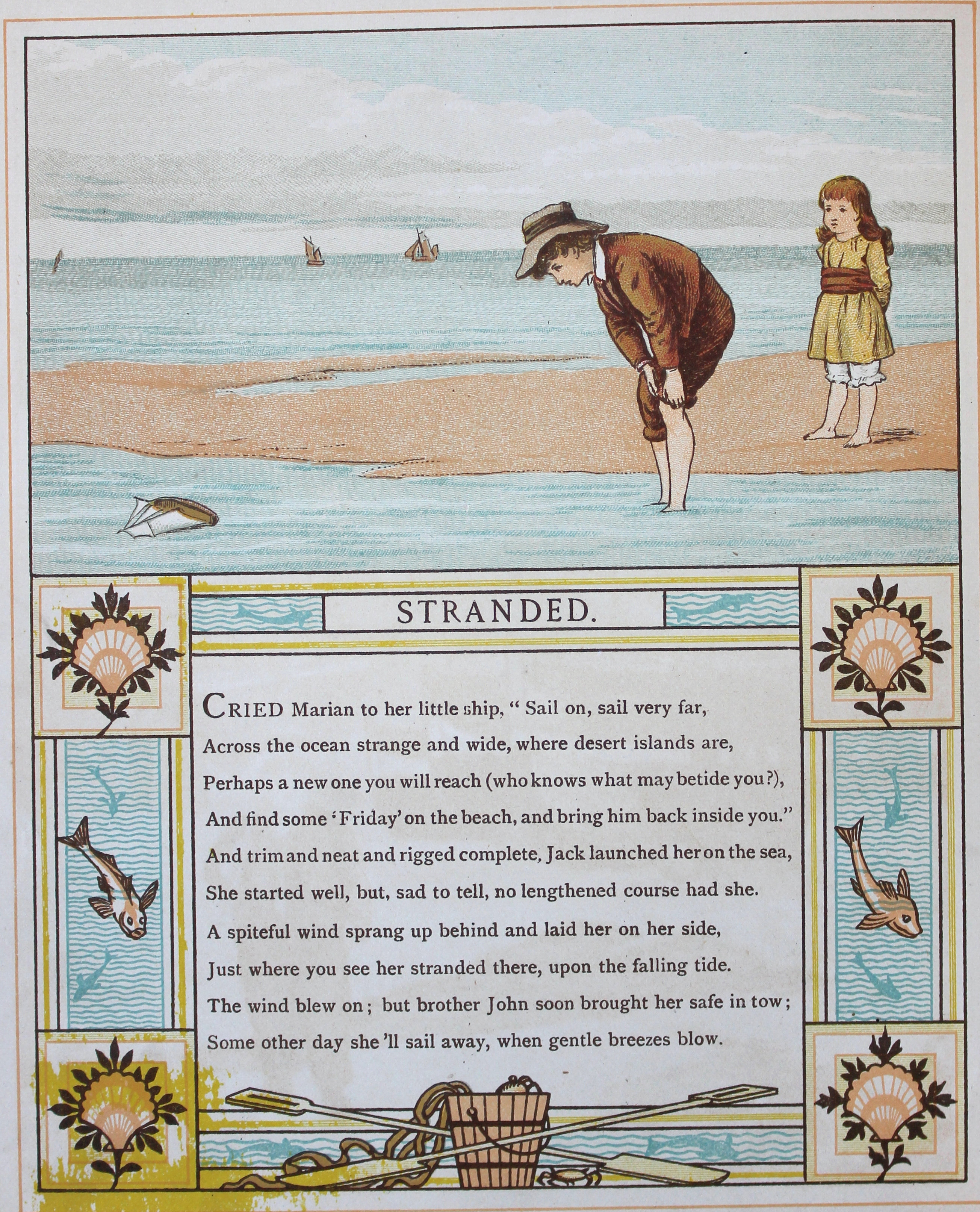
Trips to the coast are another traditional summer activity, holding out the promise of  fresh sea air and fun on the beach. The book At Home includes two quite wistful seaside-themed poems which are accompanied by delicate and evocative illustrations by the artist John George Sowerby (1849-1914).
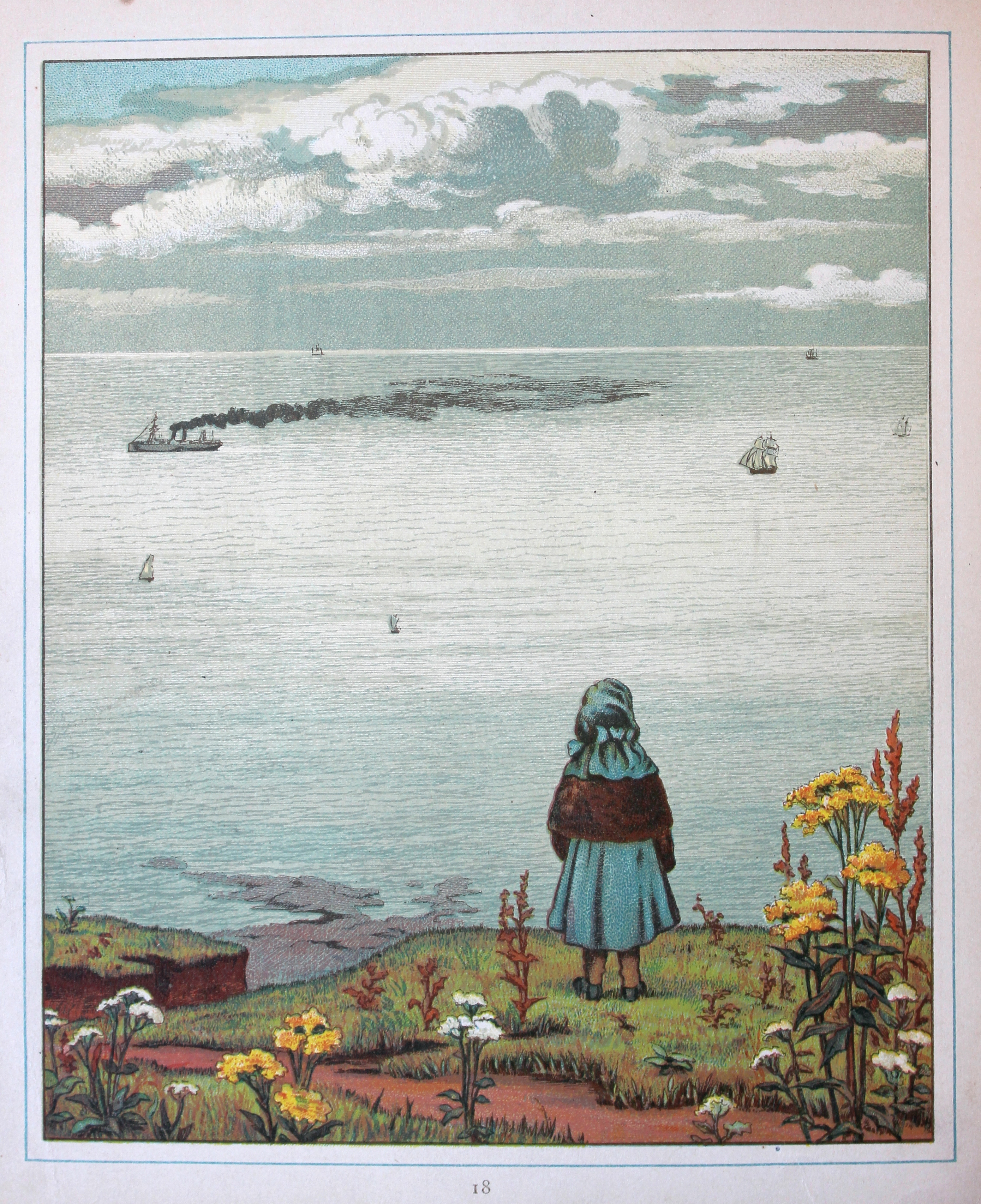
A small girl on a cliff gazing out to sea

Illustration from page 18 of At Home illustrated by J.G. Sowerby, decorated by Thomas Crane, London: Marcus Ward and Co, 1881. Shelfmark: Rylands.C.SOW.Ath.1881
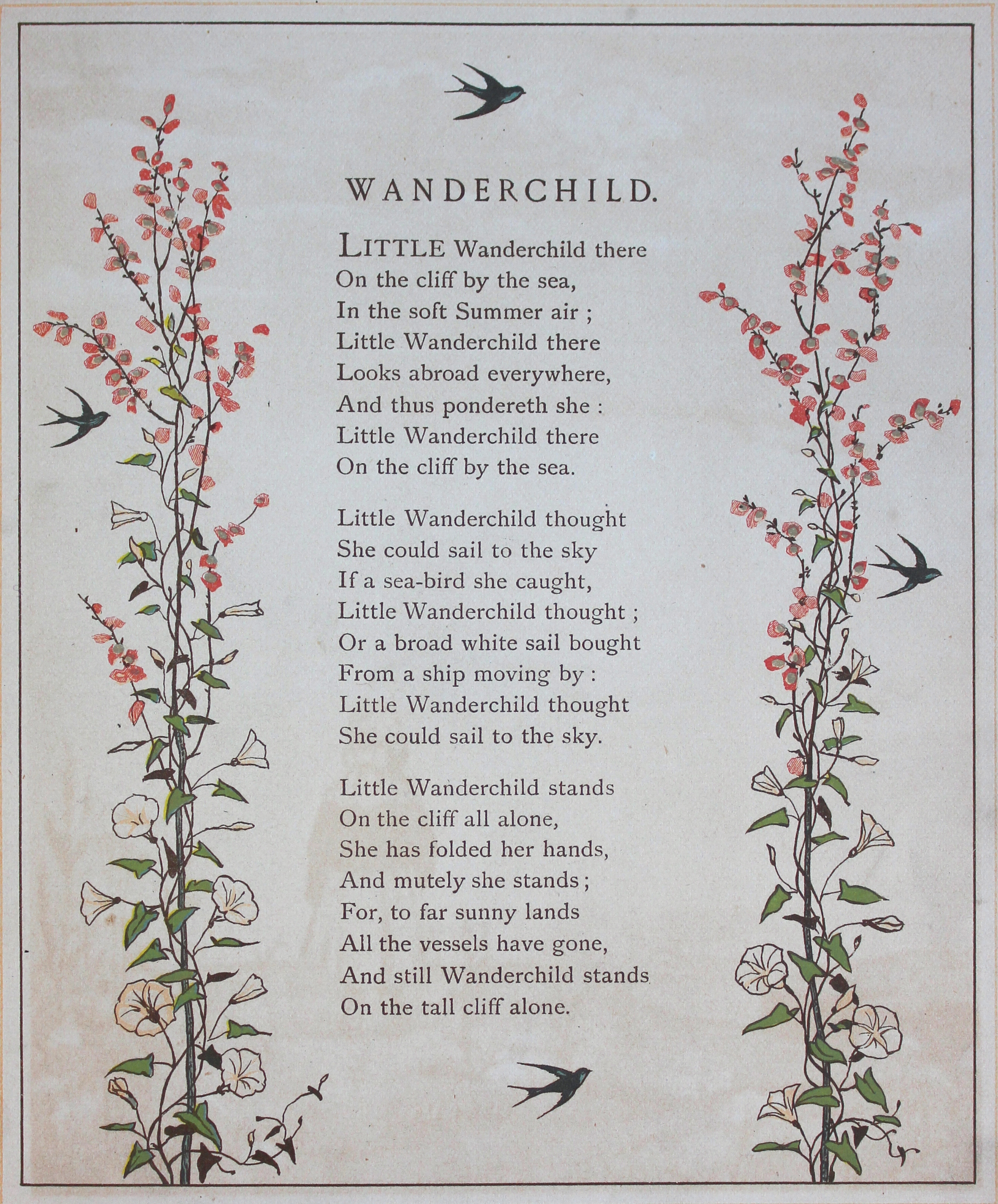
Poem with pink flower illustrations

Poem from page 19 of At Home

A poem illustrated with a little girl watching her brother retrieving a sailboat from the sea

Poem from page 26 of At Home

Robert Louis Stevenson included a short seaside poem in his collection entitled A Child’s Garden of Verses, which is illustrated by Charles Robinson (1870-1937). The style is quite different to Sowerby’s above, but equally attractive. This was the first entire book Robinson illustrated and its huge popularity significantly boosted his career.
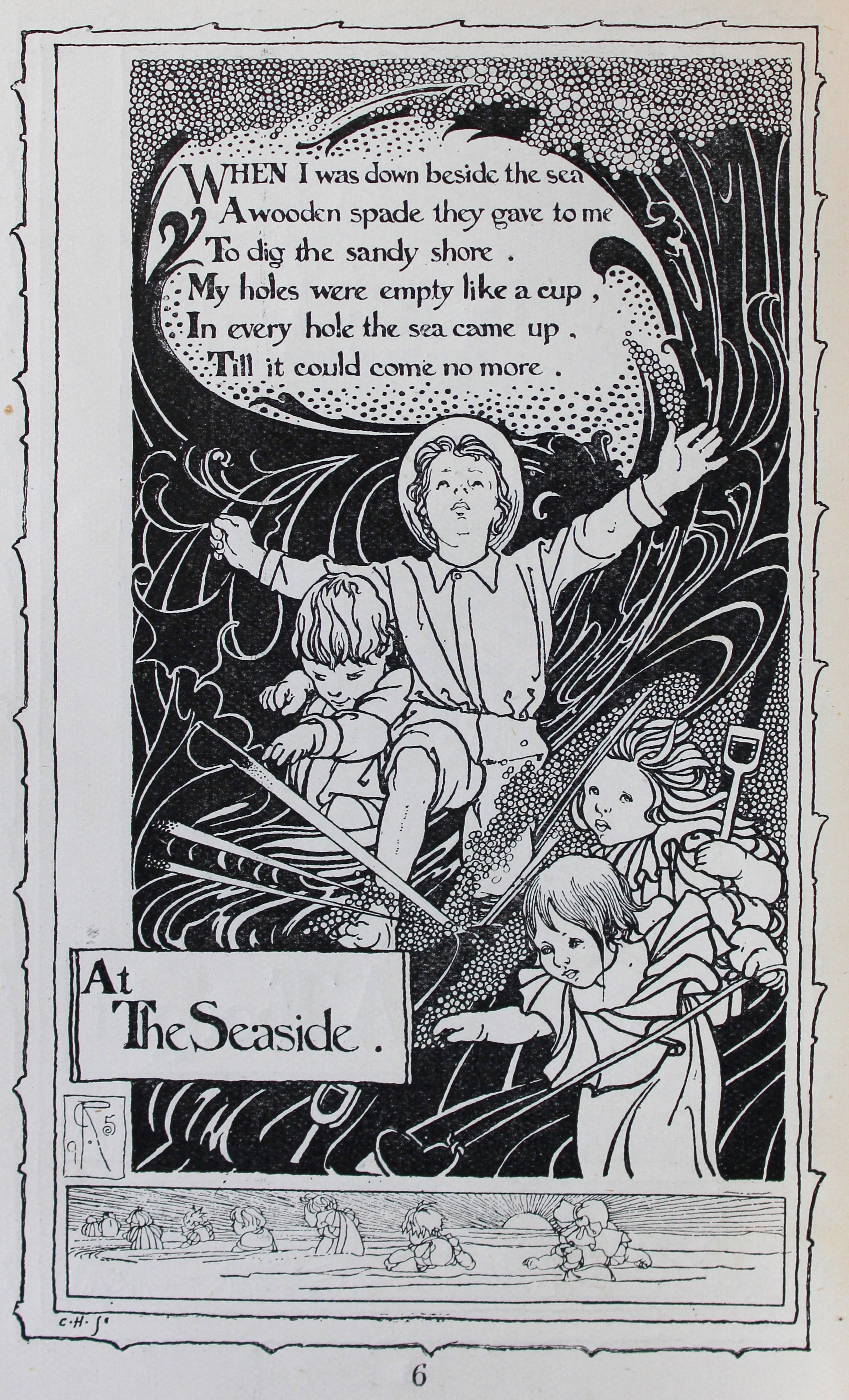
A poem with black and white illustration of children playing at the seaside

Poem from page 6 of A Child’s Garden of Verses by Robert Louis Stevenson, London: John Lane, The Bodley Head, 1896. Shelfmark: Rylands.C.STE.Chi.1896

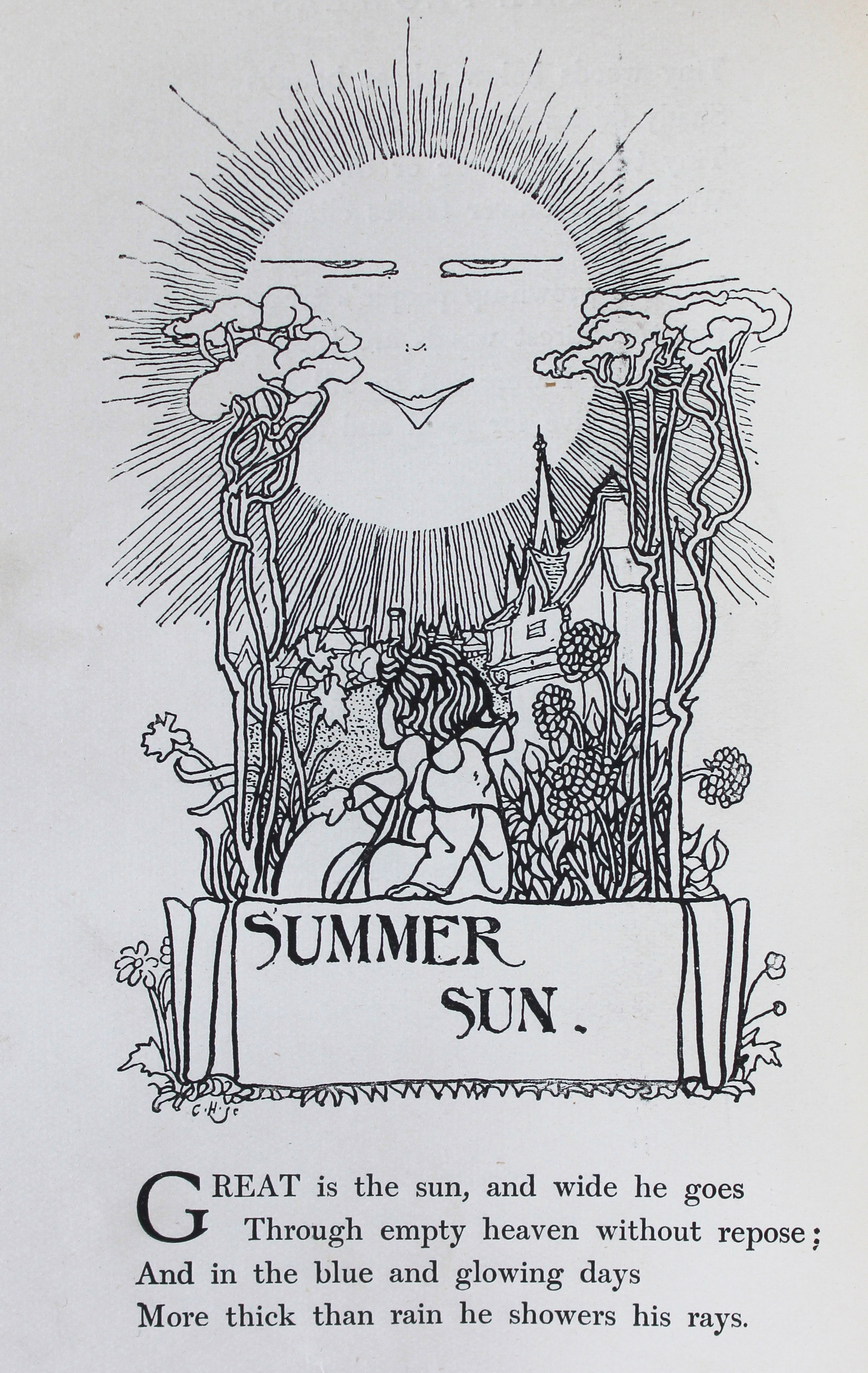
In the poem “Bed in Summer” a child bemoans the fact that they must go to bed whilst it is still light outside and adults are still going about their day, a perennial complaint. Another poem forms an ode to the sun during this season.
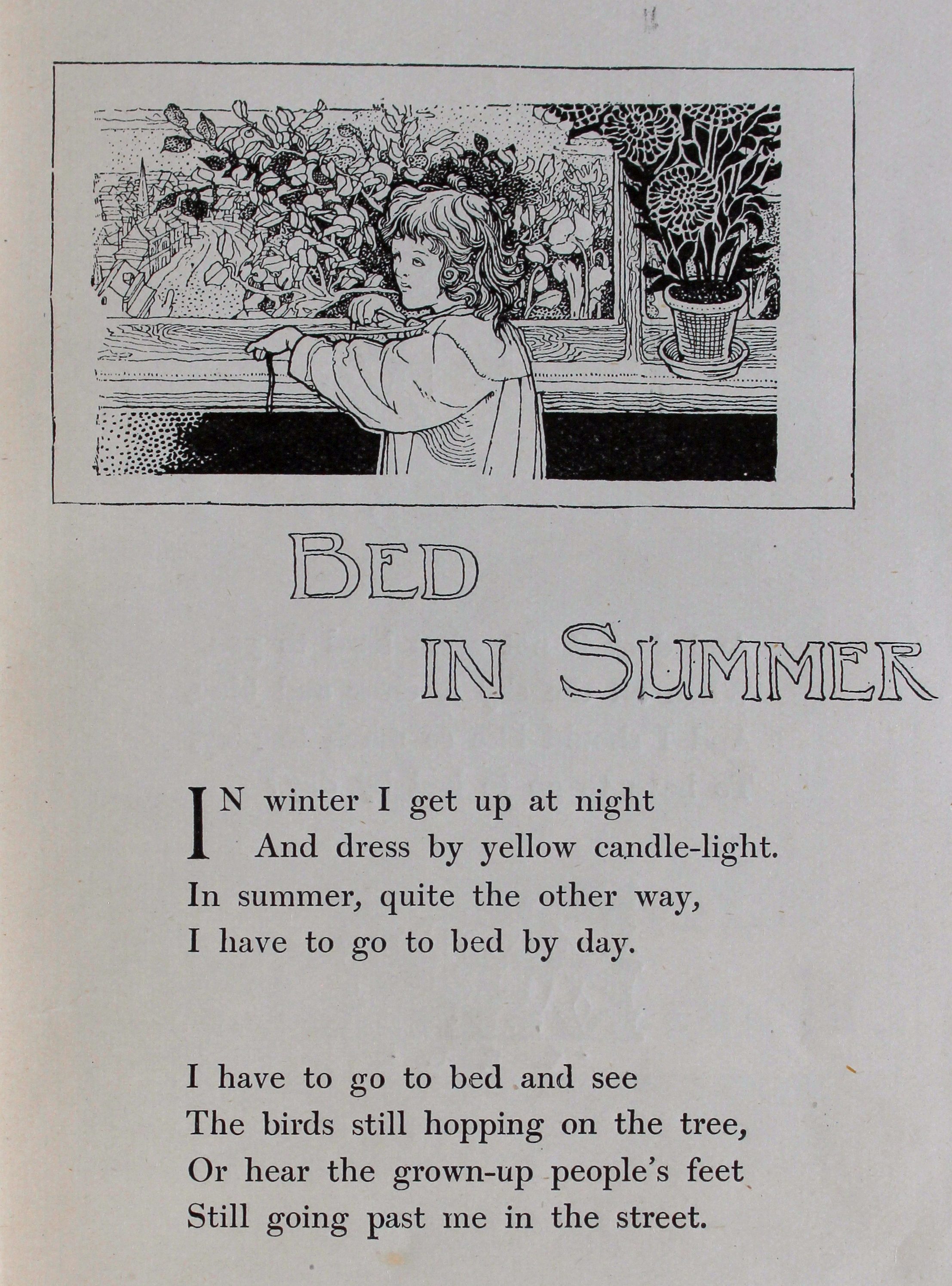
Poem illustrated with a small girl dressed for bed

Poem from page 3 of A Child’s Garden of Verses
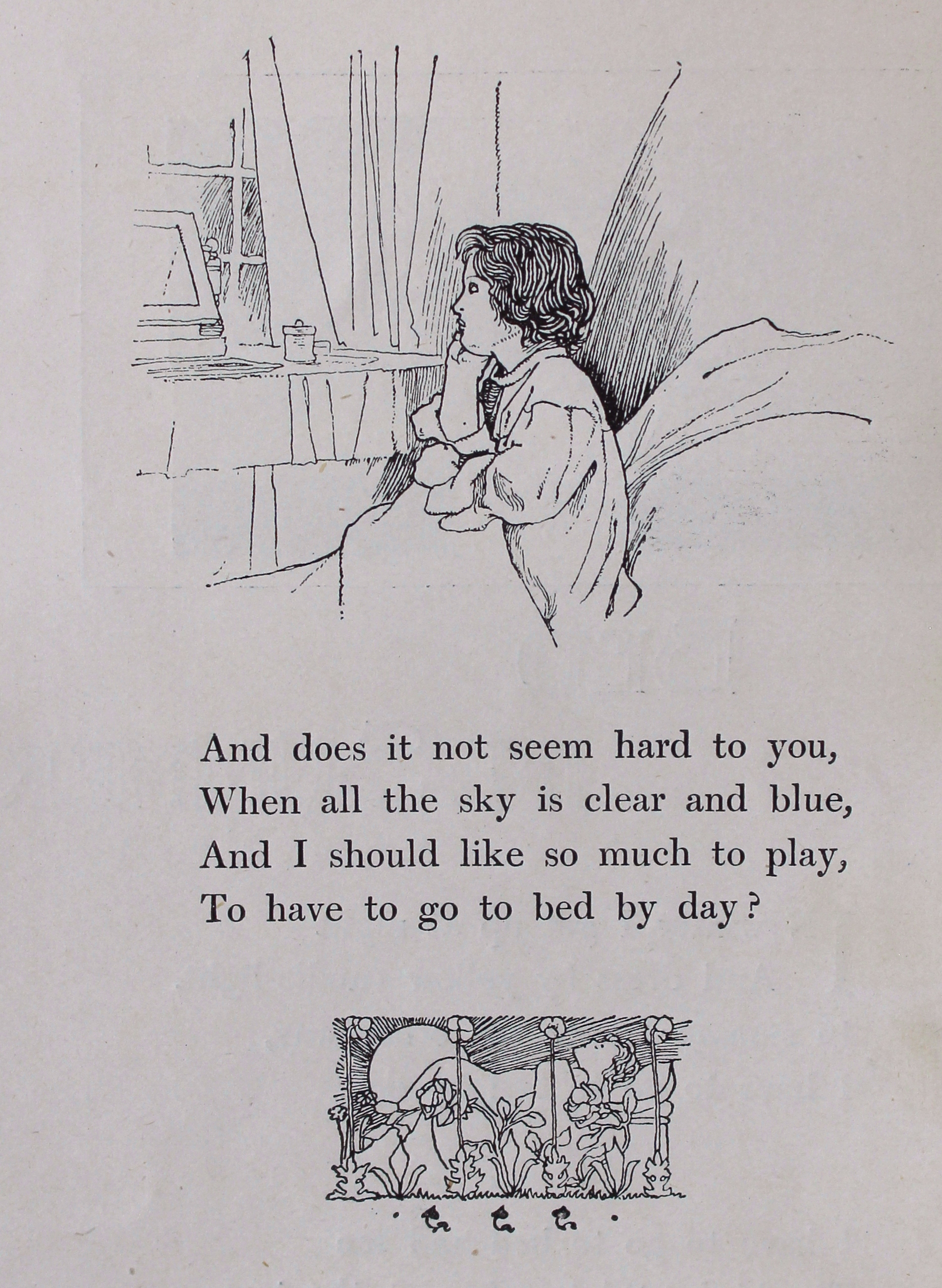
A small girl in bed peering out of the window

Page 4 of A Child’s Garden of Verses

Poem illustrated with a small girl in a garden and a large sun in the sky

Poem from page 112 of A Child’s Garden of Verses
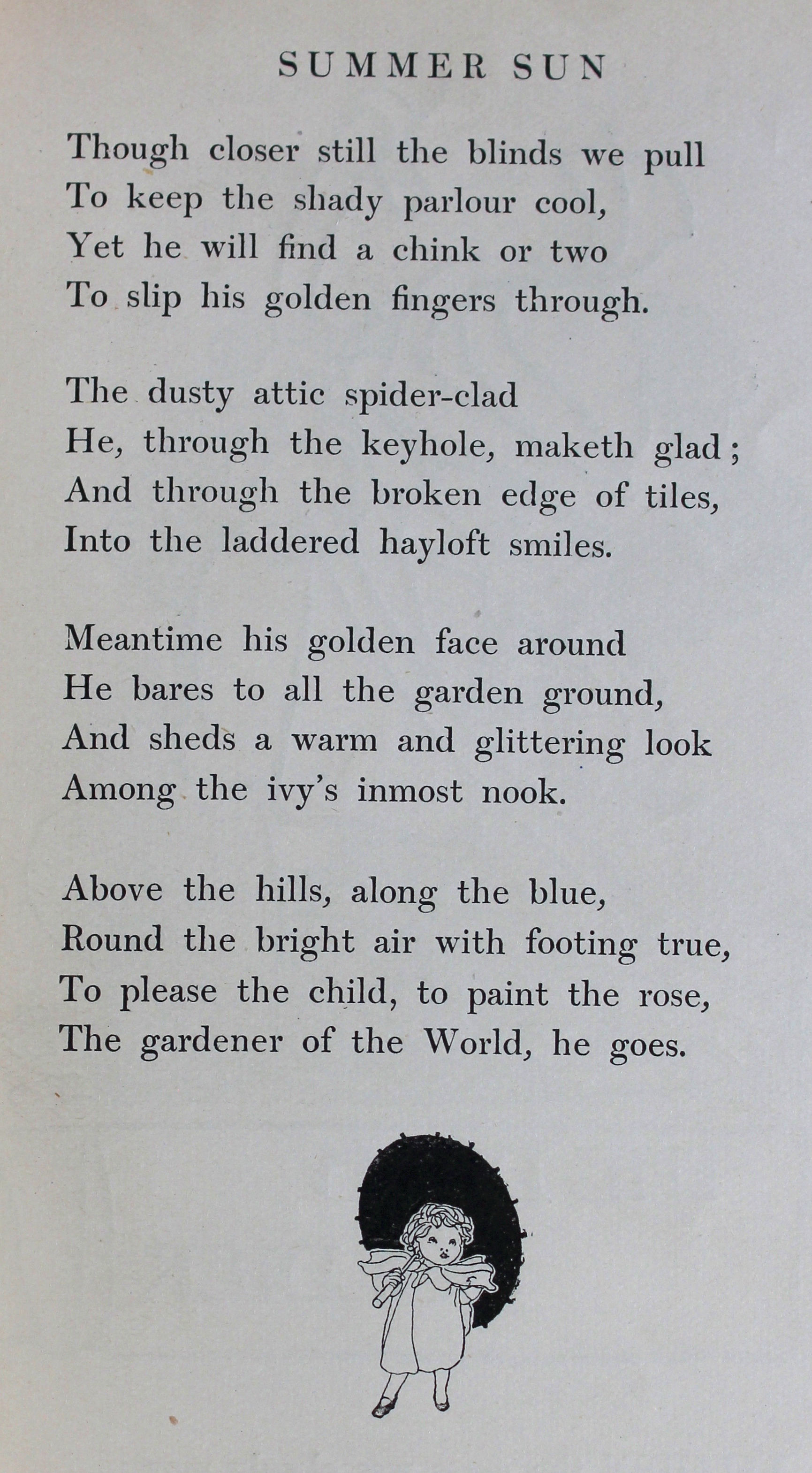
poem with illustration of a small girl

Page 113 of A Child’s Garden of Verses

Charles Robinson came from a very artistic family. His brother, William Heath Robinson (1872-1944), became famous for his illustrations of weird and wonderful contraptions intended to automate everyday tasks in convoluted ways. More relevant to our theme, Heath Robinson also illustrated a 1914 edition of Shakespeare’s  A Midsummer Night’s Dream. A selection of these gorgeous illustrations brings this post to a conclusion. We hope you have enjoyed this saunter through summers long ago.
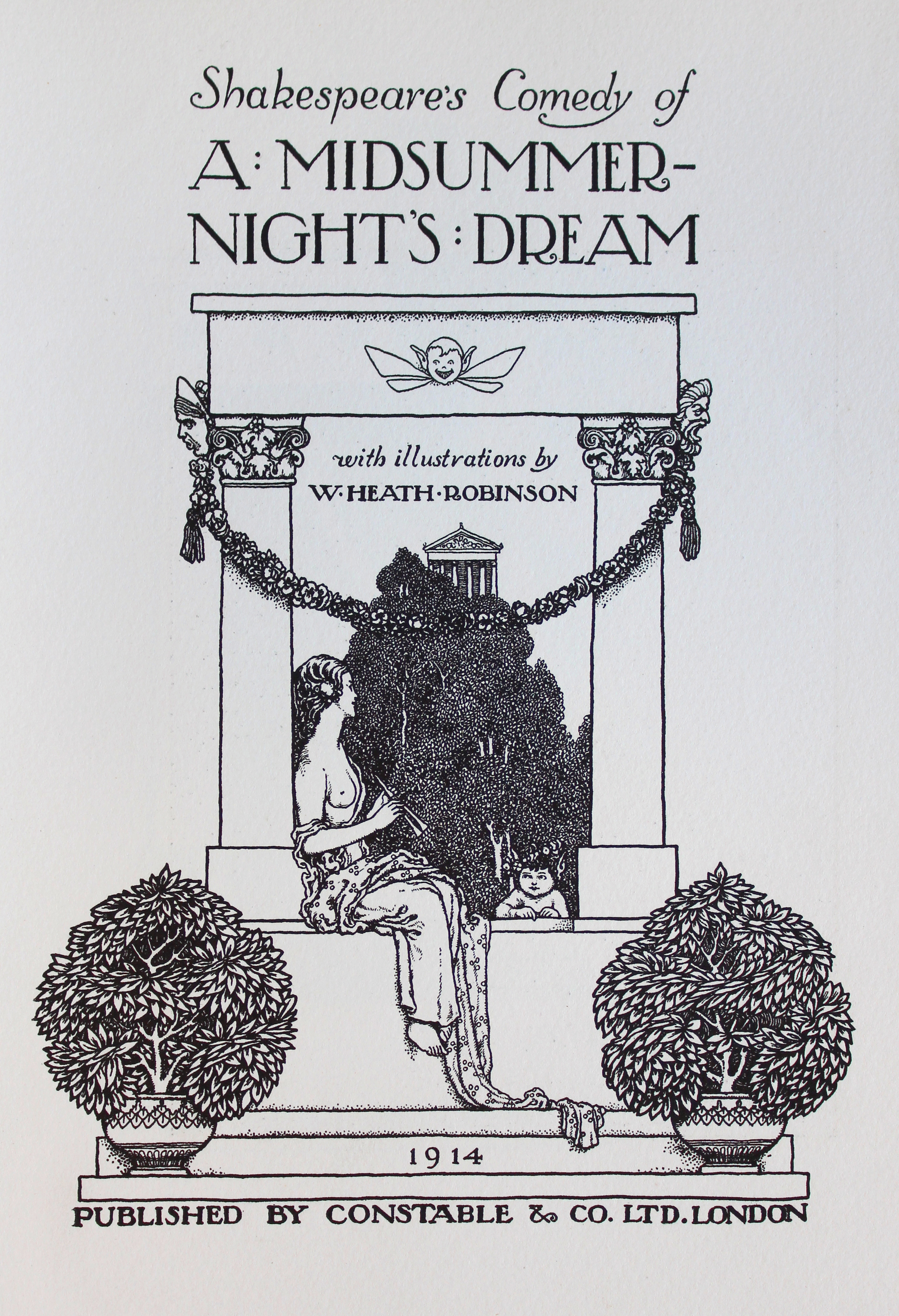
Title page with an illustration of a woman and small child sitting between pillars

Title page of Shakespeare’s Comedy of A Midsummer Night’s Dream with illustrations by W. Heath Robinson, London: Constable & Co., 1914. Shelfmark: Walser.SHA.Mid.1914
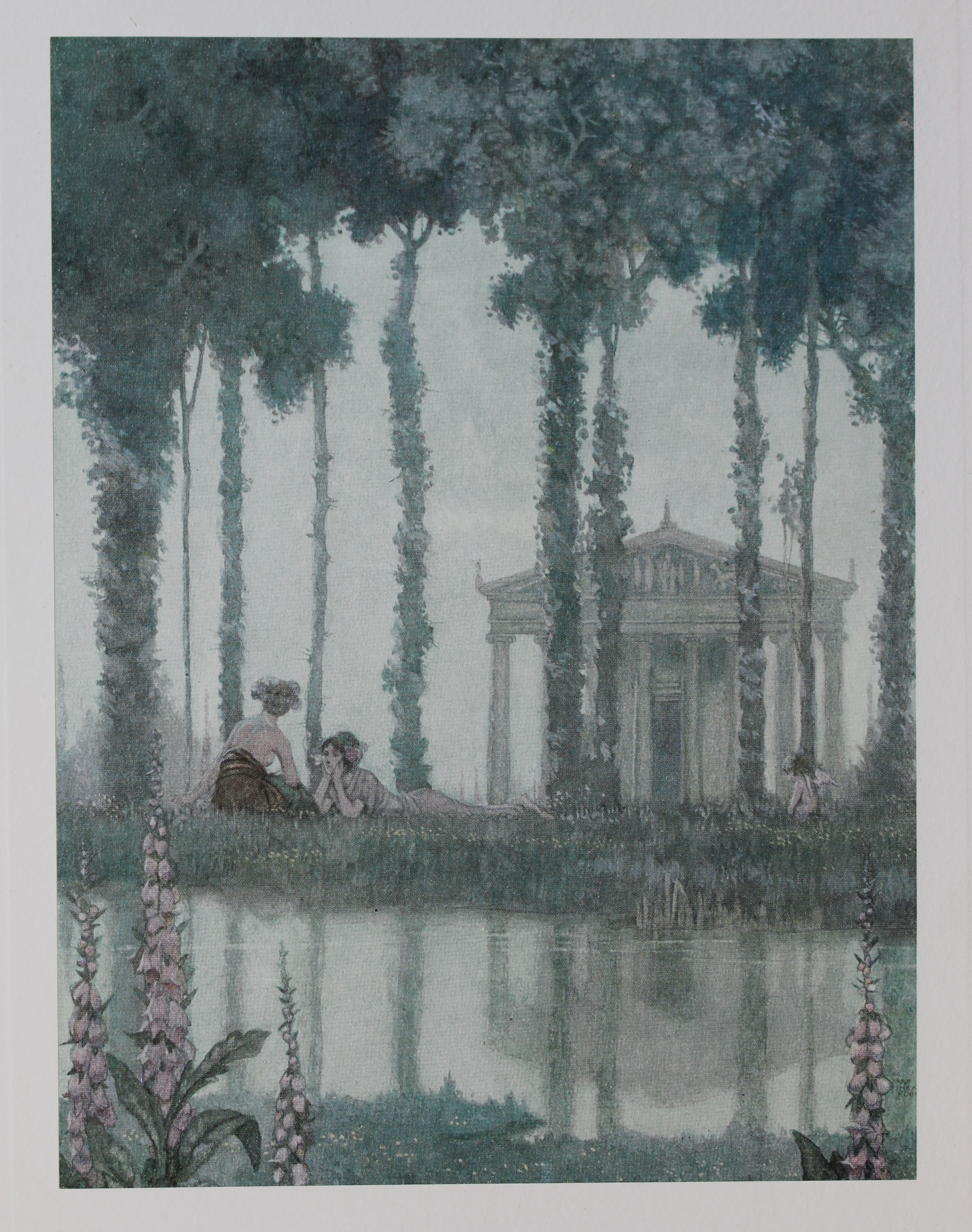
Colour illustration of a temple by a lake with two women amongst trees

Plate facing page 64 of Shakespeare’s Comedy of A Midsummer Night’s Dream
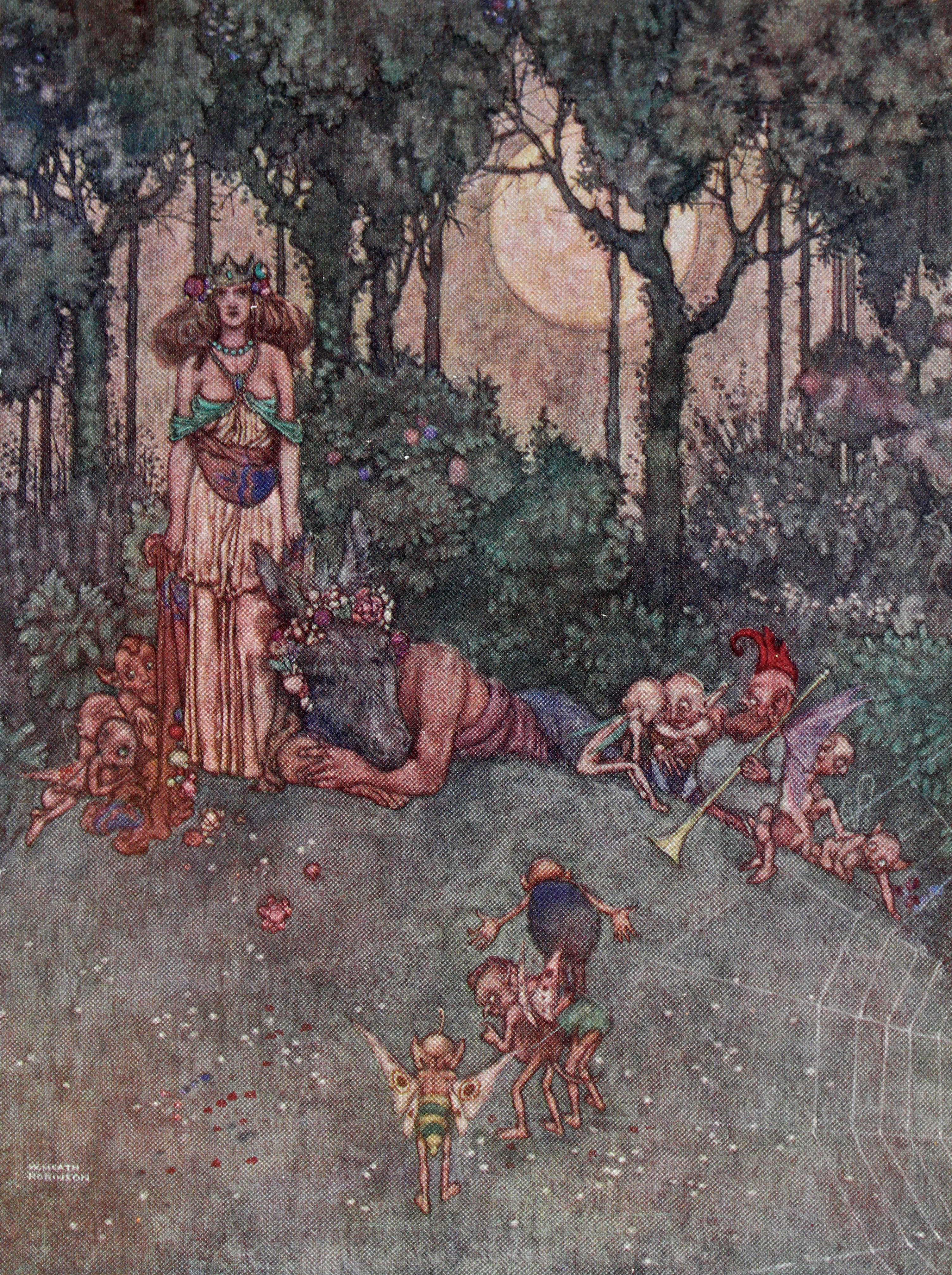
fairies and sprites on a mound in the woods, plus Bottom with the head of a Donkey and Titania (?)

Plate facing page 176 of Shakespeare’s Comedy of A Midsummer Night’s Dream
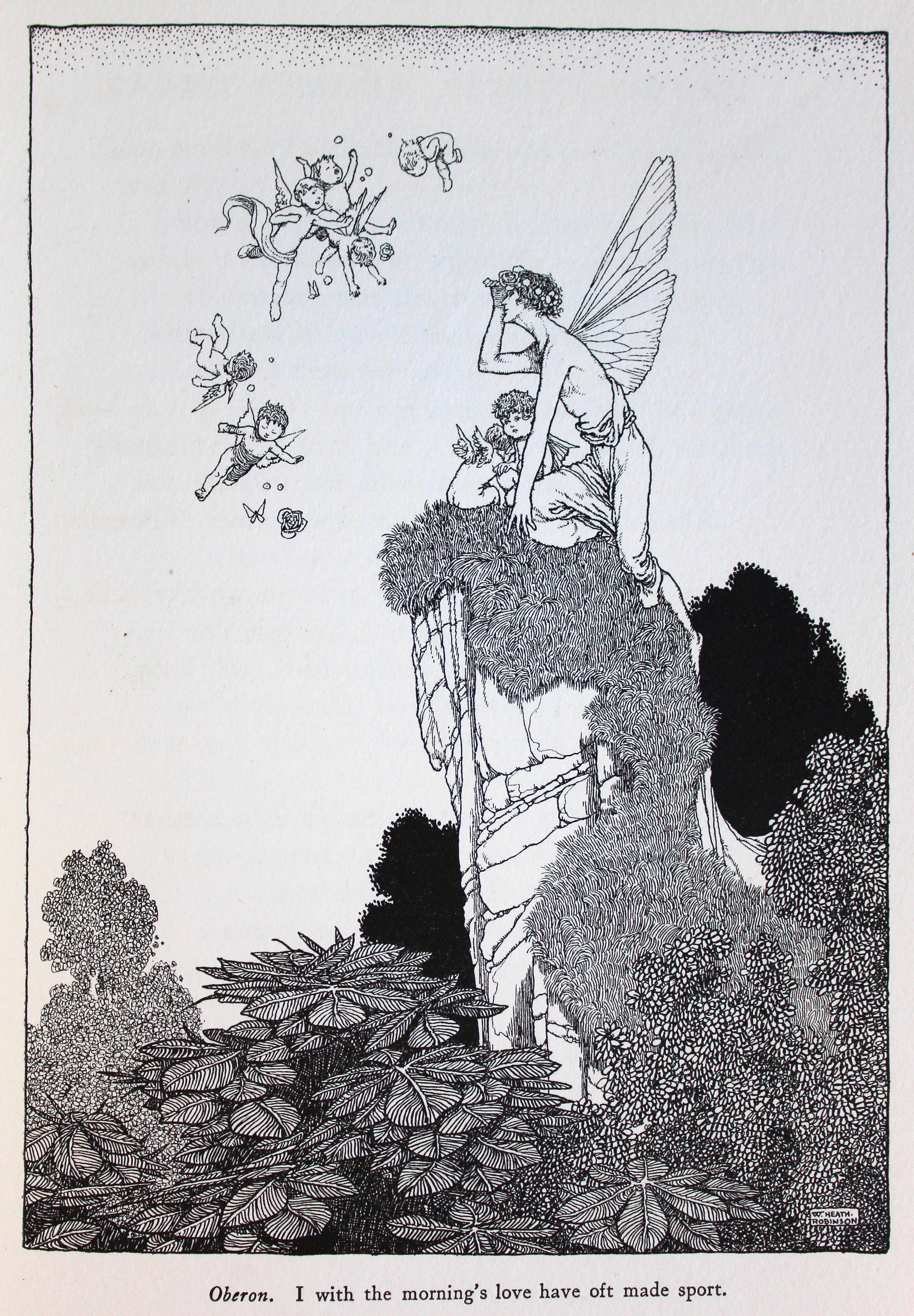
Oberon on a rocky outcrop with sprites

Page 135 of Shakespeare’s Comedy of A Midsummer Night’s Dream
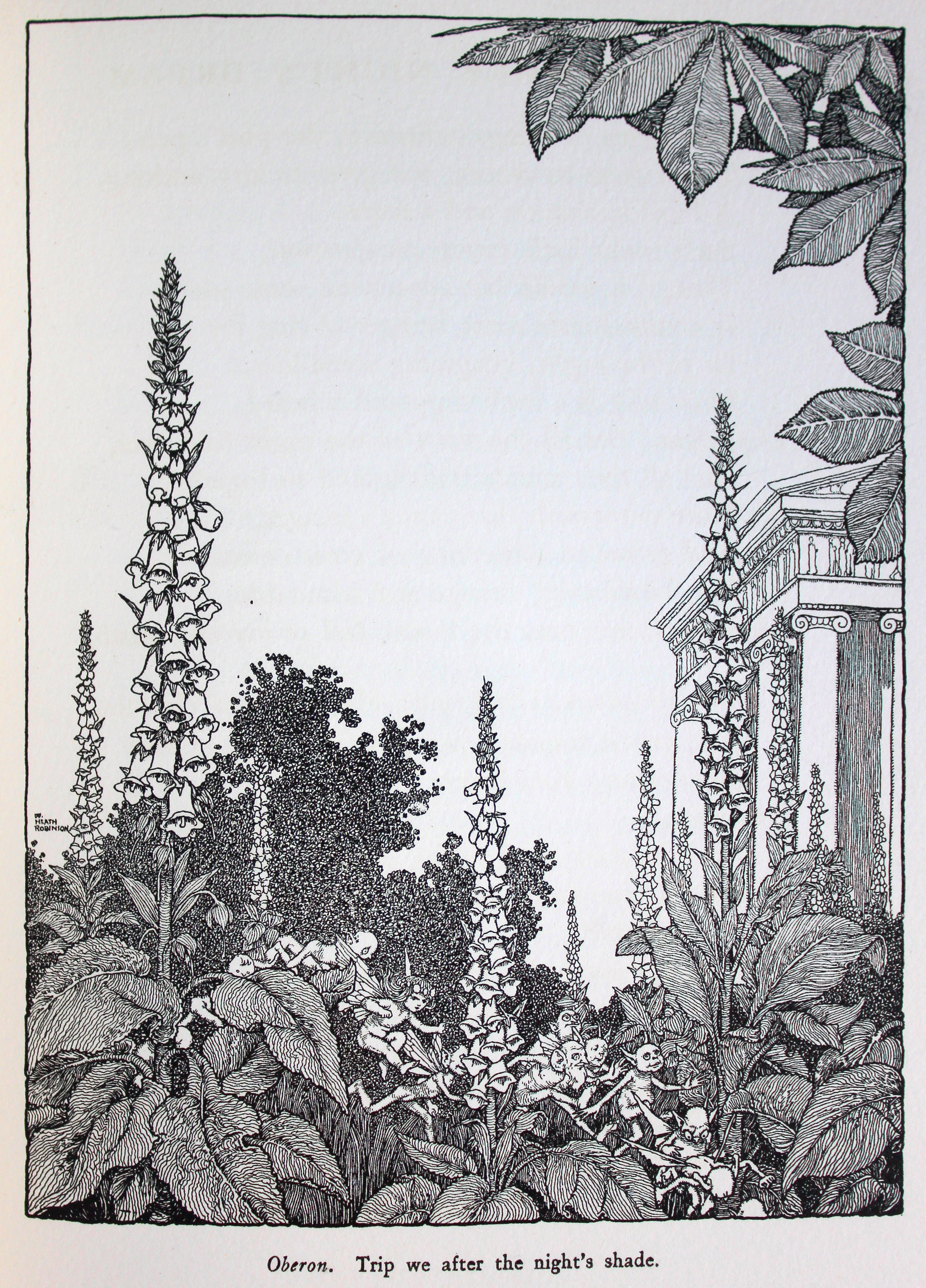
Foliage and a temple

Page 155 of Shakespeare’s Comedy of A Midsummer Night’s Dream


AC

References and further reading:

Isobel Spencer, Walter Crane, London: Studio Vista, 1975

M.H. Spielman and G.S. Layard, The Life and Work of Kate Greenaway,  London: Bracken Books, 1986
Horticultural delights

The library holds a fascinating collection of books on horticulture given to us by Kingsman Richard Gorer (1913-1994), who was a scholar here in the 1930s. In later years Gorer himself wrote a considerable number of gardening books, and became a fellow of the Royal Horticultural Society.

The collection spans the 17th to the 20th centuries and includes some wonderful works, with equally glorious illustrations.

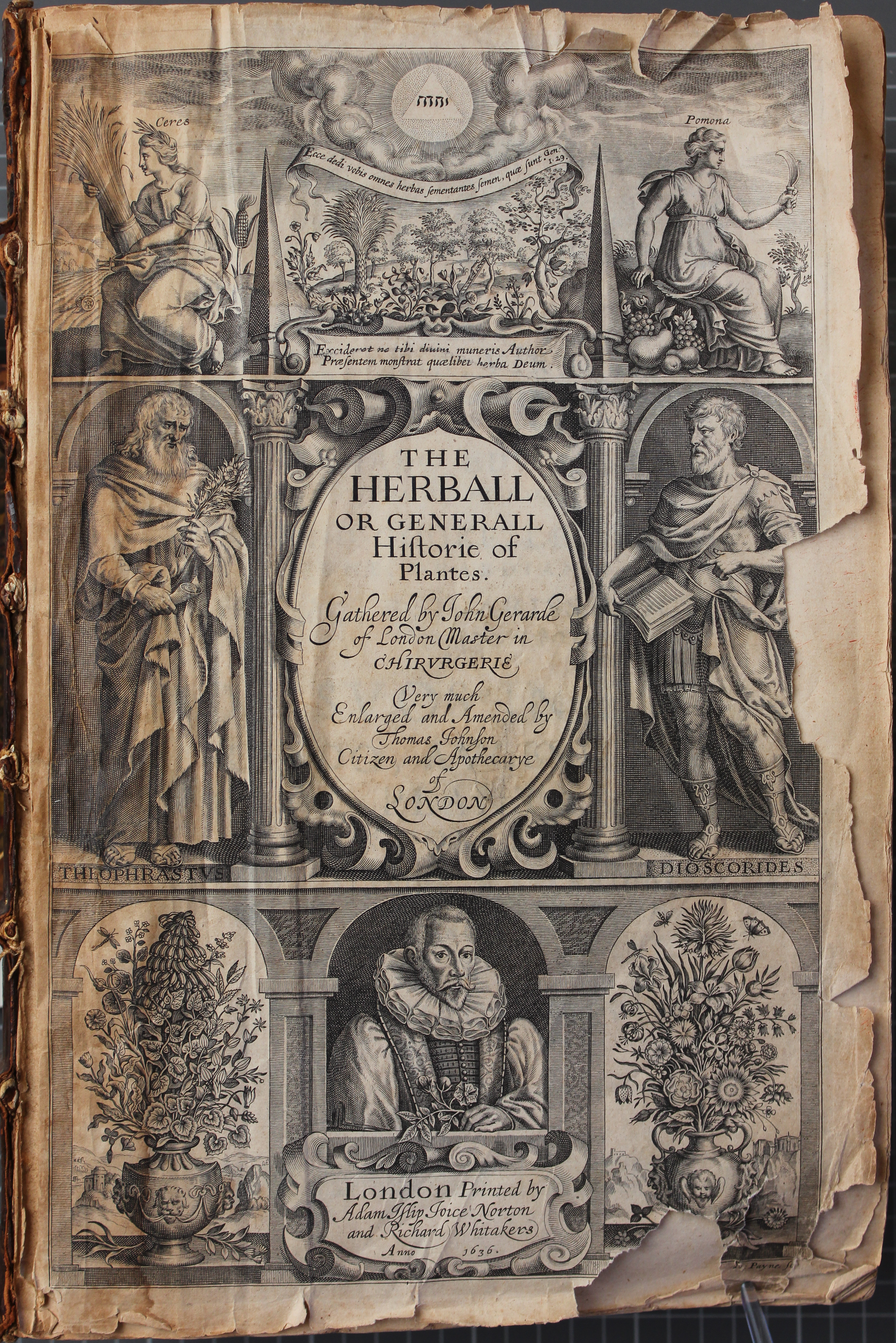
The oldest volume in the collection is The Herball or Generall Historie of Plantes. Prominent sixteenth-century English herbalist, John Gerard (c.1545-1612) published the first edition of this work in 1597. It was based almost entirely on the work of a Flemish botanist Rembert Doedens (1517-1585) with fanciful additions by Gerard. The work was then overhauled and expanded by Thomas Johnson (c.1595-1644), to produce a second edition in 1633, in which many of Gerard’s inaccuracies and fabrications were removed or corrected. The lavishly engraved title page of this second edition is pictured below, in a reprint dating from 1636. Gerard is shown in the bottom centre panel, holding a potato flower, the first image of this plant to appear in a work published in the Western world. Vases of exotic flowers and fruits appear either side of Gerard, and arrayed above him are figures from the ancient world associated with agriculture and plants, including, at the top left, Ceres, the Roman goddess of agriculture.

Engraved titlepage with mythical figures and plants

Title page of The Herball or Generall Historie of Plantes by John Gerard and Thomas Johnson, London, 1636 (Classmark: Gorer.50)

The revised Herball still contains some fanciful notions, including a description of the “Goose tree” which was believed to generate barnacle crustaceans that then developed into live geese! This was a myth of long-standing, featuring in various forms in medieval bestiaries and numerous other works over the centuries. It is thought to have originated, before bird migration was known about, as a way to explain why barnacle geese were never seen nesting, and to have been prompted by some perceived similarities in colour and shape between the barnacle and the geese. Barnacle shells were often seen attached to driftwood, which was mistaken for fallen tree branches.

A goose beside a branch full of barnacles

Illustration of a branch from a Goose Barnacle tree, page 1587 in The Herball (Classmark: Gorer.50)

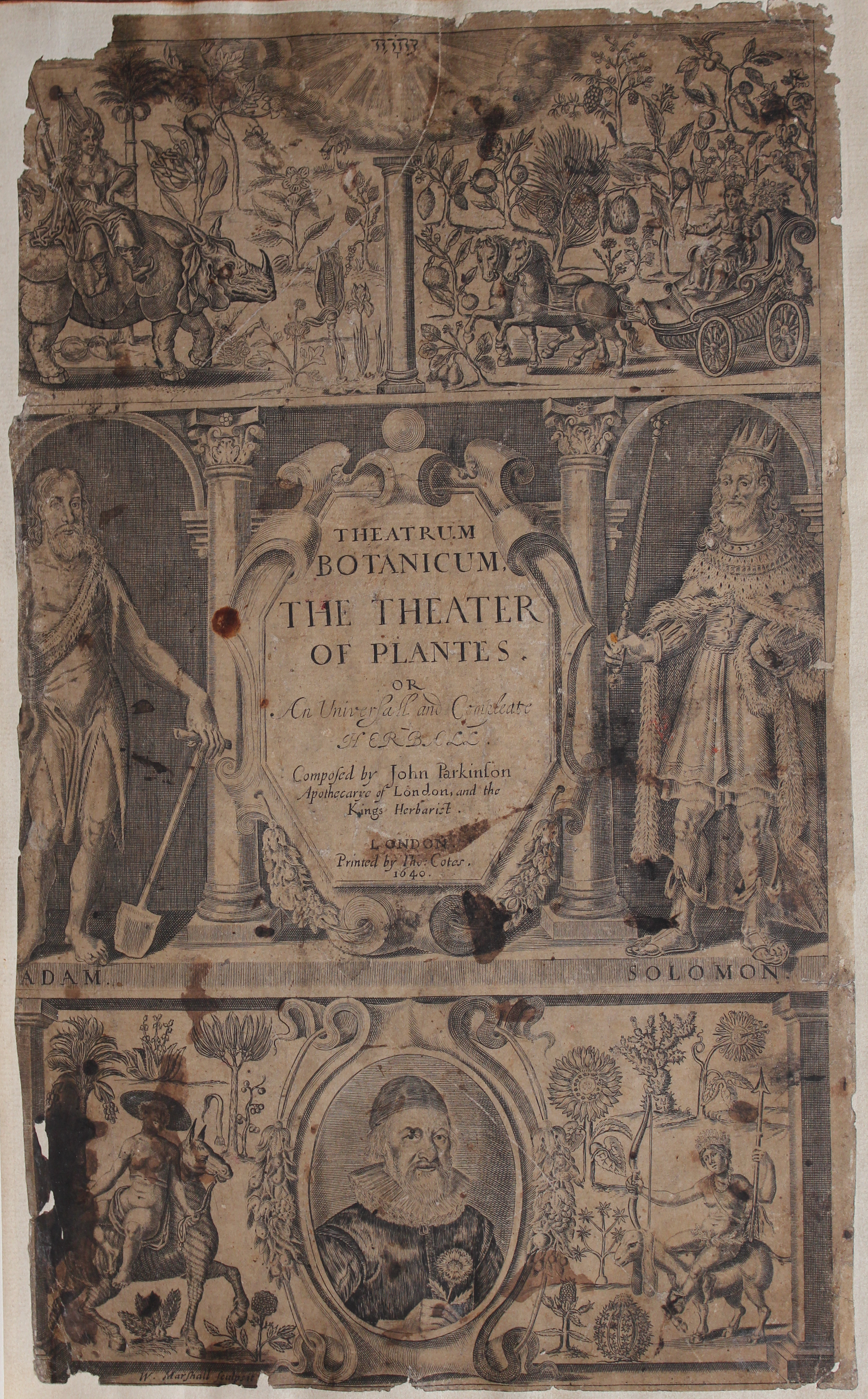
Another elaborate illustration is found on the added engraved title page of Theatrum botanicum by John Parkinson (1567-1650). The engraving is divided into the four quarters of the known world: Asia, Europe, the Americas and Africa. These are arranged clockwise from the top left. Each section depicts a woman riding an animal, or in the case of “civilised” Europe, sat in a horse-drawn carriage, and also shown are plants thought (often erroneously) to be native to each continent. Maize, for example, is depicted in the Asian quarter, since it was not yet known that it originated in the Americas. The European quarter has the most abundant selection of plants, highlighting the lack of in-depth knowledge of the other areas of the world. In the centre of the page are two figures: Adam, holding a spade, and Solomon, known for his wisdom. 

Detailed engraving depicting the four corners of the known world

Title page of Theatrum botanicum by John Parkinson, London,1640 (Classmark: Gorer.51)

Moving on to the latter part of the seventeenth century, we have a copy of The History of the Propagation & Improvement of Vegetables by clergyman and natural historian Robert Sharrock (1630-1684). Sharrock was a fellow of New College, Oxford and an associate of noted chemist Robert Boyle (1627-1691). He was also involved with the University’s Physick Garden, where he carried out some of his experiments with grafting.

Title page

Title page of The History of the Propagation & Improvement of Vegetables by Robert Sharrock, Oxford, 1660 (Classmark: Gorer.30)

The work’s only illustration, shown below, depicts the many different ways to carry out propagation via grafting.

Illustration of a stem with various methods of grafting shown

Page 60 and accompanying illustration from The History of the Propagation & Improvement of Vegetables 

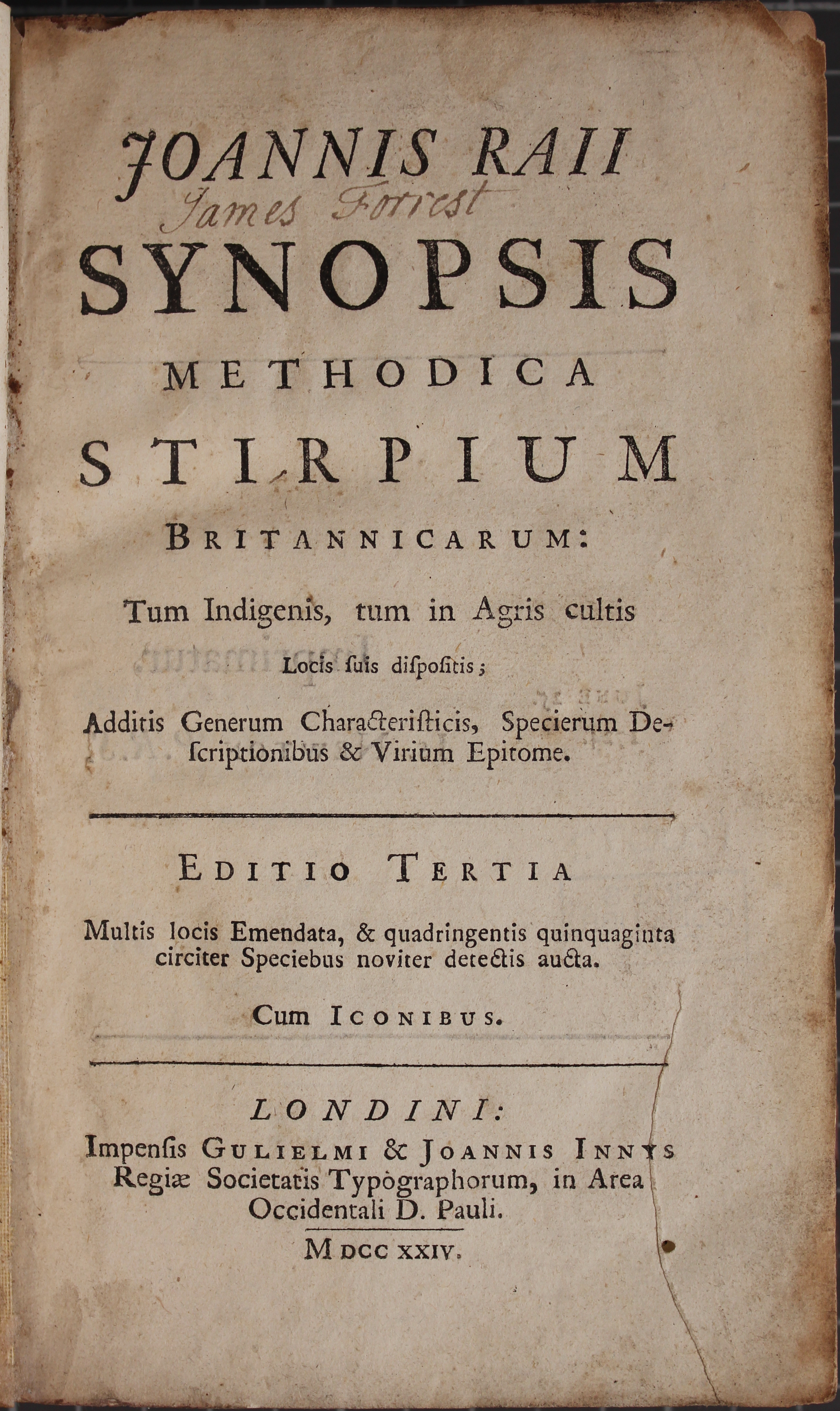
Next we have the third edition of Synopsis Methodica stirpium britannicarum by the famous naturalist John Ray (1627-1705). Originally published in 1690, this work became a hugely popular guide for amateur and professional botanists alike throughout the eighteenth century and beyond. It is now of great historical value, as it records many plants which were much reduced or lost entirely as a result of land enclosures, the expansion of cities and the Industrial Revolution.

Title page

Title page of Synopsis Methodica stirpium britannicarum by John Ray, London, 1724 (Classmark: Gorer.29)

tree illustration

Illustration facing page 477 from Synopsis Methodica stirpium britannicarum

Transitioning into the eighteenth century, the collection contains a 1754 edition of The Gardener’s Dictionary by botanist Philip Miller (1691-1771). Originally published in 1731, this work was based on Miller’s experience with plants from around the globe gained through his role as head gardener at the Chelsea Physic Garden. It is notable for its breadth of coverage and assured tone, which meant it sold well enough to be reissued in many subsequent editions across the century. The lavish engraved frontispiece depicts Britannia sitting in an orangery being gifted a cornucopia, or horn of plenty, by allegories of industry, science and nature.

Title page

Title page from volume 1 of The Gardeners Dictionary by Philip Miller, London, 1754 (Classmark: Gorer.27/1)


Engraved frontispiece

Frontispiece from volume 1 of The Gardeners Dictionary by Philip Miller, London, 1754 (Classmark: Gorer.27/1)

Arriving in the Victorian era, when gardening became a much more widespread pastime, we find books and periodicals containing an abundance of advice for amateur gardeners, often accompanied by vibrant colour illustrations.

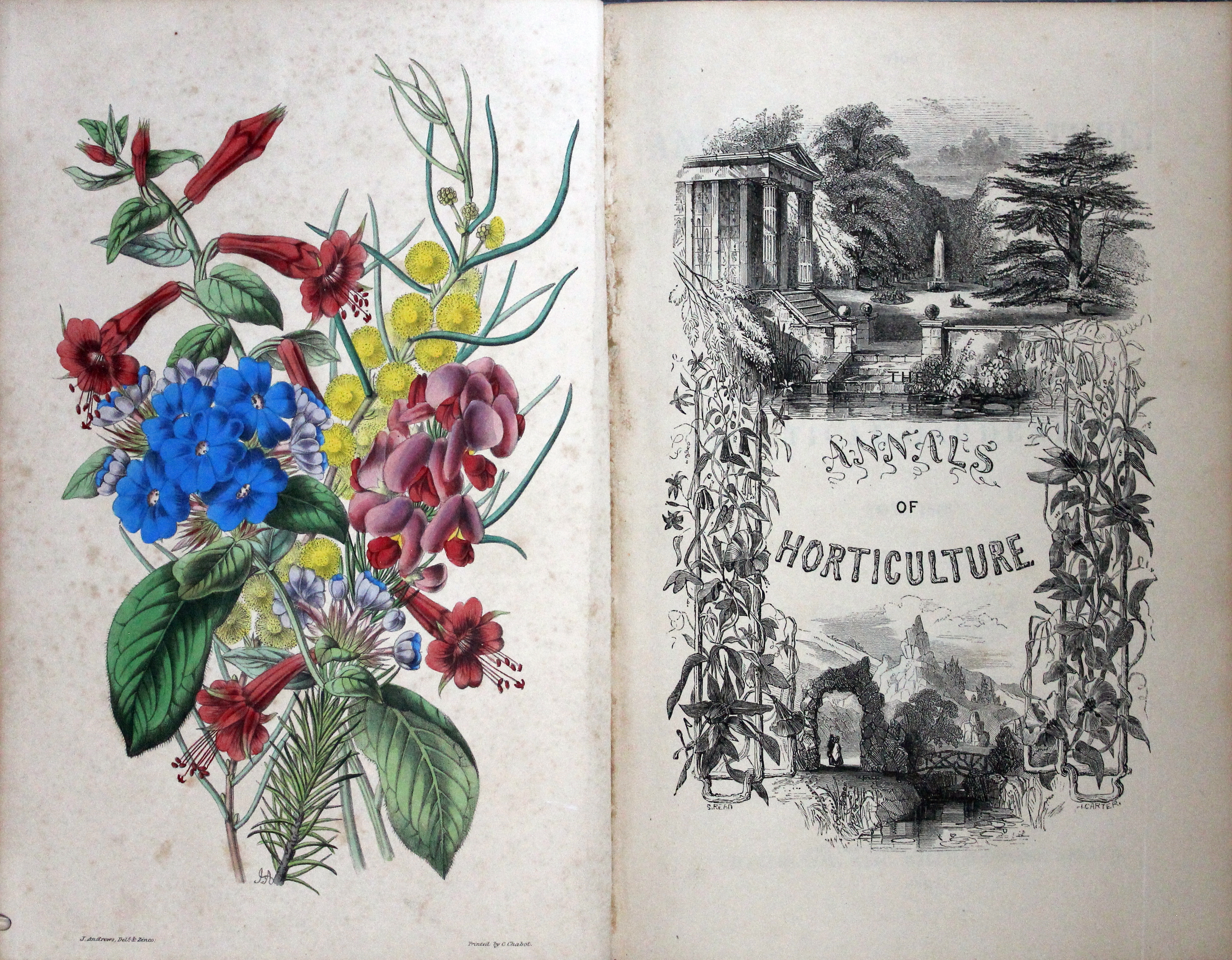
One such periodical, The Annals of Horticulture (1846-1850), first appeared monthly, and was then reissued in five annual collected volumes, of which the Gorer collection contains two. The illustrated title pages and frontispieces are very attractive.

Attractive colour frontispiece showing many different flowers and an illustrated titlepage

Frontispiece and engraved title page from The Annals of Horticulture, London, 1849 (Classmark: Gorer.32/1)

The subject matter of this periodical even extends to designs for summer houses, as illustrated below. These examples wouldn’t be out of place in a modern garden.

Pages showing summer houses

Garden architecture from page 449 of the 1849 edition of The Annals of Horticulture

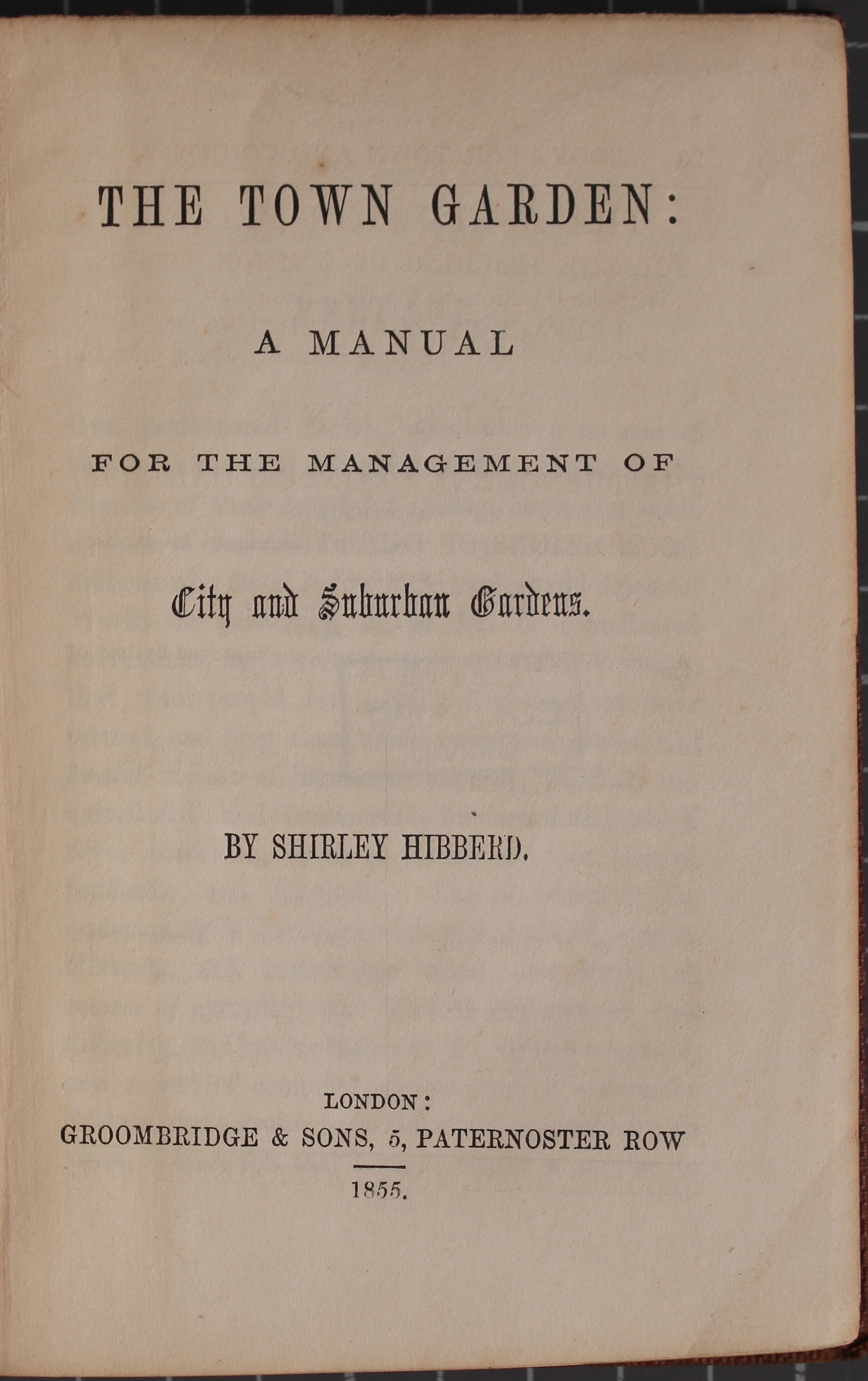
One of the most popular writers of the period was Shirley Hibberd (1825-1890), who tailored his advice particularly towards the requirements of those with urban and town gardens, rather than grand, sprawling country estates. His first gardening book, The Town Garden: A Manual (1855) was devoted to this topic. It also provided those new to gardening with tips on how to get going. In his writings, Hibberd drew upon his own experiences of hobby gardening, initially in a small garden in North London, and subsequently in various suburban settings. He was also a keen early environmentalist, and a strong opponent of cruelty towards animals and birds.

Title page

Title page of The Town Garden: A Manual by Shirley Hibberd, London, 1855 (Classmark: Gorer.10)

Hibberd went on to edit numerous gardening magazines and produce many more successful gardening books, often issued with attractive floral covers:

Attractive green floral book cover

Cover of The Amateur’s Flower Garden by Shirley Hibberd, London, 1871 (Classmark: Gorer.11)

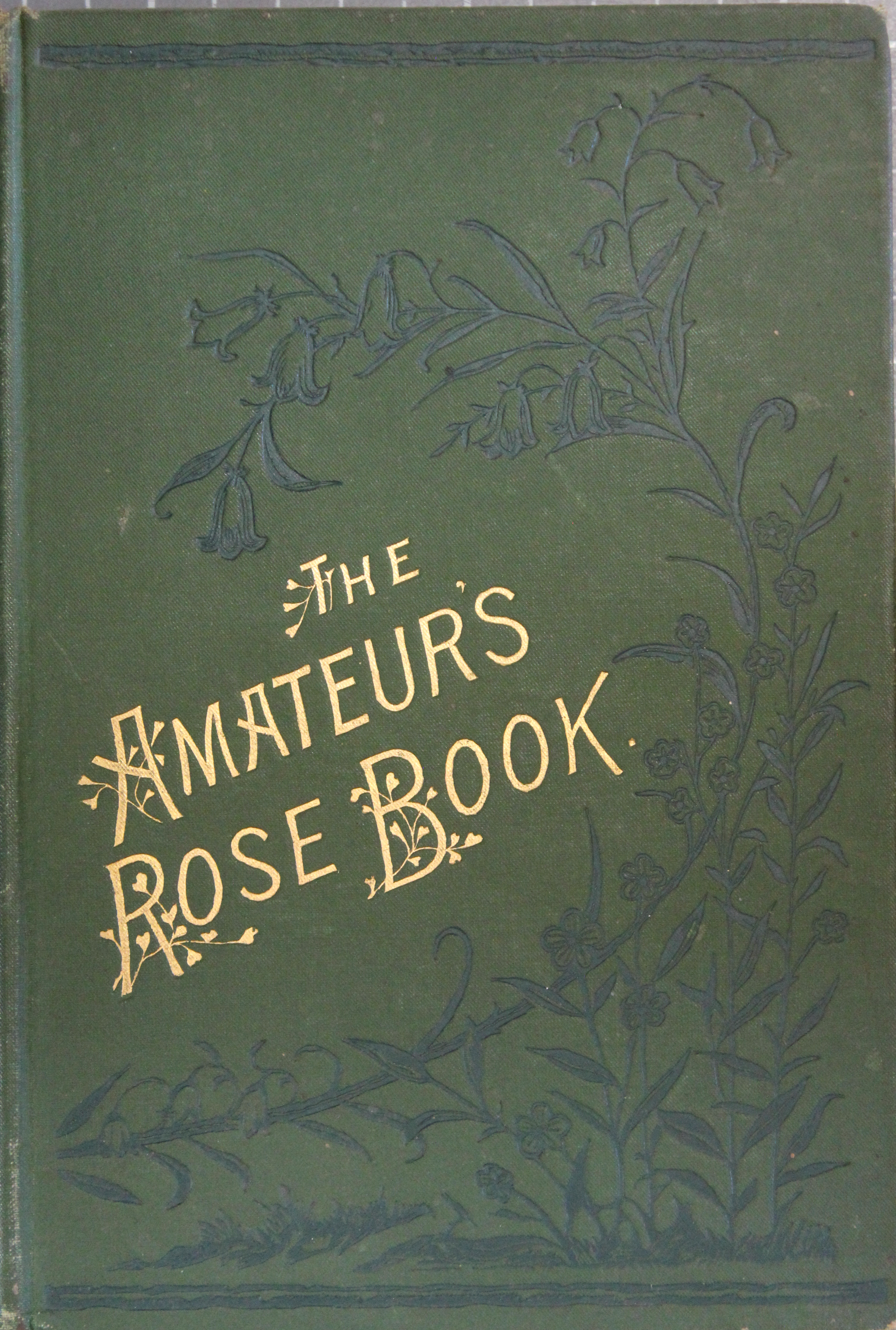
Attractive green floral book cover

Cover of The Amateur’s Rose Book by Shirley Hibberd, London, 1885 (Classmark: Gorer.12)


Light brown floral book cover

Cover of Familiar Garden Flowers by Shirley Hibberd, London, 1879-1885 (Classmark: Gorer.14/1)

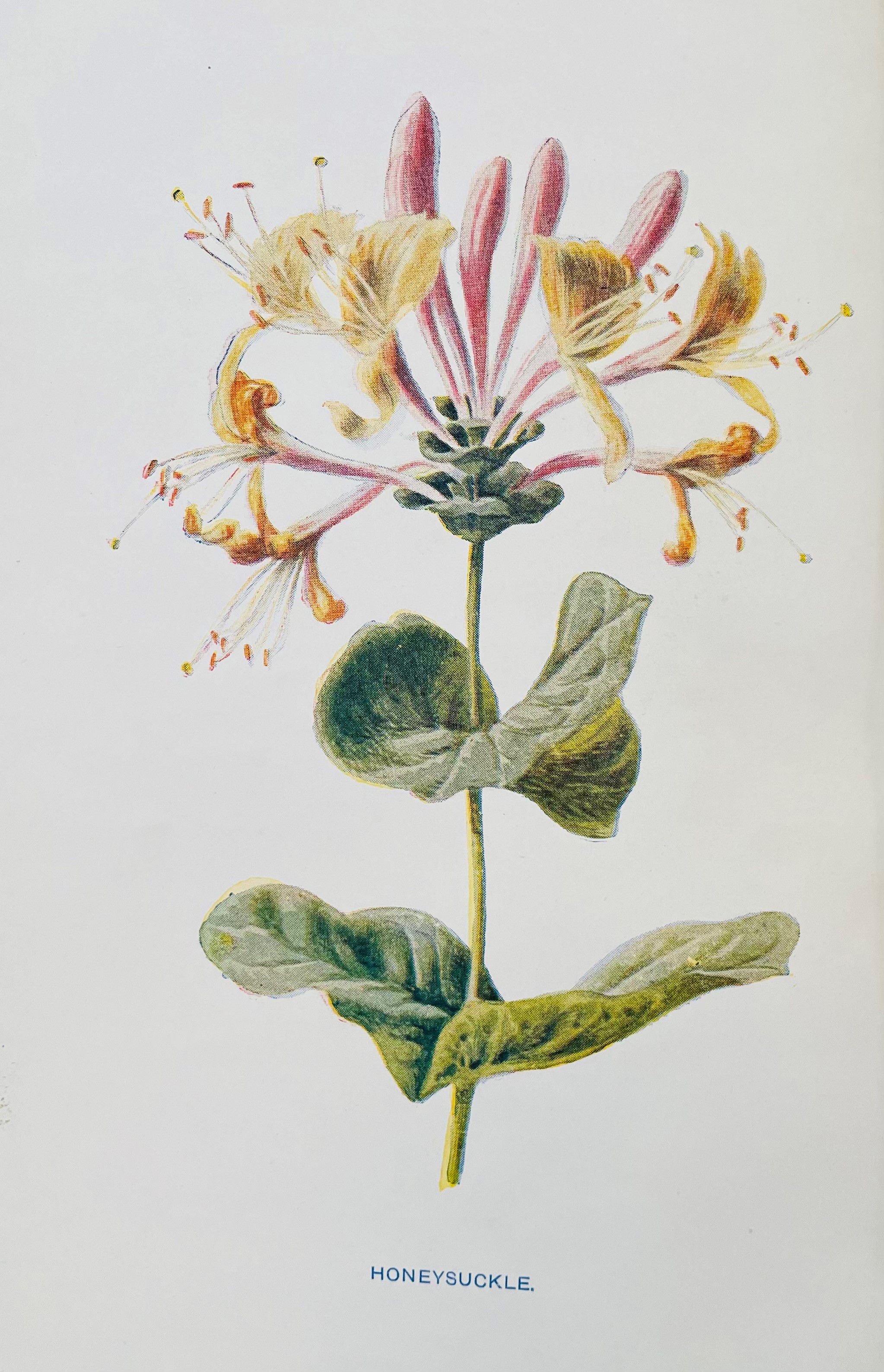
Familiar Garden Flowers, produced in five volumes between 1879 and 1887, contains particularly delightful colour illustrations, a selection of which provide a fitting way to conclude this post on gardening books through the ages. We hope you have gained some inspiration for your own gardens or flower boxes!

everlasting pea

Everlasting pea illustration facing p.105 in vol.1 of Familiar Garden Flowers (Classmark: Gorer.14/1)

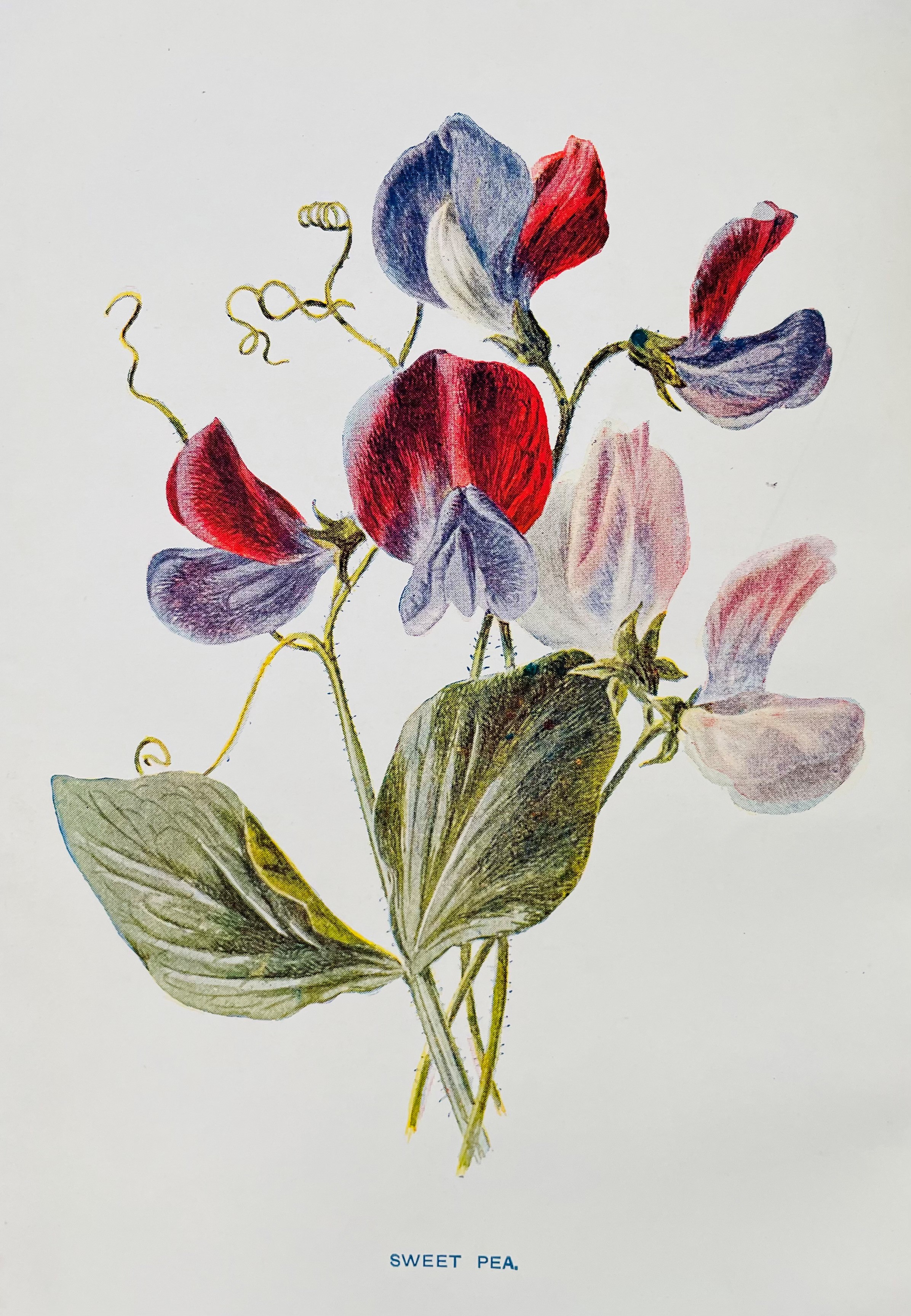
sweet pea

Sweet pea illustration facing p.113 in vol.1 of Familiar Garden Flowers (Classmark: Gorer.14/1)

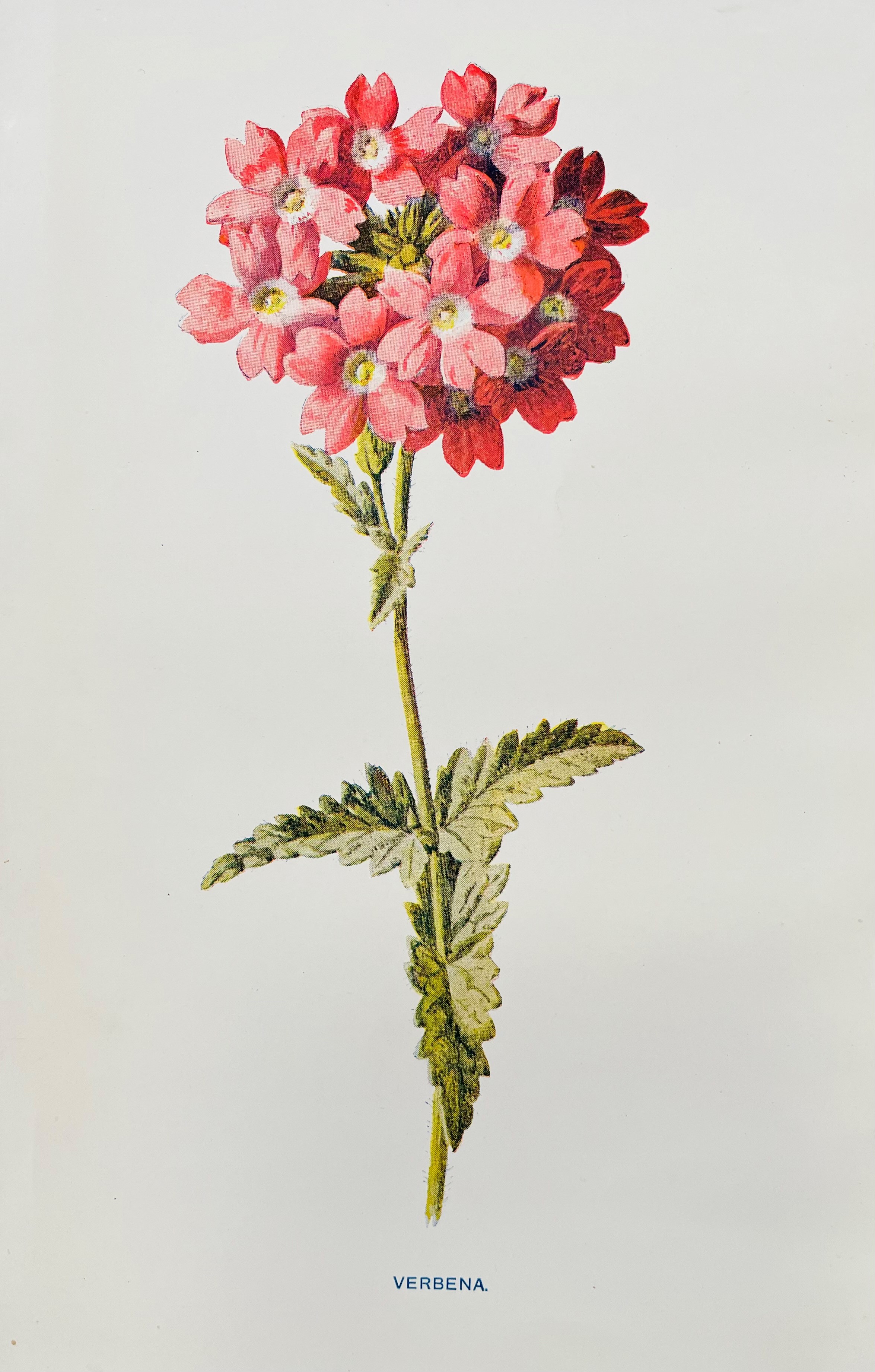
verbena

Verbena illustration facing page 105 in volume 5 of Familiar Garden Flowers (Classmark: Gorer.14/5)

wall flower

Wall flower illustration on frontispiece of volume 1 of Familiar Garden Flowers


Amethyst

Amethyst illustration facing page 5 in volume 5 of Familiar Garden Flowers

AC

References and further reading:

Richard Gorer: An English Jewish horticultural scholar and garden writer of the mid-twentieth century    [accessed September 2024]

John Gerard’s Herball   [accessed September 2024]

John Parkinson’s “Theatrum Botanicum” (1640) [accessed October 2024]

Synopsis Methodica Stirpium Britannicarum. John Ray   [accessed October 2024]

Robert Sharrock   [accessed October 2024]

A Botanical Wonderland Resides in the World of Rare and Unusual Books  [accessed October 2024]

Shirley Hibberd – the Father of Amateur Gardening    [accessed October 2024]