
Having experienced this long hot summer we can be forgiven for developing a sense of nostalgia for times past, when summers were generally more temperate and pleasant and trees and plants could flourish instead of scorching in the unrelenting heat. We have therefore searched out depictions of summer from nineteenth- and early -twentieth-century books in our collections and present a selection here as a tribute to our summers of old.
We begin with the pages for the summer months from several charming little almanacks by the celebrated children’s illustrator Kate Greenaway (1846-1901). Her tiny almanacks, measuring around 11cm tall, were published every year (bar one) between 1883 and 1897. Each has beautiful colour illustrations representing each season alongside illustrated calendar pages for the months of the year. A copy of the very first almanack produced in this series (pictured below) is held in the Rylands Collection. This little book was incredibly popular, selling 90,000 copies across Europe and America. The illustrations were printed first and then text was added in English, German or French as required. The Library also holds copies of the 1885 and 1887 editions, images from which also appear below.
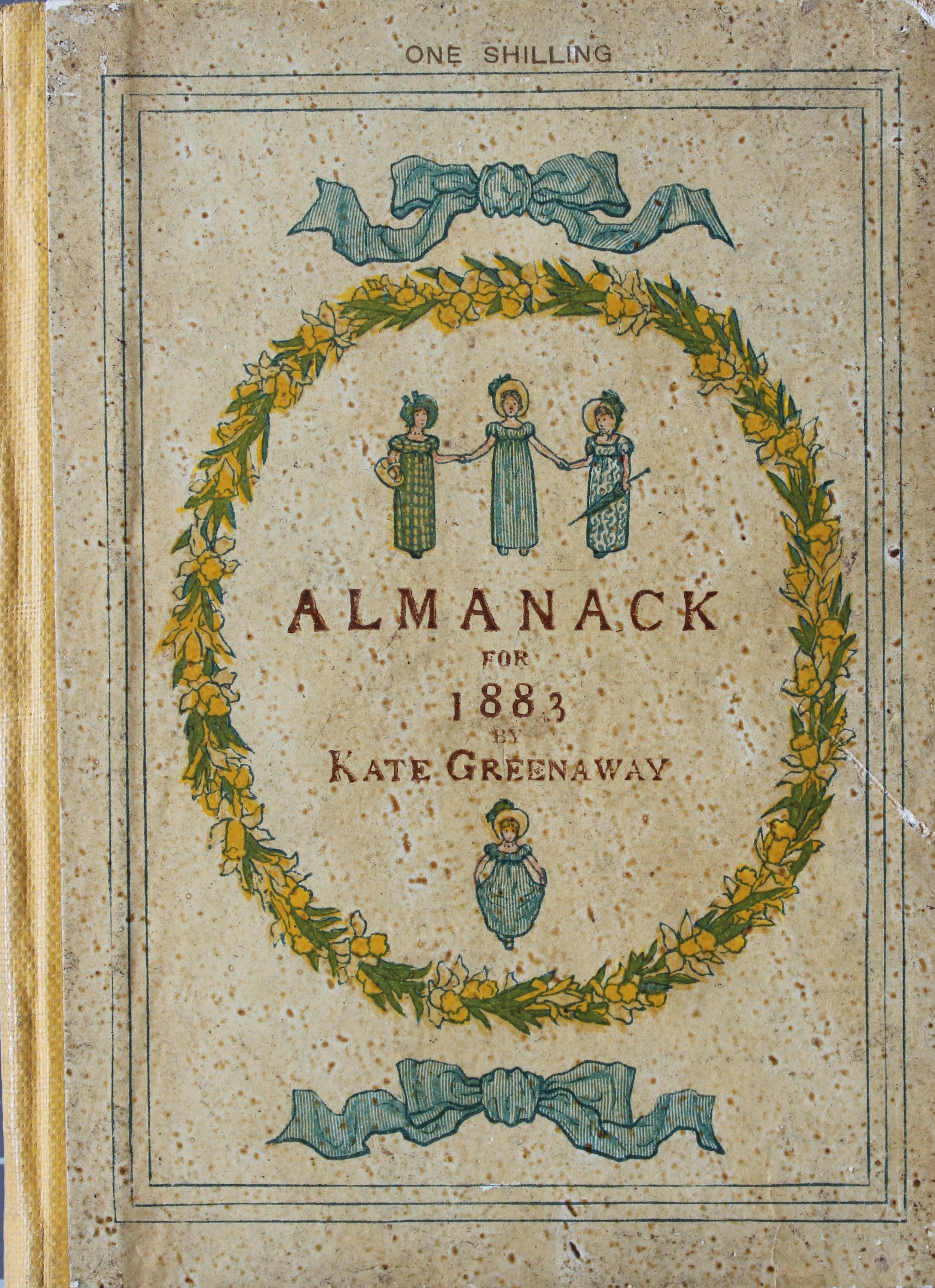
Cover of Almanack for 1883 by Kate Greenaway, London, George Routledge and Sons: 1883. Shelfmark: Rylands.C.GREE.Alm.1883
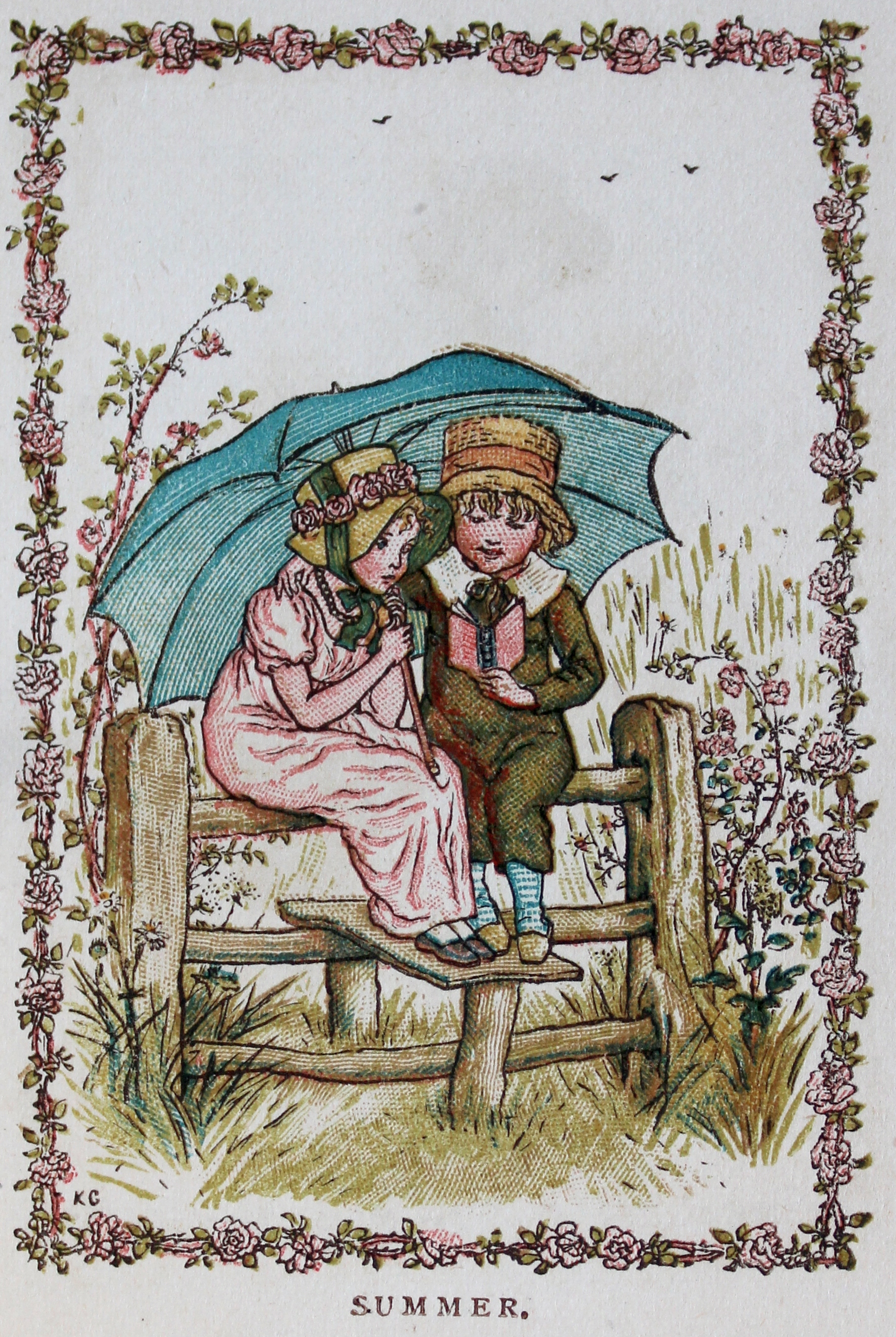
Illustration representing summer from Almanack for 1883
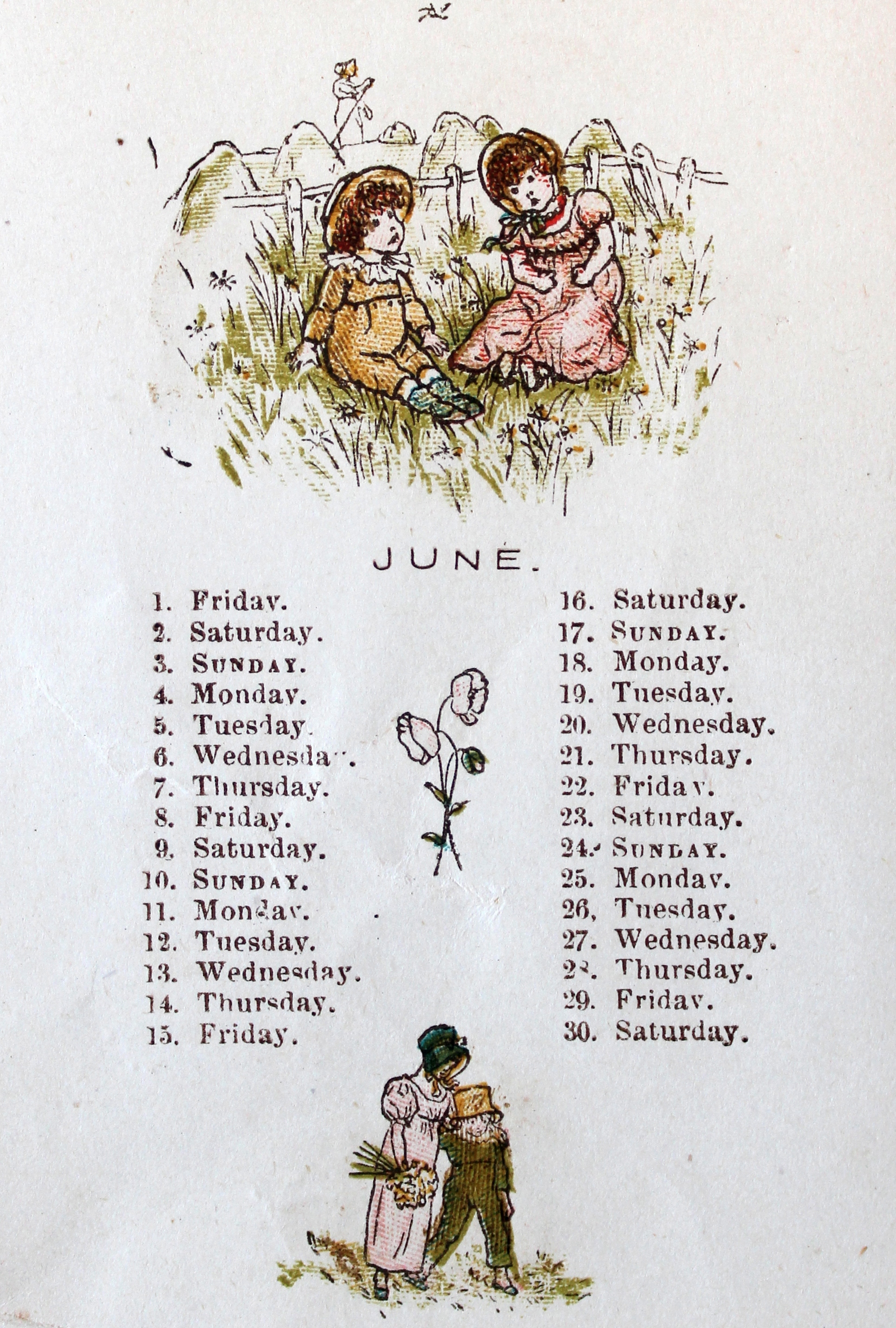
Page for June from Almanack for 1883
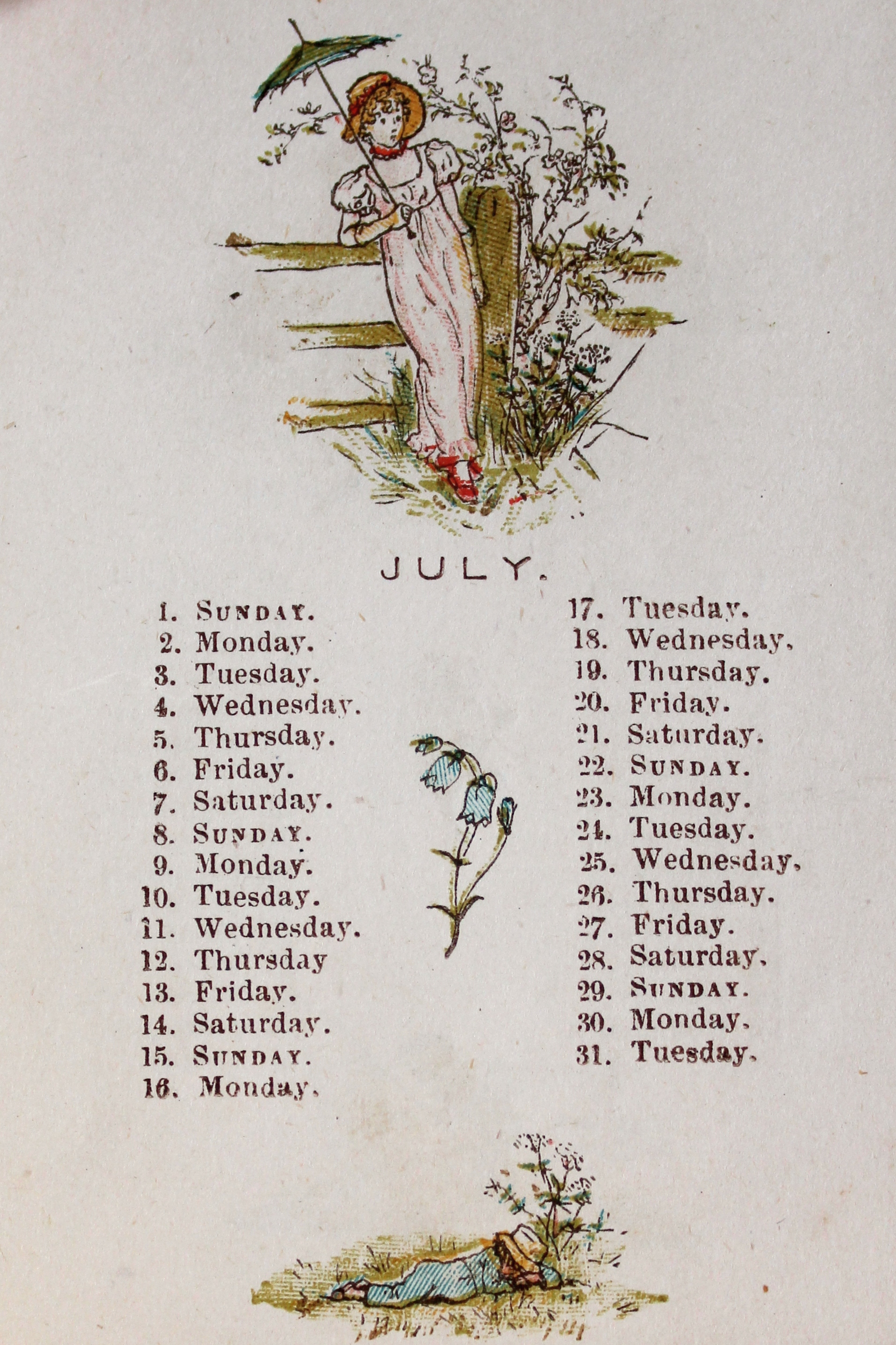
Page for July from Almanack for 1883
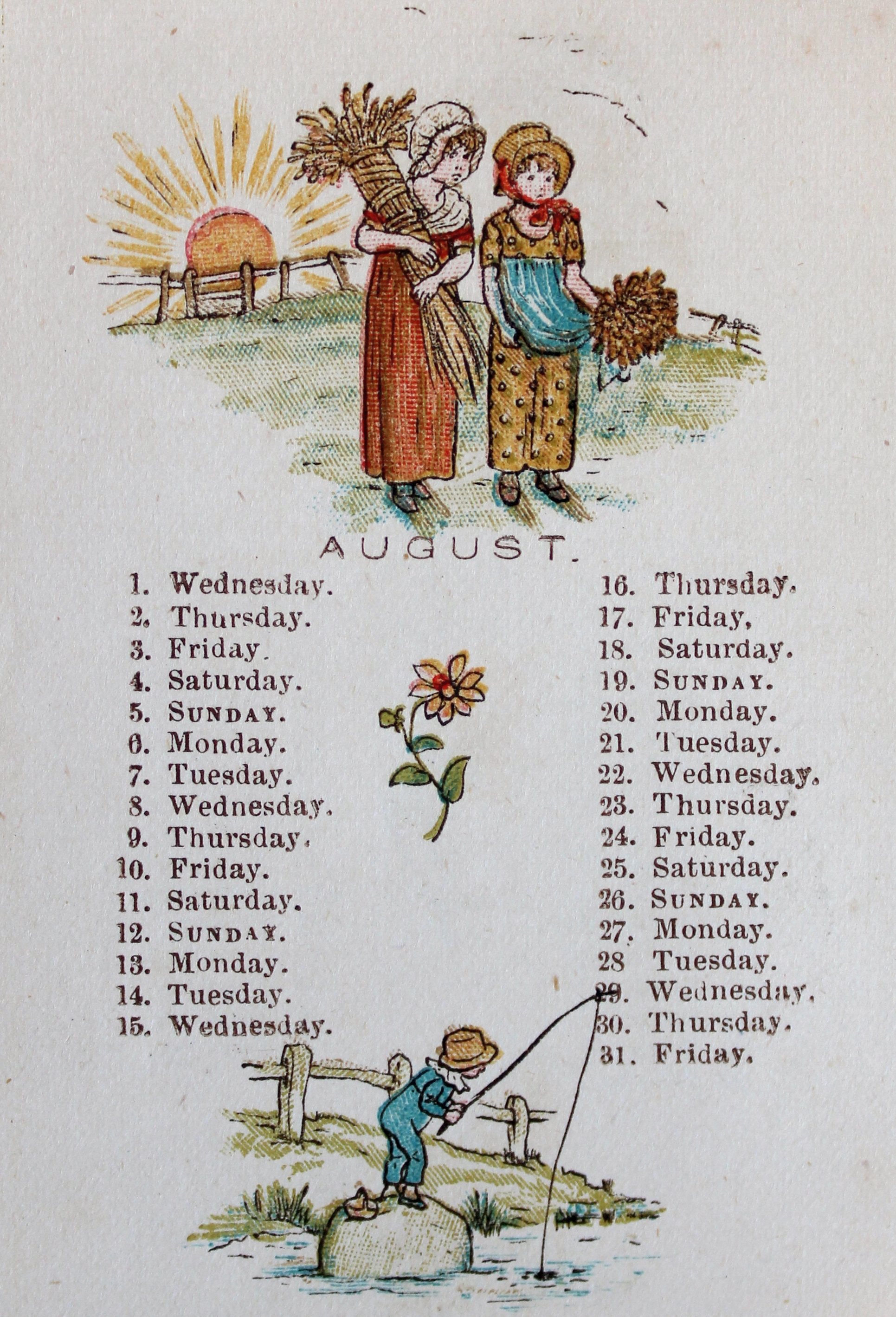
Page for August from Almanack for 1883
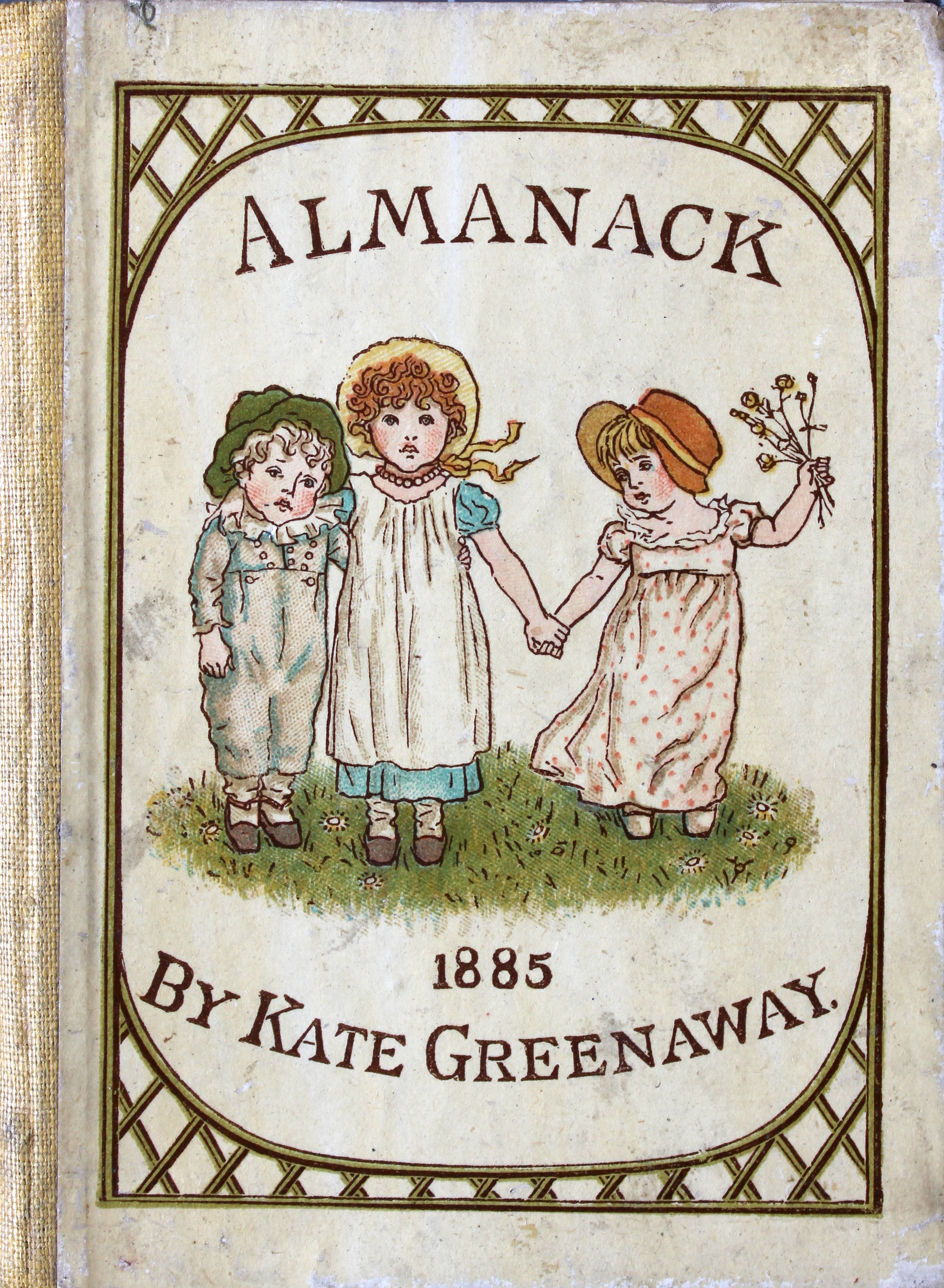
Cover of Almanack for 1885 by Kate Greenaway, London: George Routledge and Sons, 1885. Shelfmark: Walser.GRE.Alm.1885
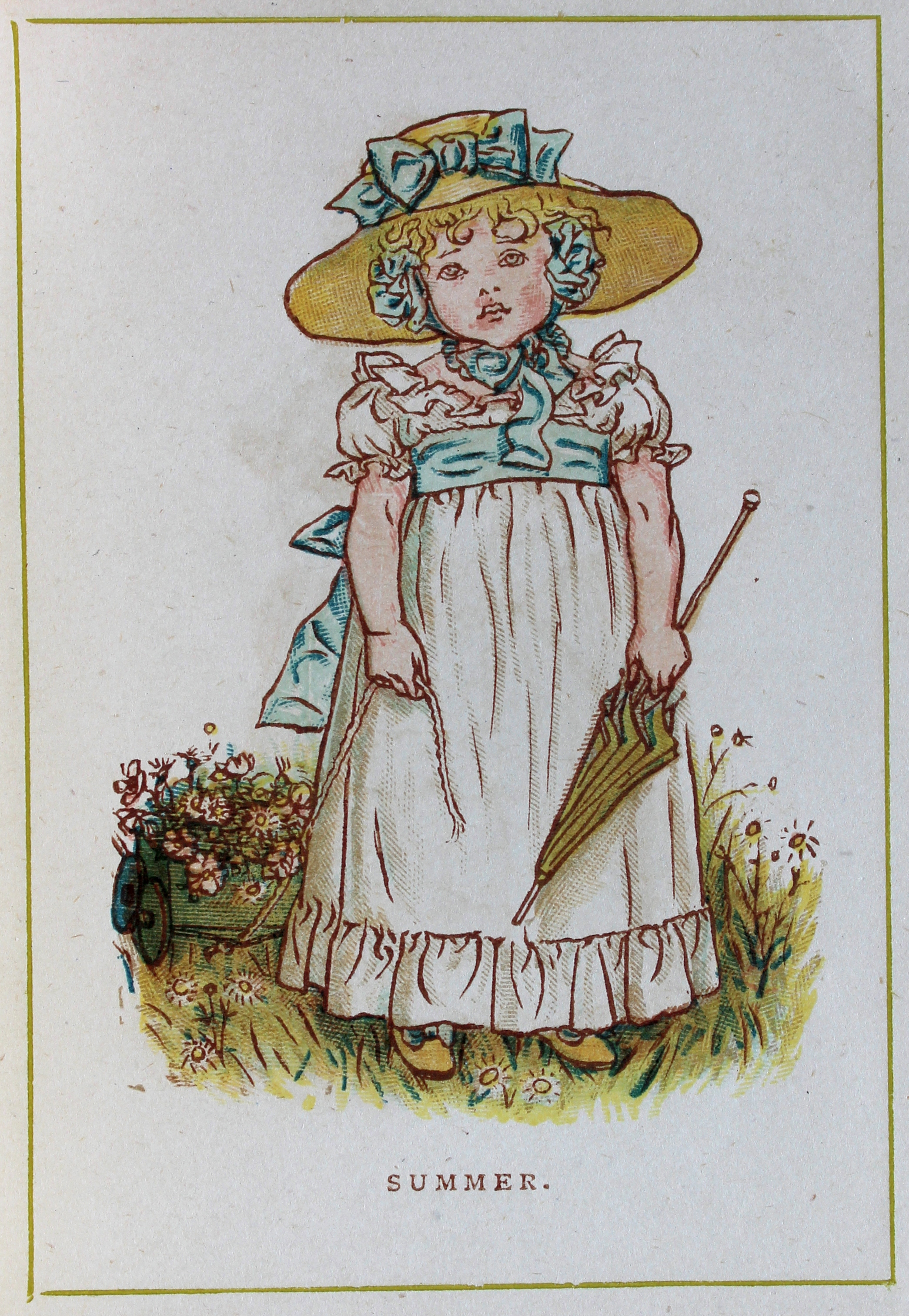
Illustration representing summer from Almanack 1885
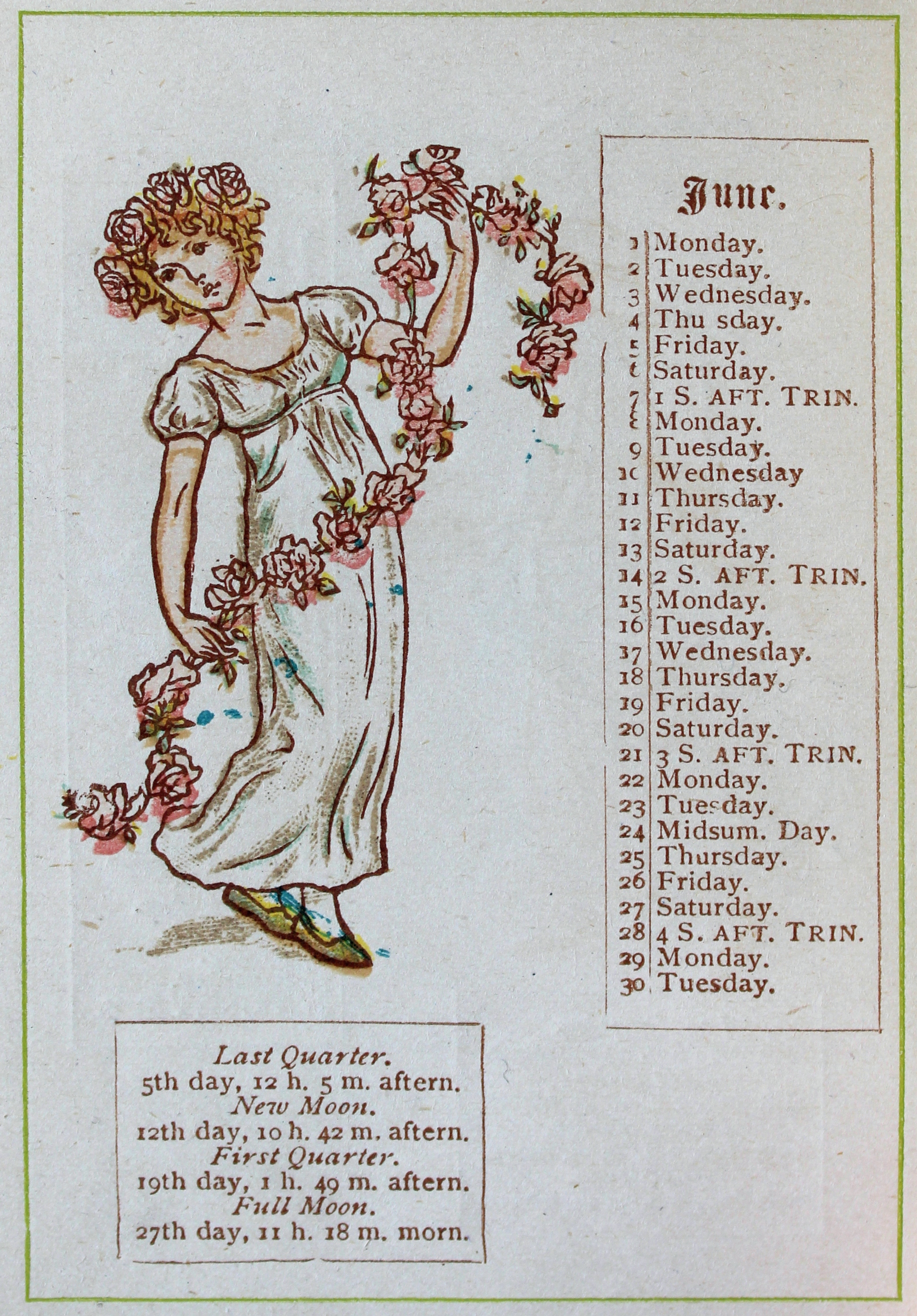
Page for June from Almanack for 1885
Page for July from Almanack for 1885
Page for August from Almanack for 1885
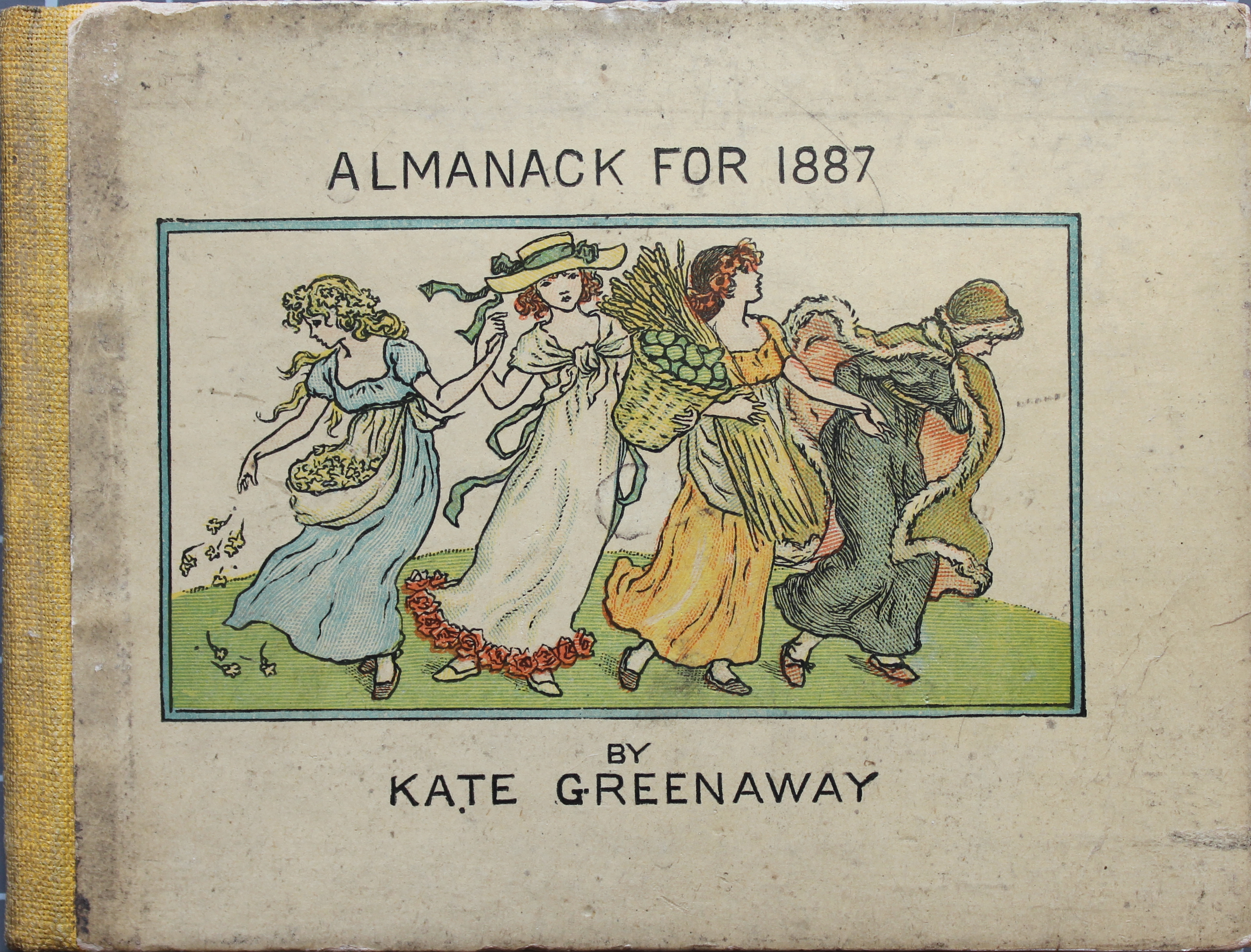
Cover of Almanack for 1887 by Kate Greenaway, London, George Routledge and Sons: 1887. Shelfmark: Walser.GRE.Alm.1887
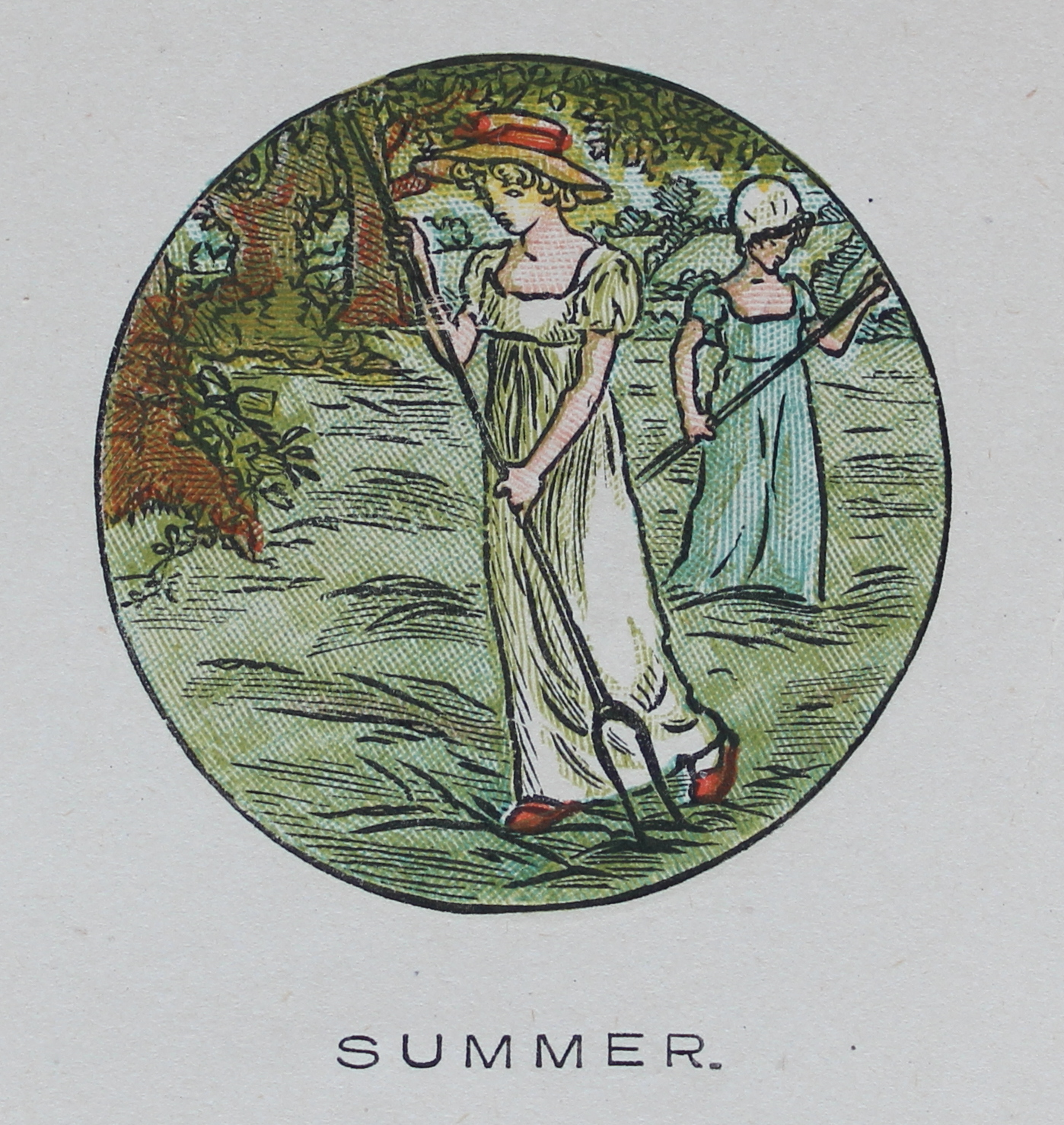
Illustration representing summer from Almanack for 1887
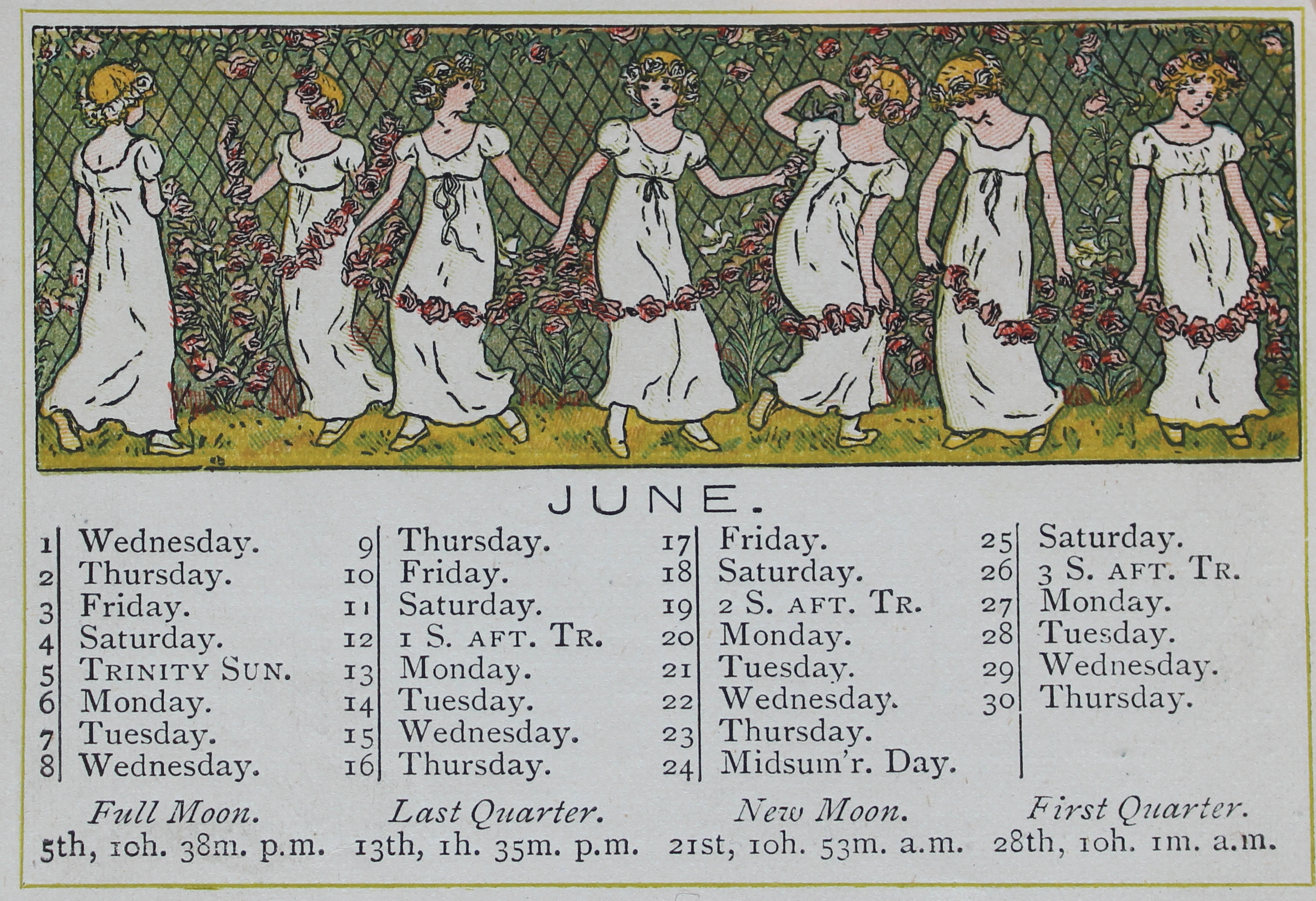
Page for June from Almanack for 1887
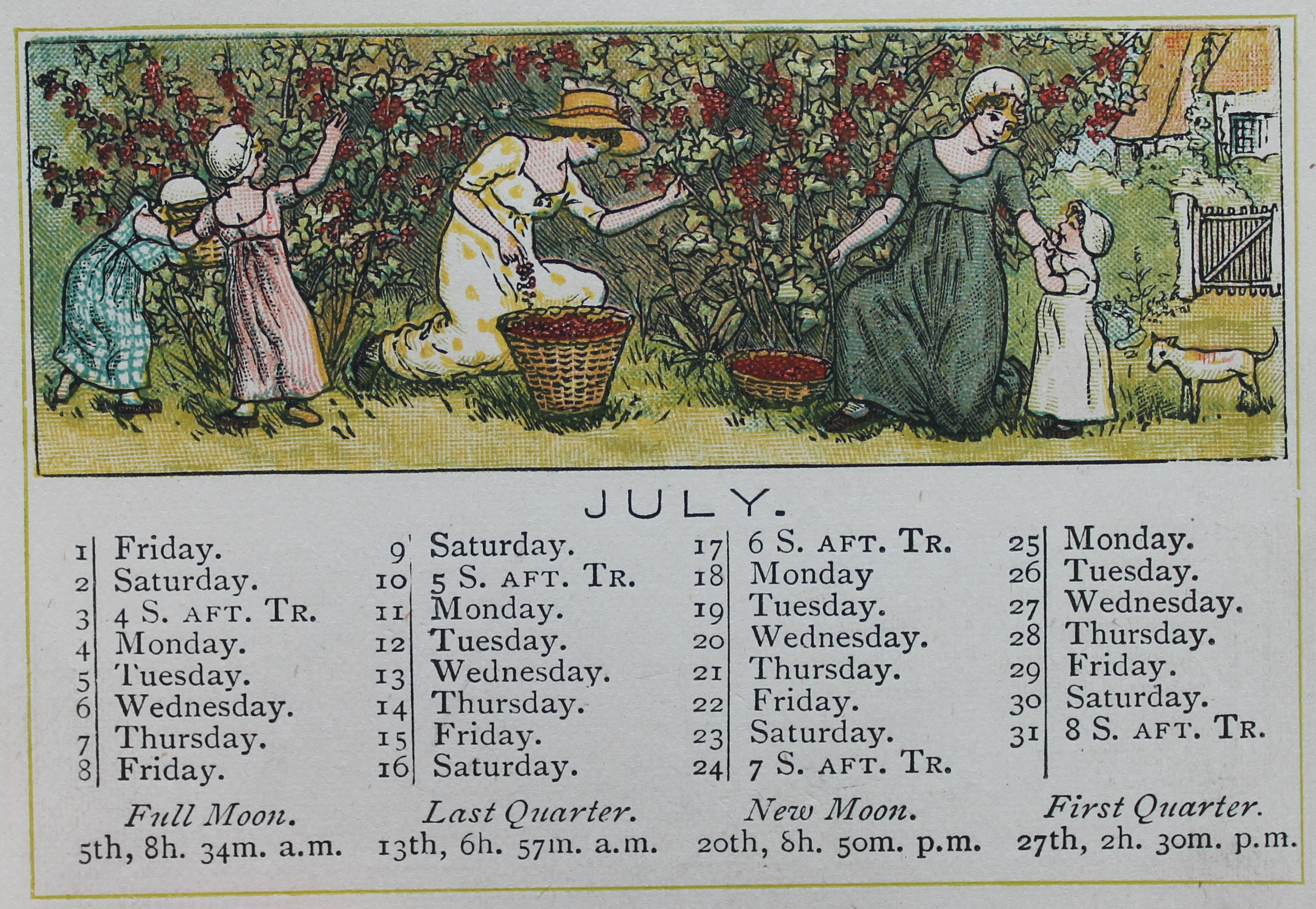
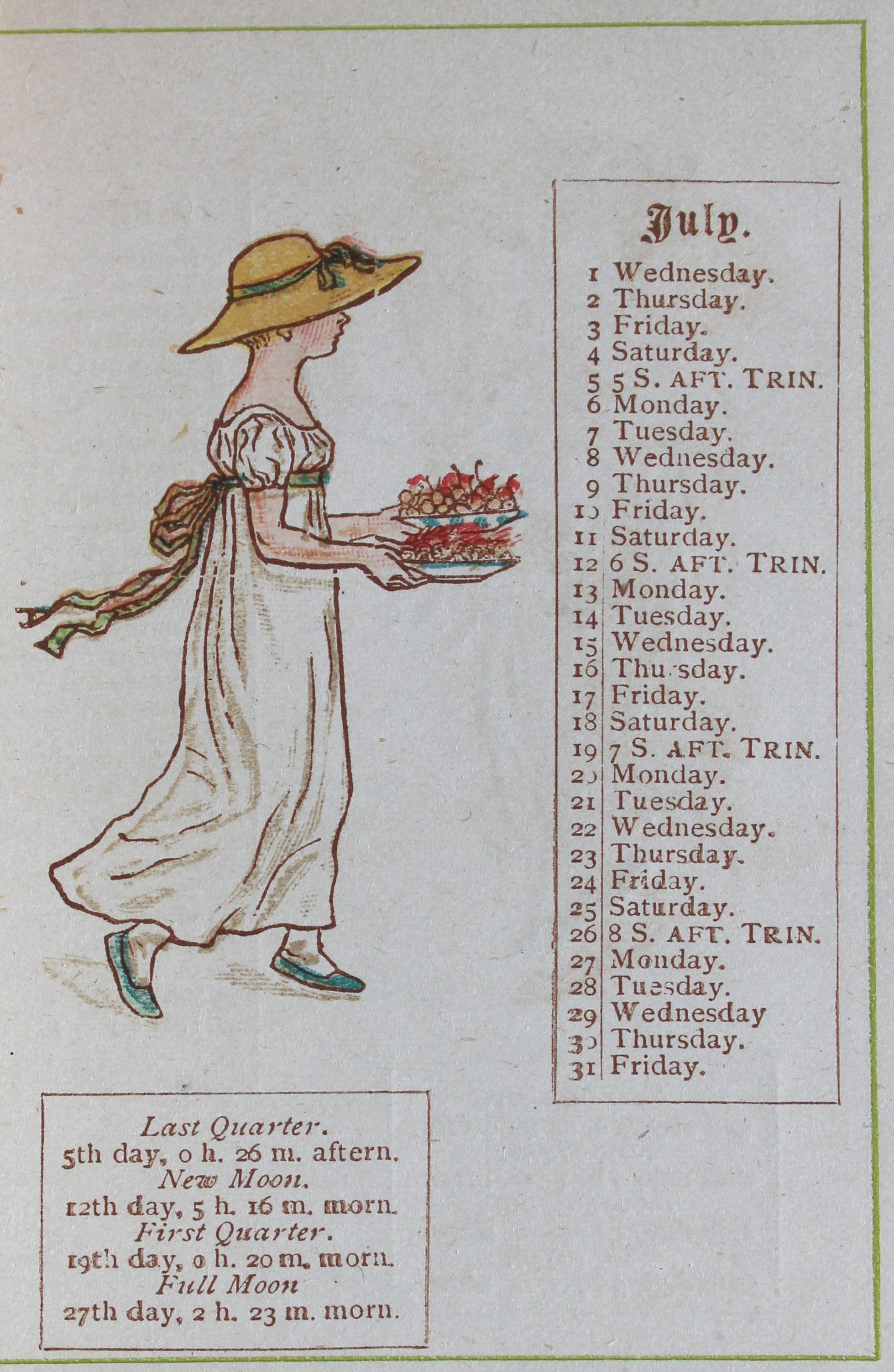
Page for July from Almanack for 1887
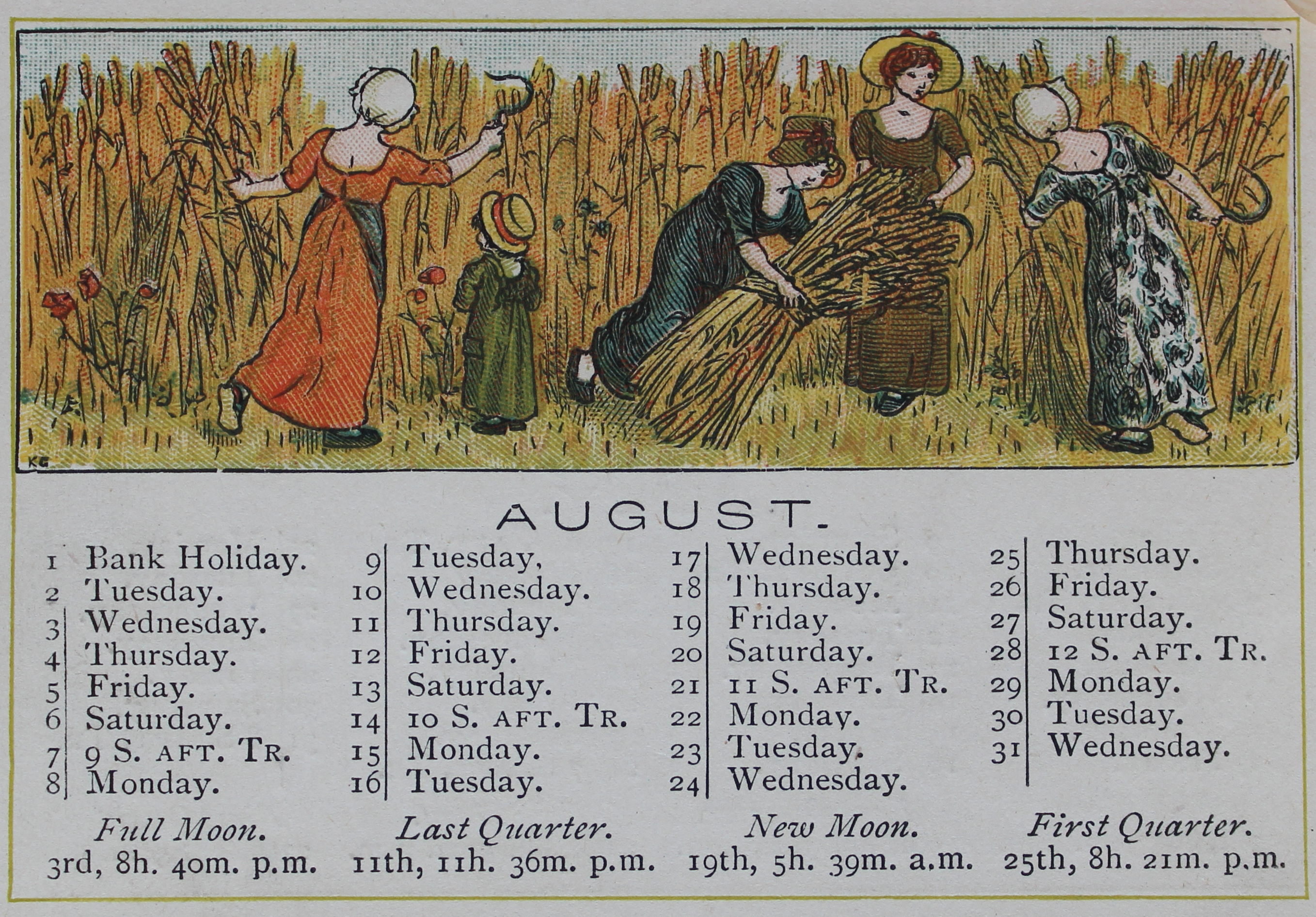
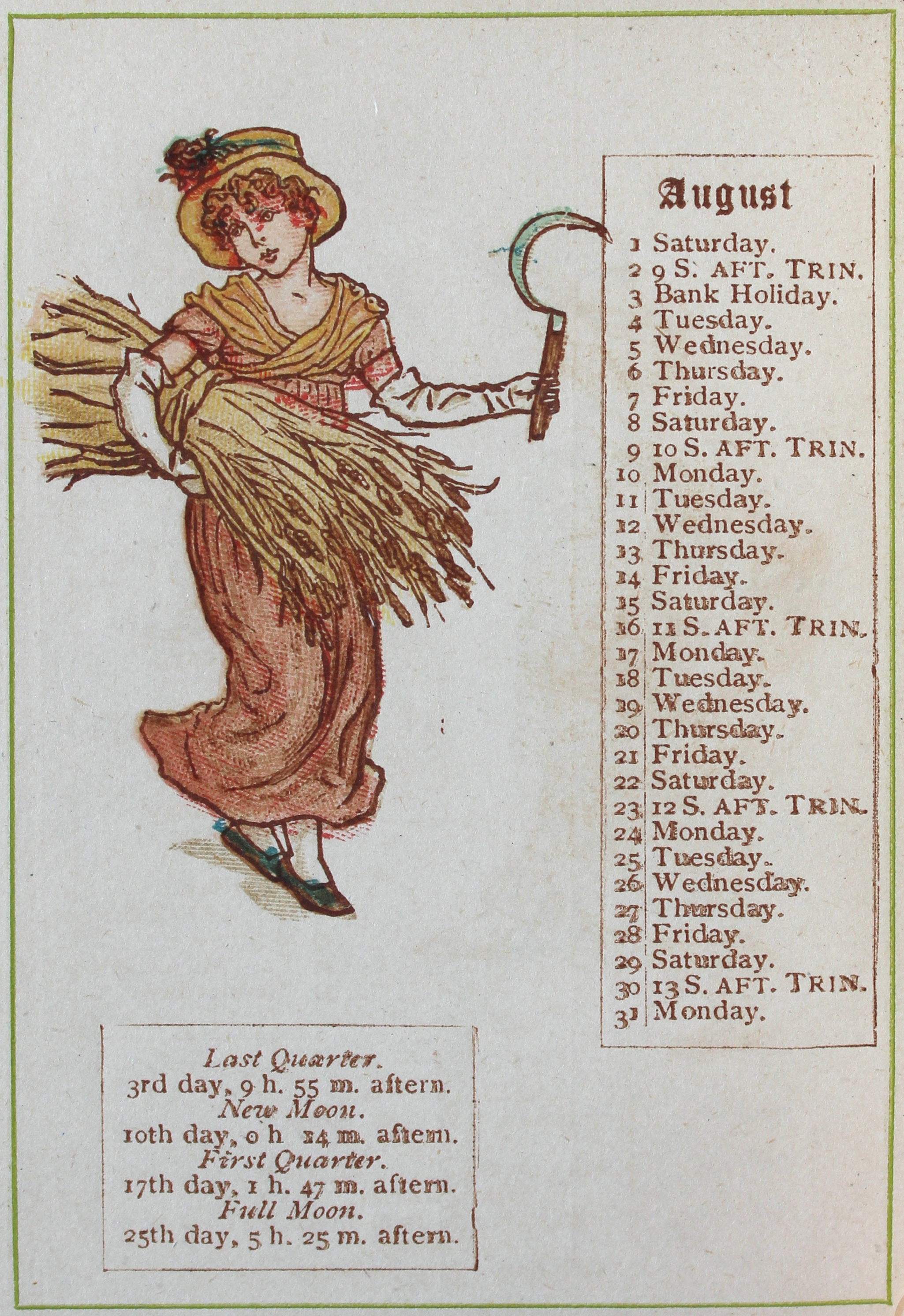
Page for August from Almanack for 1887
A number of books in the Rylands Collection celebrate the seasons with a mixture of botanical information and poetic description. Below are the pages for June, July and August from The Garland of the Year, illustrated by artist and amateur botanist Frederick Edward Hulme (1841-1909). Some of the poems included in this book are, in contrast to the vibrant flower illustrations, a touch melancholic, especially the one for June which speaks of the withering of daisies as mirroring the eventual fate of all humanity!
Cover of The Garland of the Year, or The Months: Their Poetry and Flowers, London: Marcus Ward & Co, circa 1870s. Shelfmark: Rylands.GAR
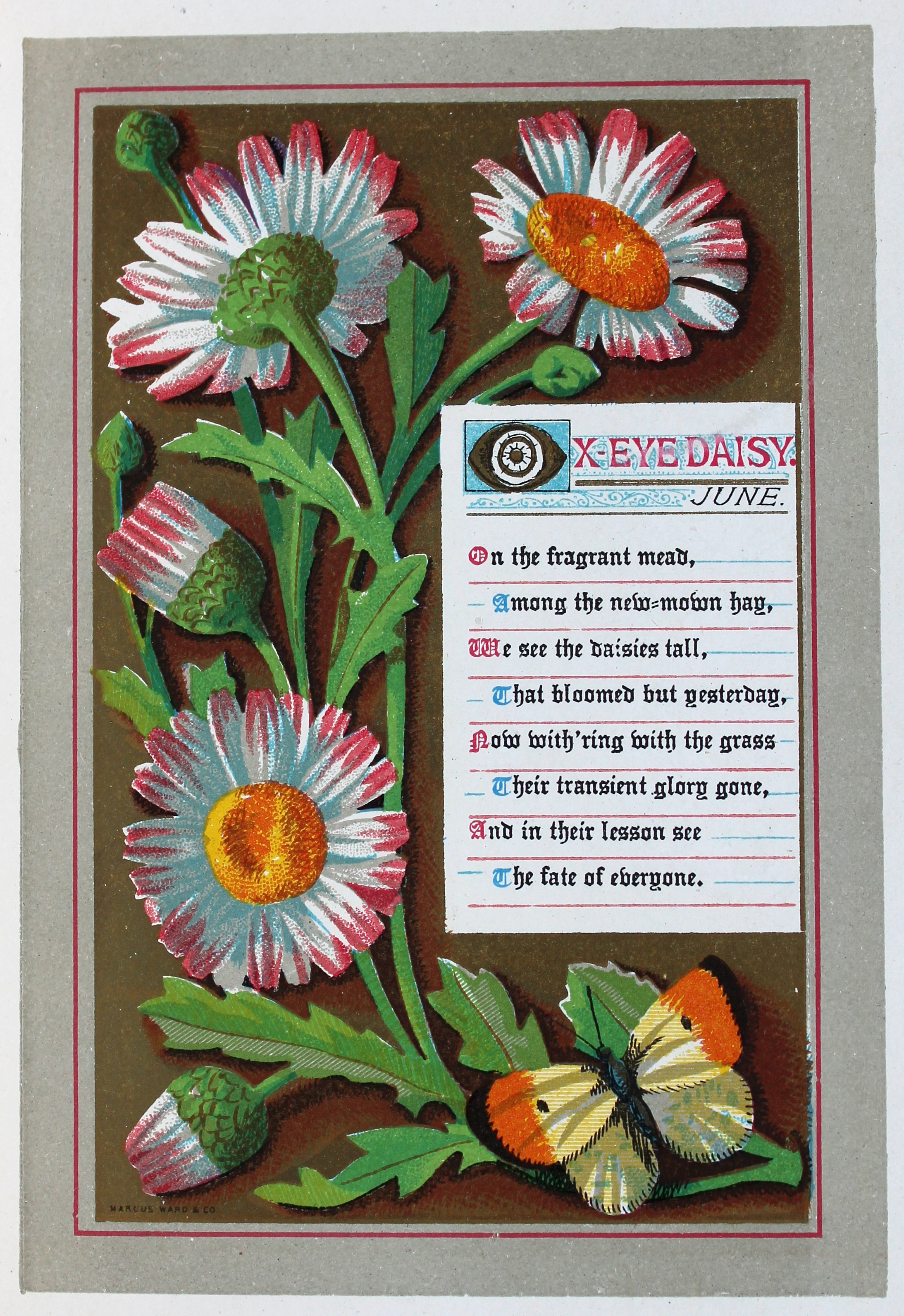
Illustration and poem for June from The Garland of the Year
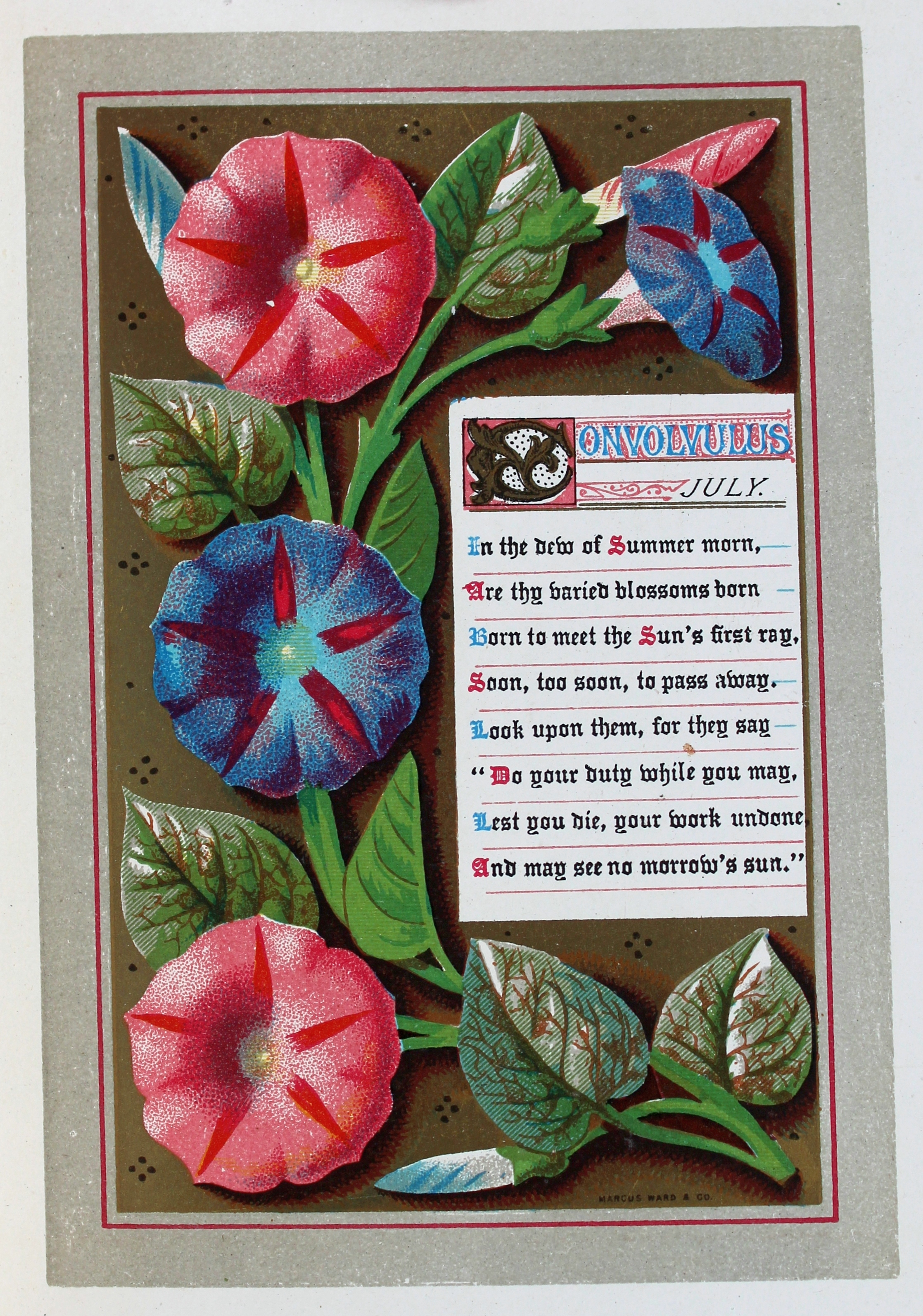
Illustration and poem for July from The Garland of the Year
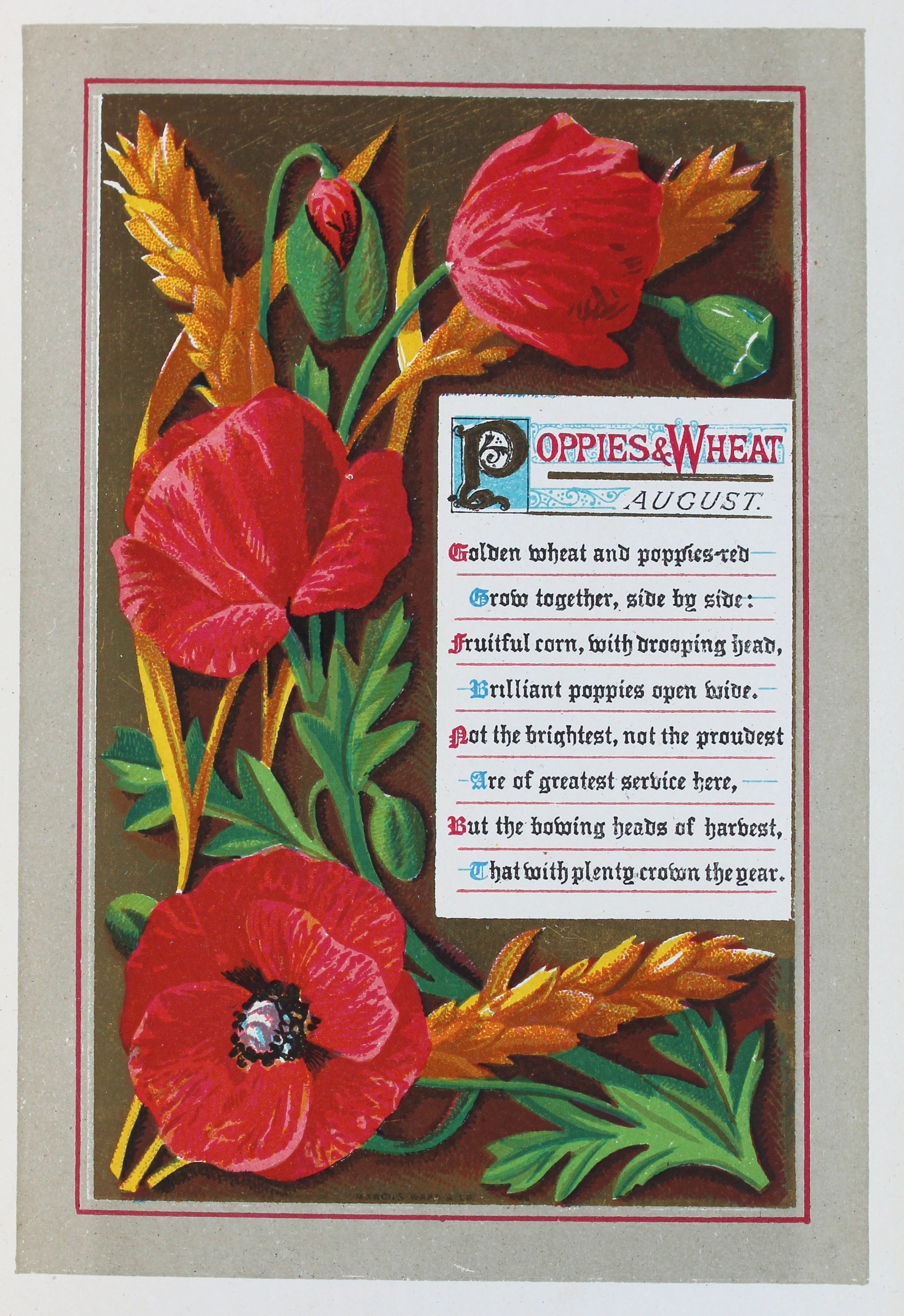
Illustration and poem for August from The Garland of the Year
A similar volume, The Songs of the Seasons and Wild Flowers of the Months, provides further colourful depictions of the flowers which flourish in the summertime.
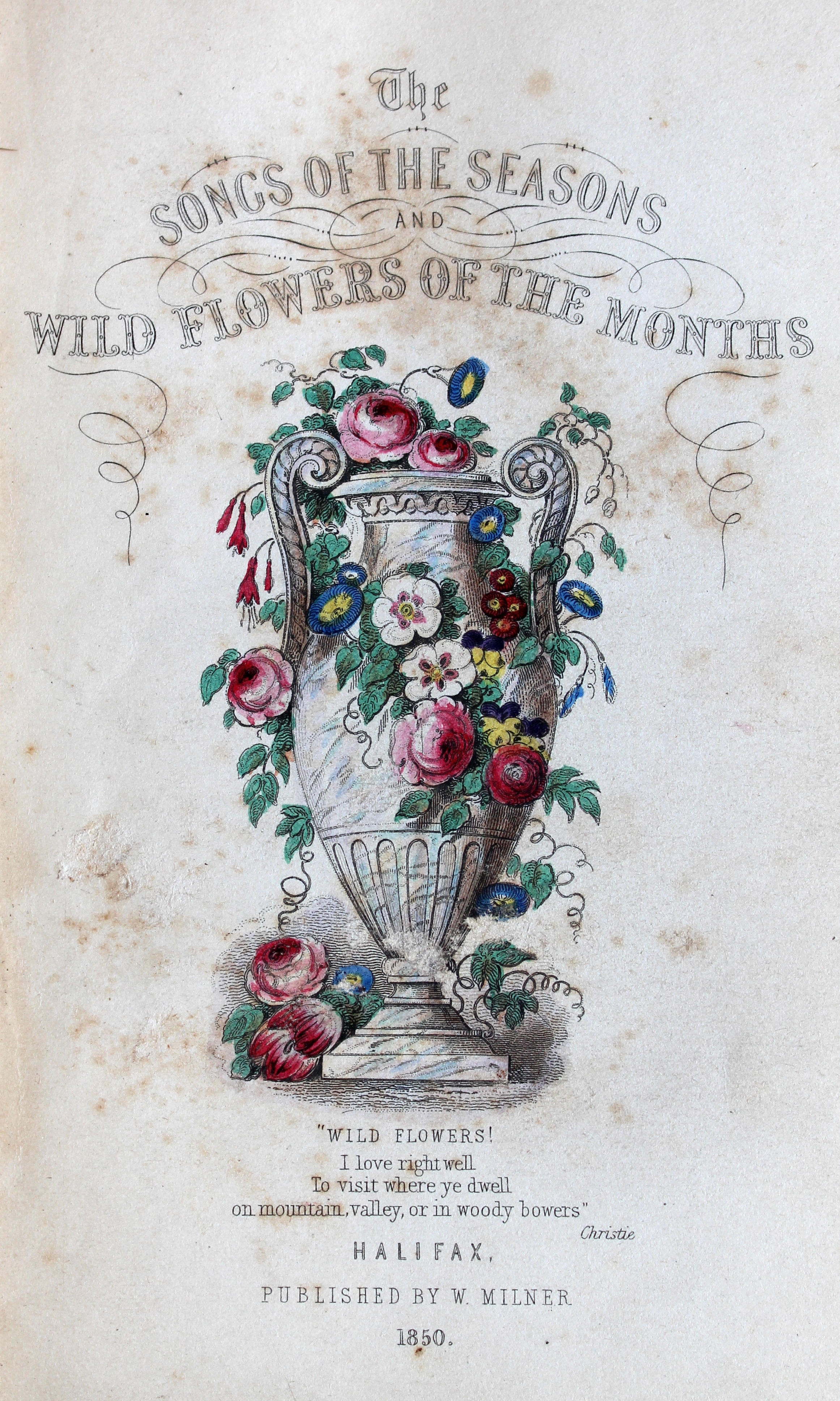
Added title page (dated 1850, unlike the actual title page) of Songs of the Seasons and Wild Flowers of the Months by J.H. Clark: Halifax, Milner & Sowerby, 1851. Shelfmark: Rylands.CLA.Son.1851
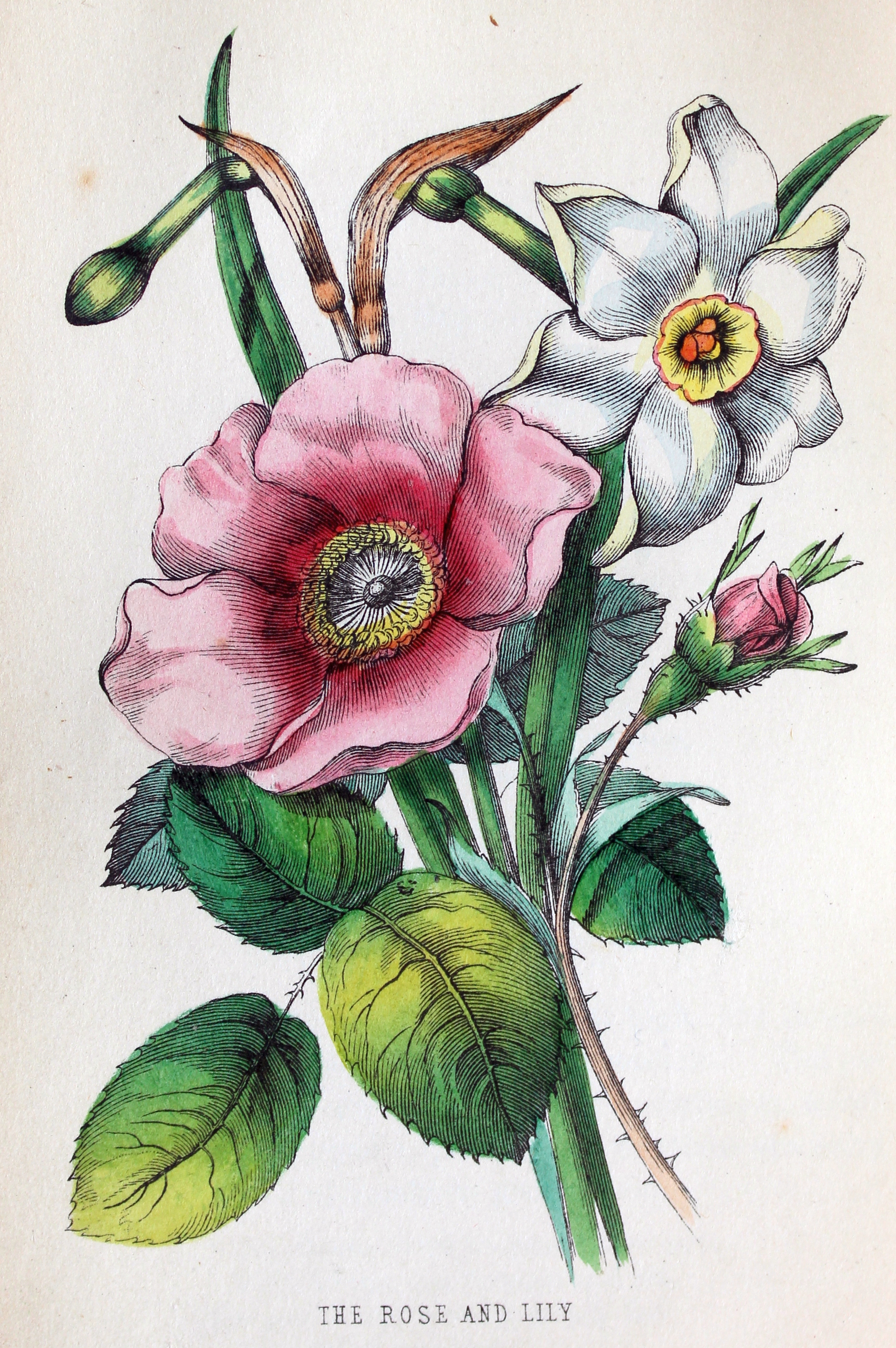
Rose and Lily illustration from Songs of the Seasons and Wild Flowers of the Months
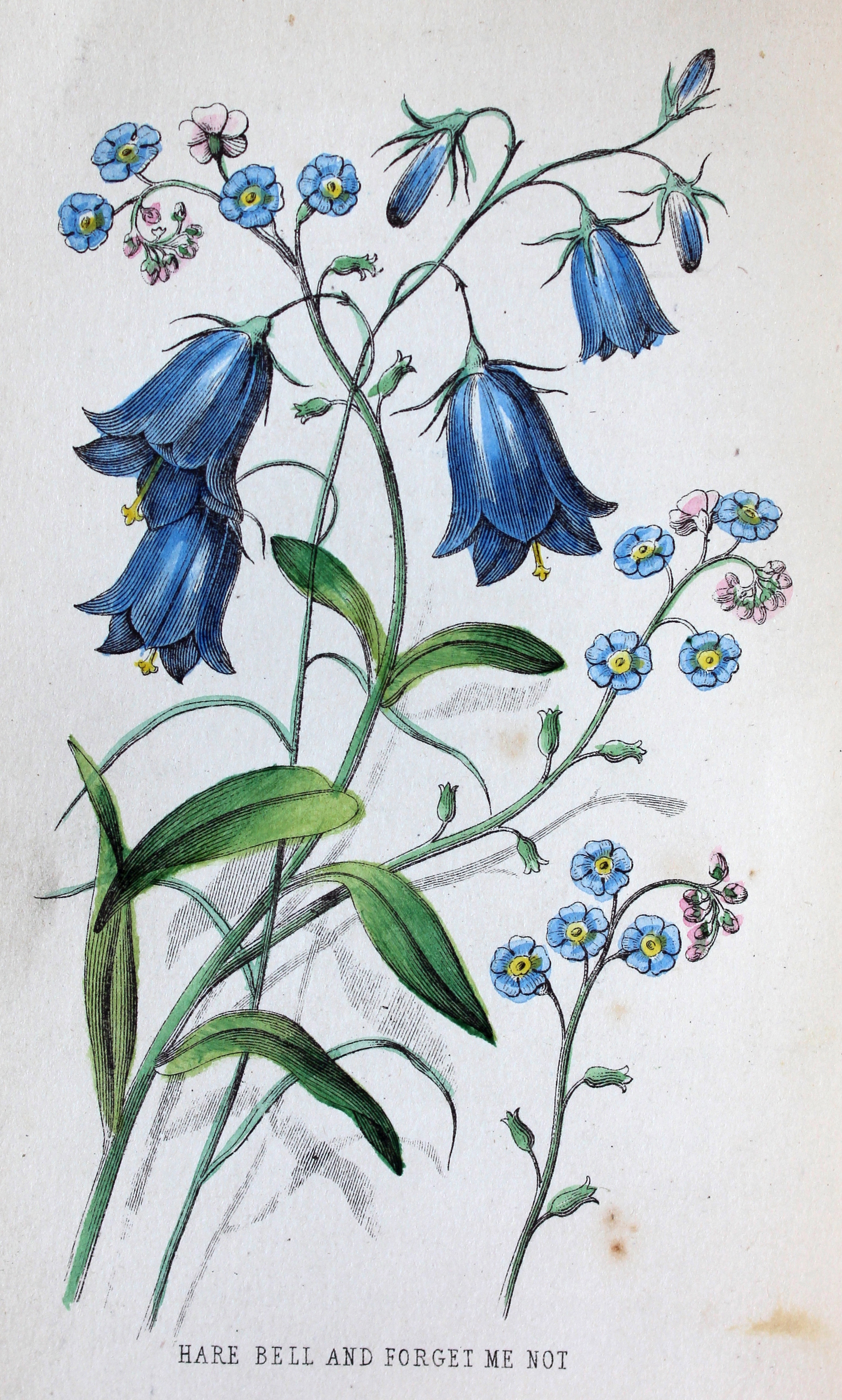
Hare Bell and Forget Me Not illustration from Songs of the Seasons and Wild Flowers of the Months
The cover of Voices of the Garden, the Woods and the Fields, or, The Teachings of Nature as Seasons Change is decorated with little figures representing each season, the one for summer being a boy sleeping amongst foliage. The internal illustration provides a bucolic image of harvest time and cattle wading in a stream.
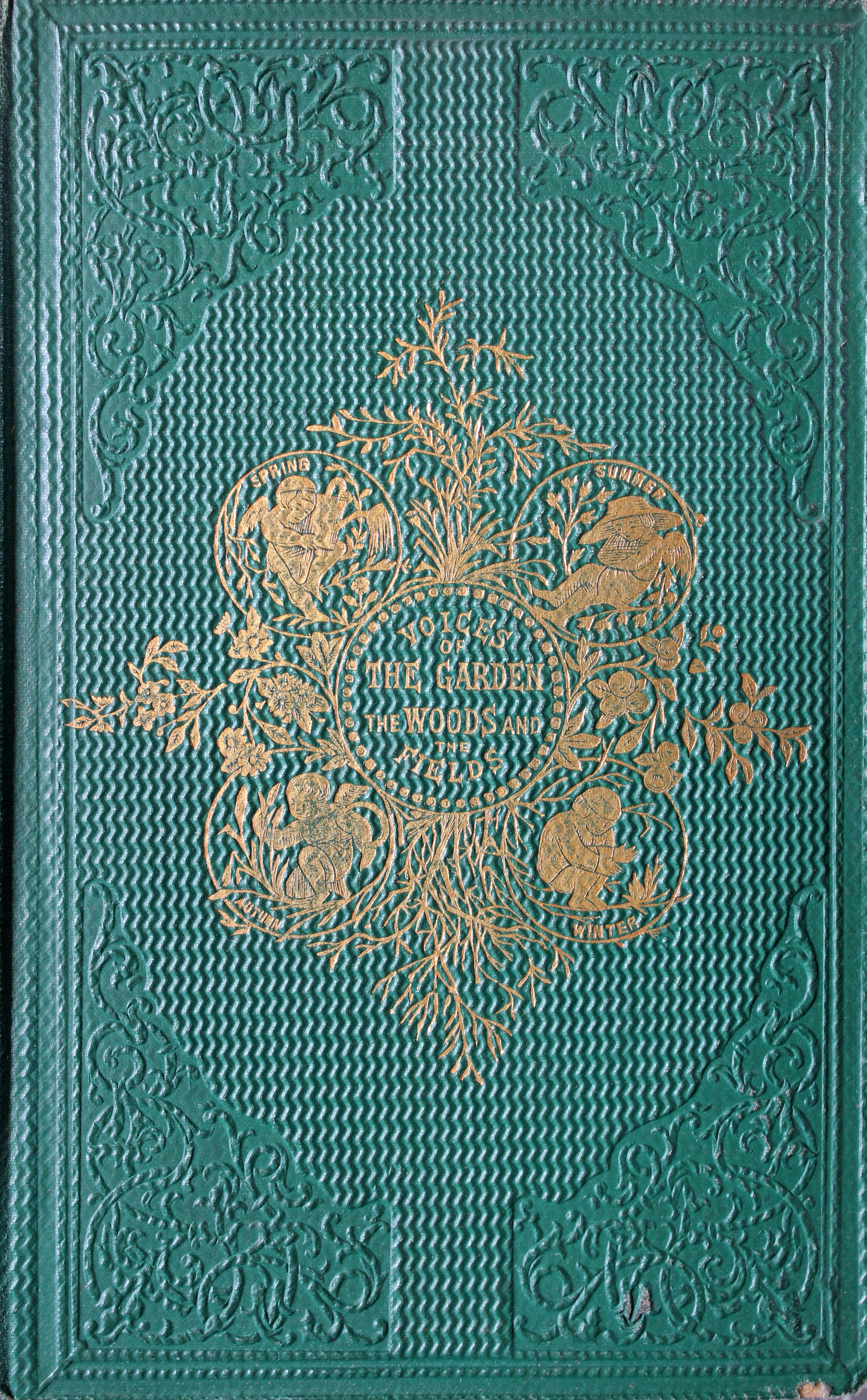
Cover of Voices of the Garden, the Woods and the Fields, or, The Teachings of Nature as Seasons Change, London: T. Nelson & Sons, 1860. Shelfmark: Rylands.VOI.1860
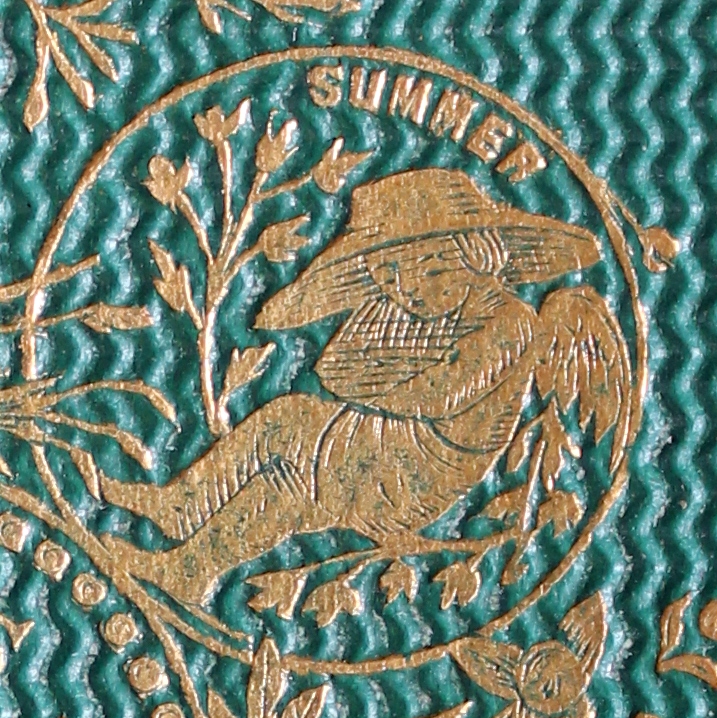
Detail from the cover of Voices of the Garden, the Woods and the Fields
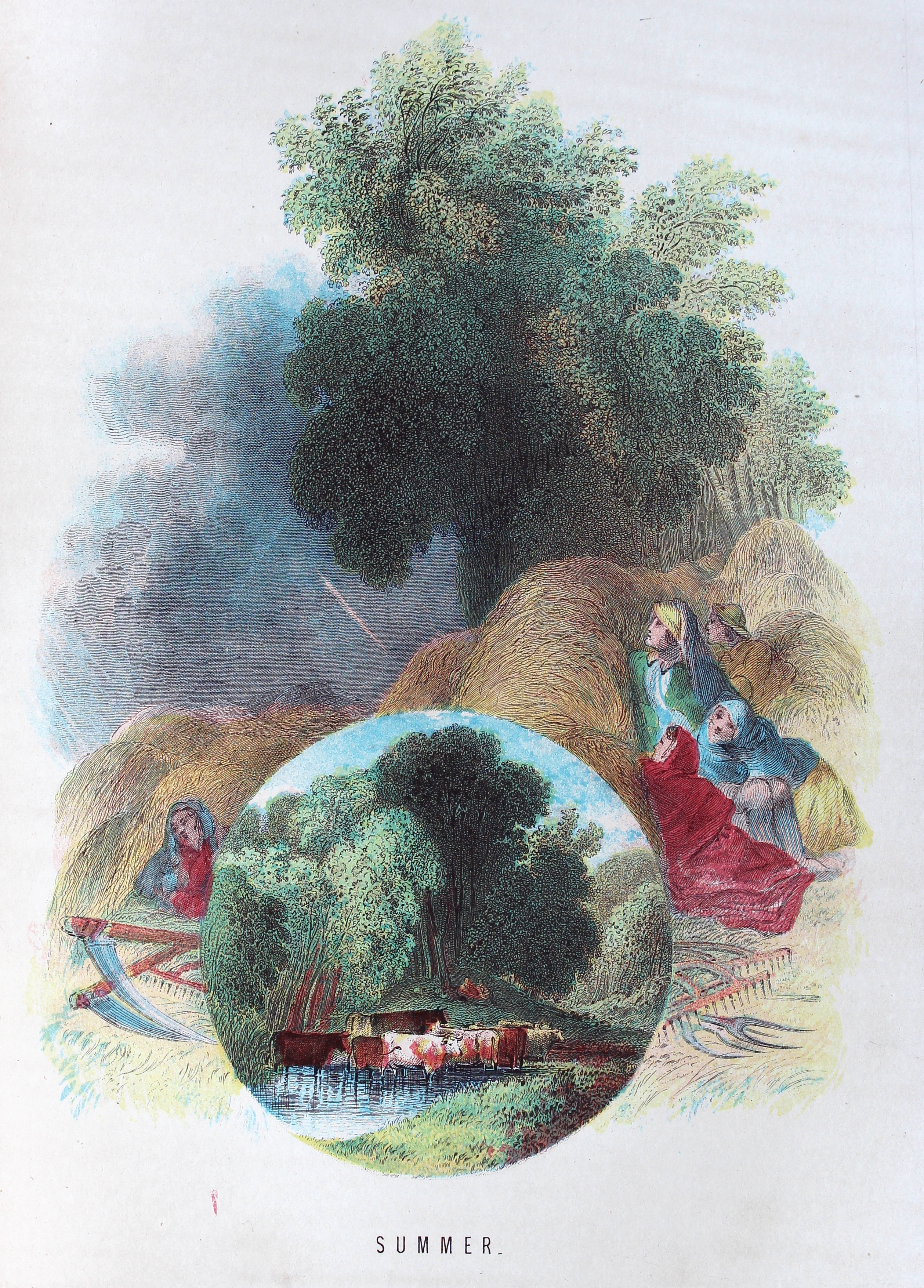
Illustration representing summer from Voices of the Garden, the Woods and the Fields
The artist Walter Crane (1845-1915) was a significant figure in the Arts and Crafts movement of the late nineteenth century. Between 1886 and 1906 he produced a series of fantastical flower-themed books with glorious colour illustrations. In the first of these, Flora’s Feast: A Masque of Flowers, published in 1889, Crane presents a troop of floral figures who have been awakened by their Queen and who process through the year accompanied by a rhyming commentary. The figures representing the summer months are pictured below.
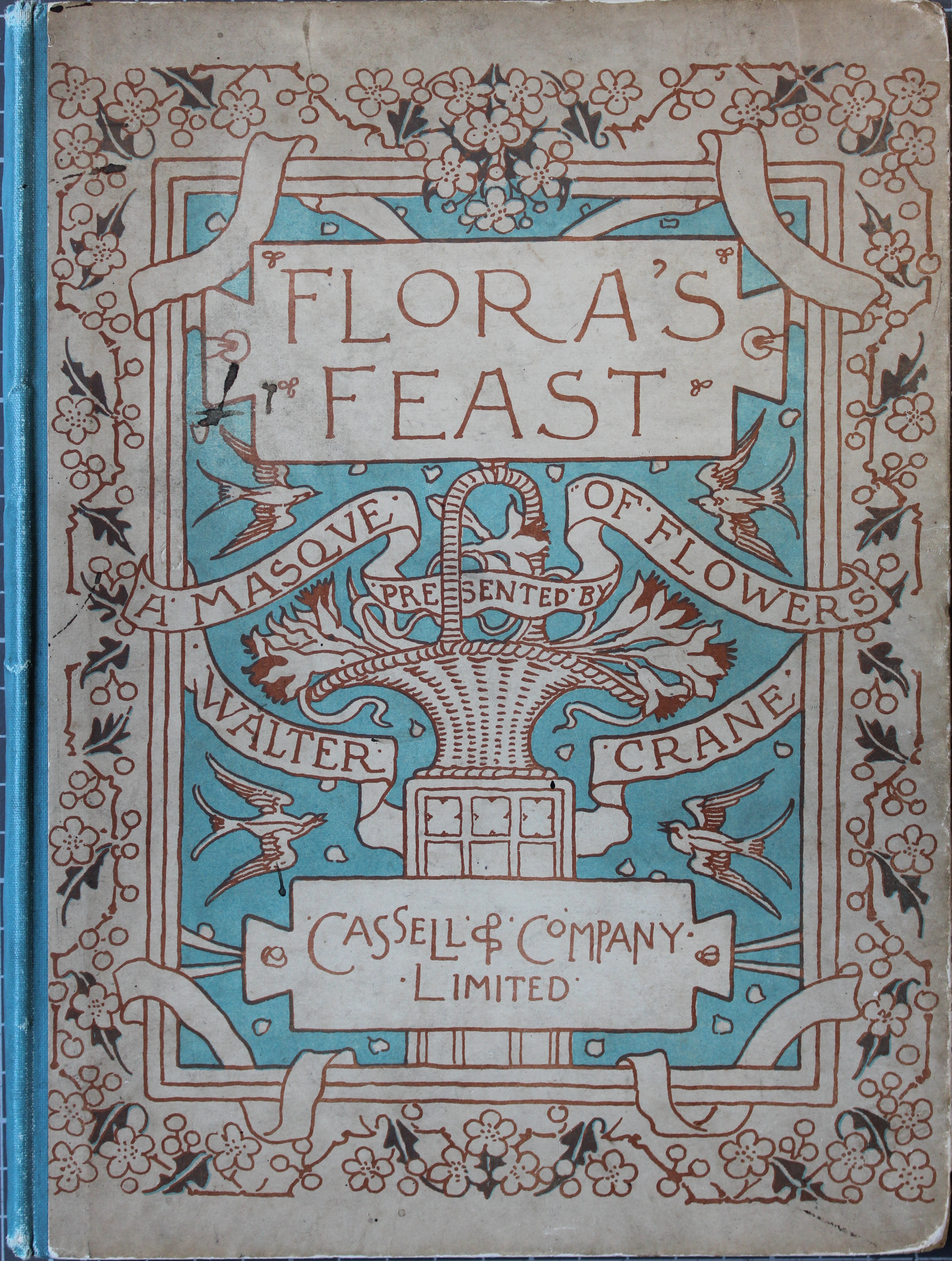
Cover of Flora’s Feast: A Masque of Flowers by Walter Crane, London: Cassell and Company Limited, 1889. Shelfmark: Rylands.C.CRA.Flor.1889
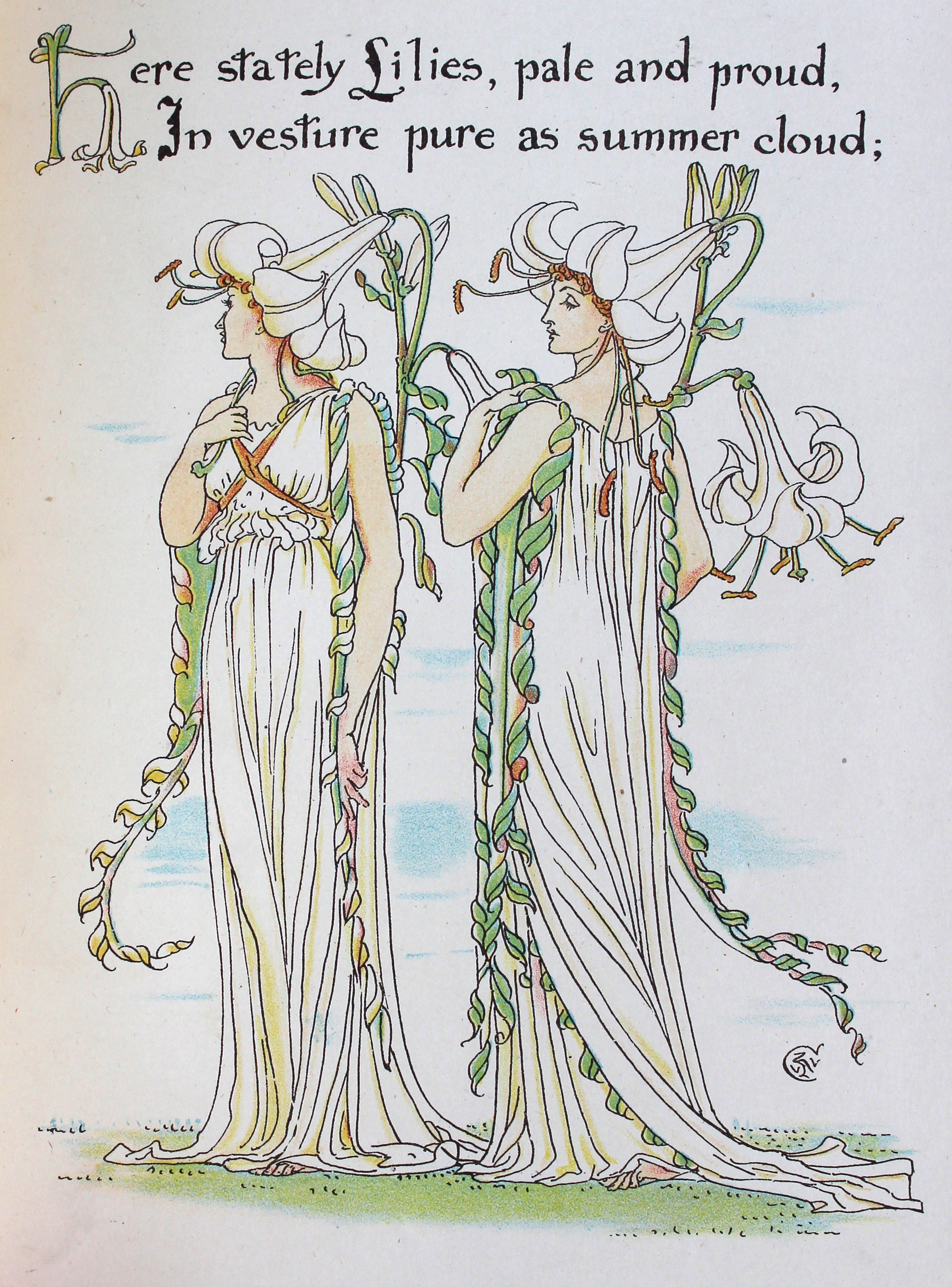
Illustration on page 25 of Flora’s Feast
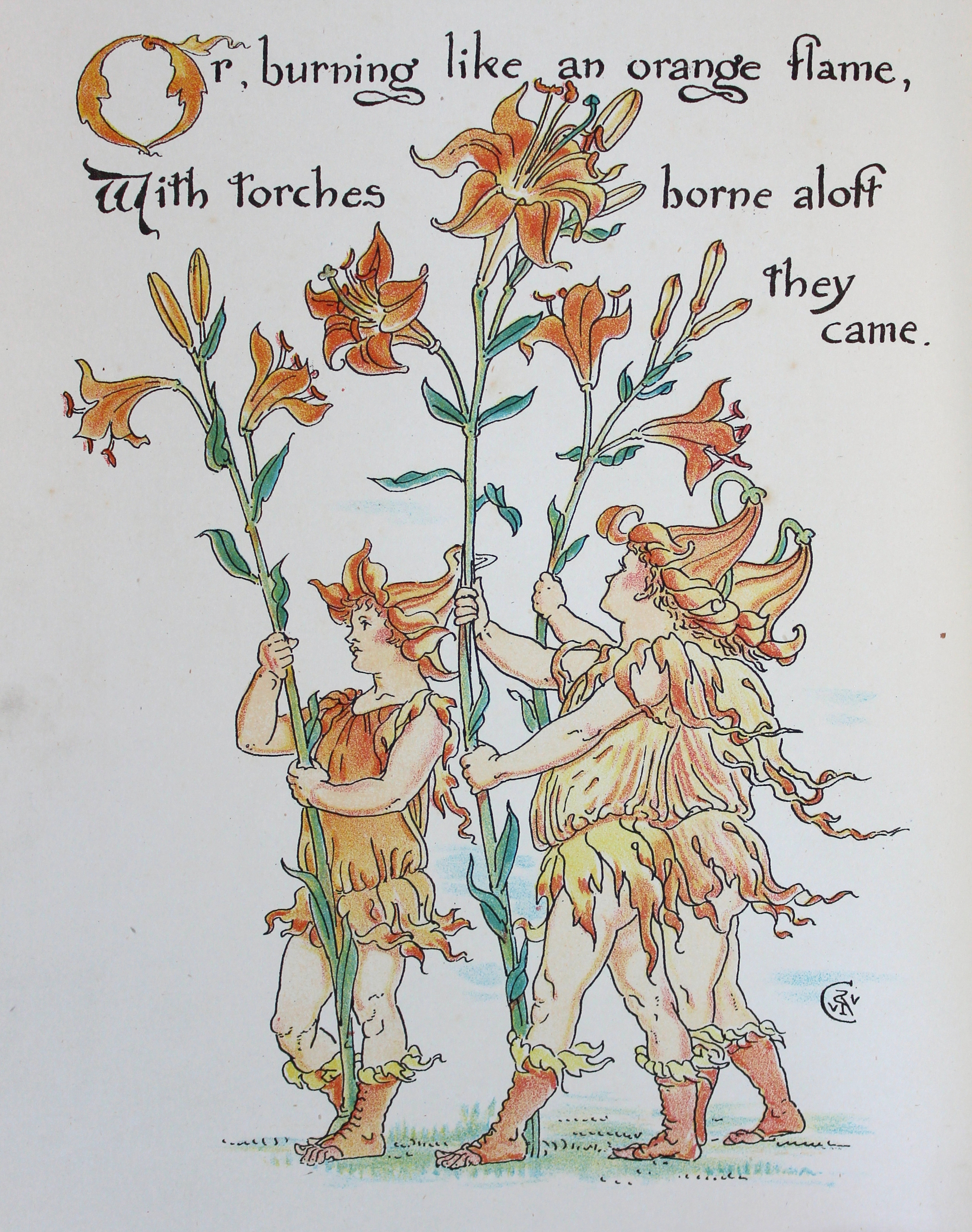
Illustration on page 26 of Flora’s Feast
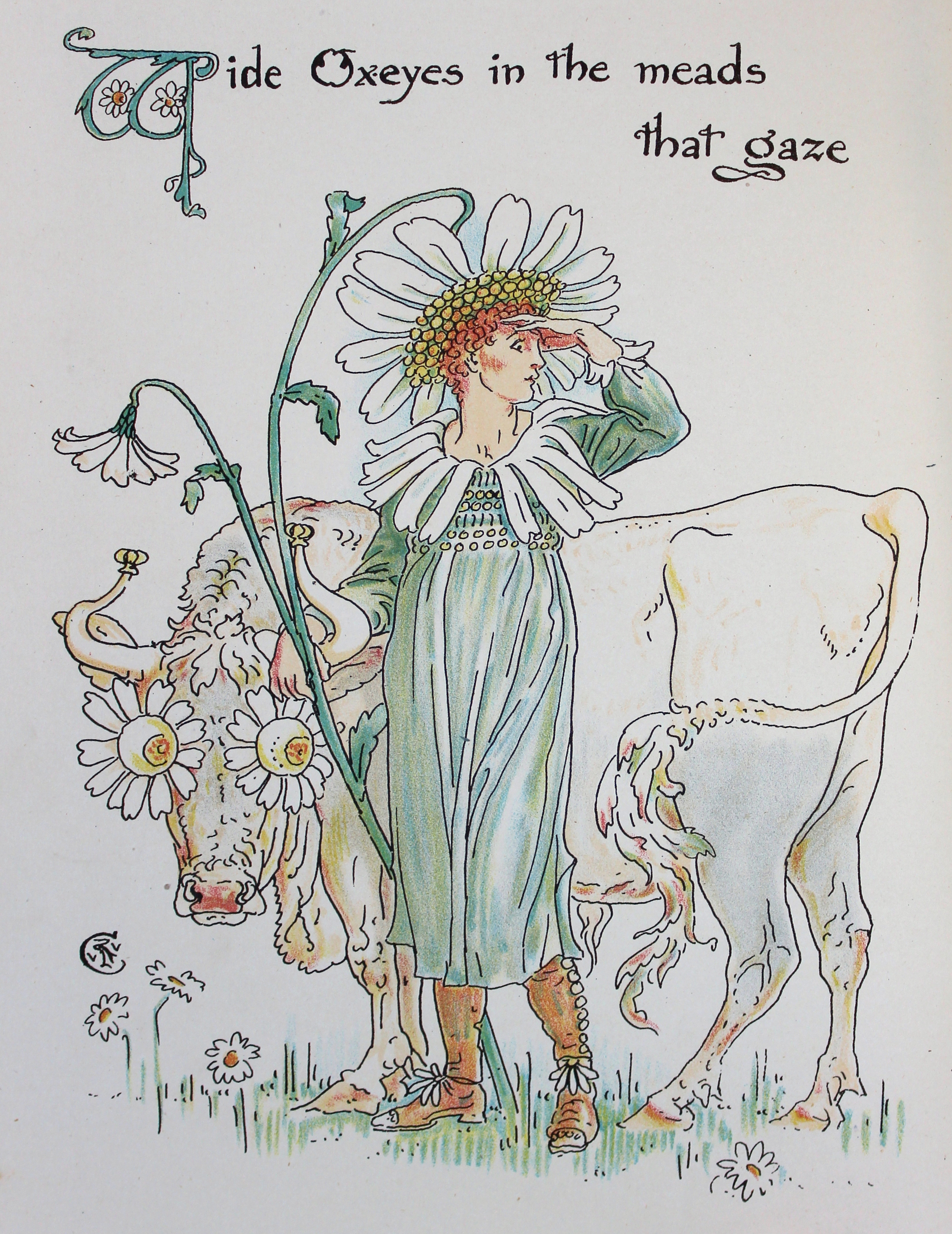
Illustration on page 28 of Flora’s Feast
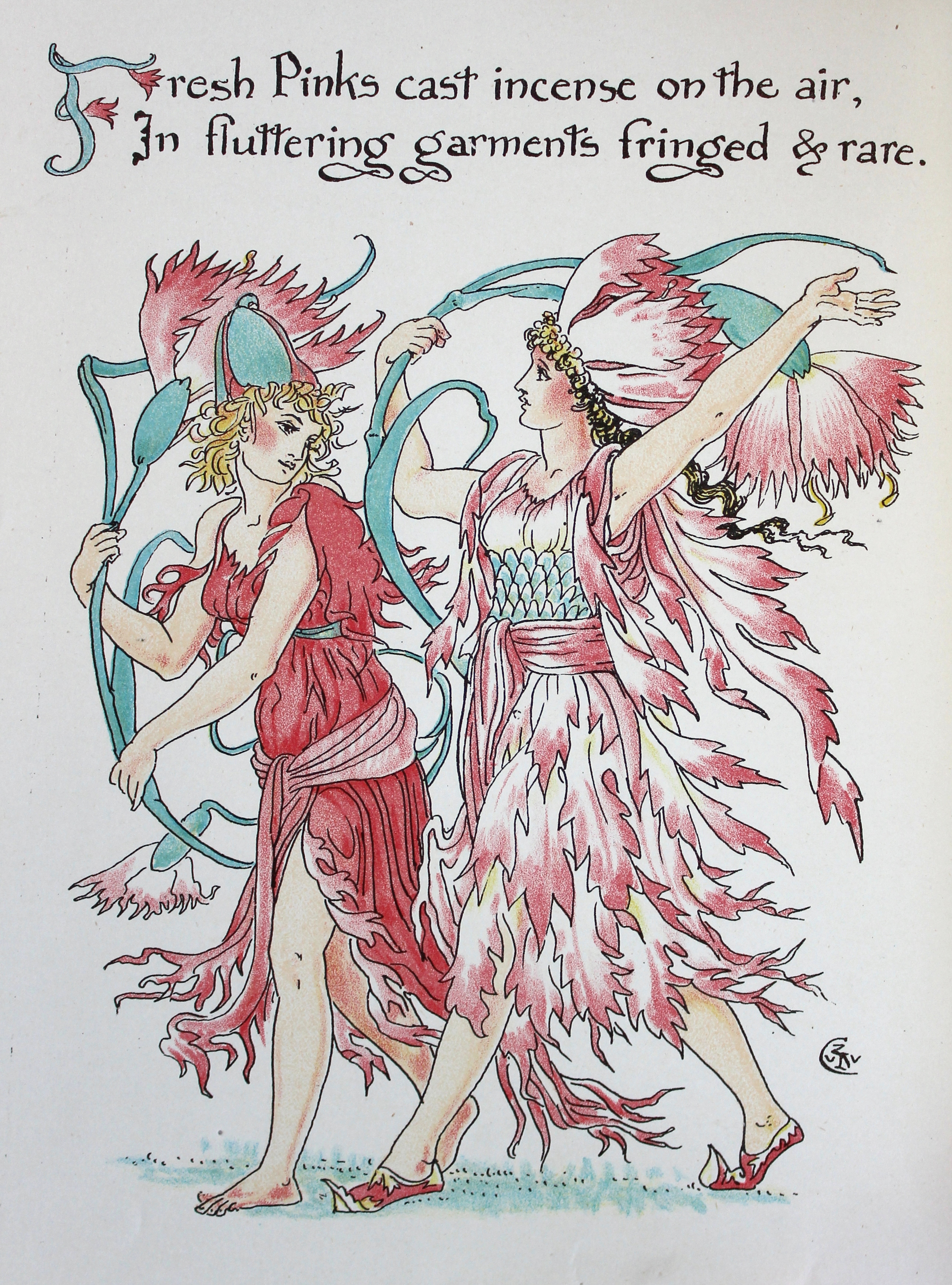
Illustration on page 32 of Flora’s Feast
The Boy’s Summer Book describes the activities and escapades of a group of schoolboys during their summer holidays. Girls, presumably, were expected to confine themselves to more domestic pursuits. The illustrations below show the boys participating in cricket matches and boating excursions, helping with the harvest and washing sheep in the river.
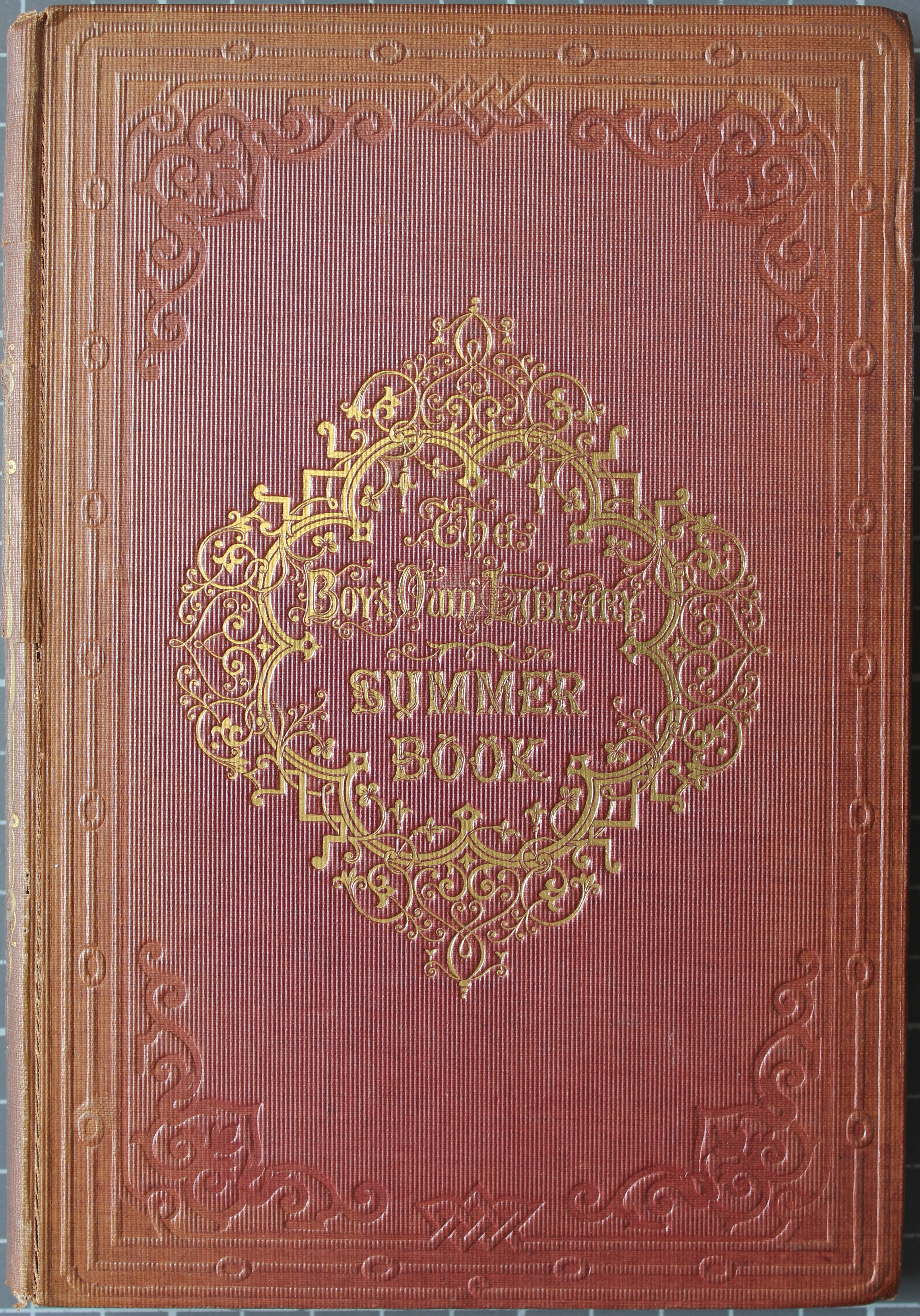
Cover of The Boy’s Summer Book: Descriptive of the Season, Scenery, Rural Life and Country Amusements by Thomas Miller, London: Chapman and Hall, 1846. Shelfmark: Rylands.C.MIL.Sum.1846
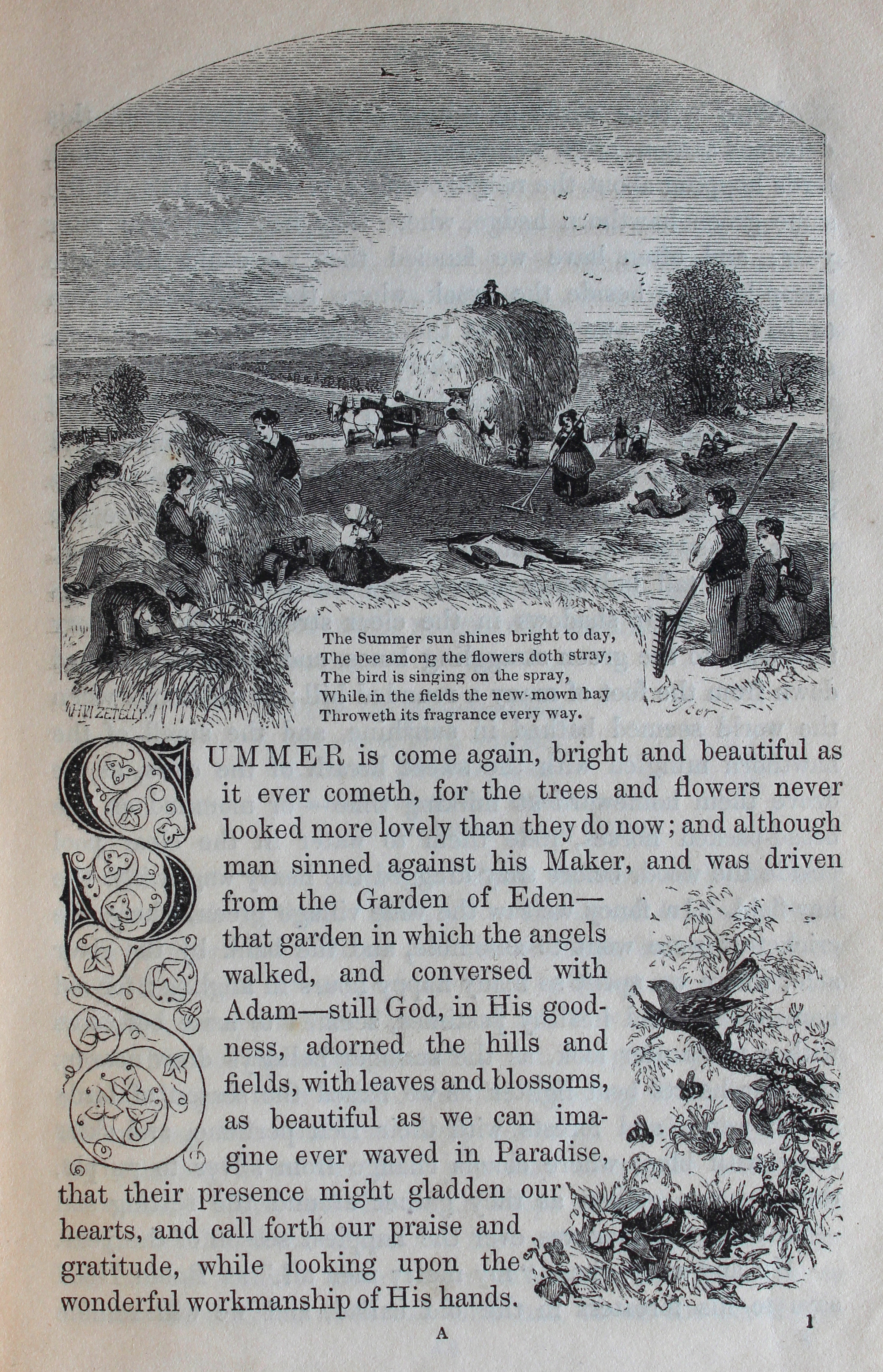
Page 1 of The Boy’s Summer Book
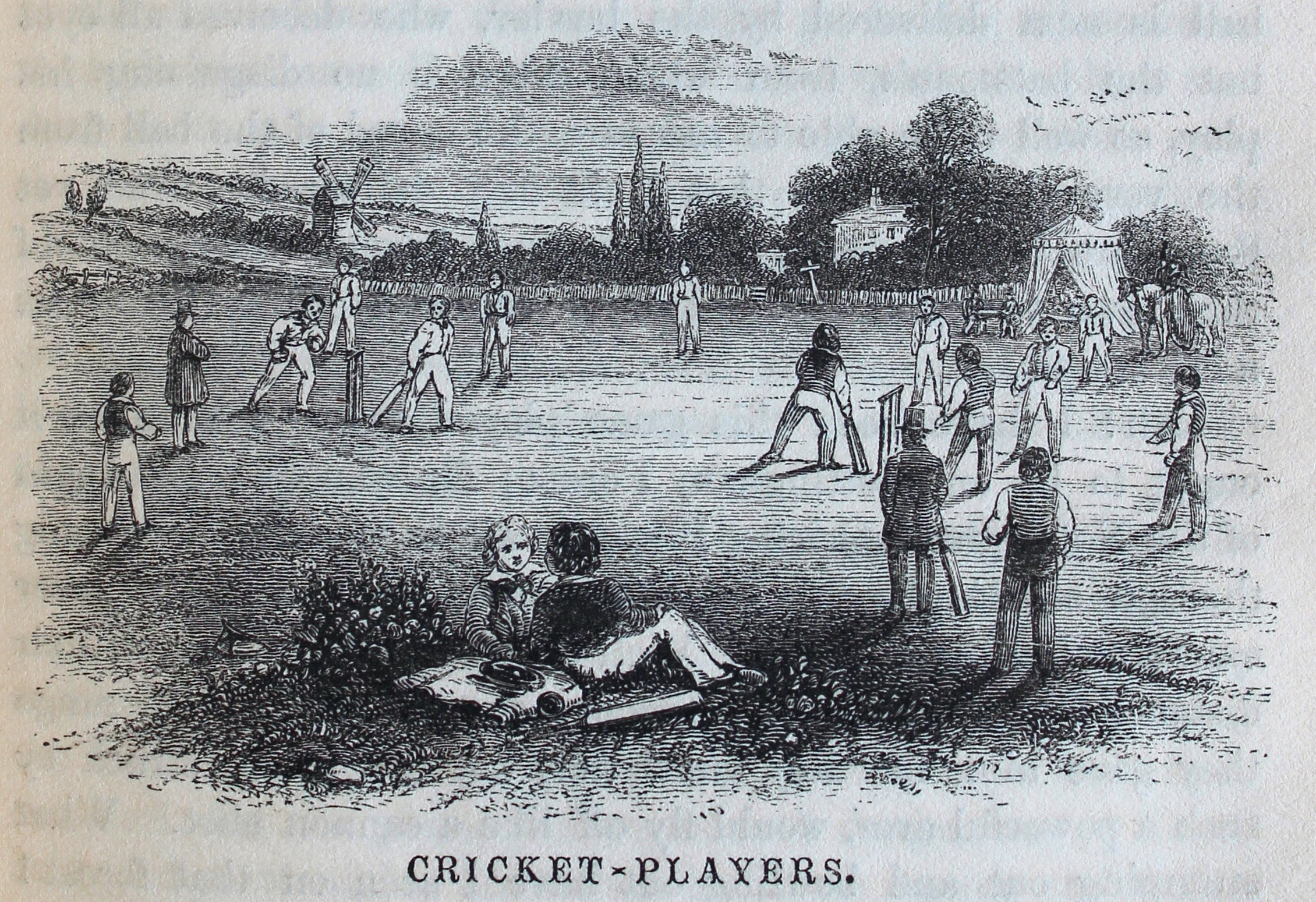
Illustration from page 83 of The Boy’s Summer Book
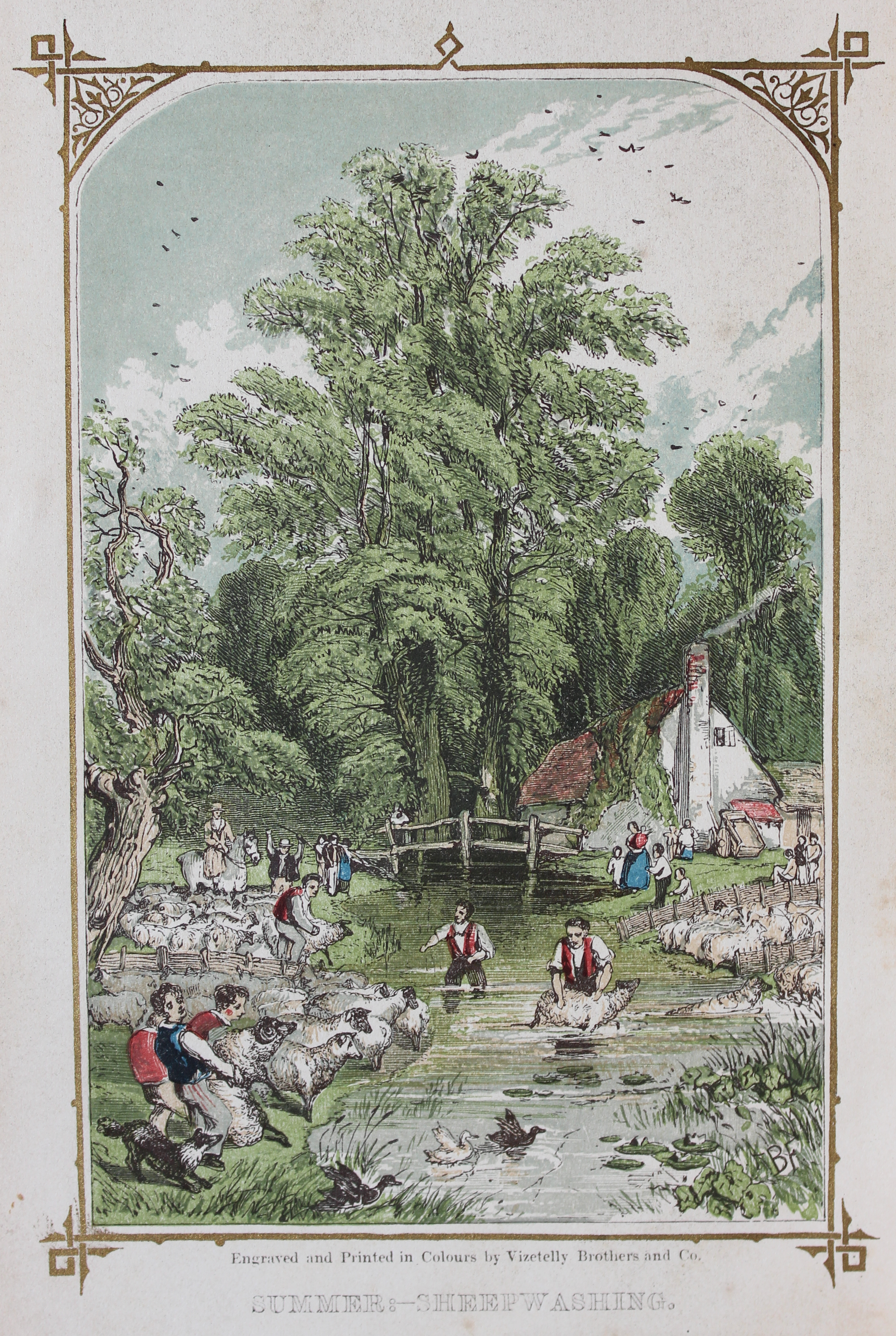
Frontispiece of The Boy’s Summer Book
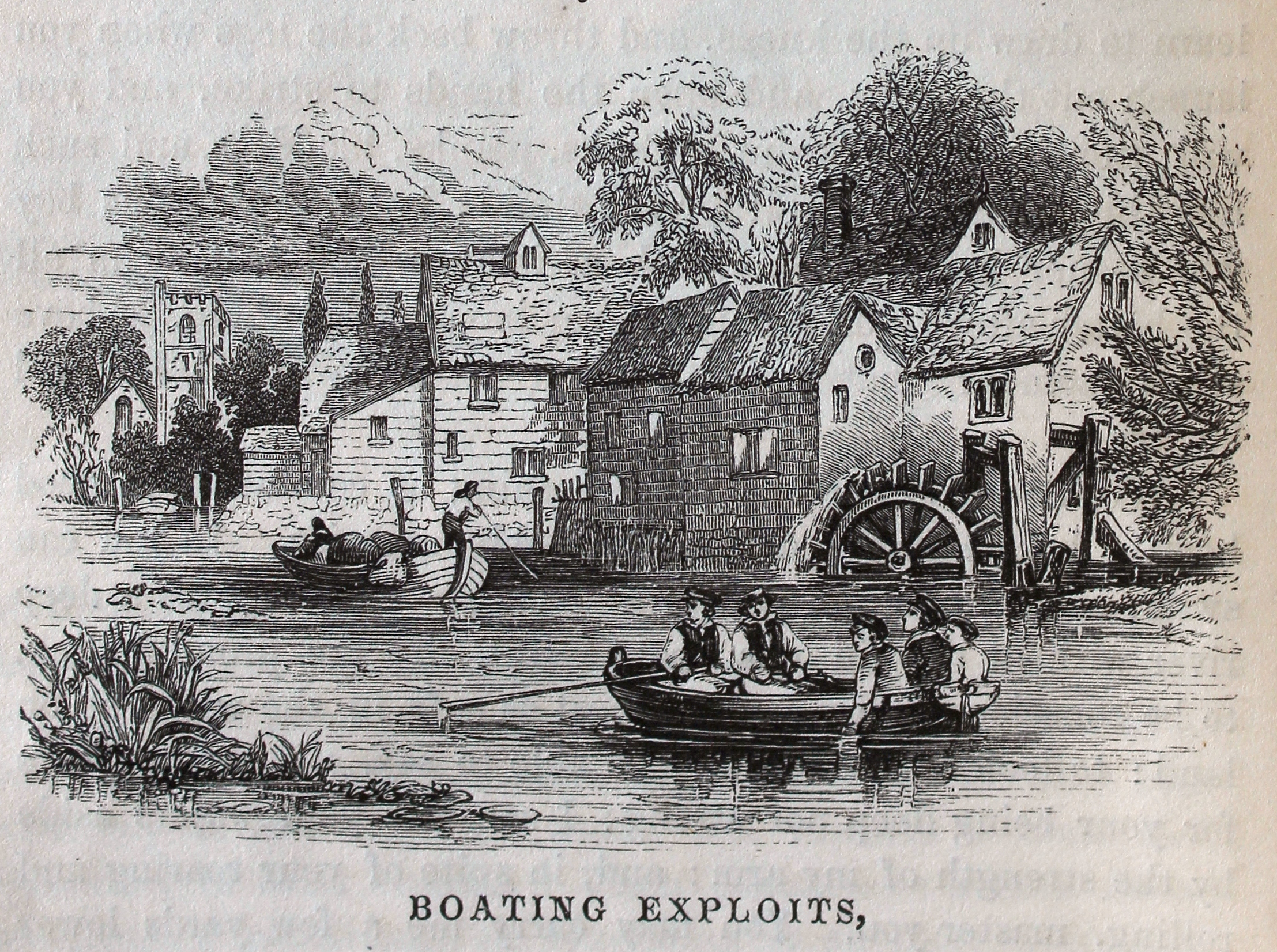
Illustration from page 14 of The Boy’s Summer Book
Trips to the coast are another traditional summer activity, holding out the promise of fresh sea air and fun on the beach. The book At Home includes two quite wistful seaside-themed poems which are accompanied by delicate and evocative illustrations by the artist John George Sowerby (1849-1914).
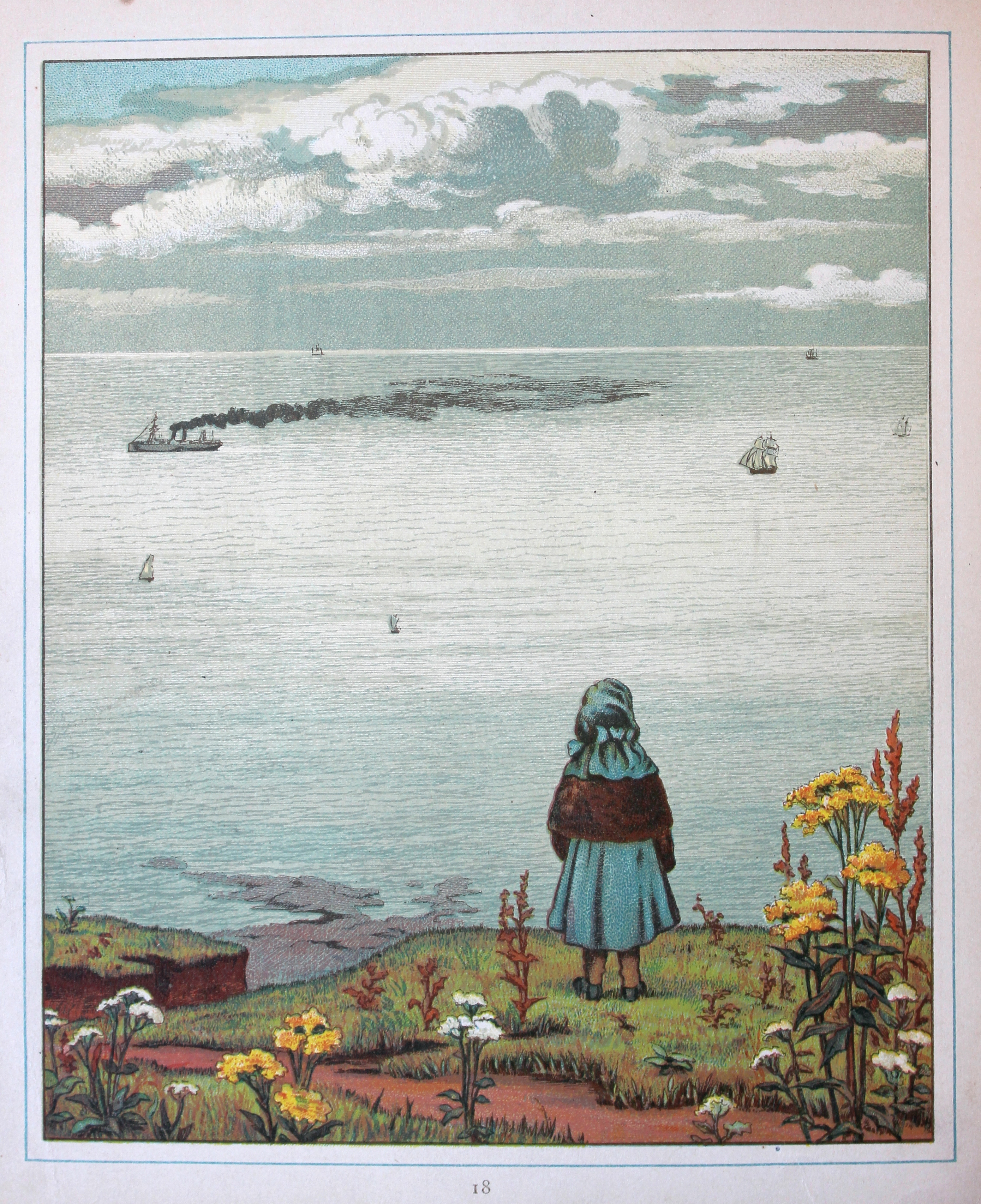
Illustration from page 18 of At Home illustrated by J.G. Sowerby, decorated by Thomas Crane, London: Marcus Ward and Co, 1881. Shelfmark: Rylands.C.SOW.Ath.1881
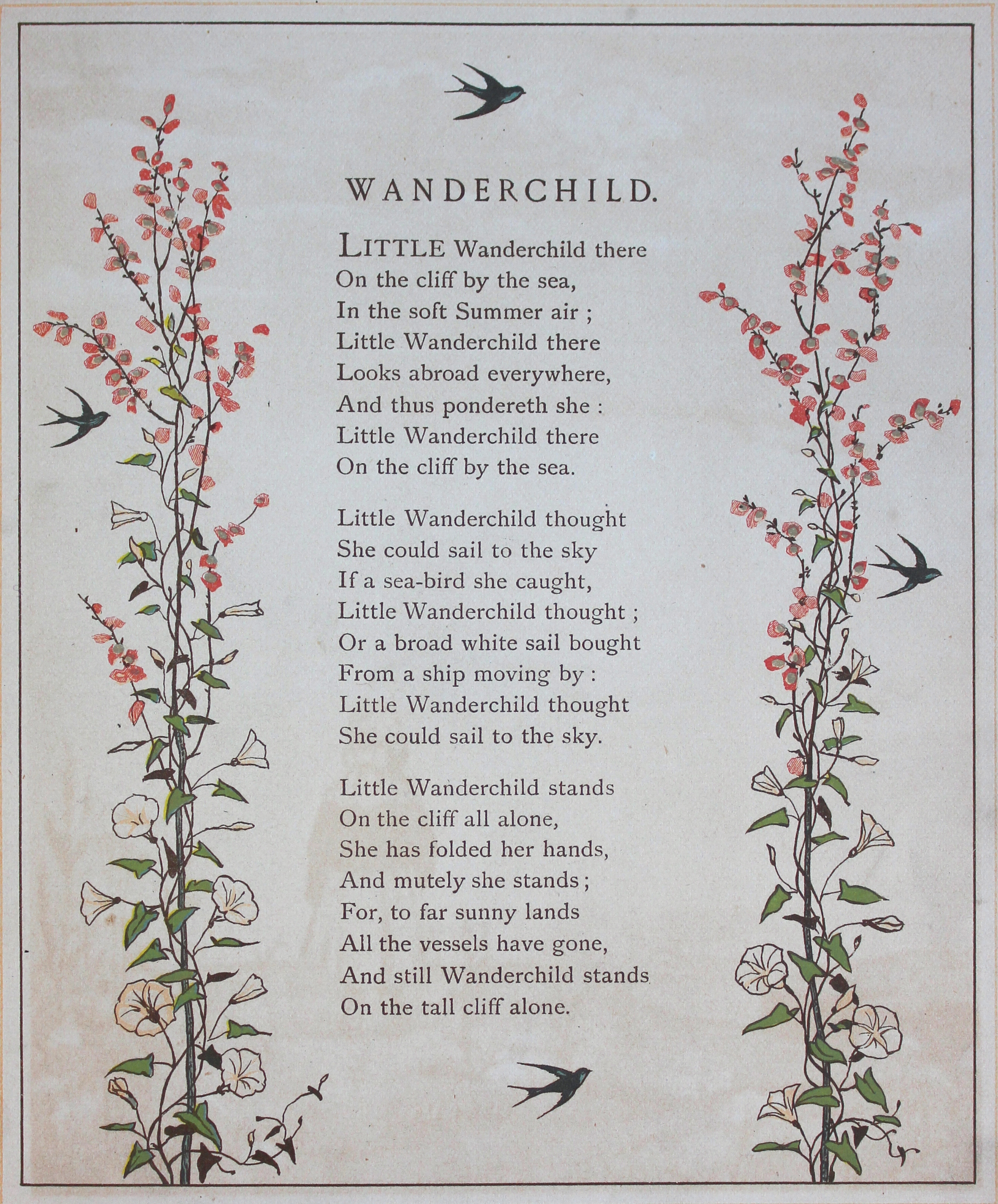
Poem from page 19 of At Home
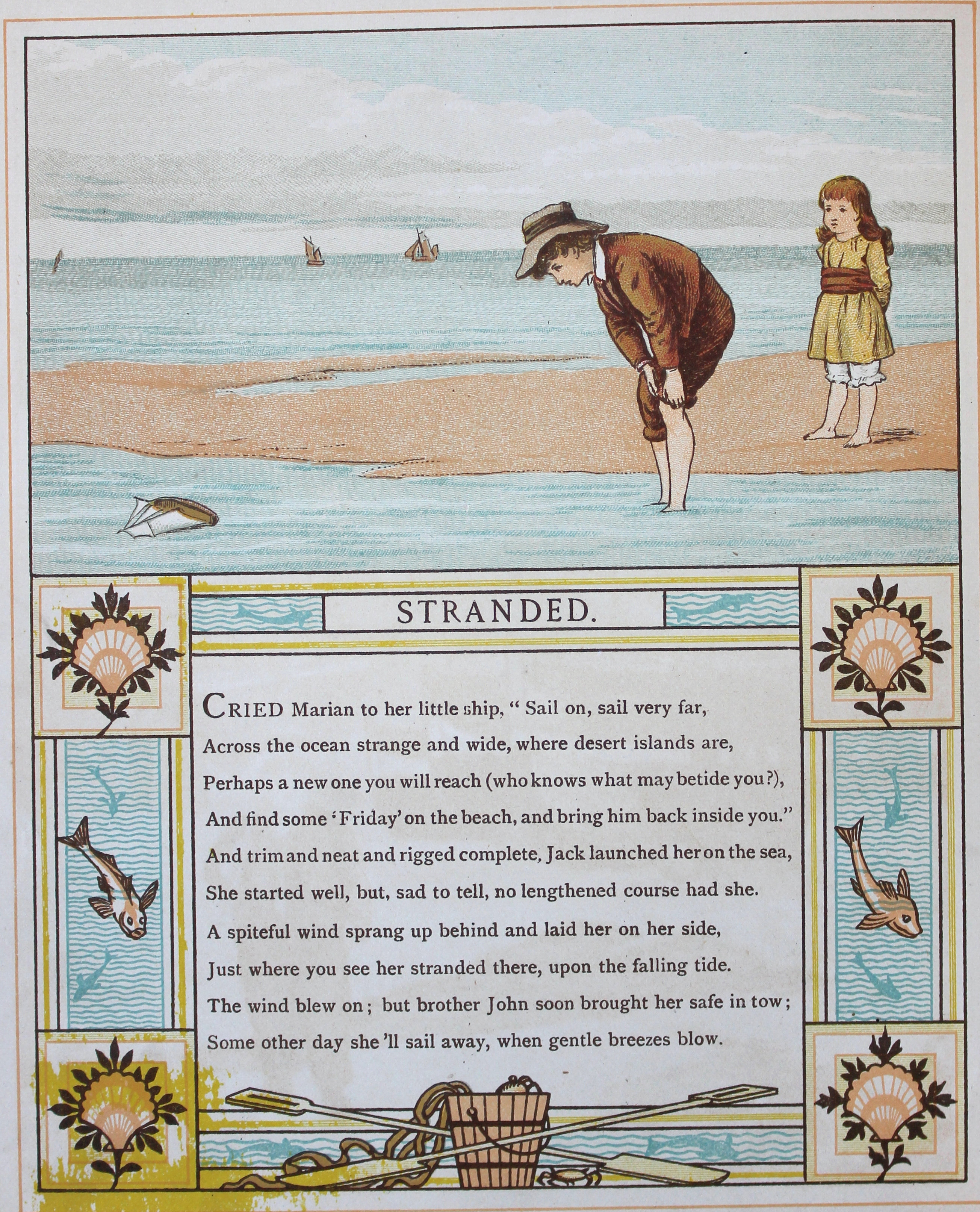
Poem from page 26 of At Home
Robert Louis Stevenson included a short seaside poem in his collection entitled A Child’s Garden of Verses, which is illustrated by Charles Robinson (1870-1937). The style is quite different to Sowerby’s above, but equally attractive. This was the first entire book Robinson illustrated and its huge popularity significantly boosted his career.
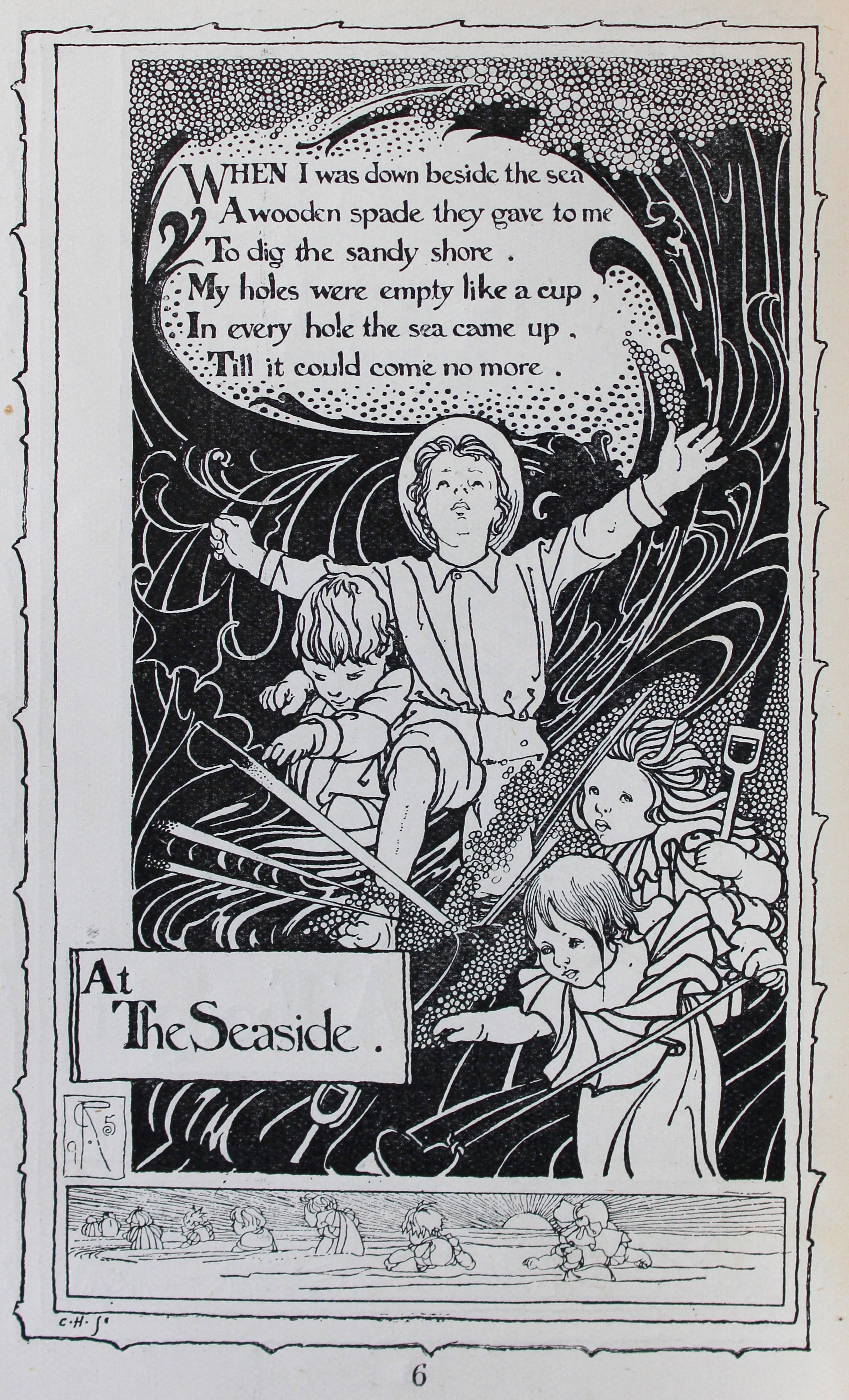
Poem from page 6 of A Child’s Garden of Verses by Robert Louis Stevenson, London: John Lane, The Bodley Head, 1896. Shelfmark: Rylands.C.STE.Chi.1896
In the poem “Bed in Summer” a child bemoans the fact that they must go to bed whilst it is still light outside and adults are still going about their day, a perennial complaint. Another poem forms an ode to the sun during this season.
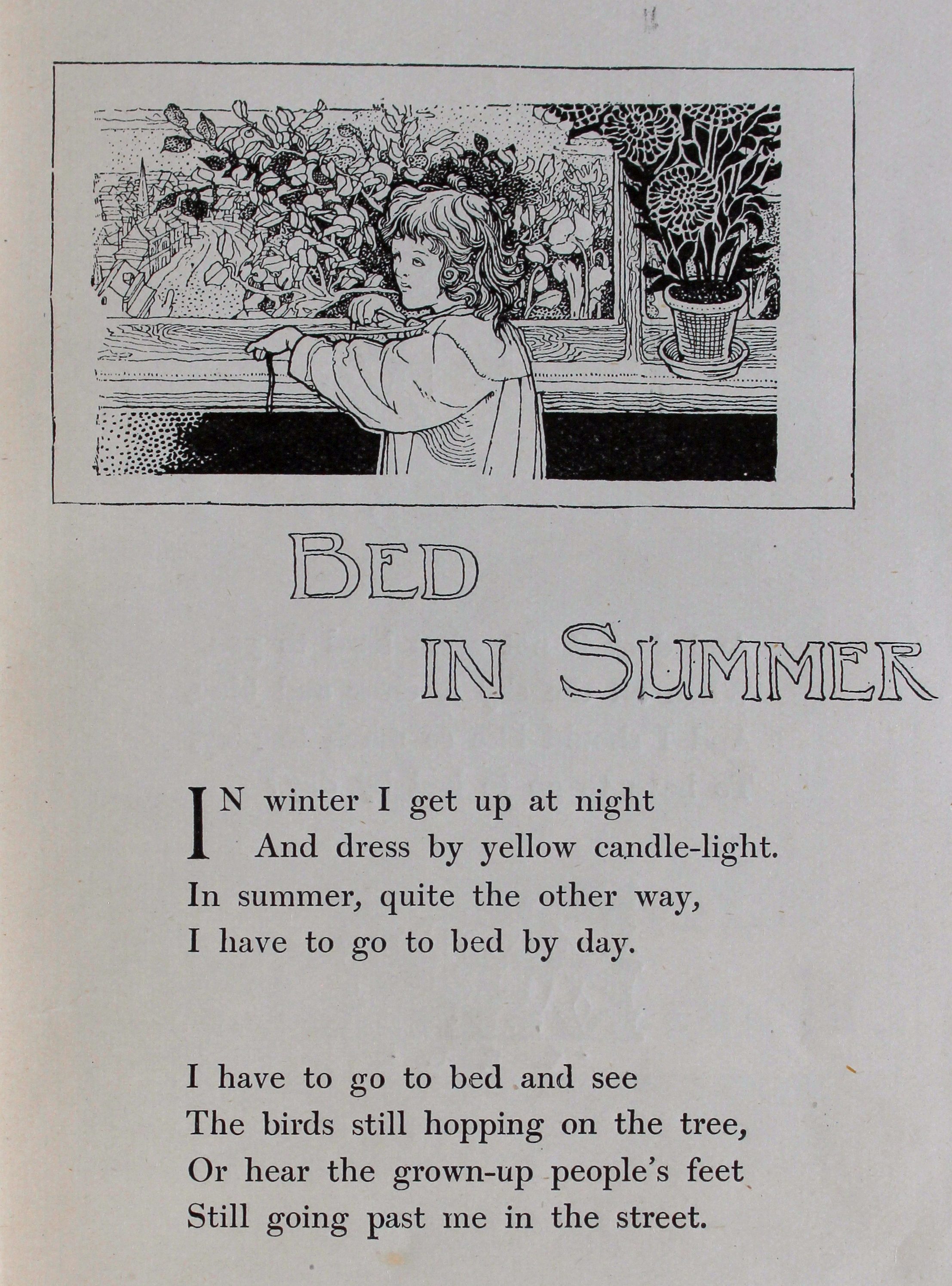
Poem from page 3 of A Child’s Garden of Verses
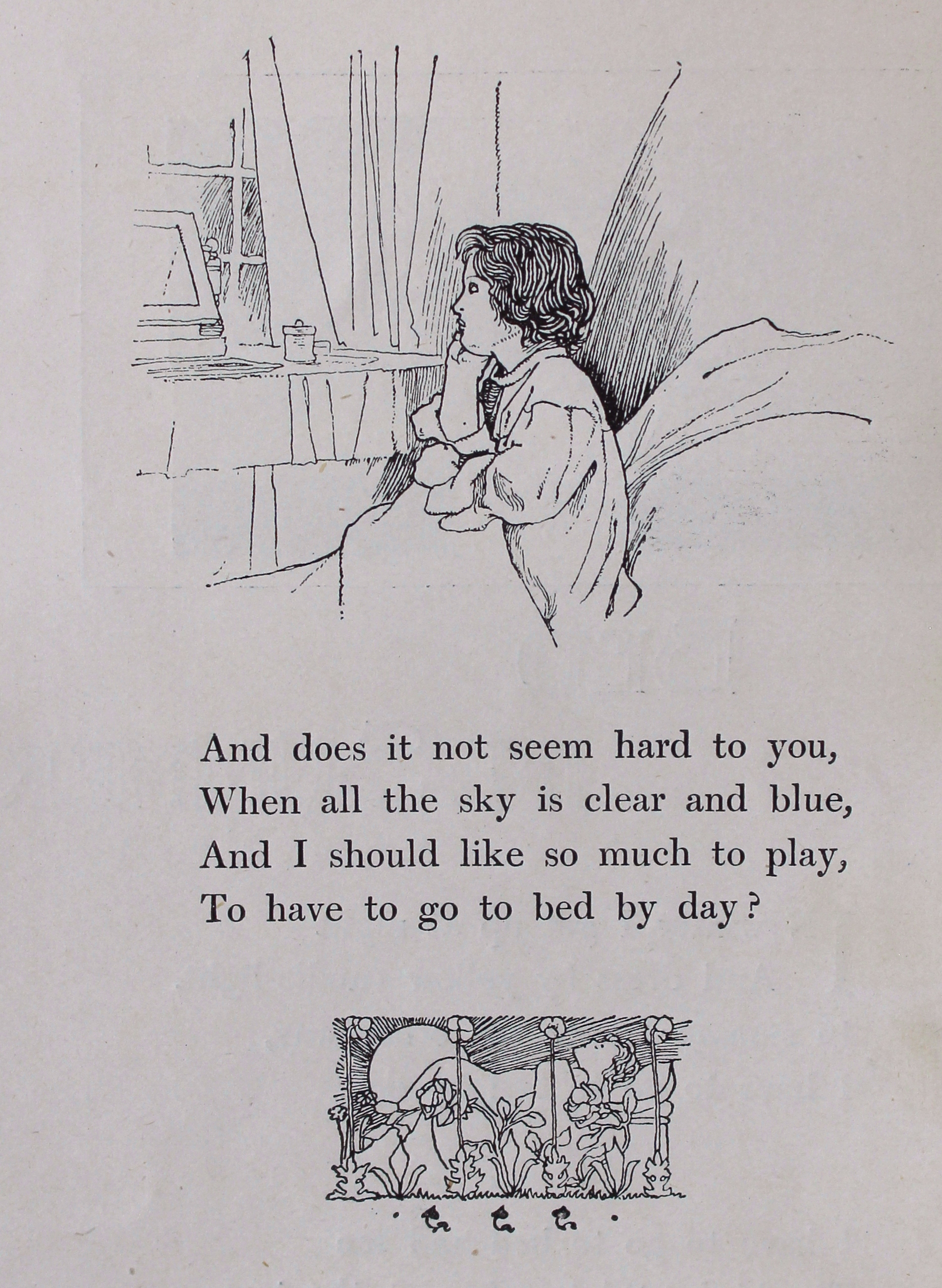
Page 4 of A Child’s Garden of Verses
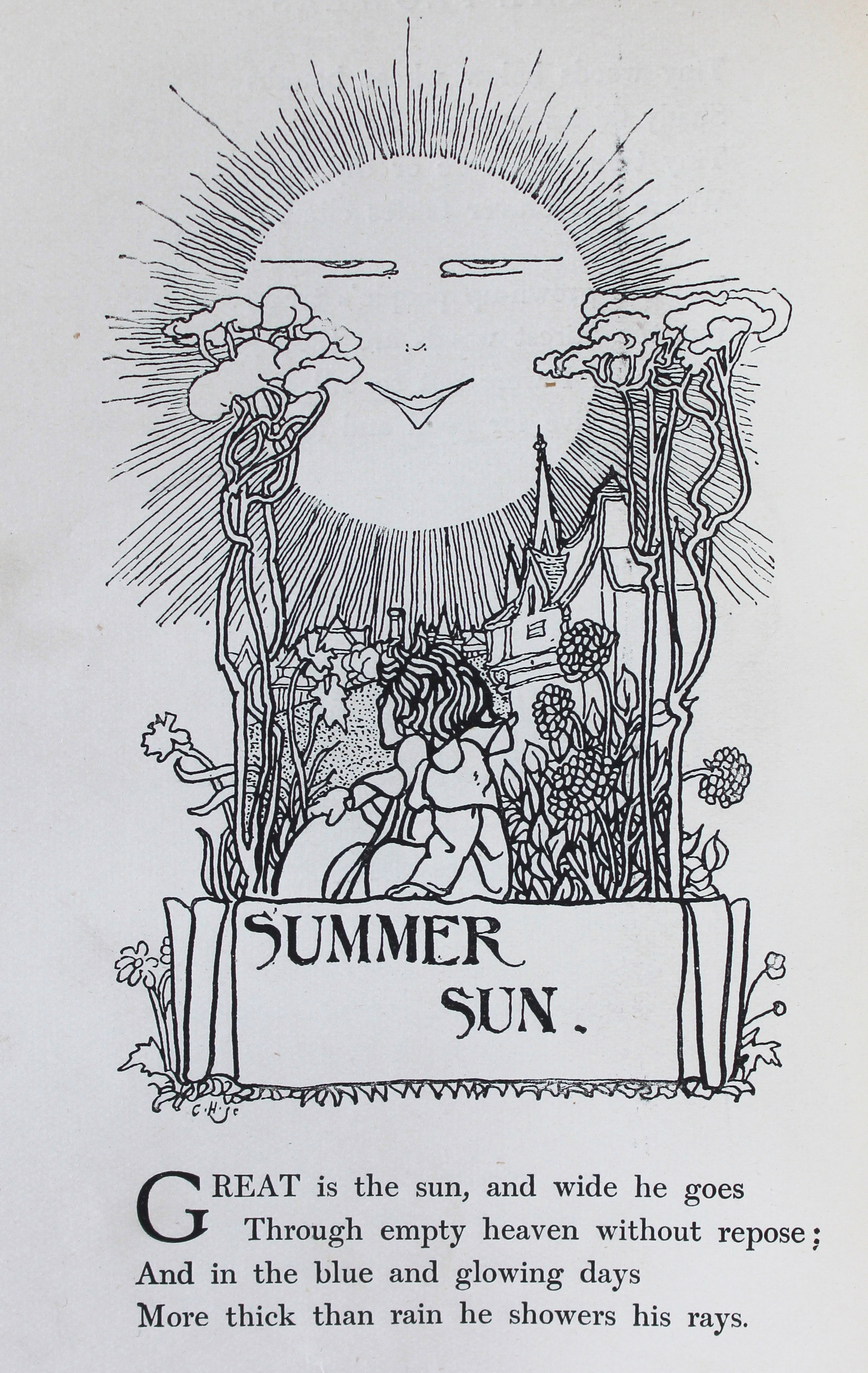
Poem from page 112 of A Child’s Garden of Verses
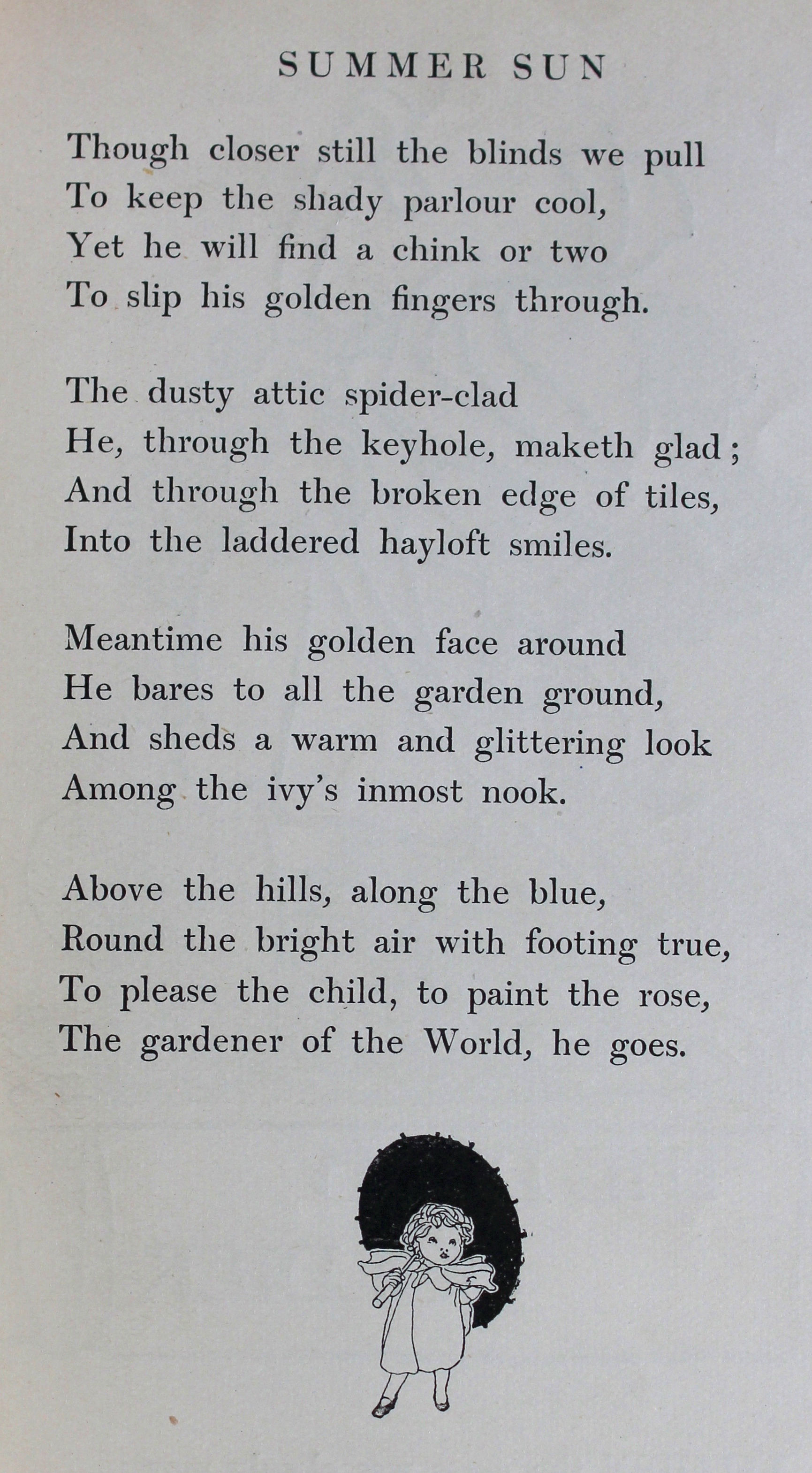
Page 113 of A Child’s Garden of Verses
Charles Robinson came from a very artistic family. His brother, William Heath Robinson (1872-1944), became famous for his illustrations of weird and wonderful contraptions intended to automate everyday tasks in convoluted ways. More relevant to our theme, Heath Robinson also illustrated a 1914 edition of Shakespeare’s A Midsummer Night’s Dream. A selection of these gorgeous illustrations brings this post to a conclusion. We hope you have enjoyed this saunter through summers long ago.
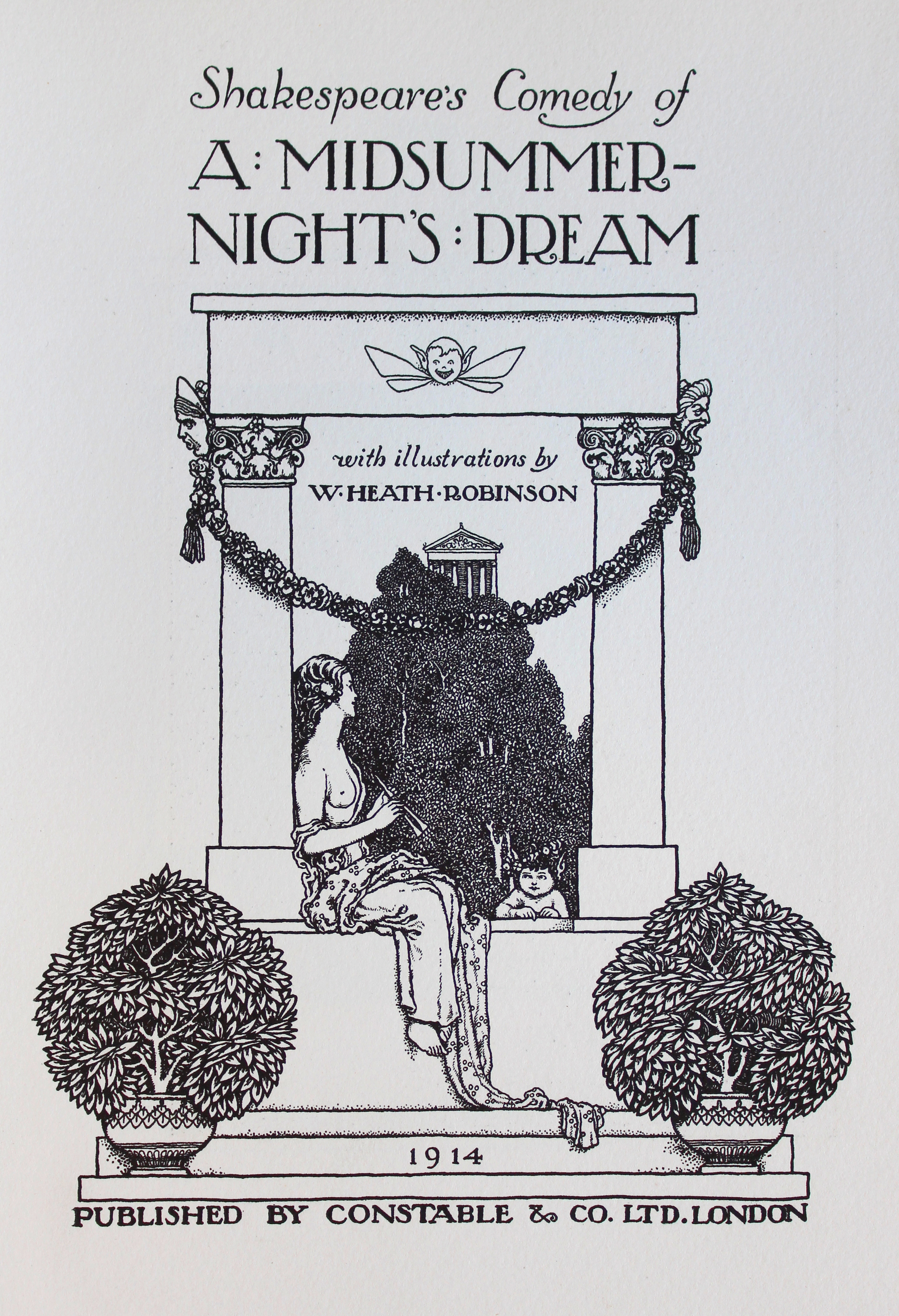
Title page of Shakespeare’s Comedy of A Midsummer Night’s Dream with illustrations by W. Heath Robinson, London: Constable & Co., 1914. Shelfmark: Walser.SHA.Mid.1914
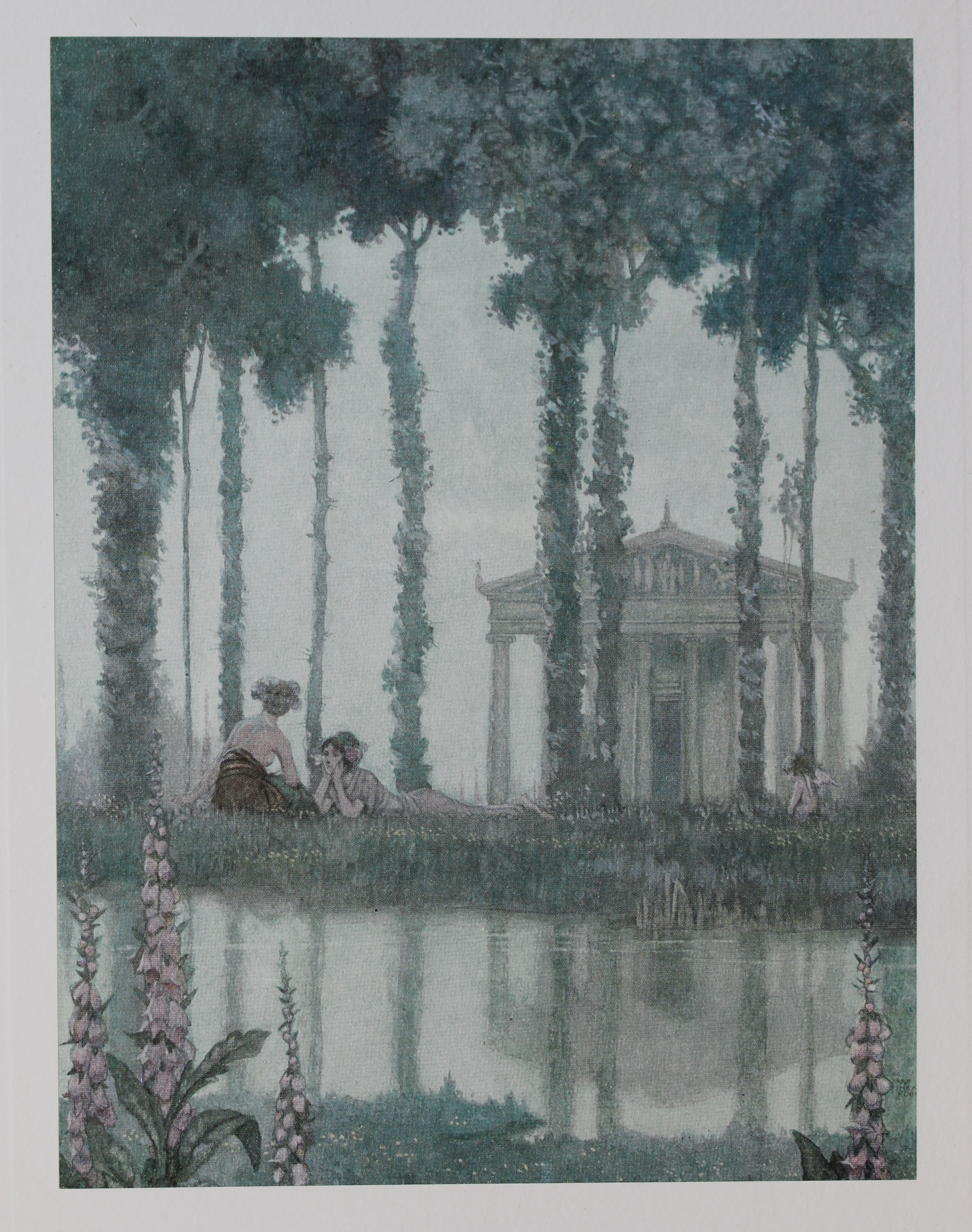
Plate facing page 64 of Shakespeare’s Comedy of A Midsummer Night’s Dream
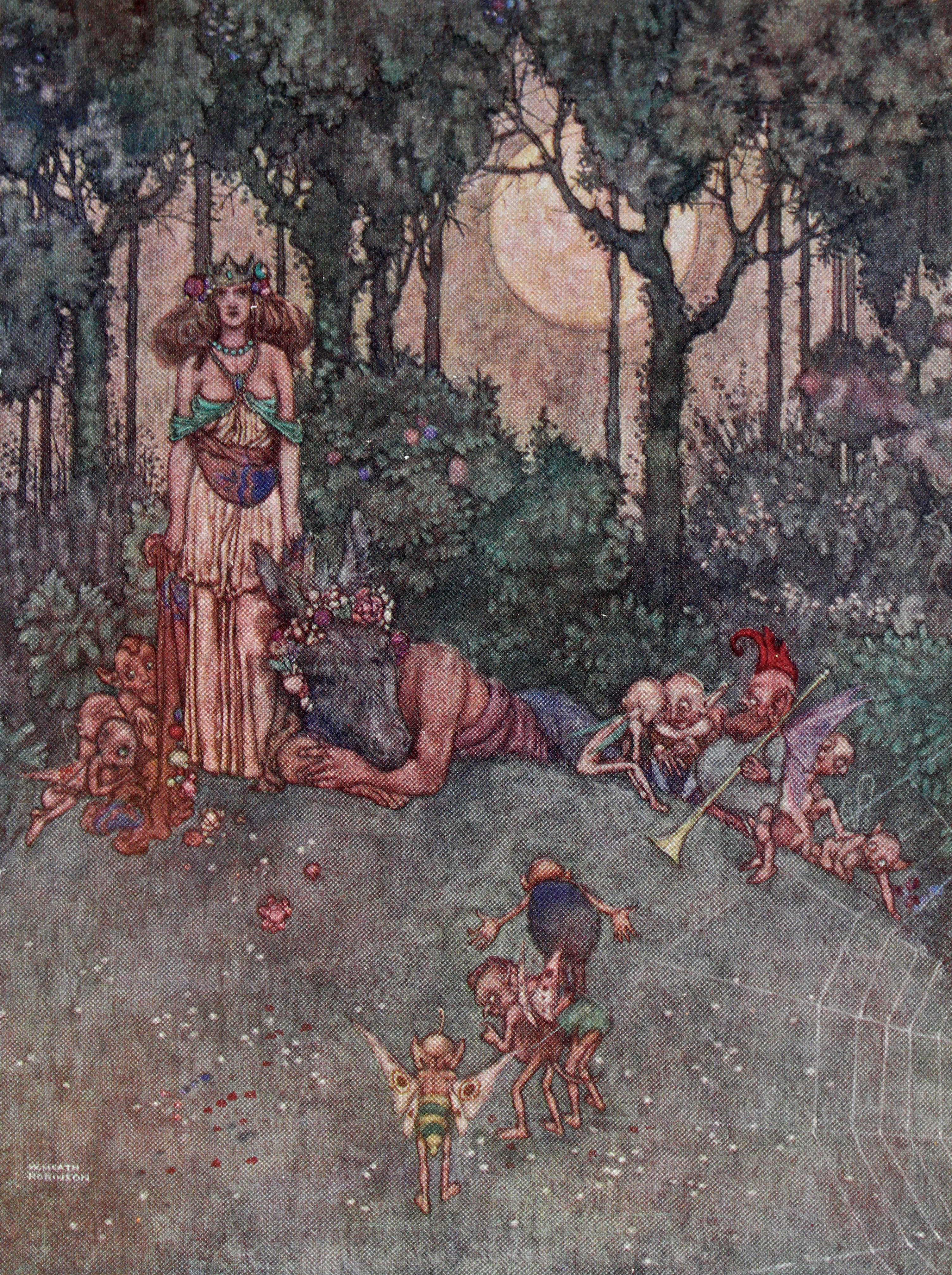
Plate facing page 176 of Shakespeare’s Comedy of A Midsummer Night’s Dream
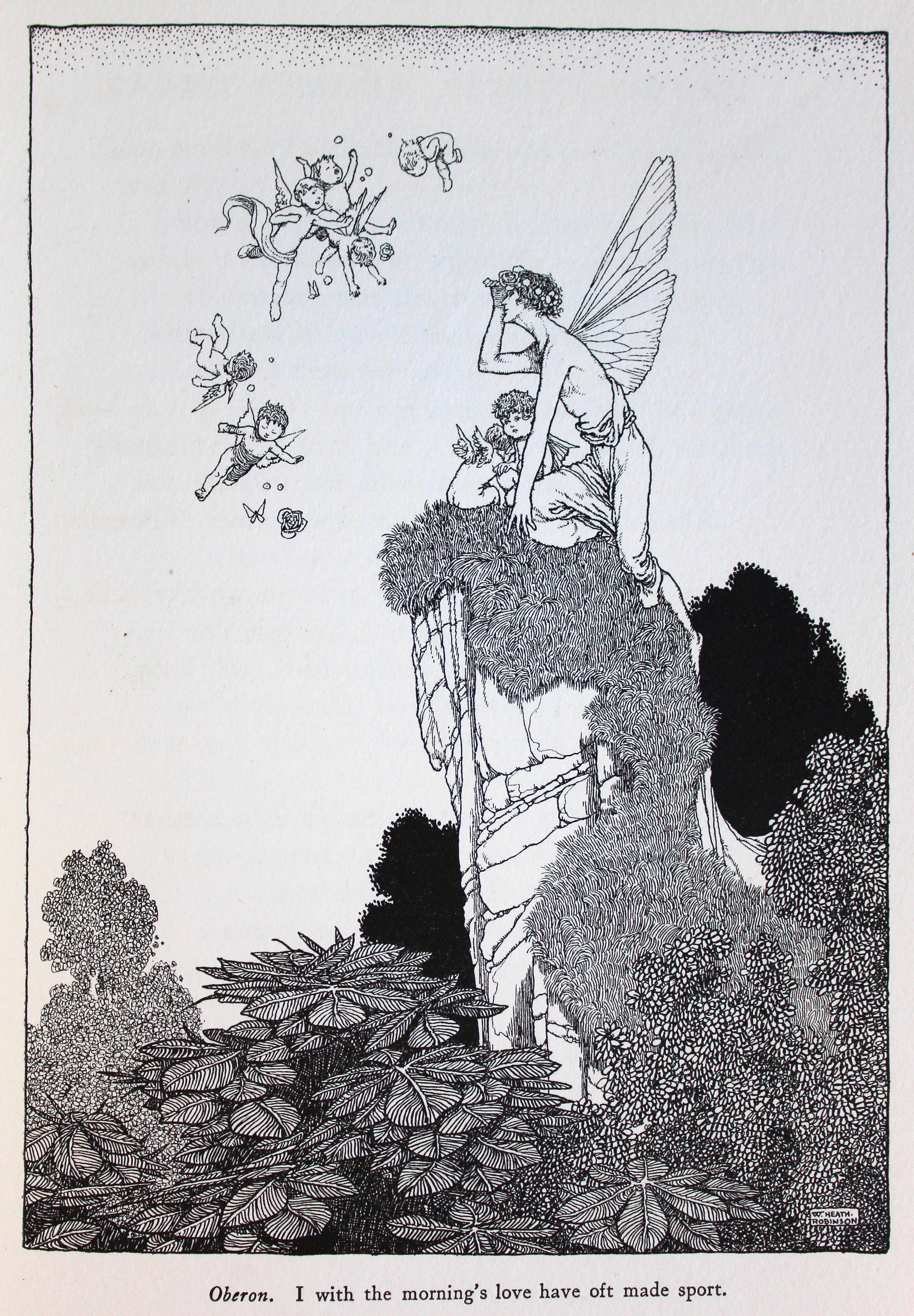
Page 135 of Shakespeare’s Comedy of A Midsummer Night’s Dream
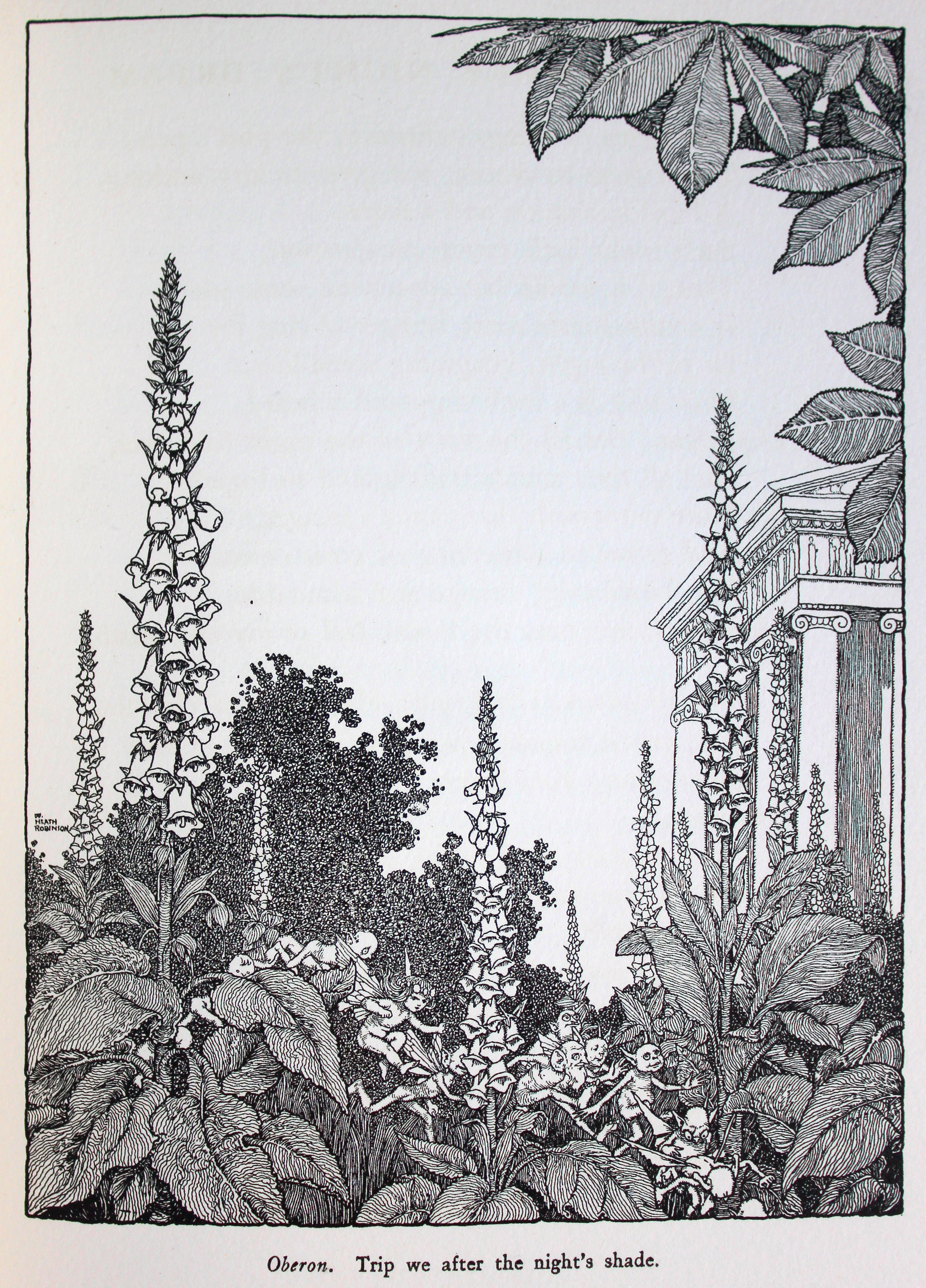
Page 155 of Shakespeare’s Comedy of A Midsummer Night’s Dream
AC
References and further reading:
Isobel Spencer, Walter Crane, London: Studio Vista, 1975
M.H. Spielman and G.S. Layard, The Life and Work of Kate Greenaway, London: Bracken Books, 1986
 King's Treasures