Hocus Pocus

A dilemma that cannot be answered by witch-mongersGiven that today many are celebrating Halloween it seems fitting to showcase a rare seventeenth-century book we’ve recently discovered in the Thackeray Collection on the subject of witchcraft. The book is the first edition of A Candle in the Dark, shewing the Divine Cause of the distractions of the whole Nation of England and of the Christian world written by Thomas Ady, of which only a handful of copies are extant. A Cambridge graduate, Ady was a physician, humanist and author of three books about witchcraft. He was a critical exposer of both persecutions for alleged witchcraft and practices such as fortune-telling which often led to witchcraft trials during the seventeenth century. It is estimated that 40,000-60,000 people were condemned to death as witches in Europe during the late-sixteenth and seventeenth centuries.
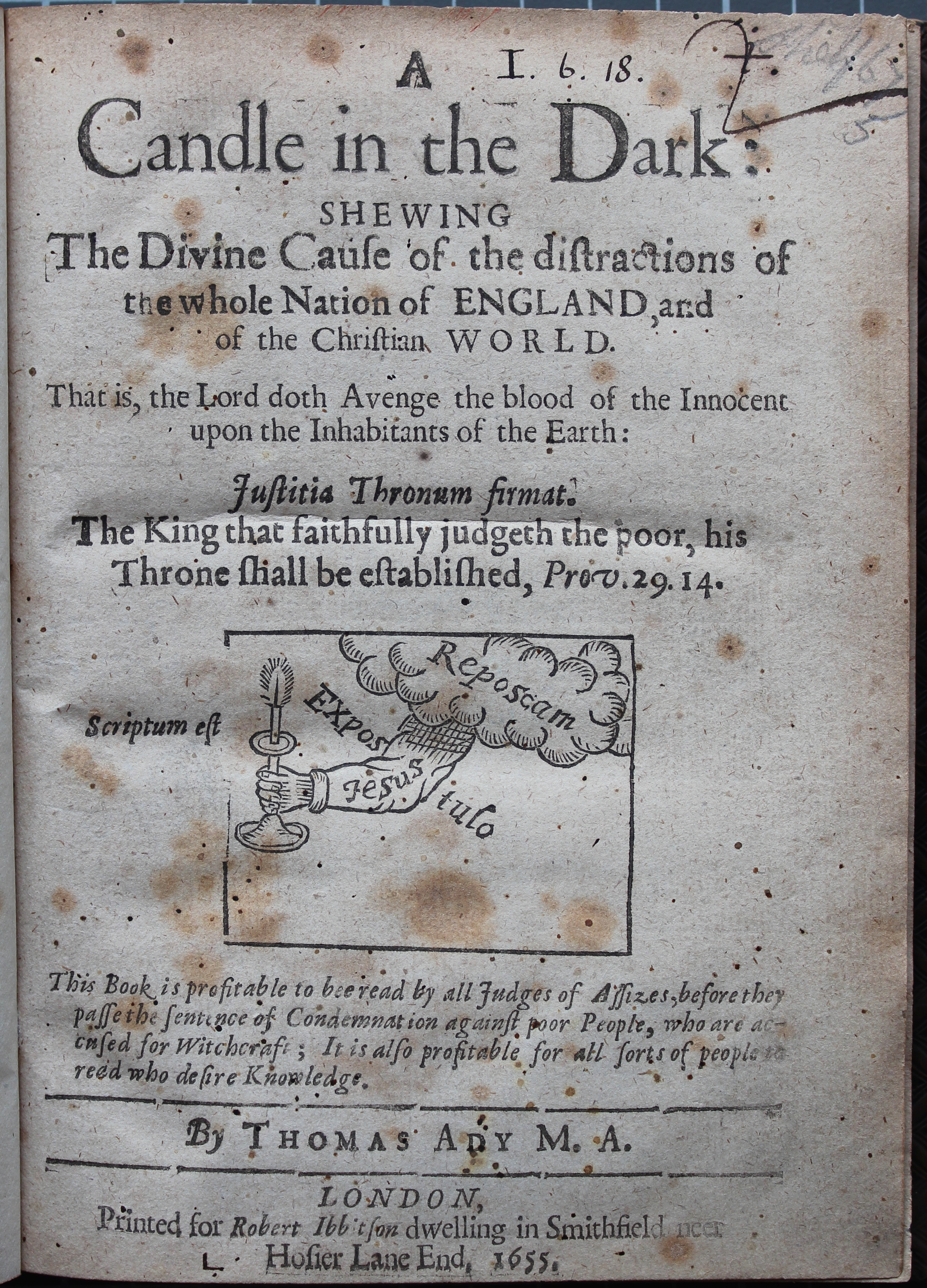
Title page

Thomas Ady, A Candle in the Dark (London, 1655), title page. (Shelfmark: Thackeray.I.6.18)

Published in London in 1655, A Candle in the Dark makes clear its intended audience through the following description on its title page: ‘this book is profitable to be read by all judges of assizes, before they passe the sentence of condemnation against poor people, who are accused for witchcraft; it is also profitable for all sorts of people to read who desire knowledge’. Like his opponents, Ady supported his arguments through reference to scripture in order to prove that it was both impossible for witches to exist and that it was indeed unchristian to accuse someone of witchcraft.
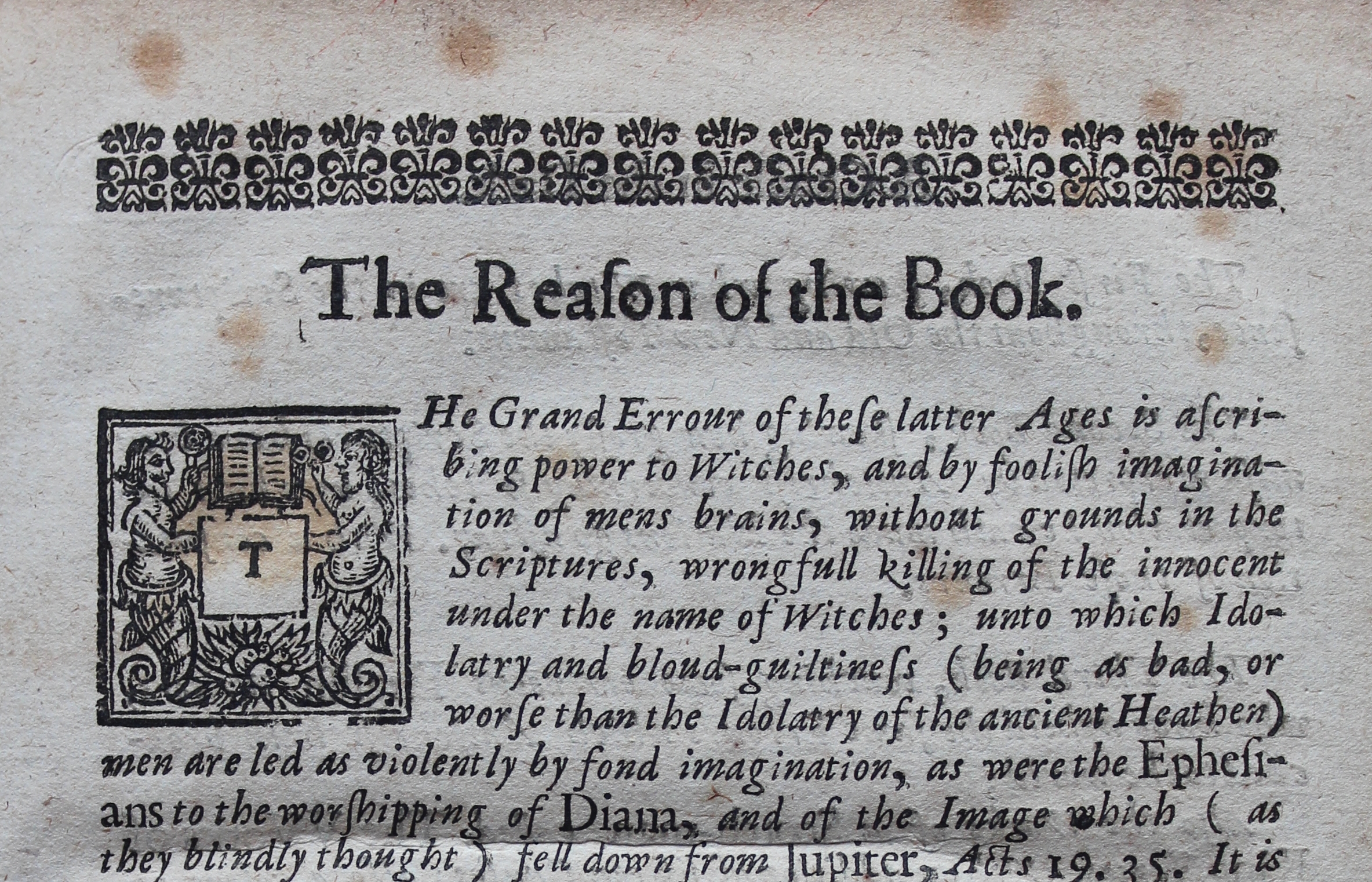
A Candle in the Dark, 'The Reason of the Book'.

Thomas Ady, A Candle in the Dark (1655), ‘The Reason of the Book’.

Ady’s volume begins with a section entitled ‘The Reason of the Book’ in which he laments: ‘the grand errour of these latter ages is ascribing power to witches, and by foolish imagination of mens brains, without grounds in the scriptures, wrongfull killing of the innocent under the name of witches; unto which idolatry and bloud-guiltiness (being as bad, or worse than the idolatry of the ancient Heathen) men are led as violently by fond imagination, as were the Ephesians to the worshipping of Diana …’ The volume is then divided into three books, the first ‘shewing what witches are in scripture-sense’, the second ‘shewing how grossly the scriptures have been mis-interpreted by antichrist concerning witches’, and the third ‘touching some erroneous English writers, who have upheld the same errors which antichrist hath broached to the world’. The volume includes discussions of divination, astrology, conjuring, the use of charms, oracles, soothsayers and necromancers.

Thomas Ady, A Candle in the Dark (London, 1655). ADD TO THIS

Thomas Ady, A Candle in the Dark (London, 1655). Ady discusses the various means of examination and torture in order to make people confess to witchcraft.

One particularly interesting facet of this book is that it contains one of the earliest known references to the phrase hocus pocus, a term used by magicians nowadays in much the same way as abracadabra, but when it was first coined conjurors perhaps could have expected such phrases to fool the audience into thinking mysterious forces were at work. Ady’s description is as follows:

The first [feature that juggling (i.e. conjuring) consists of] is profitably seen in our common juglers, that go up and down to play their tricks in fayrs and markets, I will speak of one man more excelling in that craft than others, that went about in King James his time, and long since, who called himself, The Kings Majesties most excellent Hocus Pocus, and so was he called, because that at the playing of every trick, he used to say, Hocus pocus, tontus talontus, vade celeriter jubeo, a dark composure of words, to blinde the eyes of the beholders, to make his Trick pass the more currantly without discovery…

hocus-pocus

Thomas Ady, A Candle in the Dark (1655). Ady discusses the use of the phrase hocus pocus by a seventeenth-century juglar (conjurer).

The arguments presented in this volume travelled far beyond the shores or our small island. One George Burroughs (c.1652-1692), who was originally born in Suffolk before being taken to Massachusetts where he was raised by his mother, was familiar with Ady’s work. An American congregational pastor, Burroughs became minister in Salem Village in 1680, a position he held until 1683 following a dispute with some of his parishioners. Based on the accusation of some personal enemies from his former congregation who had sued him for debt, Burroughs was arrested in April 1692 and accused of witchcraft. At his trial he used A Candle in the Dark in his defence, but, alas, to no avail as he was hanged on 19 August in that year in Salem, and was the only minister to suffer this fate. Shortly before his execution, Burroughs made a speech stating his innocence with such solemnity and to the admiration of so many present that his accusers claimed the devil was standing beside him dictating.

book-1

Thomas Ady, A Candle in the Dark (1655), p. 9.

Happy Halloween, everyone!

english_landscape_pantone

JC

Shakespeare and Theatre in Cambridge: An Online Exhibition

Last month, King’s College Library and Archives hosted an exhibition for the Open Cambridge weekend as part of the events marking the 400th anniversary of Shakespeare’s death. The exhibition, held on 9 and 10 September, showcased scarce editions of Shakespeare’s plays alongside other treasures from the special collections in the College Archive celebrating theatre and the history of theatre in Cambridge. Below are some selected highlights from the exhibition focusing on early editions of Shakespeare’s works.

College Librarian James Clements and College Archivist Patricia McGuire waiting to welcome visitors

College Librarian James Clements and College Archivist Patricia McGuire waiting to welcome visitors

King’s College’s First Folio (1623) is one of only 234 known surviving copies. The title-page portrait in this copy is not original and appears to be an engraved facsimile. The importance of this book cannot be overstated. Pivotal plays like The Tempest, As You Like It, Twelfth Night, The Taming of the Shrew, Macbeth, Antony and Cleopatra, and Julius Caesar were printed here for the first time, and may have been lost otherwise. Next to it is the first facsimile reprint of the First Folio, edited by Francis Douce. The date has been derived from the paper, which is watermarked: Shakespeare. J. Whatman, 1807:

Shakespeare’s First Folio (right) next to the 1807 facsimile reprint (left)

Shakespeare’s First Folio (right) next to the 1807 facsimile reprint (left)

On the other side of the display case are the two other Folios from the Thackeray Bequest: the Second (1632) and the Fourth (1685). The printing of the former was carried out by Thomas Cotes and a syndicate of five other partners: Richard Hawkins, John Smethwick, William Aspley, Robert Allot, and Richard Meighen. This copy bears the “exceedingly rare” Hawkins imprint (Frank Karslake, Book Auction Records, London: William Dawson, 1903; p. 355):

Mr. William Shakespeares Comedies, Histories, and Tragedies London: Printed by Tho[mas] Cotes, for Richard Hawkins, 1632

Mr. William Shakespeares Comedies, Histories, and Tragedies
London: Printed by Tho[mas] Cotes, for Richard Hawkins, 1632

The Fourth Folio included seven additional plays: Pericles, Prince of Tyre; Locrine; The London Prodigal; The Puritan; Sir John Oldcastle; Thomas Lord Cromwell; and A Yorkshire Tragedy. All of these had been printed as quartos during Shakespeare’s lifetime, but only Pericles is now seriously considered to have any Shakespearean connection. The front board of this copy was completely detached; it was repaired in August 2016 thanks to the grant from the Heritage Lottery Fund.

Mr. William Shakespear’s Comedies, Histories, and Tragedies: Published According to the True Original Copies London: Printed for H. Herringman, E. Brewster, and R. Bentley, 1685.

Mr. William Shakespear’s Comedies, Histories, and Tragedies
London: Printed for H. Herringman, E. Brewster, and R. Bentley, 1685

As well as the Folio editions of Shakespeare’s plays, the exhibition also included early quartos of individual plays. This is a third edition of Henry V, a reprint of the second quarto of 1602. The imprint date is false, as the book was printed in 1619 for the Shakespearean collection of that year:

William Shakespeare, The Chronicle History of Henry the Fift London: Printed [by William Jaggard] for T[homas] P[avier], 1608 [i.e. 1619]

William Shakespeare, The Chronicle History of Henry the Fift
London: Printed [by William Jaggard] for T[homas] P[avier], 1608 [i.e. 1619]

Below is a copy of the fourth edition of Othello. The play was entered into the Stationers’ Register on 6 October 1621 by Thomas Walkley, and the first quarto was printed by him in 1622.

William Shakespeare, The Tragoedy of Othello, the Moore of Venice London: Printed for William Leak, 1655

William Shakespeare, The Tragoedy of Othello, the Moore of Venice
London: Printed for William Leak, 1655

Featured in the exhibition were also later editions of Shakespeare’s works. This 18th-century collection of his plays, edited by Kingsman George Steevens (1736-1800), includes a facsimile of Shakespeare’s will:

The Plays of William Shakspeare: In Fifteen Volumes. With the Corrections and Illustrations of Various Commentators. To Which Are Added Notes by Samuel Johnson and George Steevens London: Printed [by H. Baldwin] for T. Longman, et al., 1793

The Plays of William Shakspeare: In Fifteen Volumes. With the Corrections and Illustrations of Various Commentators. To Which Are Added Notes by Samuel Johnson and George Steevens
London: Printed [by H. Baldwin] for T. Longman, et al., 1793

Despite inclement weather on the second day, the event was attended by more than 600 local people:

Local residents attending the exhibition on 9 September 2016

Local residents attending the exhibition on 9 September 2016

Our Shakespeare season culminated in a public lecture on the First Folio by a leading world expert, Professor Emma Smith (Hertford College, Oxford) on 3 October 2016. Professor Smith’s talk took the captive audience into the First Folio, and investigated the clues it gives us about Shakespeare’s writing methods, the early modern theatre, and the development of the Shakespeare brand.

english_landscape_pantone

IJ

Public Lecture on Shakespeare’s First Folio

Our series of events marking the quatercentenary of Shakespeare’s death culminates in a public lecture on Shakespeare’s First Folio by a leading world expert, Professor Emma Smith (Hertford College, Oxford), author of Shakespeare’s First Folio: Four Centuries of an Iconic Book (2016) and The Making of Shakespeare’s First Folio (2015). The lecture will be held in the Audit Room at King’s College, Cambridge on Monday 3rd October 2016 at 6pm.

Front cover of Emma Smith's The Making of Shakespeare’s First Folio (2015)

Front cover of Emma Smith’s The Making of Shakespeare’s First Folio (2015)

Professor Smith’s lecture is entitled “Reading Shakespeare’s First Folio”. She will discuss the first collected edition of Shakespeare’s plays, the First Folio of 1623, which has become one of the world’s most sought-after books. This illustrated talk takes us into the First Folio, and investigates the clues it gives us about Shakespeare’s writing methods, the early modern theatre, and the development of the Shakespeare brand. You can hear Professor Smith talk about the recent discovery of a copy of the First Folio on the Isle of Bute here:

http://www.bbc.co.uk/news/education-35973094

The event is free and open to all, but as spaces are limited, we ask that you reserve your place by going to the following website and clicking on ‘Register’ before printing your ticket:

https://www.eventbrite.co.uk/e/reading-shakespeares-first-folio-lecture-by-professor-emma-smith-tickets-27940806705

Those attending the lecture are invited to visit King’s College Library to view the First Folio from the Thackeray Bequest between 5pm and 6pm on 3rd October and after the talk. We look forward to seeing you there!

english_landscape_pantone

IJ


The Potticarie’s Bill

Following a previous post about the College site in the accounts books, this post highlights another series of accounts books: the Commons Books which record food bought for consumption in Hall and the names of those consuming it. Sometimes these are the only record of the names of our choristers. (An article has been written from the Commons Books for earlier years and two of the books are partially transcribed, see the catalogue descriptions of the commons books, and the article and transcriptions, for more information.) The pages for the week beginning October 18, 1578 are reproduced here (click on the image if you want to zoom in):

KCAR/4/1/6/20 1578-10-18 1

Oct 18, 1578: diners and first part of the week’s expenses


At the top of the page is listed the week (in this case, the third) of the financial year, then the name of the Fellow assigned to be Steward that week (in this case, Mag[iste]ro [John] Cowell). Then are listed the members of the ‘College society’ (the Provost is not included, his commons was usually accounted elsewhere): i.e. the Vice-Provost followed by the rest of the Fellows in their order of seniority, each of whom was allowed 20 pence weekly commons allowance in what amounted to an internal recharging system. An annotation next to someone’s name indicates if he was away from Co[llege] for the whole or just half the week. The Fellows are followed by the ‘Scholaribus’ = Scholars of the College, also in seniority order and allotted 20 pence per week, then ‘alii’ (others, also allotted 20 pence per week commons) which turns out to be the Bursar’s Clerk, the lay clerks and the chaplains. Then the Choristers are listed (10 pence each for their commons), then the ‘Servientes’ (servants, 12 pence per week each) that had been specified by Henry VI as being supported on the Foundation. Following the total commons allowance are, for each day of the week, the value of the food consumed at dinner and supper.

KCAR/4/1/6/20 1578-10-18 2

Oct 18, 1578: expenses for the second part of the week

You can see that an awful lot of beef (carne bovine) and mutton (carne ovine) was being consumed, plus milk, butter, eggs (ovis – we had no College chickens or cows), various types of fish (ling, plaice, roach, pickerel), pepper, sugar, currants, dates, cinnamon, cloves, mace, suet, rabbit (‘cuniculis’), tripe, neat’s foot (the heel of a cow or ox), ‘salsamente’ which is some unspecified sauce, oatmeal, mustard and possibly other herbs (‘sinapis’), and black or white salt (‘sale nigra’ or ‘albo’). ‘Cena’ means supper, apparently the last meal of the day.

Sedge, wood and candles were part of commons expenses, I suspect the sedge was in the form of rushes strewn on the floor. Not much flour is accounted for but there was wheat (‘frumenti’) charged during this week – we had our own millstone. There are no expenses for honey that week. I have never seen expenses for beekeeping supplies in other years’ accounts books, so possibly honey was not used regularly in Hall.

Following all of the expenditure is an account of what was used from the storerooms (in stauro), and internal accounting of various College members’ cizations, i.e. personal domus accounts.

Audit Feasts

Dining expenses in the two weeks or so preceding the annual Audit at the end of October, were accounted separately. The year after the above, in the 18 days before October 30th, 1579, in addition to the usual mutton, beef etc., the College members were indulged with ‘a pigge’ one day (other pork cuts were served on other days), pigeons, capons, oysters, cream, marrowbone, veal (loin, breast, leg, shoulder and rack), ‘boylde chikins’, larks, a goose, mallard, teal and snipe. An entry for ‘sake’ doesn’t constitute previously unknown evidence of intimate links with Japan, it’s from the French ‘sec’ for dry wine. There was wine, white as well as claret, at almost every meal during the audit time. Sometimes the wine was used ‘for broth’. The College brewed its own beer at this time but beer is not mentioned in the Commons Books, suggesting that these accounts only list the actual expenditure on food. Fruit is often mentioned in general, with apples sometimes specified for the table, sometimes for tarts, and peaches are mentioned specifically once.

KCAR/4/1/6/19 audit 1579 02

The ‘potticaries bill’ (halfway down in the image above) for the first week includes expenses for currants (5 pence per pound, that’s half a Chorister’s weekly commons allowance), prunes, sugar, cinnamon, ginger, cloves, mace, dates, pepper, capers, vinegar, verjuice, oatmeal, ‘unnions’, rose water and saffron. That’s a reminder of the days when medicines were plant-based and exotic plants were most readily available from the druggist.

PKM

Bowdlerizing the Bard

According to the OED, the etymology of the verb “to bowdlerize”, meaning “to expurgate (a book or writing), by omitting or modifying words or passages considered indelicate or offensive”, comes from Thomas Bowdler (1754-1825), “who in 1818 published an edition of Shakespeare, ‘in which those words and expressions are omitted which cannot with propriety be read aloud in a family’”.

In the collection of books bequeathed to King’s College by its sometime Provost George Thackeray (1777-1850), a cousin of the novelist William Makepeace Thackeray, is a copy of the fifth edition of Thomas Bowdler’s eight-volume The Family Shakspeare (1827):

Thomas Bowdler, The family Shakspeare (London: Printed for Longman, Rees, Orme, Brown, and Green, Paternoster-Row, 1827) (Thackeray.J.63.1)

Title of page of vol. 1 of Thomas Bowdler’s The Family Shakspeare (London: Printed for Longman, Rees, Orme, Brown, and Green, Paternoster-Row, 1827) Thackeray.J.63.1

Some of the alterations to Shakespeare’s plays made by Bowdler include, for example, Lady Macbeth’s line, “Out, damned spot!” changed to “Out, crimson spot!” (Macbeth, V.1); in Henry IV, Part 2 the prostitute Doll Tearsheet is omitted from the story altogether; and in all plays the exclamation “God!” is replaced with “Heavens!”

Below is the scan of a line spoken by Mercutio in Romeo and Juliet (II.iv) as it appeared in the Fourth Folio of Shakespeare’s plays (1685) along with the expurgated version printed by Bowdler (vol. 8, p. 168):

Spot the difference: Mercutio’s “the bawdy hand of the dial is now upon the prick of noon” has been changed to “the hand of the dial is now upon the point of noon”.

Spot the difference: Mercutio’s “the bawdy hand of the dial is now upon the prick of noon” has been changed to “the hand of the dial is now upon the point of noon”.

Thackeray’s obituarist writes that “In his discipline generally there was something of almost Roman firmness … Yet under the rigid manner lay the kindest sympathy”. While his library included the First, Second and Fourth Folios of Shakespeare’s plays – as well as later editions – it is interesting that this is the edition he decided to present to his daughter, who recorded the gift on the fly-leaf of all eight volumes: “Mary Ann Eliz.th Thackeray the gift of her father”. But this is perhaps more a reflection on the times than on Thackeray himself.

All these books, along with many other treasures, will be on display at King’s Library’s free Shakespeare exhibition as part of Open Cambridge on Friday 9th and Saturday 10th September, 10.30am – 4pm:

http://www.opencambridge.cam.ac.uk/news/kings-college-library-and-archives-open-their-doors

We hope to see many of you there!

english_landscape_pantone

IJ


Celebrating Shakespeare at King’s Library

Shakespeare folio image

William Shakespeare as depicted on the title page of the first folio edition

This year is the quatercentenary of the death of William Shakespeare (1654–1616) and events are being held worldwide to celebrate the life and work of the UK’s most famous poet, playwright and actor, described by Ben Jonson as ‘not of an age, but for all time’. In this special year, thanks to a grant from the Heritage Lottery Fund, King’s College Library and Archives will be joining the festivities by hosting various events showcasing many of our rare book and archive treasures.

1. The interior of the Library

The interior of King’s College Library

Our first event is an exhibition celebrating Shakespeare and theatre in Cambridge which will be running until the end of August. This free exhibition is open to all and can be viewed between 2pm and 5pm Monday to Friday in King’s College’s beautiful early nineteenth-century library. If you would like to see some early editions of Shakespeare’s plays as well as some archival treasures, why not pop in and see us when you are in town.

.

Upon arrival at the front gate of King’s College speak to the Visitor Guide on duty and tell them that you are visiting the Library’s Shakespeare exhibition. They will direct you to the College Library. When you reach the Library, simply press the buzzer on the main door and one of the Library team will let you in and welcome you to the Library.

We look forward to seeing you!

college-map-library

How to find King’s College Library

english_landscape_pantone

JC

Another Portrait of Mr. W. H.

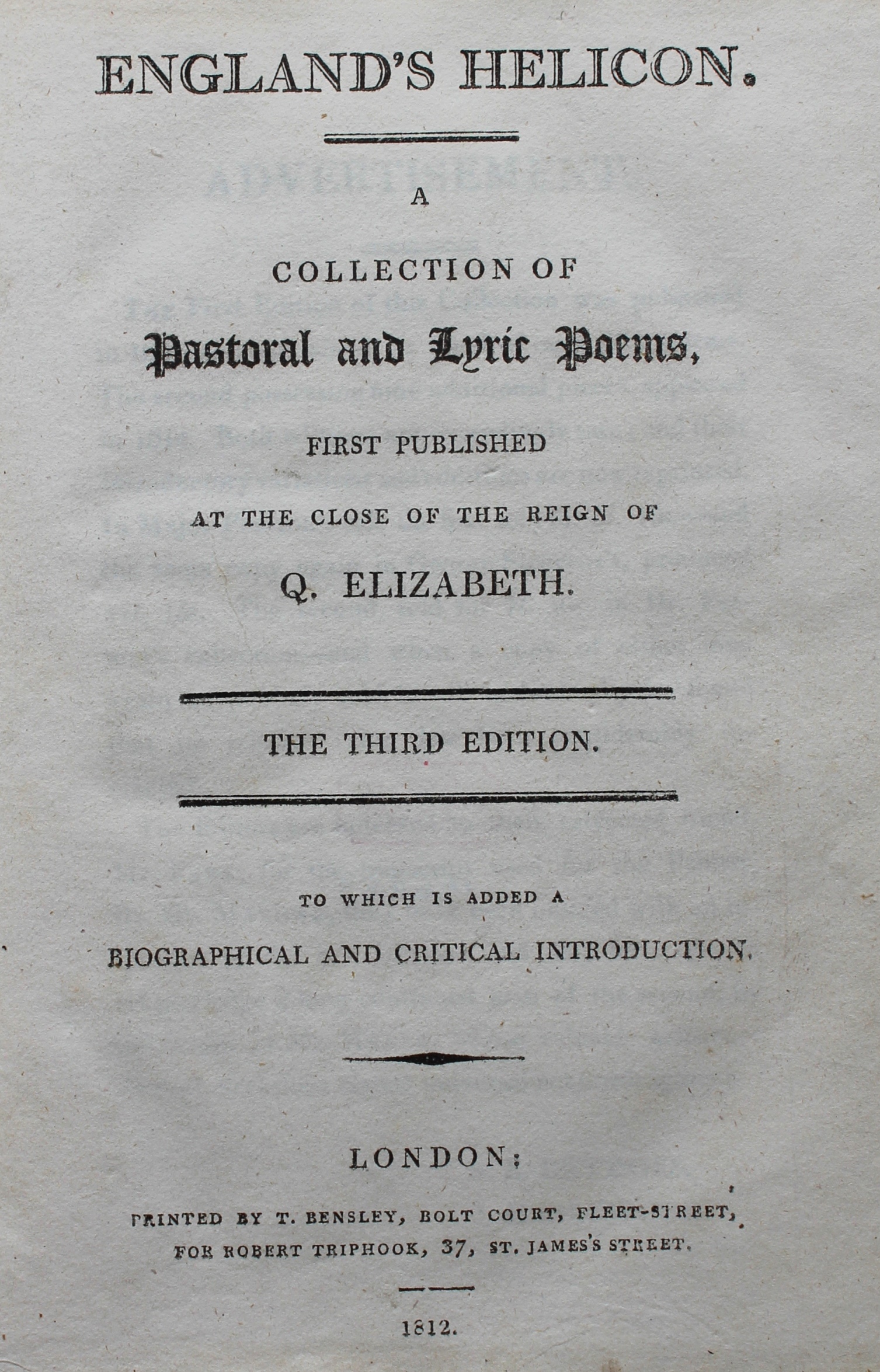
As we’re marking the 400th anniversary of Shakespeare’s death, this book from the Keynes Bequest could not be more topical. England’s Helicon, an anthology of Elizabethan poems first printed in 1600, includes contributions by Christopher Marlowe, Sir Walter Raleigh, William Shakespeare, Sir Philip Sidney and Edmund Spenser.

Title page of England’s Helicon: A Collection of Pastoral and Lyric Poems, First Published at the Close of the Reign of Q. Elizabeth, edited by S. E. Brydges and Joseph Haslewood (London: Thomas Bensley, 1812; Keynes.E.3.8)

Title page of England’s Helicon: A Collection of Pastoral and Lyric Poems, edited by S. E. Brydges and Joseph Haslewood (London: Thomas Bensley, 1812; Keynes.E.3.8)

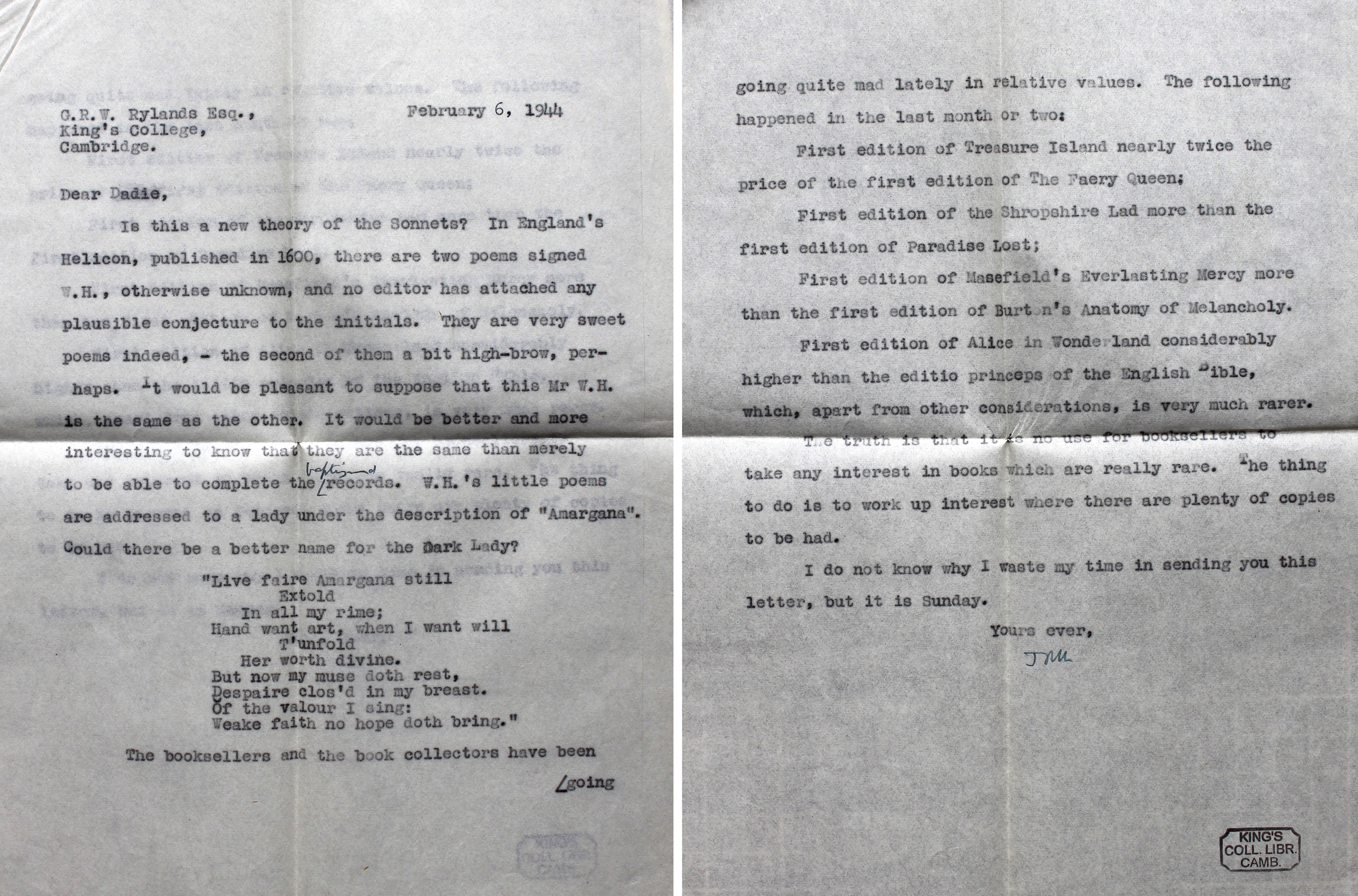
In an 1812 reprint of the third edition (1614) is the carbon copy of a letter from John Maynard Keynes to Dadie Rylands dated 6 February 1944 and initialled in ink by Keynes. Rylands was a Fellow at King’s and a noted Shakespeare scholar who also directed several plays for the Marlowe Society and acted as chairman of the Cambridge Arts Theatre between 1946 and 1982.

Dadie Rylands (1902-1999) punting on the Cam, mid-1930s

Dadie Rylands (1902-1999) punting along the Cam, mid-1930s

Keynes writes: “Is this a new theory of the Sonnets? In England’s Helicon, published in 1600, there are two poems signed W. H., otherwise unknown, and no editor has attached any plausible conjecture to the initials. […] It would be pleasant to suppose that this Mr. W. H. is the same as the other”.

Carbon copy of Keynes’s letter to Dadie Rylands, 6 February 1944

Carbon copy of Keynes’s letter to Dadie Rylands, 6 February 1944

The first 126 of Shakespeare’s Sonnets (1609) are addressed to a “fair youth”, and the whole work is dedicated to a certain “Mr. W. H.”. The identity of the dedicatee remains a mystery, and possible contenders include Shakespeare’s patrons, Henry Wriothesley, 3rd Earl of Southampton (1573-1624), and William Herbert, 3rd Earl of Pembroke (1580-1630).

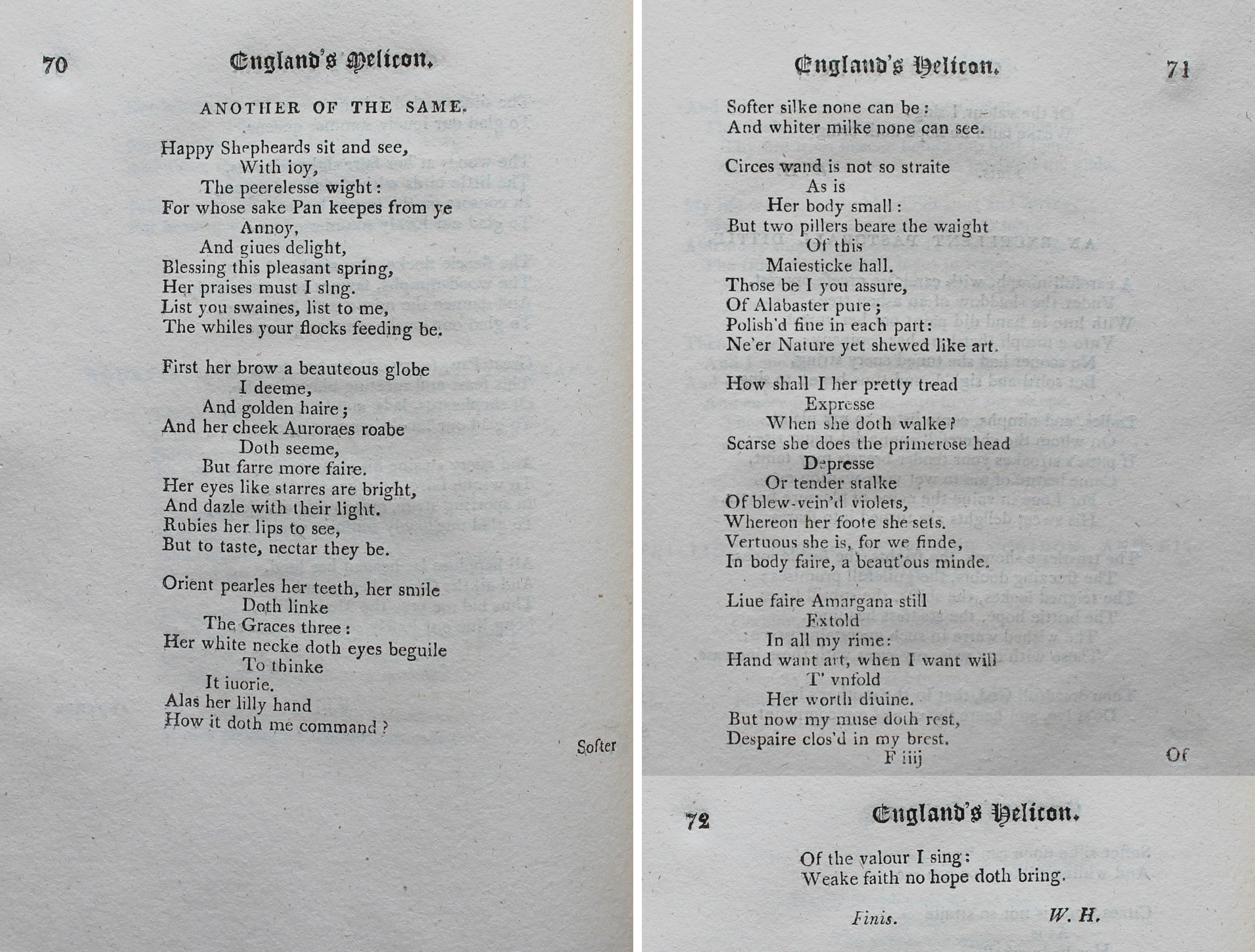
W. H., “Wodenfride’s Song in Praise of Amargana”, England’s Helicon, pp. 68-69

W. H., “Wodenfride’s Song in Praise of Amargana”, England’s Helicon, pp. 68-69

Keynes seems to have failed to check the “Index of the Names of Authors” at the beginning of the book, where W. H. is tentatively identified as “Wm. Hunnis?” The editors, S. E. Brydges and Joseph Haslewood, state in the biographical notice of W. H.: “I recollect no writer to whom these initials may apply, unless William Hunnis, who seems to have lived too early to have been a contributor to this volume. […] Qu.? William Herbert?” The poet William Hunnis, who died in 1597 and could have therefore known Shakespeare, was in the service of William Herbert, 1st Earl of Pembroke (1501-1570) and grandfather of Shakespeare’s patron, the 3rd Earl of Pembroke. So there is a connection with Shakespeare there, albeit a tenuous one.

The second poem by W. H. in England’s Helicon, pp. 70-72

The second poem by W. H. in England’s Helicon, pp. 70-72

As shown in a previous post on James Howell’s Epistolae Ho-Elianae (1645), Keynes’s book collecting was not merely a matter of accumulating items, as he actively engaged with the issues raised in these works and shared his ideas, thoughts and opinions with friends. But going back to his original question. Could the W. H. in England’s Helicon really be the mysterious dedicatee of Shakespeare’s Sonnets? Over to Shakespeare scholars.

IJ

HLF funding for King’s Library

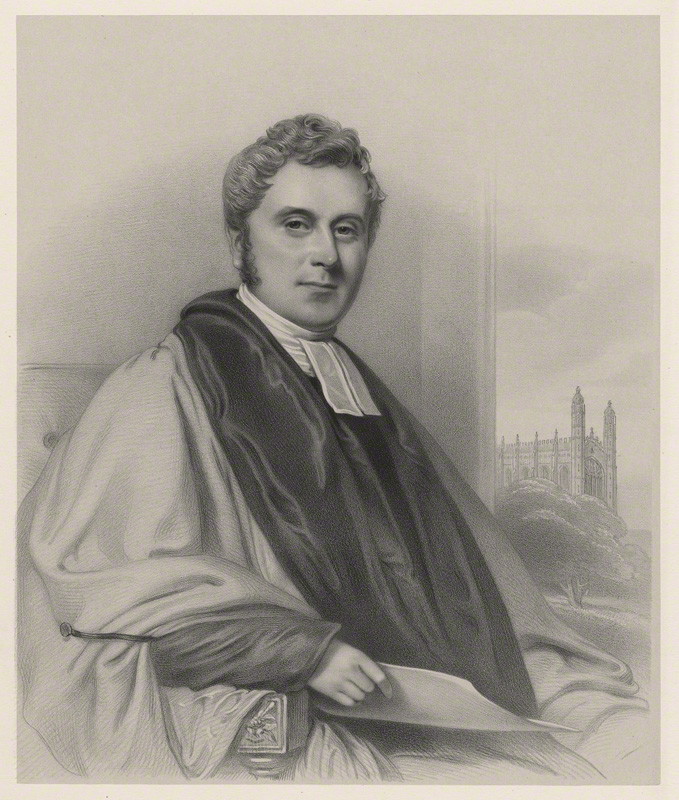
King’s Library has received £44,000 from the Heritage Lottery Fund (HLF) for an exciting project, ‘Shakespeare and Austen at King’s College: Celebrating their Centenaries in 2016 and 2017’. The project will result in the online cataloguing and conservation of the English literature section of the Thackeray collection of rare books, bequeathed to King’s College Library in the mid-nineteenth century by the sometime Provost of the College, George Thackeray (1777-1850), cousin of the novelist William Makepeace Thackeray (1811-1863). A major part of the project is a comprehensive programme of outreach activities and online educational material.

by Richard James Lane, lithograph, 1851

George Thackeray (1777-1850) by Richard James Lane, lithograph, 1851

The project will enable local people and volunteers to engage with some of the most important books in the history of English literature through a series of exhibitions, talks, open days and workshops for young people, and give a worldwide audience the opportunity to learn about the collection online. Owing to the lack of a proper online catalogue, the collection has remained difficult to explore.

Shakespeare folio image

Title page of Shakespeare’s First Folio (1623)

Highlights in Thackeray’s library include Shakespeare’s First Folio, first and early editions of all of Austen’s novels, a collection of 16th-century books on theology (including works by Sir Thomas More, Martin Luther and Erasmus), and over one thousand volumes of early editions of the most important English authors in sumptuous historic bindings. Other major writers included are John Milton, John Donne, Edmund Spenser and Ben Jonson.

We are delighted to have received the support of the Heritage Lottery Fund, which will enable us to gain a much better understanding of the Thackeray collection and help us to improve access to these treasures. We are also looking forward to the many opportunities the project will afford us to allow local people to engage with their heritage (anyone interested in volunteering for the project is most welcome to get in touch), and hopefully revisit the works of Shakespeare and Austen during their anniversary years.

english_landscape_pantone

JC


Lake District Books (1750-1850): An Online Exhibition

Peter Bicknell (1907-1995), an architect, mountaineer and art historian who taught architecture at Cambridge for more than fifty years, was also a book collector with a particular interest in eighteenth-century topographical books and prints. In 1980 he donated his collection of books on the Lake District to King’s College Library. As Bicknell later recalled in his introduction to The Picturesque Scenery of the Lake District, “My addiction to book-collecting was stimulated by the friendship of that inspired lover of books, A. N. L. (‘Tim’) Munby. When some years ago I decided that it was time I found a permanent home for my Lake District collection, it occurred to me that there could be no better place for it than the library of King’s” (Winchester: St. Paul Bibliographies, 1990, p. x). We have just started cataloguing the collection and mounted an exhibition in the library, some highlights from which are described below.

Peter Holland was a Liverpool artist about whom little is known. He visited Ambleside in 1797. His Select Views of the Lakes is the first book of Lake District views using the printing technique known as aquatint. In this method of printing the artist makes marks on the plate (in the case of aquatint, a copper or zinc plate) that are capable of holding ink. The inked plate is passed through a printing press together with a sheet of paper, resulting in a transfer of the ink to the paper.

Peter Holland, Select Views of the Lakes in Cumberland, Westmoreland & Lancashire (Liverpool: printed by James Smith, for John Peeling, [1792]) Bicknell.61

Peter Holland, Select Views of the Lakes in
Cumberland, Westmoreland & Lancashire
(Liverpool: printed by James Smith, for John Peeling, [1792])
Bicknell.61

This copy of Revd Stebbing Shaw’s A Tour in 1787 from London to the Western Highlands of Scotland bears the ownership inscription “Elizabeth Vernon: Given to her by the Marquis of Lansdown 1792”. It ended up in the library of Holland House in Kensington and has their bookplate on the inside front pastedown. The book shows signs of fire damage from when Holland House was bombed during the Blitz in 1940.

Stebbing Shaw, A tour, in 1787, from London, to the Western Highlands of Scotland (London: printed for L. Davis, Messrs. Robson and Clarke, W. Lowndes, H. Gardner, J. Walker, [1788]) Bicknell.27

Stebbing Shaw, A Tour, in 1787, from London,
to the Western Highlands of Scotland
(London: printed for L. Davis, Messrs. Robson and Clarke,
W. Lowndes, H. Gardner, J. Walker, [1788])
Bicknell.27

Peter Crosthwaite was an expert in self-advertisement, referring to himself in this plate as “Admiral at Keswick Regatta; who keeps the Museum at Keswick, is Guide, Pilot, Geographer, Hydrographer to the Nobility and Gentry, who makes the Tour of the Lakes”.

An accurate map of the matchless Lake of Derwent (situated in the most delightful Vale which perhaps ever Human Eye beheld) Peter Crosthwaite, Maps of the Lake District (London: published & sold by Peter Crosthwaite, 1819) Bicknell.10

“An accurate map of the matchless Lake of Derwent (situated in the most delightful Vale which perhaps ever Human Eye beheld)”
Peter Crosthwaite, Maps of the Lake District
(London: published & sold by Peter Crosthwaite, 1819)
Bicknell.10

The next item in the exhibition, William Hutchinson’s An Excursion to the Lakes in Westmoreland and Cumberland, is one of the earliest books in the Bicknell Collection. The excursion was made with William Hutchinson’s brother Richard who acted as draughtsman. The book includes a generous amount of rich picturesque description and lively accounts of unusual incidents.

William Hutchinson, An Excursion to the Lakes in Westmoreland and Cumberland (London: printed for J. Wilkie & W. Goldsmith, 1774) Bicknell.1

William Hutchinson, An Excursion to the Lakes in Westmoreland and Cumberland
(London: printed for J. Wilkie & W. Goldsmith, 1774)
Bicknell.1

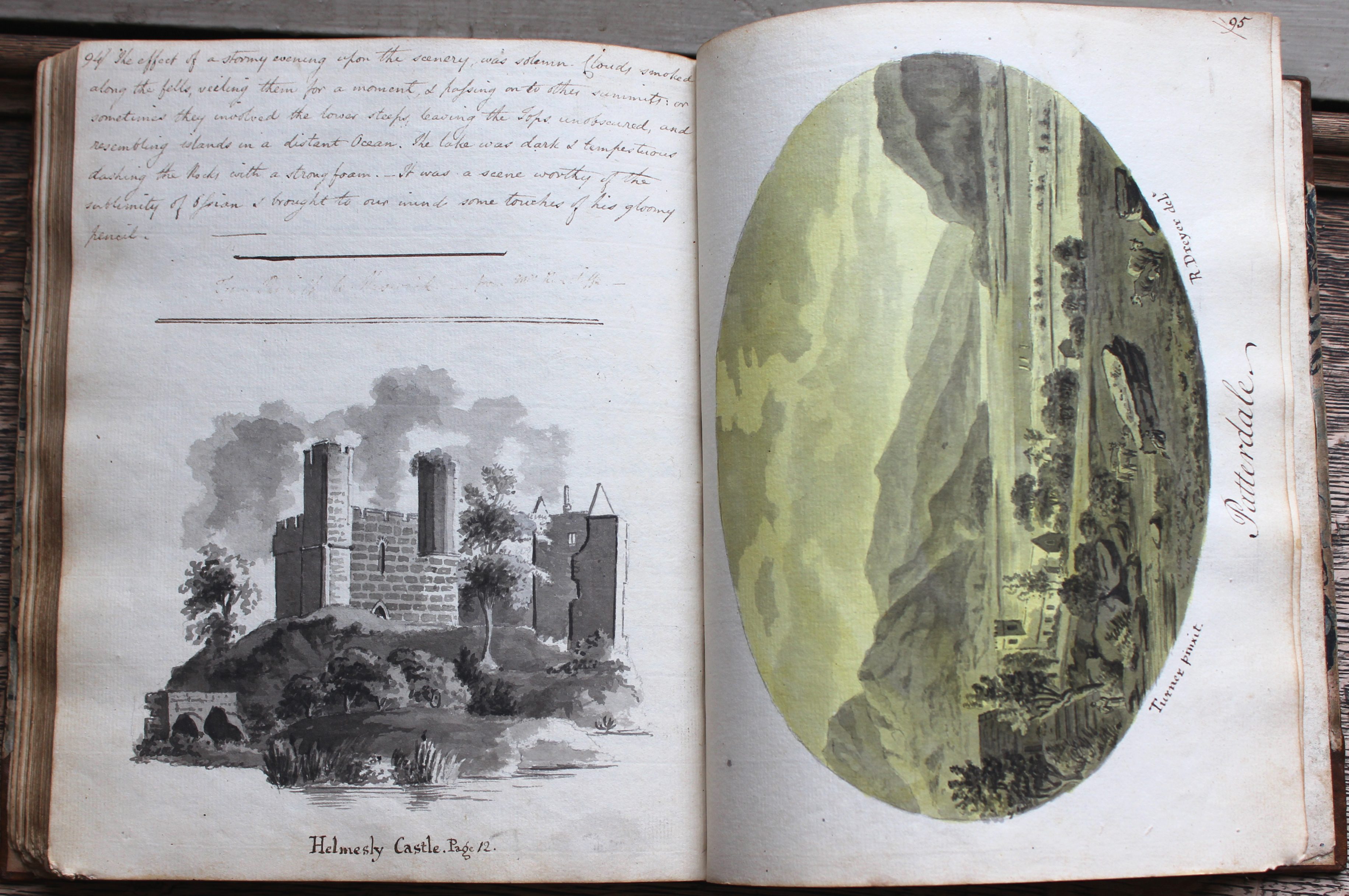
This manuscript journal is illustrated with wash drawings in imitation of William Gilpin’s Observations (London, 1786). The tour was taken in the autumn of 1792 by Mr and Mrs R. Rede and Mr Dreyer. The book is compiled from notes taken on the spot by Mr Rede.

R. Dreyer, A Tour of the Lakes of Cumberland & Westmoreland (Great Yarmouth) Bicknell.82

R. Dreyer, A Tour of the Lakes of Cumberland & Westmoreland
(Great Yarmouth)
Bicknell.82

Thomas Rose’s three-volume work Westmorland, Cumberland, Durham, & Northumberland includes 213 steel engravings from drawings by Allom, Gastineau and Pickering by various engravers. Prints from these fine and durable steel plates were produced in large numbers for many years. They were used in various books and for a variety of purposes such as headings for letter paper and for table maps.

Thomas Rose, Westmorland, Cumberland, Durham, & Northumberland (London: Fisher & Jackson, [1832-1835]) Bicknell.85

Thomas Rose, Westmorland, Cumberland, Durham, & Northumberland
(London: Fisher & Jackson, [1832-1835])
Bicknell.85

Finally, these sixteen views were issued without text or title to be bound with Thomas West’s Guide to the Lakes (1778). The views were advertised in the later editions of West’s Guide, and in that sense belong closely to the aesthetic promoted by West’s editors. The artists often intervene in the topography to improve the view.

John Smith, Sixteen Views of the Lakes in Cumberland and Westmorland (London: printed for W. Clarke [1794-1795]) Bicknell.84

John Smith, Sixteen Views of the Lakes in Cumberland and Westmorland
(London: printed for W. Clarke [1794-1795])
Bicknell.84

Mira Le/JC/IJ

Riveting Accounts

After someone asked me about a young King’s fellow in about 1579 (whom the enquirer thought might be the minister who married Will Shakespeare and Anne Hathaway – we were not surprised when I couldn’t find any supporting evidence at King’s), I searched through that entire year’s accounts. Some surprising, or at least interesting, things came up.

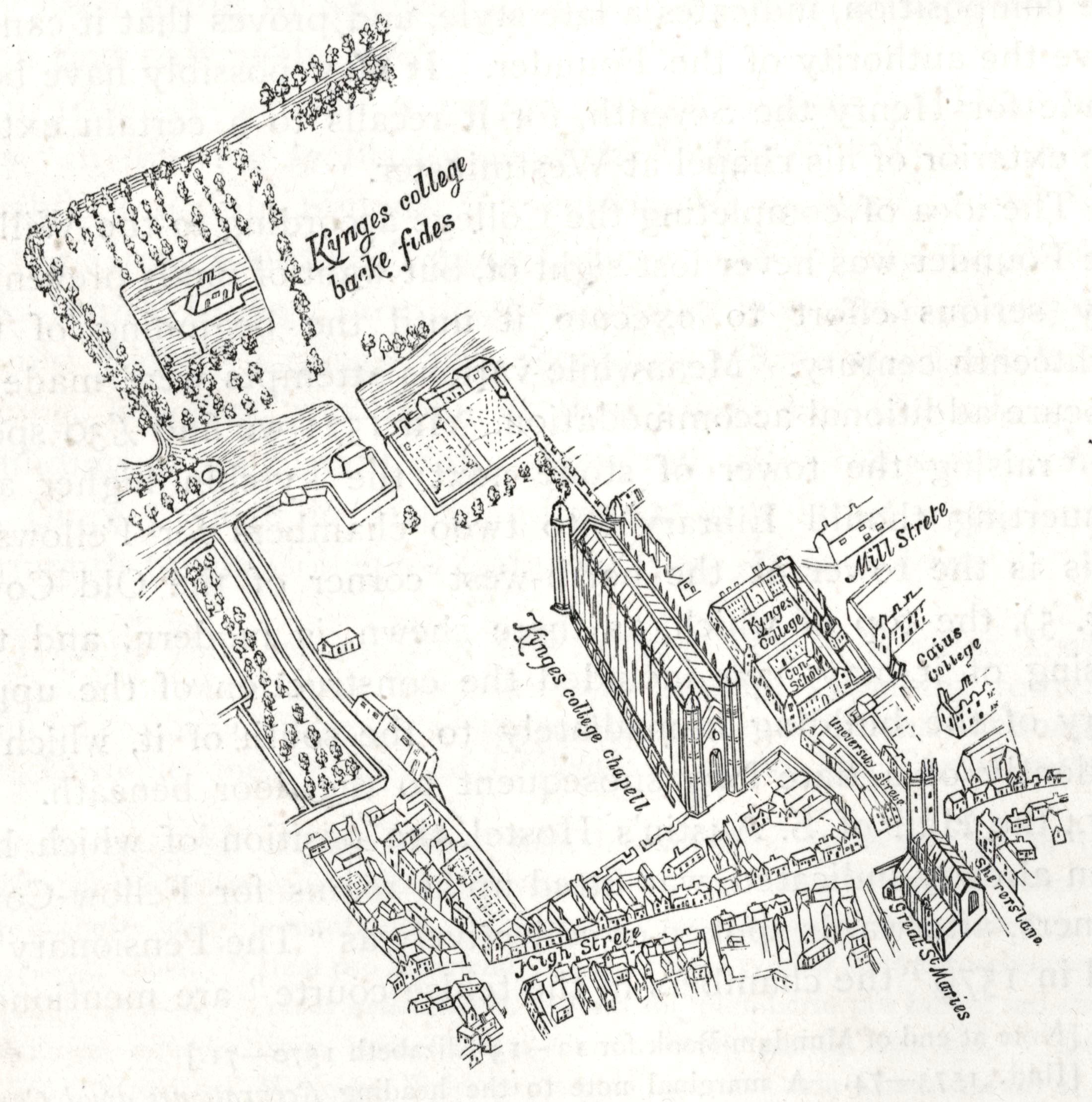
The two great maps of the College site pre-Gibbs’ building are Hamond’s map of 1592 and Loggan’s map of 1688. Hamond’s map is faint, and is reproduced here as a re-drawing from Willis and Clark’s Architectural History of the University of Cambridge and of the Colleges of Cambridge and Eton. The Loggan excerpt reproduced here is taken from a 1921 reprint by Clark and Gray.

W&C-553 fig 57 b

Hamond’s map

1688 Loggan_crop

Loggan’s map

Queens’ Road (west) is at the top – the fields beyond, now the Fellows’ Garden, were common land at the time.

What’s that moated site in the middle of Scholars’ Piece? On the Hamond map it’s occupied by a dovecote. And what about all those buildings around the wall surrounding the College site, particularly visible in Hamond’s map? What are they? The draft accounts (a page of which is shown below) offer some partial explanations.

1578-9 rep cantab 4

KCAR-4-1-4-11 Bursar’s particulars book, reparationes cantab. for Annunt and Bapt term (Easter and long vacation/summer) 1579

These particular pages from the accounts record repairs on the College site. (Other pages record repairs at our Grantchester and Barton estates, for example.) The first three items on this page record payments of

Junii 23 le pavier for paving 32 yerdes in the lane by the stables 2 d ob the yerde…vi s iiii d

for a load of ragge to the same…iiii s vi d

Cochei July 8° pro 10 bigatis argille…vi s viii d

The abbreviation ob is for oblus, technically a halfpenny but the term often appears in the accounts to stand generally for ‘a portion’ – in this case the paving cost works out at 2 3/8 shillings per yard. This suggests it is internal to the College site, for the 1543 Cambridge paving bill (in force until 1788) decreed that all the public streets be maintained by the frontage-holders and that ‘no persone or persones exercysyng the handecrafte or ocupacion of pavyng wythin the sayd towne, shall take above a jd. q. for every yarde square pavyng’ (Cooper’s Annals of Cambridge, vol. 1, p. 411).

Thus we paid someone to pave a lane, at two and a bit pence per yard, and he supplied the (rag-)stones at 4 shillings sixpence. We also paid Cochei for 10 cartloads of clay. It’s not clear whether this is a man called Cochei, or just ‘a coach driver’ – the designation appears in the accounts books frequently during these years, when labourers’ names are usually specified. From the marginal ‘g.w.’ next to this entry and others I surmise the clay (‘argille’), as well as the next items (sand and straw, also delivered by Cochei), were used to build the garden wall in that year. 10,800 tiles were purchased at one point to cope the garden wall ‘about the Fellows garden’ which had a locked gate.

In various places the late 1570s College accounts mention a thatched swan house and a dove house which probably housed the ‘salt stone for the pigeons’ who were fattened, like the swans, with malt – the swans were later ‘upped’ (gathered and marked) and one presumes the pigeons were consumed in Hall. Other buildings mentioned in these years are:

• the stables and stable yard
• wheat house
• wood house and wood yard
• storehouse which might be the same as the larder mentioned
• salt house
• lead house (it housed the leads used in windows and the Chapel roof I suppose)
• ‘house over the water in the Scholars’ garden’
• coal house
• mill house with mill stone and mill horse
• brew house
• bake house
• sedge house with a wall around it which might be the same as the new straw house – a boat was required to remove the scaffolding after the sedge yard wall had been repaired, so if they are the same it must be one of the riverside buildings.

Gates mentioned:

• field gate
• bridge gate
• water gate
• College gate
• alms gate
• friars’ gate

The friars’ gate was approximately where Webb’s Court gate now is. There was a tennis court outside the friars’ gate and an orchard in what is now the Provost’s garden. There were lofts somewhere for malt and fish. Willis and Clark examined the accounts and offered some explanations, but it’s likely that in many cases we will never know which buildings were used for which purposes. So there are more questions than answers at this point, and plenty more research to do in those ‘boring, dry old accounts’.

PKM