Category Archives: Library

Flying Sheets

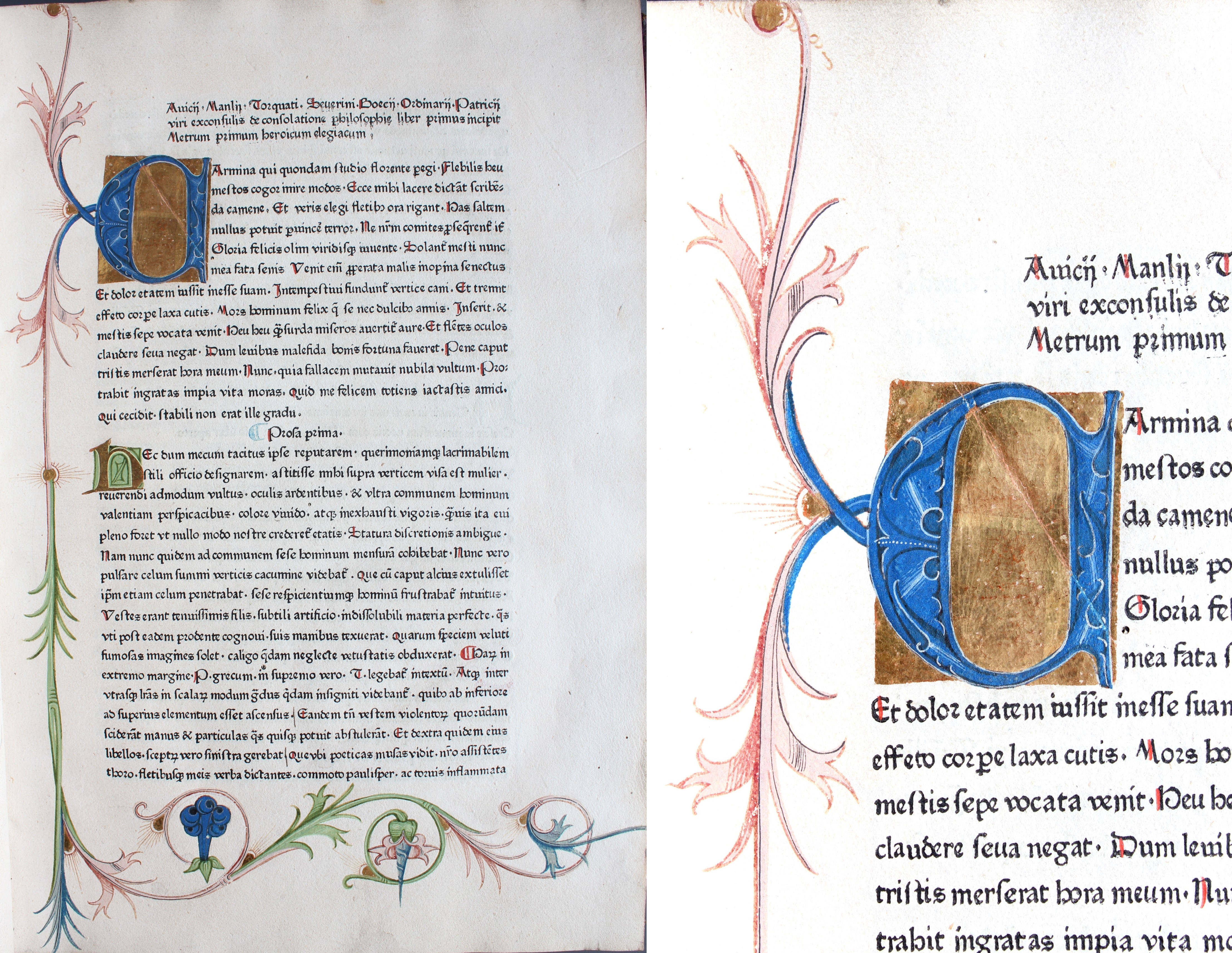
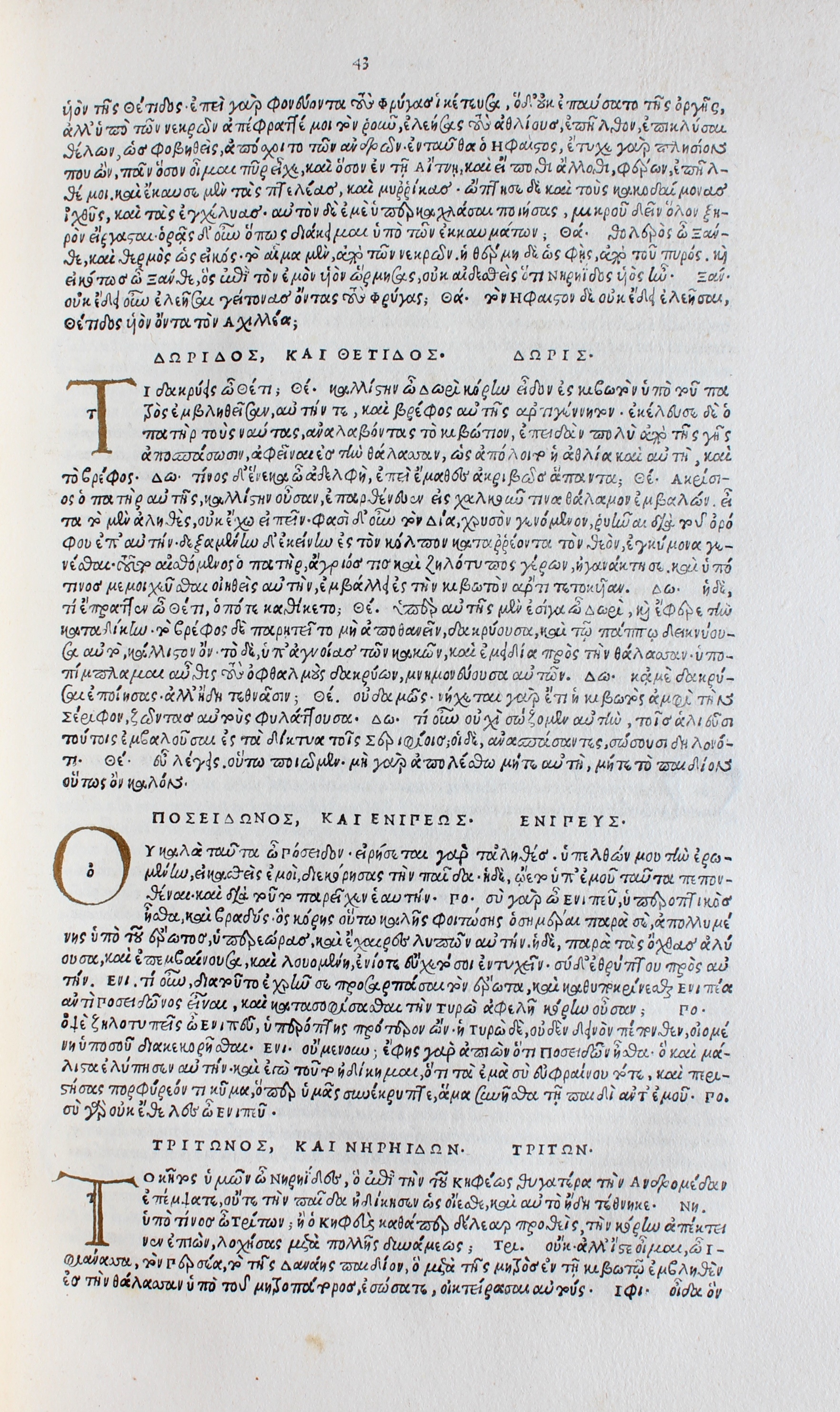
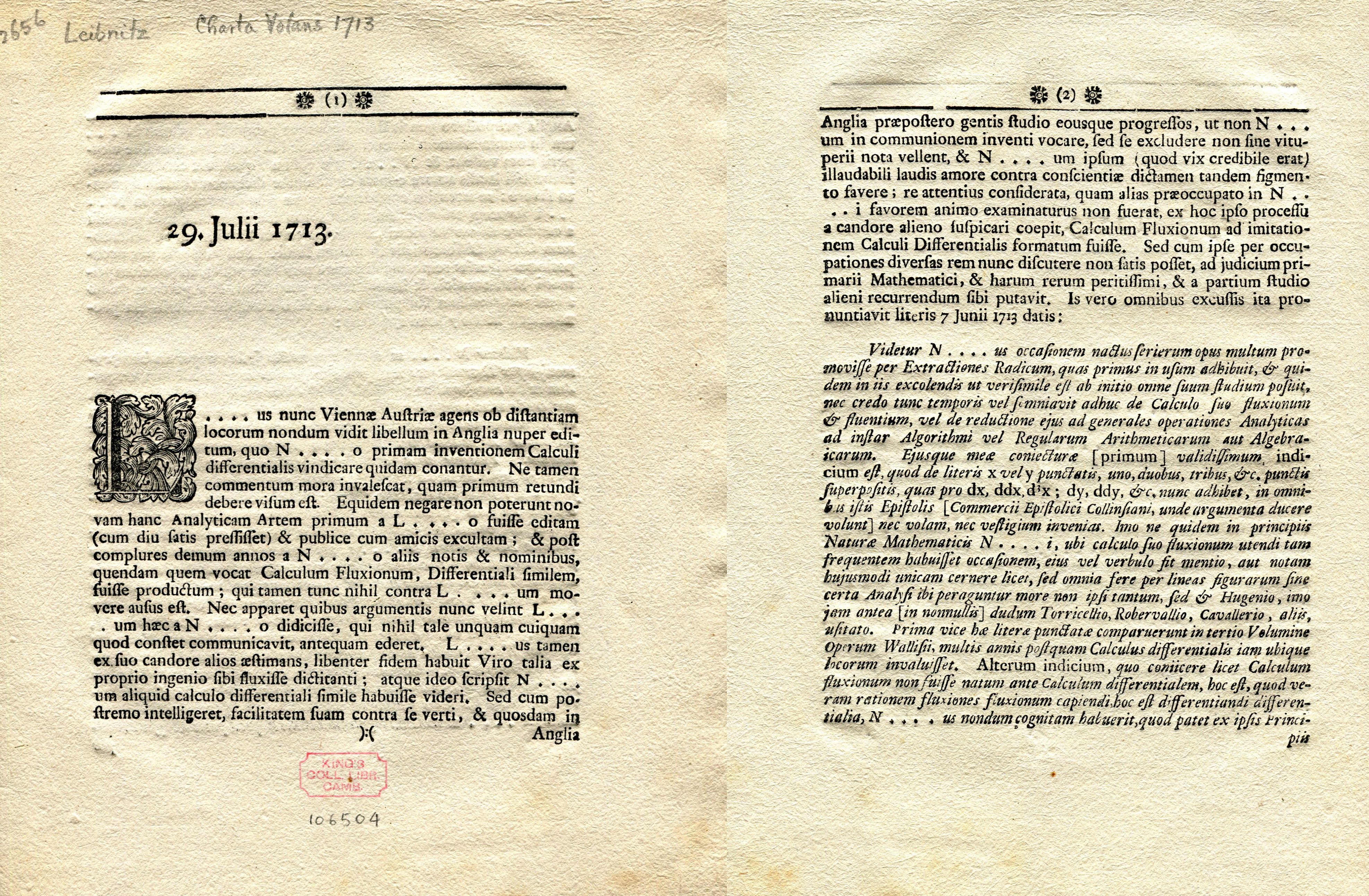
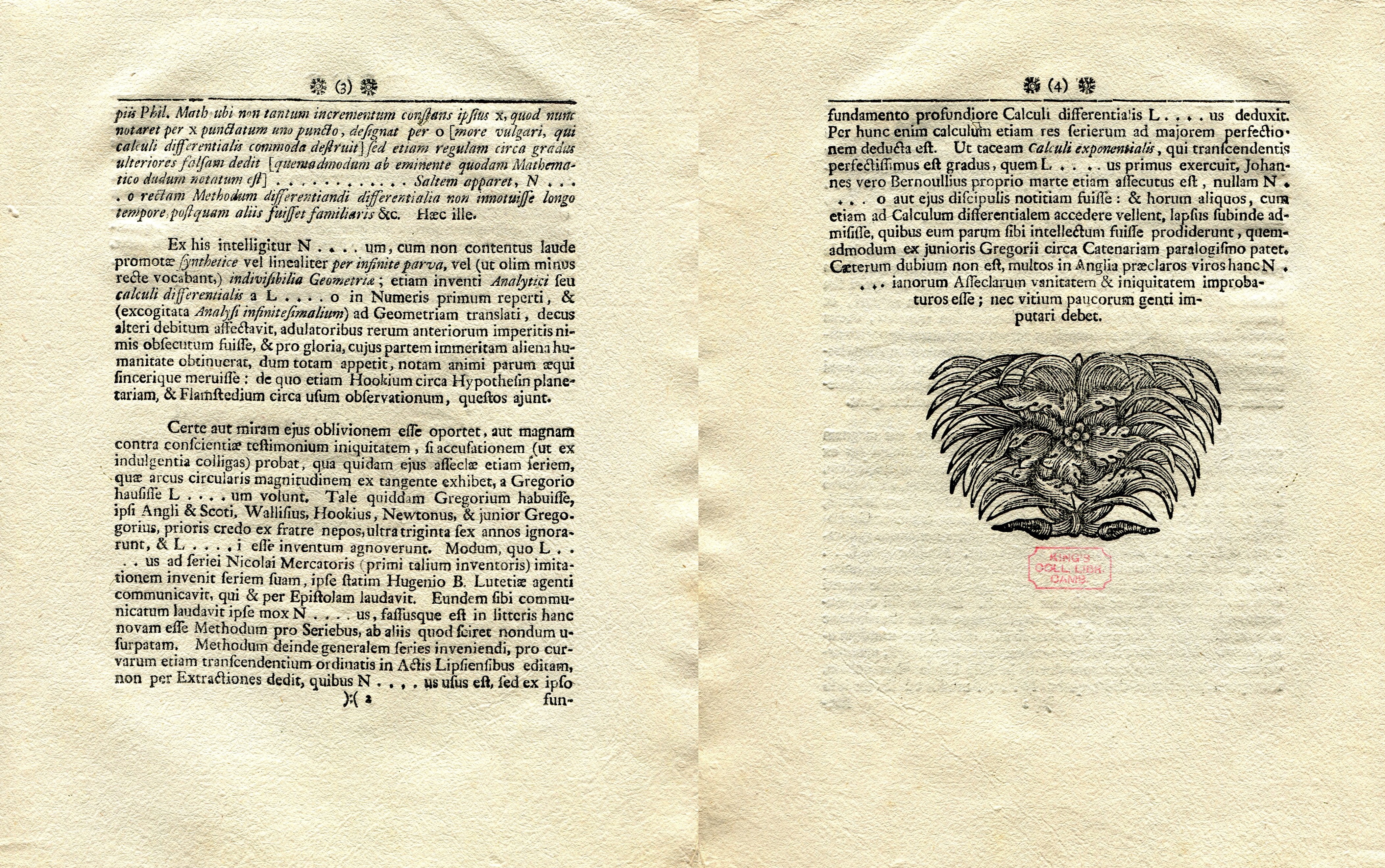
The Keynes Bequest is not merely a collection of books. Interspersed among first editions of Galileo, Descartes, Pascal, Hobbes, Kant and Locke are a number of pamphlets of historical, literary and scientific significance, ranging in size from one sheet to several pages. In the extensive collection of first and early editions of Isaac Newton’s works is an anonymous pamphlet with the caption “29. Julii 1713”. This is the so-called Charta volans (flying sheet), an important document written by Gottfried Leibniz during the bitter controversy between him and Newton over which of them invented the mathematical study of change, calculus. Given the rarity of this pamphlet (the only other copies are in Yale, Chicago and in the Burndy Library), and in the interest of scholarship, we provide a scan of all four pages:

Charta Volans 1-2

Gottfried Leibniz’s Charta volans (1713), in which he argues that Newton had not published anything on calculus before him, adding that Newton’s fluxional method was in imitation of his calculus (Keynes.Ec.7.2.27)

Charta Volans 3-4

Charta volans, pp. 3-4

Its acquisition history is also rather fascinating. Keynes had originally bought two copies of the pamphlet, and observed in a letter to K. G. Maggs when the latter offered to purchase the duplicate copy in May 1942 that he had done so “not because I wanted them, but because they were fastened together, never having been separated by a paper knife when issued. So far I have not had the heart to split the Siamese twins.” The correspondence between Keynes and Maggs throws an interesting light on his relationship with booksellers and how he went about augmenting his collection of rare books and pamphlets:

Keynes-Maggs 1

J. M. Keynes’s correspondence with K. G. Maggs, 15 May-18 May 1942

Keynes-Maggs 2

J. M. Keynes’s correspondence with K. G. Maggs, 28 May-29 May 1942

The “American library which specialises in Newton material” that bought the second copy of the Charta volans is almost certainly the Burndy Library, founded the previous year by the industrialist and historian Bern Dibner. Their copy is now at the Huntington Library in San Marino, California.

As the above correspondence reveals, the loss of one of the “Siamese twins” to the Burndy Library led to Keynes’s acquisition of another exciting “flying sheet”, namely a leaf from the Gutenberg Bible, the first book printed using movable type which marked the beginning of the Printing Revolution. The iconic 42-line Bible was printed in Mainz, ca. 1454-55, by Johannes Gutenberg. Of the about 180 copies printed, 49 are known to have survived, only 21 of which are complete. This leaf includes all of Jeremiah XX and part of Jeremiah XXI:

Gutenberg Bible Leaf 2

The first printed book: recto and verso of leaf 80 from the Gutenberg Bible (1454-55). Printed in two columns, one column on each side being defective; 2 initials supplied in red, chapter numbers in red and blue (Keynes.Ec.7.2.13)

The addition of a leaf from the Gutenberg Bible to Keynes’s collection means that the items in the Keynes Bequest cover five centuries of printing, from its very inception in the middle of the fifteenth century, right up to the middle of the twentieth.

IJ

John Wilmot, Earl of Rochester: an online exhibition

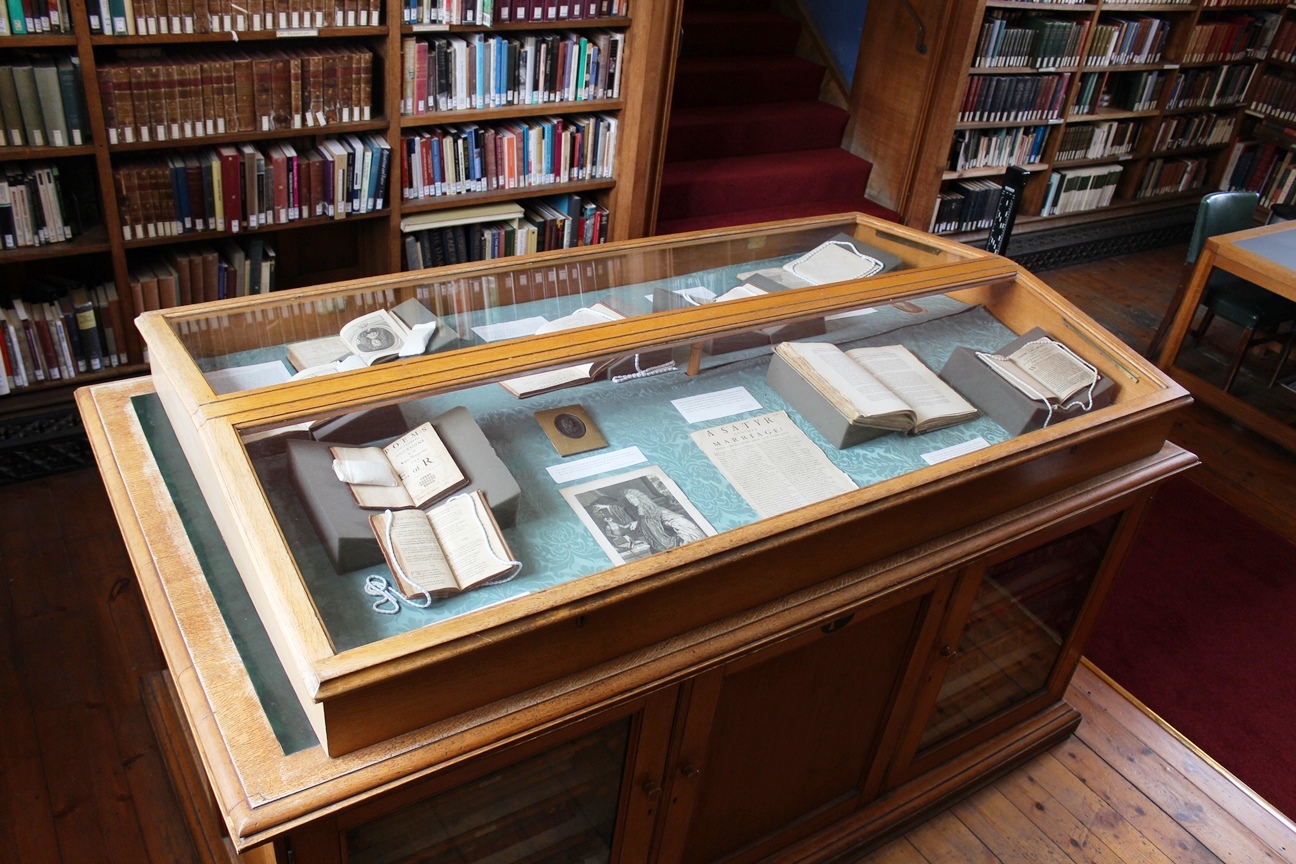
Exhibition case

Last Friday King’s College Library and Archives hosted an exhibition for the Open Cambridge weekend, focusing partly on Kingsman John Davy Hayward (1905-1965) and his collection of early editions of the works of John Wilmot, Second Earl of Rochester (1647-1680). These are some selected highlights of the exhibition.

H.14.1

Poems on Several Occasions by the Right Honourable the E. of R- – – (Printed at Antwerp, 1680). Hayward Bequest, H.14.1

Poems on Several Occasions was the first anthology of Rochester’s poems published after his death in July 1680. The false imprint (it was printed in London) and lack of a publisher’s name permitted unrestrained lewdness of content. By November of that year Samuel Pepys had a copy which he kept in the right-hand drawer of his writing desk as he considered it ‘unfit to mix with my other books’, adding ‘pray let it remain there, for as he is past writing any more so bad in one sense, so I despair of any man surviving him to write so good in another’.

H.10.5

A Satyr against Marriage ([London], undated). Hayward Bequest, H.10.5

Only a handful of Rochester’s works were printed during his lifetime, mainly satires published as broadsides. The most famous was his ‘A Satyr against Mankind’ (1679) which is a scathing denunciation of rationalism and optimism that contrasts human wickedness with animal wisdom. His ‘A Satyr against Marriage’ is written in a similar vein.

H.14.17 and H.14.16

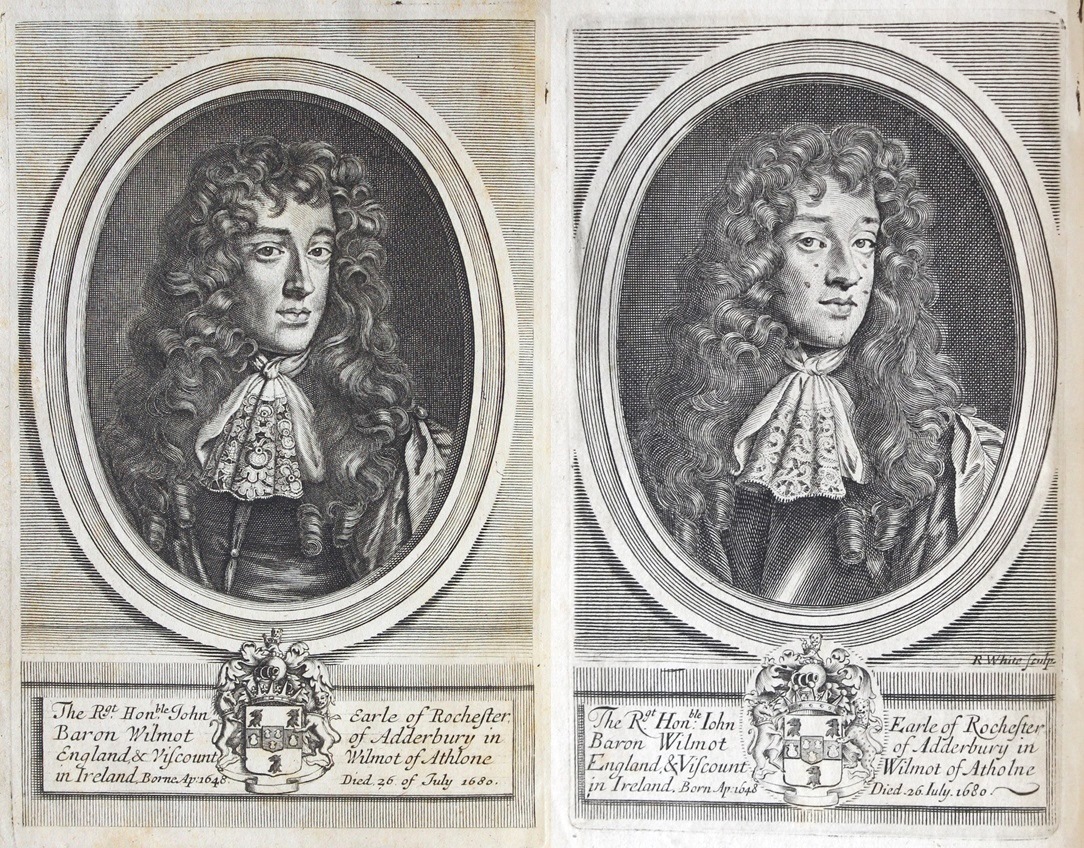
Frontispiece portraits from two editions of The Miscellaneous Works of the Right Honourable the late Earls of Rochester and Roscommon . . . by Mons. St. Evremont (London, 1707). Hayward Bequest, H.14.16 & H.14.17

Spot the difference: numerous editions of Rochester’s works appeared during the late seventeenth and eighteenth centuries, and their salacious content was gradually rewritten to reflect ‘respectable’ tastes. One of these portraits has been doctored, perhaps to suggest the venereal disease that would eventually lead to Rochester’s demise.

H.12.7

A Genuine Letter from the Earl of Rochester to Nell Gwyn. Copied from an Original Manuscript in the French King’s Library. Hayward Bequest, H.12.7

The actress Nell Gwyn, a long-time mistress of Charles II, is also believed to have been Rochester’s mistress, perhaps demonstrating his prominent position at court as well as his interest in the theatre. In 1673 Rochester had begun training Elizabeth Barry as an actress. She went on to become the most famous actress of her age and her relationship with Rochester produced a daughter. Whilst bearing all the hallmarks of Rochester’s style, some doubt the authenticity of this explicit (and anonymously published) letter from Rochester to Nell.

Engraving

Engraving of Rochester crowning his monkey. Hayward Bequest, no shelfmark

Monkey business: this engraving is one of the best known images of Rochester, and provided the title for Graham Greene’s biography of the author, Lord Rochester’s Monkey. In ‘A Satyr against Mankind’ Rochester writes:

Were I, who to my Cost already am
One of those strange, prodigious Creatures Man,
A Spirit free, to choose for my own Share,
What sort of Flesh and Blood I pleas’d to wear,
I’d be a Dog, a Monkey, or a Bear,
Or any thing, but that vain Animal,
Who is so proud of being Rational.

H.12.15

Broadside circular ([London], ca. 1676), Hayward Bequest, H.12.15

In 1676 Rochester fell into disfavour with the King and fled this time to Tower Hill where he impersonated a physician, one ‘Dr Alexander Bendo’. Under this persona he claimed skill in treating many conditions including ‘barrenness’, apparently gaining him access to many young ladies.

WARNING: This blog post was not suitable for children.

GB/JC/IJ
‘The oddest town I’ve ever seen’: Alban Berg’s visit to Cambridge

Rowe Music Library

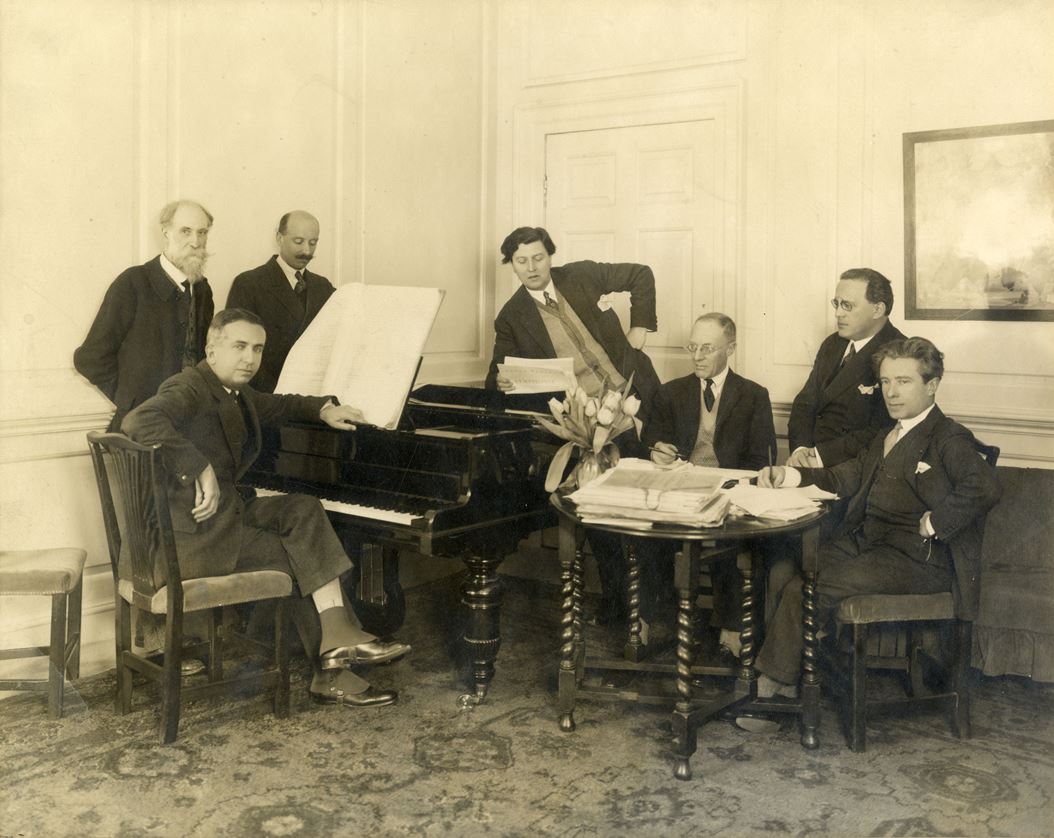
The first thing anyone notices on entering King’s College’s Rowe Music Library are shelves upon shelves of brightly coloured scores, and it is possible to be so beguiled by them that you fail to notice anything else; but there are pictures hanging on the walls that are just as interesting in their way. This, for instance:

Cambridge, 1931

The photograph was taken in January 1931, in the rooms of the musicologist E.J. Dent, a Fellow of King’s. Dent is the dapper, Wilfrid Brambell-esque figure seated at the table; alongside him, the Polish composer Grzegorz Fitelberg and the Belgian Désiré Defauw. At the piano is Alfredo Casella; standing behind him, Charles Koechlin and the conductor Adrian Boult. And in the middle, leaning on the piano, is Alban Berg. How did this man, one of the titans of twentieth-century classical music, come to be in Cambridge?

The occasion was a meeting of the jury of the International Society for Contemporary Music, which at that time consisted of Dent and the five composers (Boult serving in an advisory capacity). Dent had been President of the ISCM since its inception in 1922, and the purpose of the meeting was to determine which works would be performed at that summer’s Festival in Oxford and London, the first to be held in Britain.

Berg’s published letters to his wife tell the story. From 12th January:

So far I’ve only the impression of a provincial place, but not a German one. Sort of super-Deutsch-Landsberg.

Dent called for me, and we went on working in the College. Altogether this is the oddest town I’ve ever seen. More about that when I get back.

Dent, who is like a kindly nanny to me, made a splendid tea in the afternoon. We worked till about seven; and now the car is fetching me and taking me home to dinner. We had a very fine lunch at Dent’s, except that the food had no taste at all. In this country a pheasant tastes exactly like a turkey or a chicken.

A couple of days later:

I’ve been working hard all day, had a fine lunch (my ‘favourite’ roast lamb), home to dinner, played the gramophone afterwards, and went to bed early. It’s become colder. But thanks to all sorts of drinks, good warm pants and woolly vests and galoshes, I’m managing quite well and never catch cold. We all get on well on the jury, talking French almost all day – although we’re from six different countries: Italy, France, Belgium, Poland, Austria, England …

By 15th January, writing on his way to London, he had had enough:

Thank the Lord, Cambridge is over … not an hour more in that dull place.

In a letter to Arnold Schoenberg a month later, Berg wrote more frankly of his experience on the jury:

Of course the professional task at hand was very depressing since I, alone against 4, sometimes 5 opponents … was able to accomplish practically nothing worthwhile, as you can see from the concert programs of the Oxford Music Festival.

Thank heavens at least Webern will be heard!

The Webern performed that summer was his Symphony, Op. 21, the score of which Berg is seen holding in the photograph. Among the other works in the programme were Vaughan Williams’ Job: A Masque for Dancing, Gershwin’s An American in Paris, Hindemith’s children’s opera Wir bauen eine Stadt, and pieces by Szymanowski, Roussel, Roger Sessions, Egon Wellesz and Constant Lambert. Much of the Festival was broadcast by the BBC, which (alongside the Radio Times, at that time a publication of the BBC) made an effort to promote it with a series of articles and radio talks related to the music being performed.

While researching this post I had the opportunity of consulting Dent’s personal papers, housed in our Archive Centre. They include correspondence from several ISCM people, including a typed letter of thanks from Defauw dated 21st May 1931, to which is added a handwritten postscript referring presumably to the forthcoming Festival, to be held in July: ‘Cher Ami, je ferai tout mon possible pour venir en juillet – j’aurai une grande joie de vous revoir’.

Also in the Dent archive are several photographs dating from the foundation of the ISCM. This annotated photo, taken in Salzburg in 1922, features several composers of note, including Webern, Wellesz, Hindemith, Arthur Bliss (later Master of the Queen’s Music), and Ethel Smyth.

Salzburg, 1922

You can explore the Dent archive further by searching the catalogue on Janus here.

Bibliography
Brand, J., Hailey, C. & Harris, D. (eds.). The Berg-Schoenberg Correspondence: Selected Letters (Macmillan, 1987)
Doctor, J. The BBC and Ultra-Modern Music, 1922-1936 : Shaping a Nation’s Tastes (Cambridge University Press, 1999)
Grun, B. (ed.). Alban Berg: Letters to His Wife (Faber, 1971)

[The copyright holder of the 1931 ISCM photograph is unknown. We apologise for any inadvertent omission. Please contact us if you are the copyright holder.]

GB

Judging a Book by its Cover

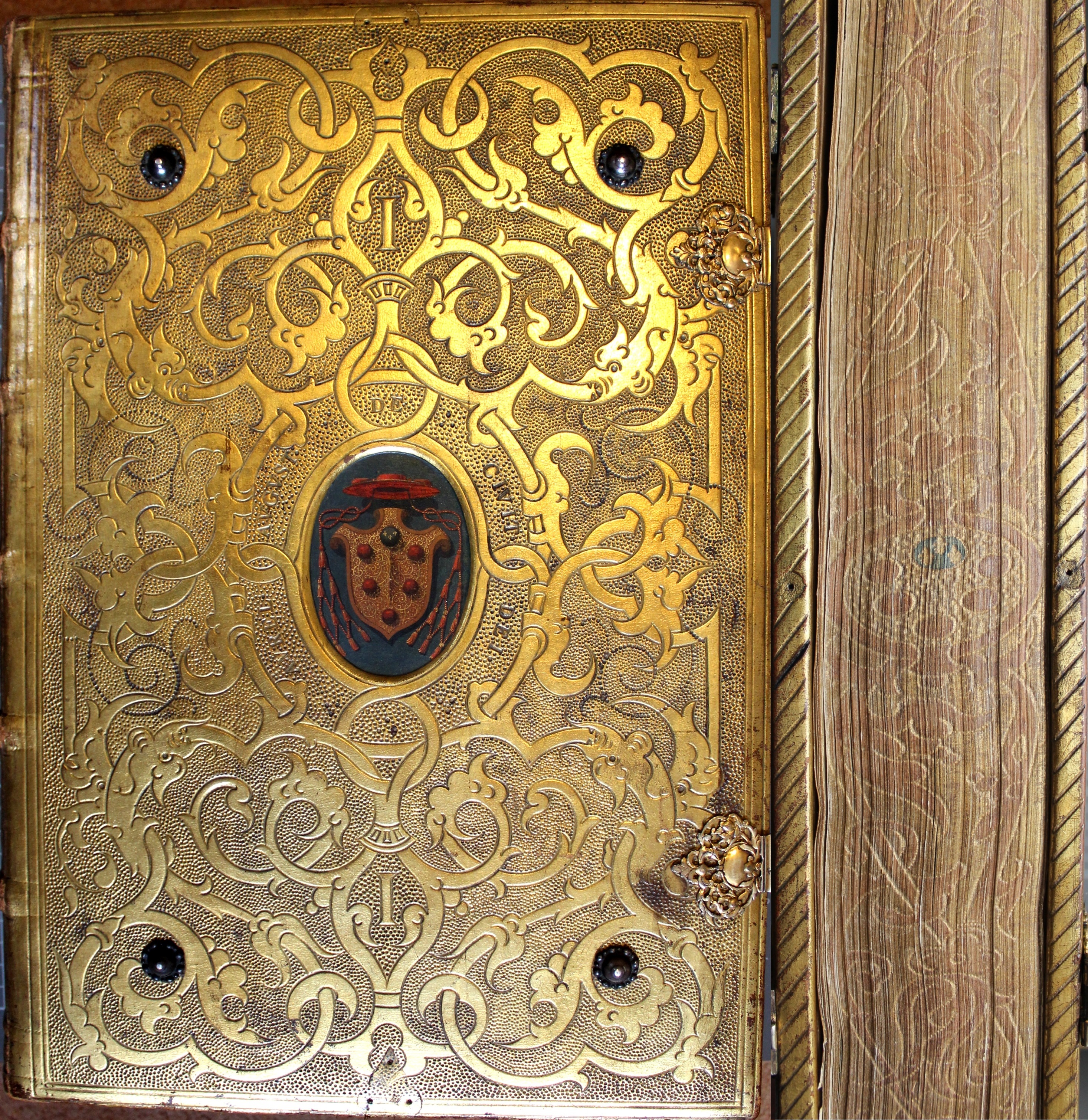
While most of the books in the Keynes Bequest have been acquired for their intellectual content, charting the history of European thought, there is one section in which the items have been collected primarily because of their physical characteristics, namely the binding. Every book bound before the early 19th century is a unique handcrafted object, so no two bindings can be genuinely identical. Recording the binding information when cataloguing a rare book is important as it gives us an indication of its provenance as well as how the book was used, regarded and circulated. Below is a selection of some of the most interesting items in the ‘binding’ section of the Keynes Library.

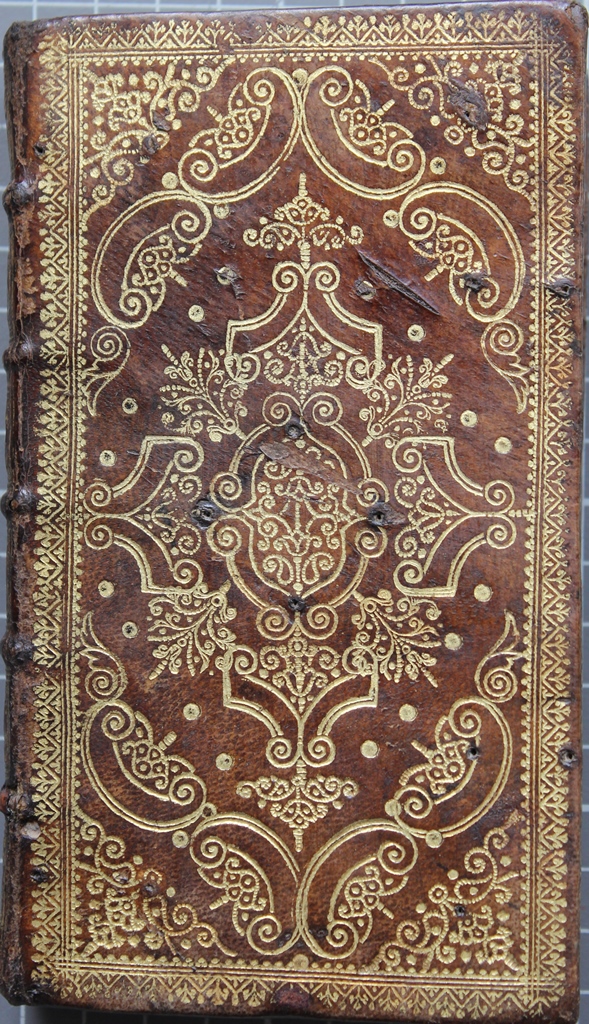
This copy of Les Pseaumes de David (1668) features an ornamental binding in goat-skin from the atelier de Charenton, characterised by corner-pieces and fleurons incorporating several pointillé motifs; on the board edges is a decorative roll in the style of the binder Antoine Ruette (1609-1669). Four stud holes are visible at the centre:

Keynes.Ec.7.4.11

Keynes.Ec.7.4.11: Les Pseaumes de David mis en rime franc̜oise par Clement Marot, et Theodore de Beze (Charenton: Estienne Lucas, 1668).

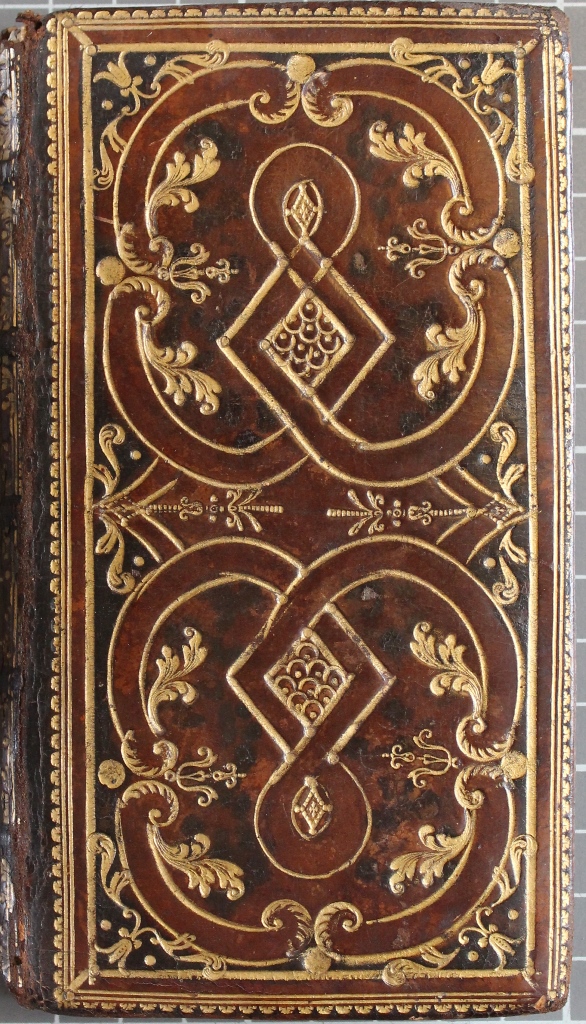
Keynes.Ec.7.4.13 is an example of a book judged solely by its cover, being a copy of an obscure Italian play on St. John the Baptist which seems to have been consigned to oblivion by literary history, but whose binding features an aesthetically pleasing symmetrical double-panel design with drawer-handle and leaf ornaments tooled in gold:

Keynes.Ec.7.4.13

Keynes.Ec.7.4.13: Niccolò Lippi, La verità conosciuta, e non seguita: overo la decollazione del glorioso S. Gio. Battista (Naples: Eredi di Laino, 1721).

There are also a number of armorial bindings in this section with interesting historical associations. We have a copy of Notizie per l’anno 1759, a volume of a statistical and administrative annual printed in Rome from 1716 to 1849, the precursor of the Annuario pontificio. Again, the content of the book is probably less interesting than the binding, which features the arms of the book’s dedicatee Cardinal Carlo Rezzonico (1724-1799), nephew of Pope Clement XIII, gold-stamped at the centre, and corner-pieces with elaborate floral decorations:

Keynes.Ec.7.4.12

Keynes.Ec.7.4.12: Notizie per l’anno 1759 (Rome: Chracas, 1759).

Going back to France, this copy of René Budel’s De monetis, et re numaria (1591) has the coat of arms of the noted French historian and bibliophile Jacques-Auguste de Thou (1553-1617) and of his second wife Gasparde de la Chastre blocked in gold at the centre of each cover. The fact that de Thou and his wife were already dead when this volume was added to their library is indicated by the addition of an urn above the two coats of arms. Underneath them, and on each spine panel, is the couple’s monogram IAGG. De Thou’s son François continued to add books to his late father’s library using this version of his coat of arms:

Keynes.Ec.7.4.6

Keynes.Ec.7.4.6: René Budel, De monetis, et re numaria, libri duo (Cologne: Johann Gymnich, 1591). Detail from the cover and spine.

And finally something closer to home: a 16th-century English blind-stamped volume bound by Garret Godfrey of Cambridge (d. 1539), with a panel design formed by a roll containing a lion, a wyvern, and a gryphon; the floral ornaments feature the binder’s initials G. G. The metal clasps, catch plates and leather straps are intact:

Keynes.Ec.7.4.7

Keynes.Ec.7.4.7: Petrus Comestor, Historia scholastica (Paris: Jean Frellon, 1513).

Some useful online resources on bookbinding:

http://www.bl.uk/catalogues/bookbindings/

https://armorial.library.utoronto.ca/

http://www.cyclopaedia.org/virtual/bookbinding.html

http://www.joh.cam.ac.uk/library/special_collections/provenance/bindings/

IJ

Mad Madge in the Attic at King’s College

A- Mad Madge's portrait

Engraved frontispiece portrait of Margaret Newcastle from The Philosophical and Physical Opinions, 1655 edition (Classmark: J.6.10)

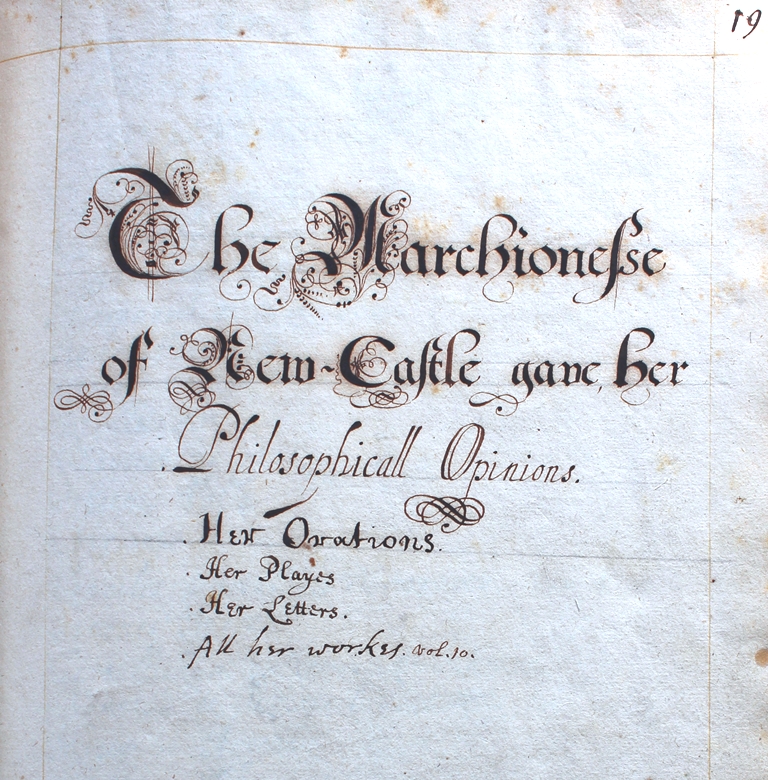
About a year ago we catalogued in the Library a seventeenth-century book entitled Philosophical and Physical Opinions (1663) written by the Marchioness of Newcastle, Margaret Cavendish (1623-1673). We knew little about the book and the author when we first started cataloguing this volume, but we came across an intriguing manuscript note in ink when we opened the cover: “1663. The gift of the Marchioness her foolish selfe”. It seemed that the author herself had donated the book to the College. Following trails we discovered that indeed our Library held eleven volumes written by the Marchioness, published between 1655 and 1688, and donated by her to the College. Nevertheless, the question remained, who was this seventeenth-century prolific female writer and what is the importance of her collection? And, furthermore, why did the author herself give the volume, or set of volumes, to King’s?

Manuscript inscription on front pastedown of The Philosophical and Physical Opinions, 1663 (Classmark:  J.6.11)

Manuscript inscription on front pastedown of The Philosophical and Physical Opinions, 1663 (Classmark: J.6.11)

Margaret Newcastle (née Lucas) belonged to the English aristocracy of the seventeenth century. She worked as Queen Henrietta Maria’s maid of honour and fled to Paris in exile with the royals during the English Civil War. She married William Cavendish, later appointed 1st Duke of Newcastle, in 1645 and remained in exile until the Restoration due to her husband’s royalist political allegiance. This had a negative impact on William’s estate and on the economy of the family. The couple returned to England in 1660 and recovered part of their estate. They moved later to Welbeck Abbey in Nottinghamshire where Margaret died in 1673. Her body was reburied in Westminster Abbey in 1674.

Title pages of five of Margaret Newcastle's publications held in King's College Library.

Title pages of five of Margaret Newcastle’s publications held in King’s College Library.

During her life Margaret Newcastle became a controversial figure among the English aristocracy due to her writings and public persona. Since then she has been both praised and criticised, even to the point of mockery when referred to as “Mad Madge” or foolish in the bequest inscription. Among her works we can find diverse genres and topics such as poems, plays, orations, biographies, politics, philosophical treatises, and gender discussions. Unlike numerous other women of her time who chose to publish anonymously or pseudonymously, Margaret Cavendish signed her own works, challenging the traditional publication hierarchies. The topics discussed in her works made her prone to criticism by male intellectuals of the time who questioned her authority and education to address them, often disregarding her books. Thus, she was perceived as a threat for crossing the boundaries of the traditionally established roles for women in society and academia. This was emphasised by her appearances at public events where she wore vests and trousers.

A- Donors' book

Entry for Margaret Newcastle in the Donors’ Book. (Ref: KCAC/6/2/1/1)

Margaret often responded to these criticisms stating that she only wrote to pass the time and that her writings should not be taken seriously. However, she recurrently expresses in her books and letters her desire to become a famous intellectual. As such, despite being considered mad and mocked by academics, Margaret Cavendish, as found in our own Donors’ Book, indeed donated entire collections of her books to King’s and other colleges in Cambridge seeking for a place in history. Furthermore, in recent years her works and importance as an academic have also been vindicated.

SVA

Something Fishy

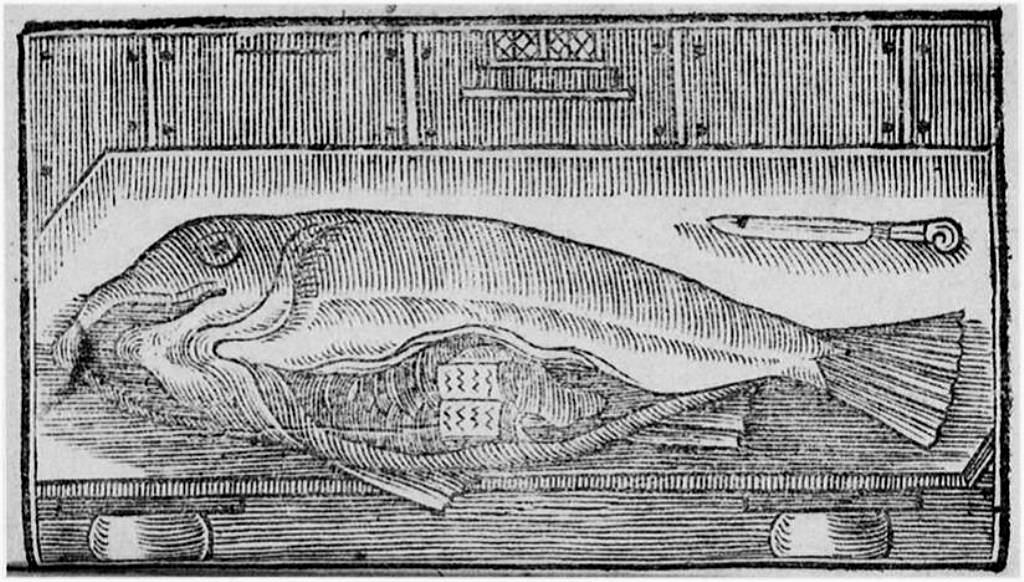
Among the more curious items in the Keynes Bequest is a book entitled Vox Piscis; or, The Book-Fish; Contayning Three Treatises Which Were Found in the Belly of a Cod-Fish in Cambridge Market, on Midsummer Eve Last, Anno Domini 1626 (1627). The title says it all. The circumstances surrounding this catch are detailed in the preface of the book, where we are told that “a codfish being brought to the fish-market of Cambridge and there cut up, … in the depth of the mawe of the fish was found wrapped in a peice of canvase, a booke in decimo sexto, containing in it three treatises bound up in one” (p. 8). The preface was written by the clergyman Thomas Goad (1576-1638), who became a Fellow of King’s College in 1596. In his will, he bequeathed his land in Milton to the College, “to the intent that the whole yearlie profitt thereof bee faithfullie emploied yearlie for ever in divinitie bookes for the librarie”. Many of these books bear the inscription “Legavit Thomas Goad”.

Vox Piscis 1b

The voice of the fish: title page and frontispiece of Vox Piscis; or, The Book-Fish (Keynes.D.4.15). It is unclear how the book ended up in the fish’s stomach.

Joseph Mede (1586-1639), theologian and Fellow of Christ’s College, helped clean the bundle and decipher the content of the treatises. They were attributed to John Frith (1503-33), the Protestant reformer who was imprisoned in Oxford in a “darke cave, where salt-fish was then kept” (p. 19) and burned at the stake in London on 4 July 1533. Frith received his B.A. degree from King’s, so the book bears a close connection with the College. Incidentally, his tutor at Cambridge, Stephen Gardiner, later played a role in condemning him to death. That’s Cambridge supervisions for you. The Keynes Bequest has two other copies of Frith’s works: A Pistle to the Christen Reader (Antwerp, 1529) and A Boke Made by Iohn Fryth, Prysoner in the Tower of London (Antwerp, 1548), a reply to Sir Thomas More.

Vox Piscis 2b

The second plate of Vox Piscis, wanting in King’s College copy; this is from the copy in the Cambridge University Library.

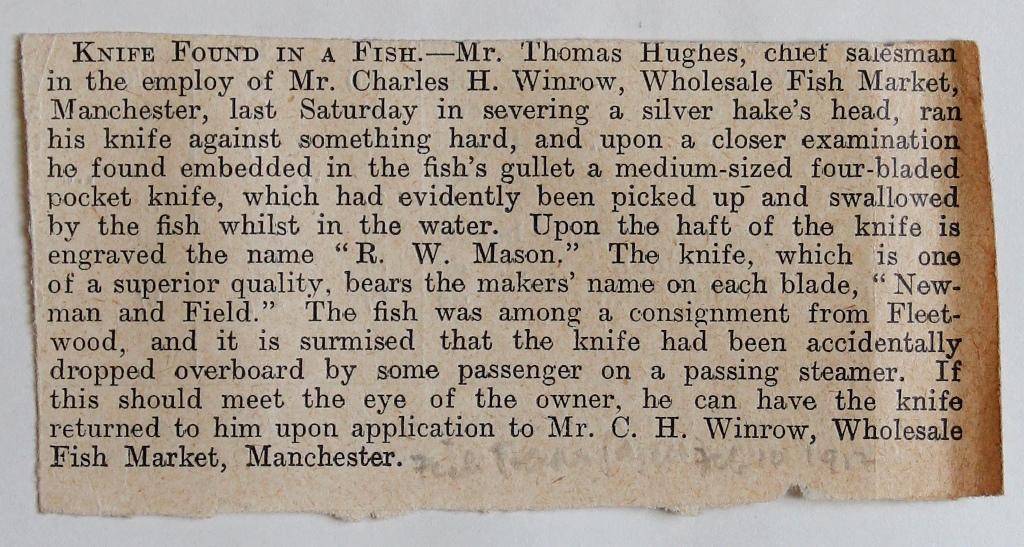
If you think this already sounds like something out of Pinocchio, there is more to come. Inside the book is preserved a newspaper cutting with the date “Feb 10 1912” pencilled in by a former owner. The short article recounts how a pocket knife was found inside a silver hake by Thomas Hughes, a salesman at the Wholesale Fish Market in Manchester. It then describes the knife, “one of a superior quality” bearing the makers’ name on each blade, “Newman and Field”, before inviting the owner to come forward and have it returned to them.

Vox Piscis 3

“Knife found in a fish”: newspaper cutting preserved inside the book.

Carrying such items is now probably illegal following the introduction of the Offensive Weapons Act in 1996, but if a knife that matches this description has been missing from your kitchen for the last century, now may be a good time to claim it back.

IJ

Bradshaw’s Bullet

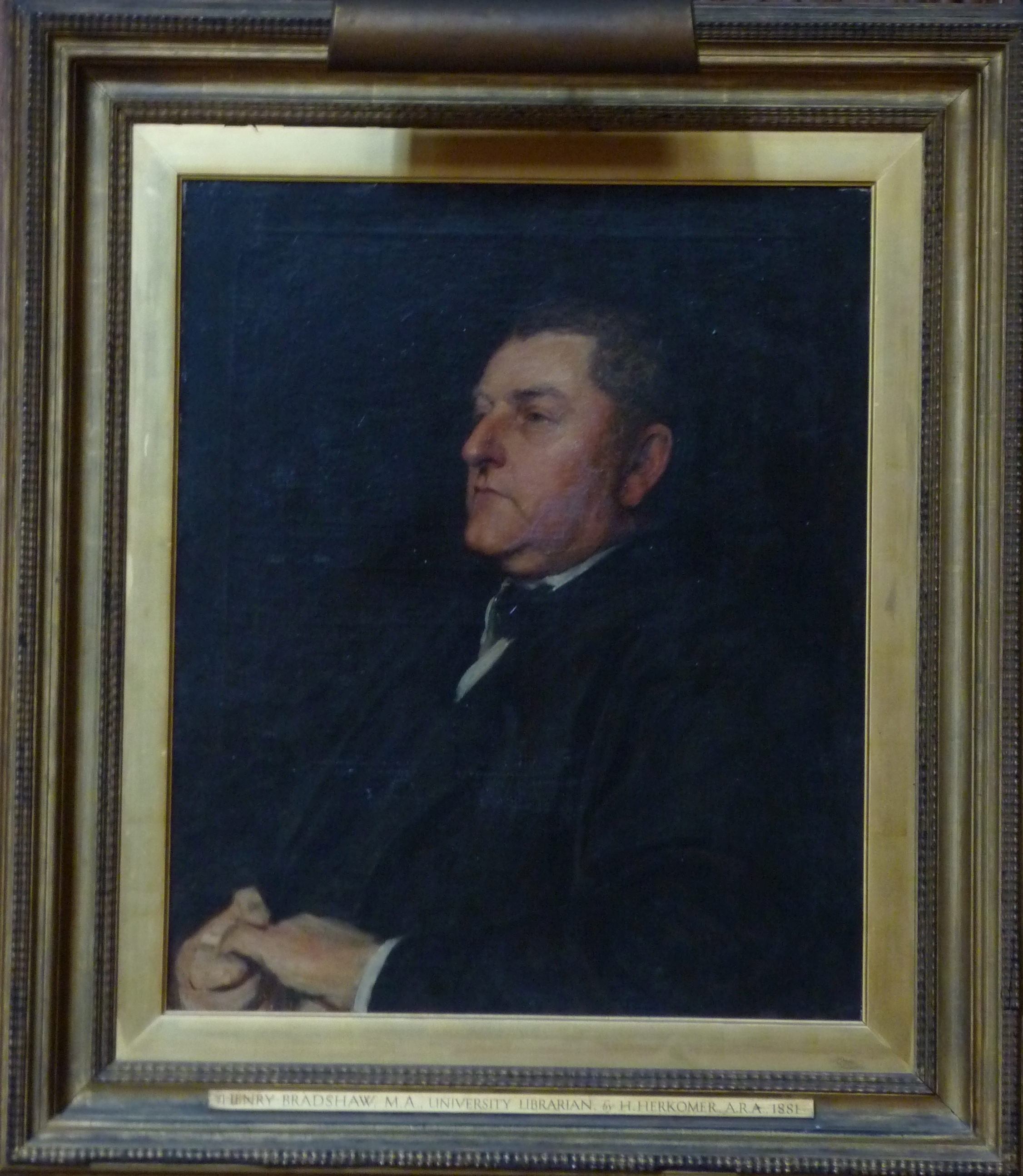
Richard Beadle gave the Sandars Lectures at Cambridge University Library this year on ‘Henry Bradshaw and the Foundations of Codicology’. Bradshaw was a Fellow of King’s from 1853 onwards, and University Librarian from 1867 until his death in 1886. Richard Beadle began his lectures with a gunshot fired from the Queens’ Lane direction into Bradshaw’s rooms at King’s in 1872, and Bradshaw’s enquiries to try to find who had fired it. Over the course of the lectures he showed Bradshaw acting as a detective in examining manuscripts, working from significant details of physical evidence, very much like Sherlock Holmes—but Bradshaw got there first. Bradshaw inspired awe and devotion amongst his colleagues in King’s, in Cambridge and the wider book world. His friend the historian George Prothero, Tutor at King’s, produced A Memoir of Henry Bradshaw in 1888, based largely on the correspondence of Bradshaw, his friends and collaborators. The Memoir has a facsimile of a letter from Bradshaw to Mr G.L.F. Tupper of 6 May 1870 tipped in opposite page 360 where other letters to Tupper are mentioned. In the 1870 letter Bradshaw explains how his codicological method could also be applied to woodcuts found in early printed books. His addressee Tupper was a lithographic printer, but also a keen student of early printing, who produced excellent facsimiles of early editions for Bradshaw.

photo of portrait2

Portrait of Bradshaw by Hubert von Herkomer, 1881

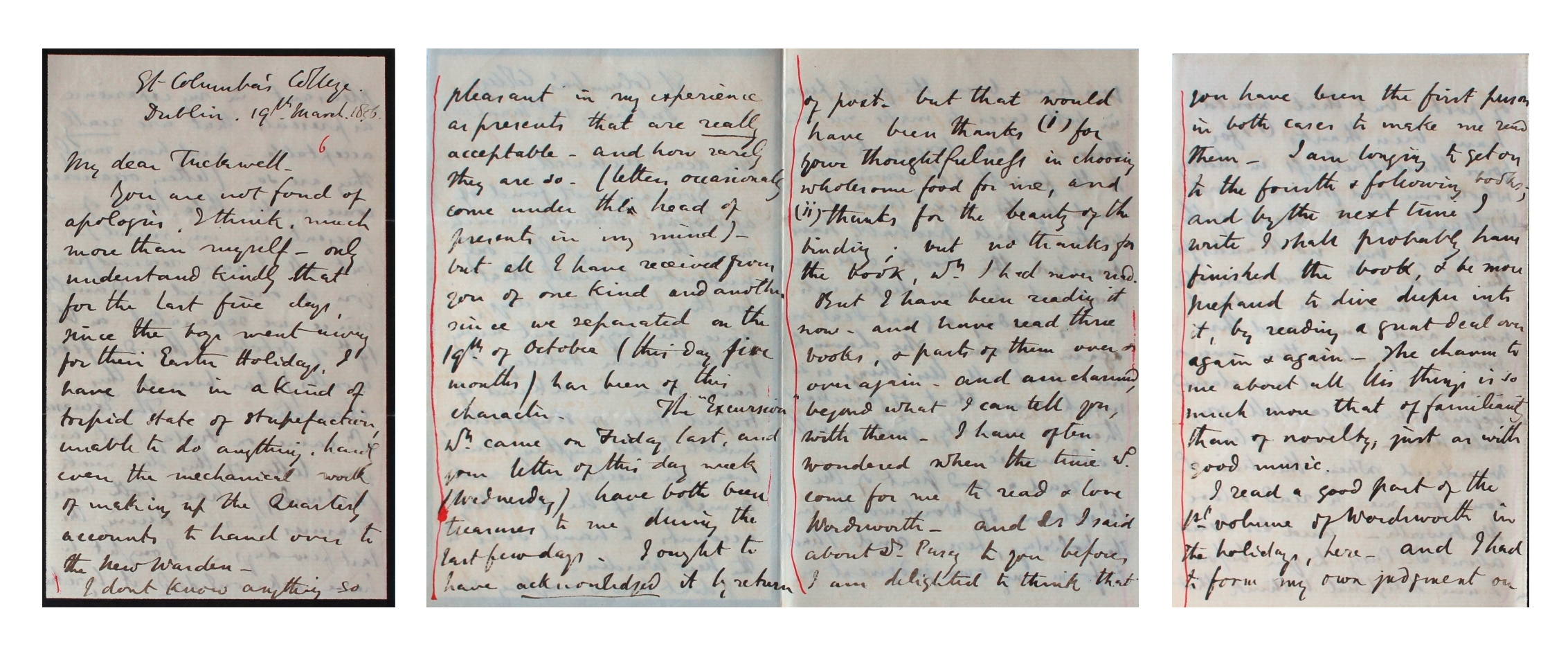
Two copies of this Memoir in the Library at King’s were ‘grangerised’, that is original letters by Henry Bradshaw were inserted within the printed text, rather on the model of the Tupper letter. ‘Grangerising’ was a common practice amongst Victorian book owners, a way of personalising as well as supplementing biographies, or extra-illustrating histories and antiquarian works. Both these copies of the Memoir were purchased by King’s in 1955. One copy is quarter-bound in leather and cloth by the firm of Zaehnsdorf for its owner William Tuckwell, whose bookplate is inside the front board. Tuckwell (1829-1919) was educated at New College, Oxford, and became a friend of Bradshaw when they both taught at St Columba’s College near Dublin in 1853-4. Tuckwell is best known today for his Reminiscences of Oxford (1900). Inside the Memoir Tuckwell inserted a letter from Arthur Hugh Clough (son of the poet of the same name), of 16 February 1886 describing the last hours of Bradshaw’s life, as well as another portion of a letter from Clough listing obituaries of Bradshaw. There is a letter from Prothero asking Tuckwell for information about Bradshaw, manuscript ‘Reminiscences sent to Mr Prothero’ by Tuckwell, and Prothero’s letter of thanks. Then follows a printed review of the Memoir by Tuckwell, from The Spectator on 6 July 1889, with Prothero’s letter of thanks for sending it to him. Five letters from Bradshaw to Tuckwell dating from 1854 to 1865 are inserted. Apart from school matters at St Columba’s College the letters deal with Bradshaw’s responses to reading Wordsworth and college reform at King’s. These letters were selectively quoted by Prothero in the Memoir. The final insertion is of a copy of the auction catalogue of Bradshaw’s library by John Swan & Son of Cambridge in November 1886.

Tuckwellthumbnail

Click on image to see full letter

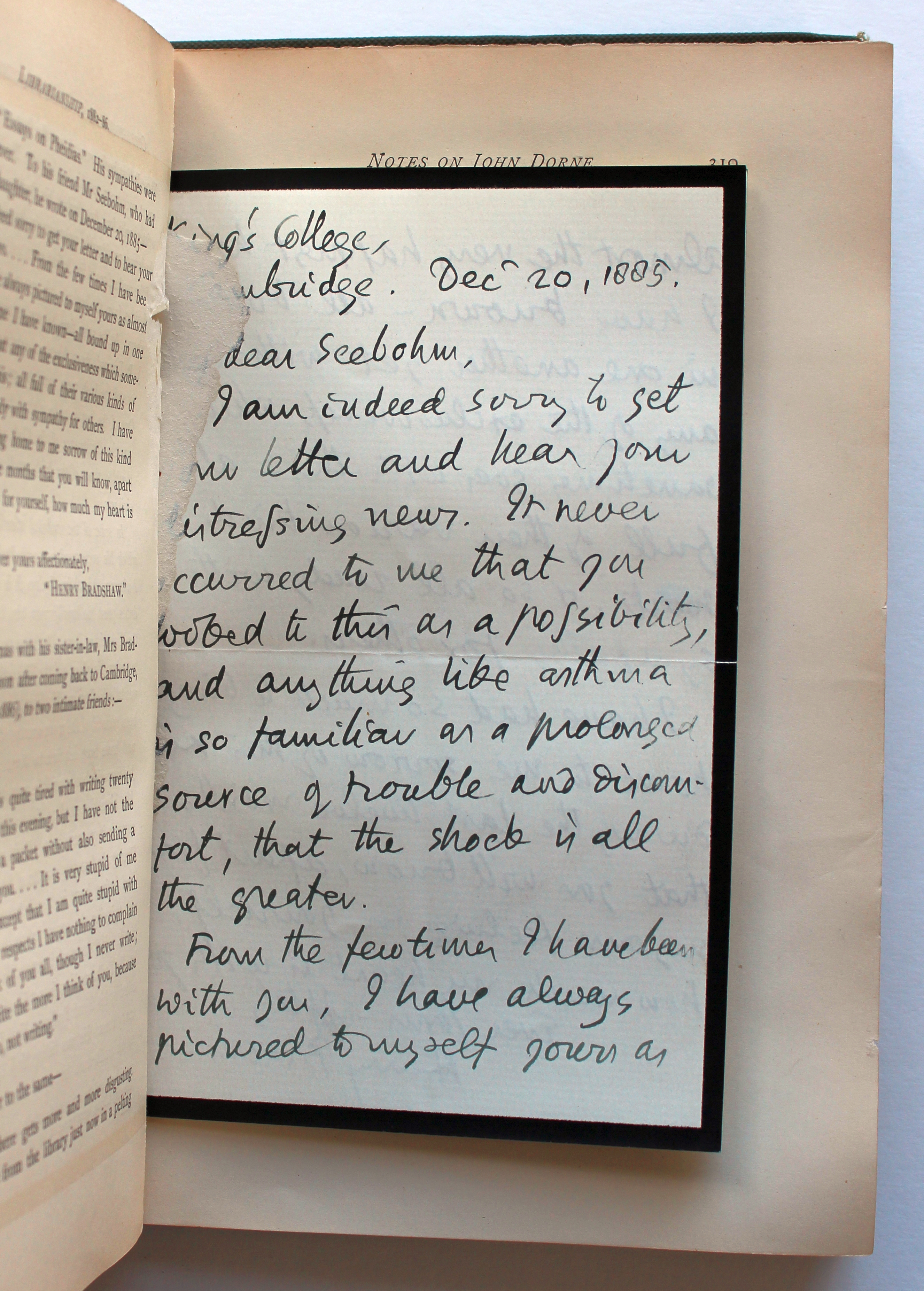
The other ‘grangerised’ copy of the Memoir must have been in the possession of the historian and banker Frederic Seebohm (1833-1912). No less than 31 letters from Bradshaw to Seebohm are inserted, some attached, some now loose. Seebohm’s work on The Oxford Reformers (1867) seems to have first put him in touch with Bradshaw, who helped him by superintending a transcript of the lectures on St Paul’s Epistles to the Romans by John Colet (1467-1519), CUL MS Gg.IV.26, and by trying to procure a decent photograph of an illuminated portrait of Colet in MS Dd.7.3. A second batch of letters deals with Seebohm’s innovative research on early field systems, which resulted in The English Village Community (1883), his most influential book. Seebohm had worked out the size of the average ‘virgate’ or villein’s holding of land, which Bradshaw was able to illustrate from a 14th century manuscript terrier of the West Fields of Cambridge which he had bought himself in 1878, and was bequeathed to the University Library (Additional MS 2601). Seebohm’s letter to Bradshaw of 13 September 1878 (Additional MS 2592, no.504) reads: You are a splendid fellow! Your letter has interested me much for, as the enclosed paper will show you, you are describing the field system in the very terms in which it is described incidentally in the Saxon descriptions of the boundaries added to the Latin charters of the 10th century aBradshaw’s own transcription of part of the manuscript dealing with ‘Grythowefeld’ survives as Additional MS 4228, and is mentioned in his letter to Seebohm of 25 September 1878. Bradshaw also performed the service of introducing Seebohm to the great Russian historian Paul Vinogradoff, as we see from his letter of 8 October 1883. IMG_5733_crop0The most poignant letter inserted in Seebohm’s copy of the Memoir is Henry Bradshaw’s letter of condolence on the sudden death of Seebohm’s daughter Winnie, a student at Newnham College, on 20 December 1885. Winnie’s life and her letters is the subject of Victoria Glendinning, A Suppressed Cry: Life and Death of a Quaker Daughter (1969). Other sources: C.W. Crawley, “Sir George Prothero and his Circle: The Prothero Lecture”, Transactions of the Royal Historical Society 20 (1970), 101-127 ‘Introduction’ to John Colet’s Commentary on First Corinthians, ed. Bernard O’Kelly and Catherine A.L. Jarrott (Binghampton, NY: Medieval & Renaissance Texts & Studies, 1985) Robin Myers, “George Isaac Frederick Tupper, Facsimilist, ‘Whose ability in this description of work is beyond praise’ (1820?-1911)”, Transactions of the Cambridge Bibliographical Society, 7 (1978): 113-34 Paul Needham, The Bradshaw Method: Henry Bradshaw’s Contribution to Bibliography (Chapel Hill: Hanes Foundation, 1988) Oxford Dictionary of National Biography (Bradshaw, Prothero, Seebohm, Tuckwell)

PMJ

Michael Mills: ‘Keeper of the Publick Library’

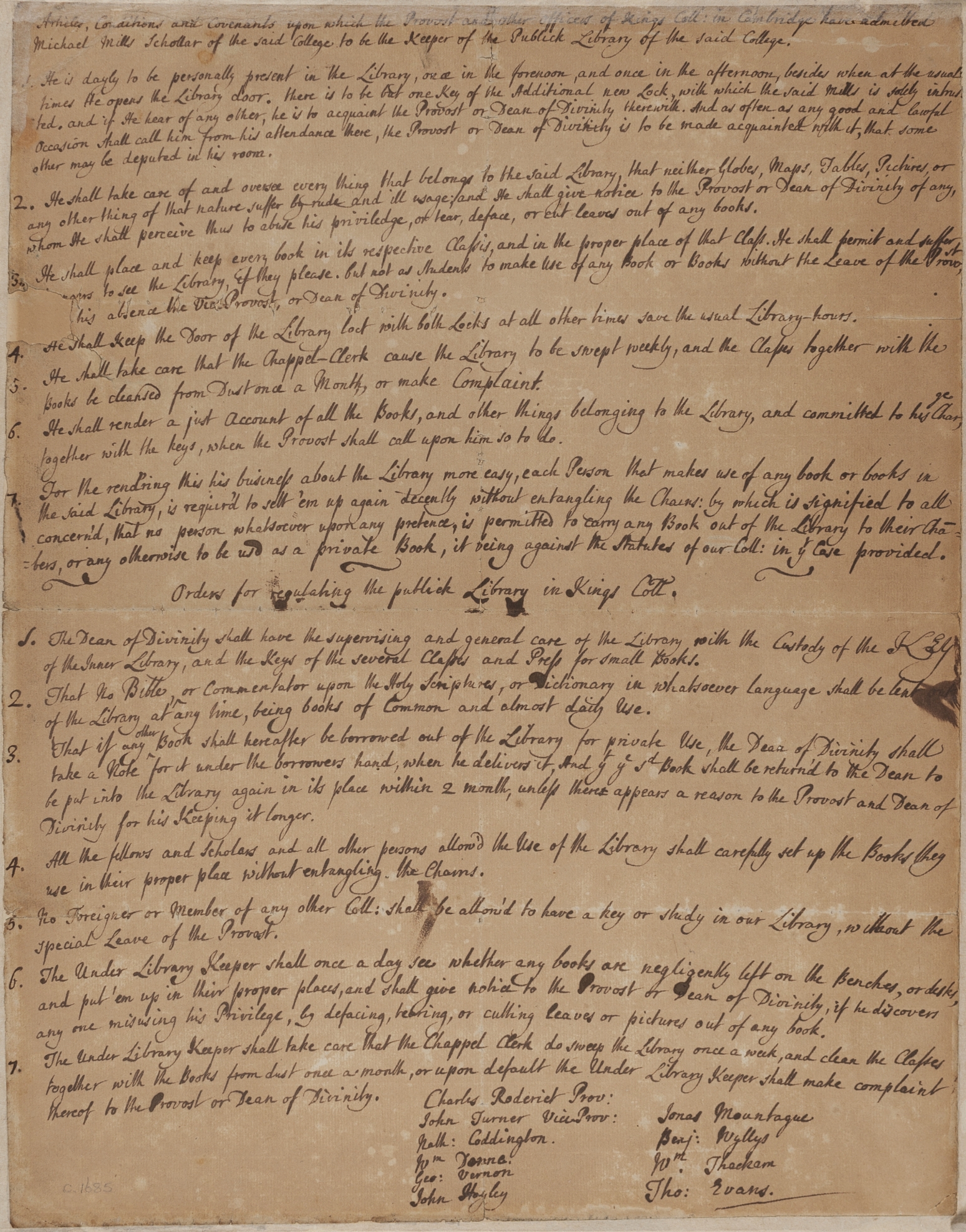
King’s College Library, which has been in continuous existence since the College’s foundation in 1441, is housed in a purpose-built building designed by William Wilkins (1778–1839), and completed in 1828. Prior to this the Library was housed in various other buildings in College, and from 1570 until 1828 the Library occupied a number of side chapels in the College’s magnificent Chapel. This is where the library was housed when, in ca. 1685, one Michael Mills (KC 1683) was appointed ‘Keeper of the Publick Library’, and a copy of what might be considered his job description survives today in the College Archives (KCAC/6/1/1). The full title of that document is: ‘Articles, Conditions and Covenants upon which the Provost and other officers of King’s Coll: in Cambridge have admitted Michael Mills Schollar of the said College to be the Keeper of the Publick Library of the said College’. The second half of the same document sets out a copy of the rules for those who used the library, thought to date from ca. 1709–10.

Create text to go here

‘Articles, Conditions and Covenants’ (ca. 1685) and ‘Orders for Regulating the Publick Library’ (ca. 1709-10) (KCAC/6/1/1). (Photograph: Adrian Boutel and Elizabeth Upper)

Born in Windrush (Gloucestershire), Mills took up his role around 1685 whilst still a scholar (he became a fellow in 1687), and this document offers an interesting insight into the College’s Library in the late seventeenth century. Reporting directly to the Provost and Dean of Divinity, Mills had ‘dayly to be personally present in the Library, once in the forenoon, and once in the afternoon, besides when at the usual times He opens the Library door’. In addition to keeping the books in good order, he also had to ‘take care and oversee every thing that belongs to the said Library, that neither Globes, Maps, Tables, Pictures, or any other thing of that nature suffer by rude and ill usage.’

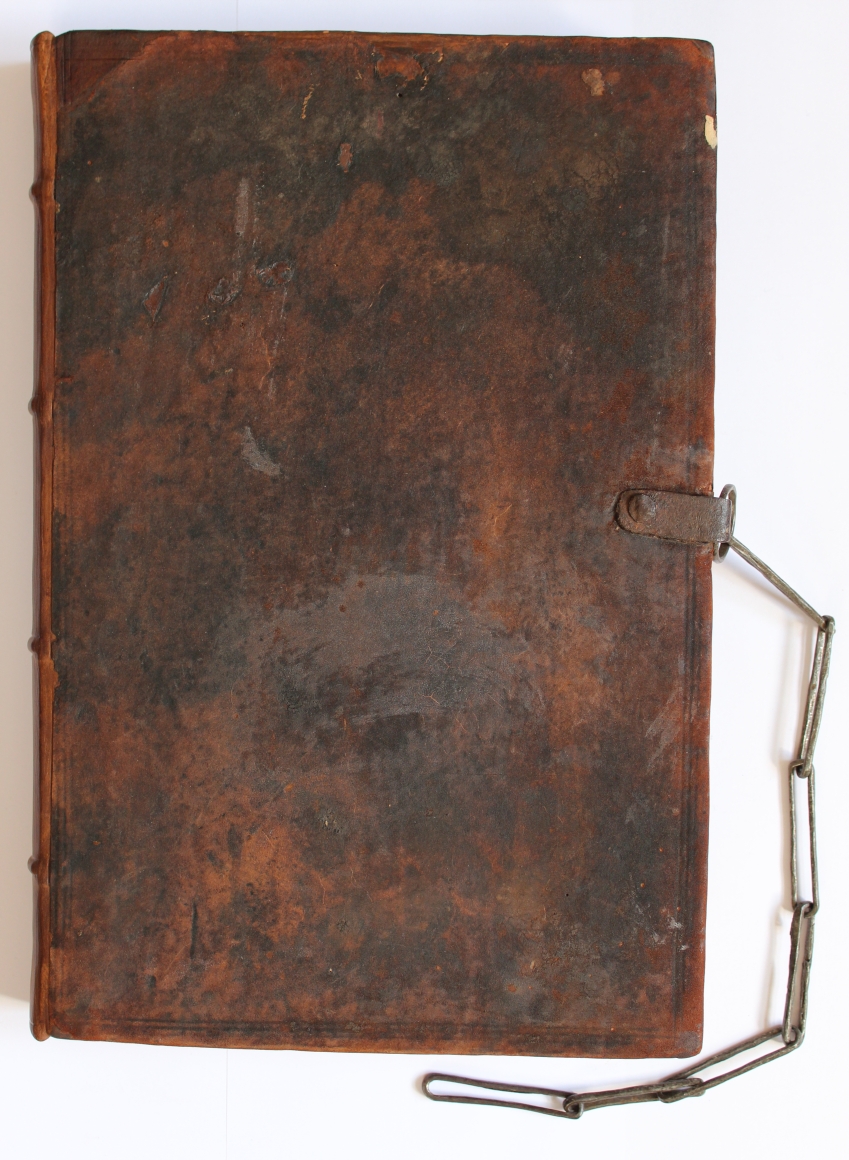
Lib I Cover_25

Index Bibliothecae Regalis Colegii (Donors’ Book). Original calf binding, with chain (KCAC/6/2/1/1)

Mills was allowed to ‘permit and suffer Strangers to see the Library, if they please, but not as Students to make Use of any Book or Books without the Leave of the Provost.’ Any member of College reading books in the library was ‘requir’d to sett ‘em up again decently without entangling the Chains: by which is signified to all concern’d, that no person whatsoever upon any pretence is permitted to carry any Book out of the Library to their Chambers’.


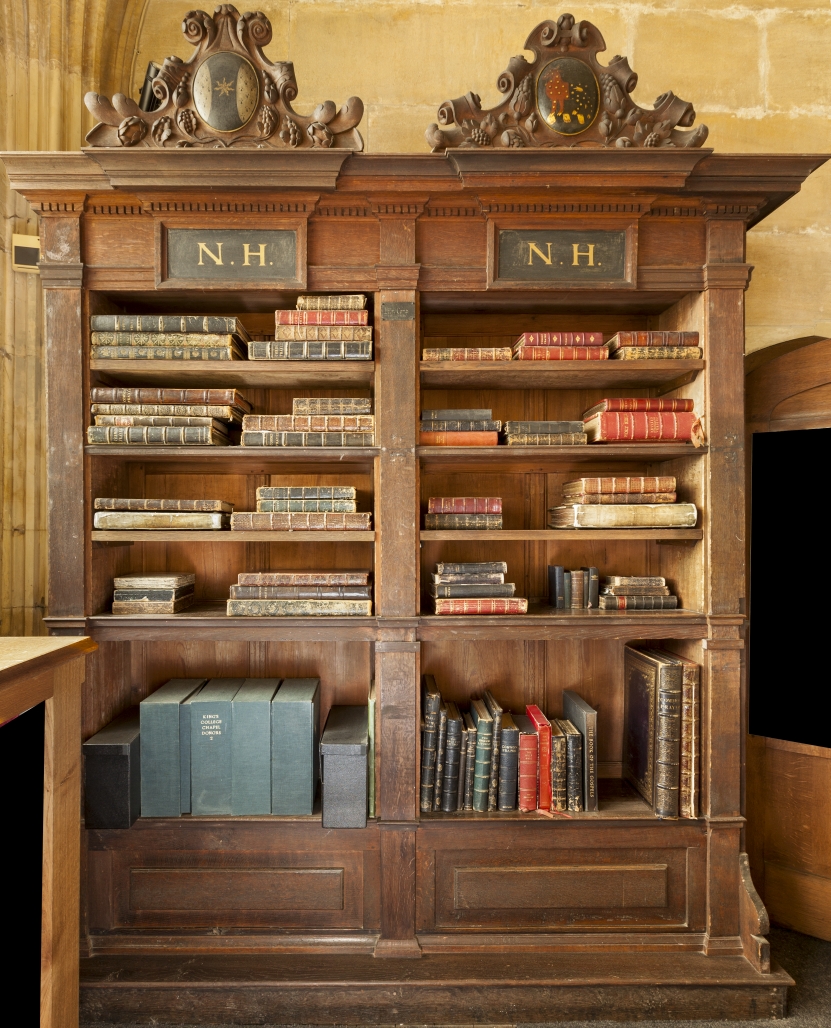
Hobart Bookcase_25

Bookcase (made in 1659) with money bequeathed by Nicholas Hobart (NH). It no longer has its chains or the chaining mechanisms attached (Photograph: Adrian Boutel and Elizabeth Upper)

As this shows, King’s Library at that time (like many libraries) was a chained library, that is, a chain was attached to the front board of each book which was attached in turn to the bookcase which housed it to prevent it from being removed. It was not until 1777 that the College finally paid someone for nine days’ work to remove the remaining chains from all the books. One book in King’s Library which still has its chain attached is a splendid calf-bound donors’ book in which donations of books were recorded along with the name of each donor from 1612 onwards (KCAC/6/2/1/1), and three of the magnificent bookcases which housed such books and which were constructed during the second half of the seventeenth century—and would therefore have been kept in order by Michael Mills—remain in the Chapel to this day.

Add text here

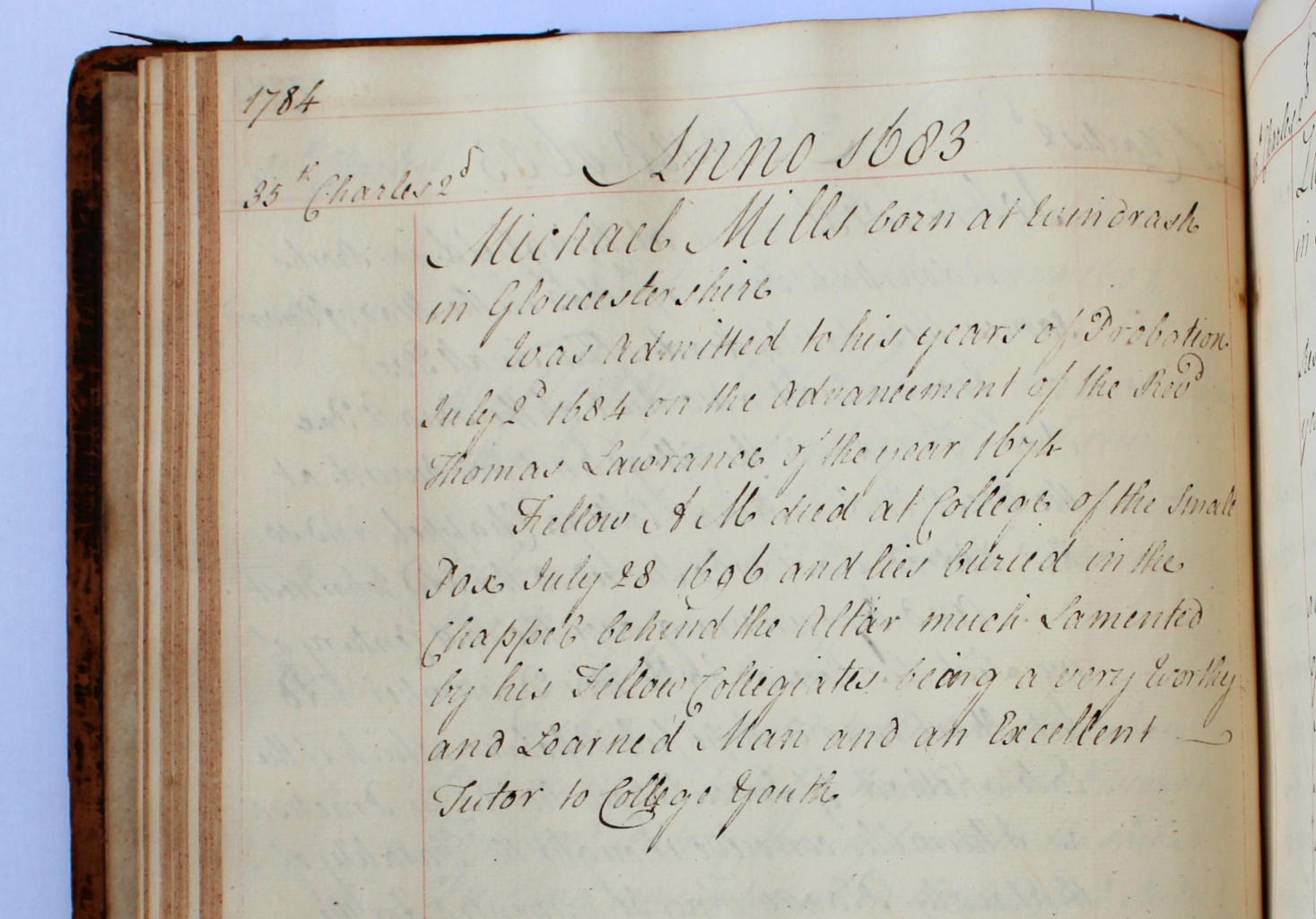
Extract from: Anthony Allen, Skeleton … or A Catalogue of all the Provosts, Fellows and Scholars, of the King’s College

Michael Mills died at a young age on 28th July 1696 and according to one eighteenth-century biographer of Kingsmen (Anthony Allen, 1685–1754), his passing was ‘much lamented by his Fellow Collegiates being a very Worthy and Learned Man and an excellent tutor to College youth’. Mills had succumbed to smallpox and was buried behind the altar in the Chapel: two fates unlikely to befall present-day College librarians.

JC

Hide and seek

[Or, if you prefer, Haydn seek. I absolve myself of all responsibility for this pun.]

The fun of cataloguing rare books is in the detective work. It’s like hide and seek at times, following tracks to work out where a particular item belongs. You chase up a reference here, another there, encountering any number of dark alleys and dead ends along the way, eliminating the possibilities one by one, until eventually whatever remains, however improbable, must be the truth.

I’ve been cataloguing rare music recently, most of it from the 1780s. The usual suspects: Davaux and Dalayrac, Tarchi and Tozzi, Sulzer, Schroeter and Schetky. Names that have the ring of familiarity even now. Occasionally, something out of the ordinary comes up, like a 1786 edition of Mozart piano sonatas printed in London by John Bland. Or this:

Title page 1

Most title pages have a publisher’s imprint, giving the cataloguer useful details of the place of publication, the name of the publisher, and even (in cases of great good fortune) the publication date. These are all standard on modern books, but in the 1780s they weren’t, especially on printed music.

Where to look, then, if your edition of Haydn’s Overture for the Piano Forte has no publication information? Well, in the first instance, major reference sources like the British Union-Catalogue of Early Music (BUCEM) and Répertoire international des sources musicales (RISM). In this case, though, the increasingly mysterious overture was listed in neither.

Haydn, happily, is a composer important enough to have his own thematic catalogue, which was compiled by Anthony van Hoboken and published in 1957. Hoboken arranges Haydn’s works by form (symphony, string quartet, piano sonata), and then chronologically by publication within sections. My heart sank at the prospect of having to wade through all of Haydn’s orchestral music to identify the overture in question. My first thought was that a piece of piano music calling itself an overture might just as easily be an arrangement of a symphony movement, and Haydn wrote a hell of a lot of symphonies.

Incipit 1

The task was to match the incipit (in plain English, the opening) of the score to one in Hoboken’s catalogue. After at least two minutes of tireless browsing, lo and behold, there it was in the Overtures section! Hob. Ia:7, Overture in D major. I hadn’t expected it to be so straightforward. Hoboken lists early editions of the piece, and includes the one I was cataloguing. But in the place where you would normally find the name of the publisher, one word: ‘Anonym’. Sigh.

When the reference works let you down, it doesn’t have to be the end of the trail. You still have your own wits to rely on, and (more pertinently) the item itself. In this case, a major clue was provided by the plate number. Sets of music printed from engraved plates often have a number at the foot of each page, identical across all plates in a set, and here the style of the plate number (a number 13 in parentheses), combined with its proximity to a similar Plate number 1plate number (the item bound after it having a number 14 in the same style), led me to infer with some confidence that the unidentified publishers of this edition were Edinburgh’s Corri & Sutherland.

This in turn facilitated the task of assigning a publication date. Humphries & Smith’s Music Publishing in the British Isles, an invaluable ‘dictionary of engravers, printers, publishers and music sellers’, says Corri & Sutherland operated from 1780 until 1790, which fits neatly with Hoboken’s stated composition date of 1777.

So there you have it: the cataloguing of an early edition from cradle to grave. There’s more to it than that, of course, but one has to keep something exciting in reserve for future posts.

GB

The Vagaries of English Spelling

When George Bernard Shaw died in 1950, he bequeathed a substantial portion of his estate to finance the creation of a new English phonemic alphabet. The word ‘ghoti’, i.e. ‘fish’ (gh, pronounced [f] as in tough; o, pronounced [ɪ] as in women; ti, pronounced [ʃ] as in nation), is often cited as an example of the irregularities in English and misattributed to Shaw. While his endeavours to simplify English orthography are well known, he is not the first one to have taken steps towards this end.

Shavian Alphabet

The Shavian Alphabet, devised in 1958 by Kingsley Read and three other entrants who won a competition to create an economical writing system for English, as stipulated in Shaw’s will

The Keynes Bequest features a first edition of Epistolae Ho-Elianae: Familiar Letters Domestic and Forren (1645) by James Howell (ca. 1594-1666), in which the author argues in the epilogue: ‘Amongst other reasons which make the English language of so small extent, and put strangers out of conceit to learn it, one is, that we do not pronounce as we write, which proceeds from divers superfluous letters, that occur in many of our words, which adds to the difficulty of the language’.

Keynes.D.3.16-2 Title page

Engraved title page of Howell’s Epistolae Ho-Elianae: Familiar Letters Domestic and Forren (1645)

Keynes.D.3.16-2 Epilogue

Howell’s Epilogue ‘To the Intelligent Reader’ criticising redundant letters in English words

Keynes wrote to Shaw on 5 January 1946 to draw his attention to Howell, ‘the first pioneer whom you are following’. The carbon copy of the letter, initialled by Keynes, is preserved in the book and accompanied by his transcription of Howell’s epilogue ‘To the Intelligent Reader’. This highlights the importance of cataloguing the collection, as it throws light on Keynes himself, his book-collecting habits and uncovers new correspondence between him and his illustrious friends.

Keynes.D.3.16-2 Letter

Keynes’s letter to Shaw, 5 January 1946 [recto]

Keynes.D.3.16-2 Letter 2

Keynes’s letter to Shaw, 5 January 1946 [verso]

Later this year, the English Spelling Society will host the first International Spelling Congress to come up with proposals to update the English spelling system. While the implementation of such recommendations is likely to face major obstacles, the case for simplification has been made compellingly in a 2003 study which investigated literacy acquisition rates in 13 languages, and concluded what Howell had already highlighted in 1645: ‘Children from a majority of European countries become accurate and fluent in foundation level reading before the end of the first school year. […] The rate of development in English is more than twice as slow.’

In 1991, the Académie française recommended a number of ‘rectifications orthographiques’ to regularise French spelling, which, though largely ignored at first, have now become widely accepted. The Germans too introduced an orthography reform in 1996, which has been adopted throughout German-speaking countries after some initial controversies and teething problems. So shud Inglish follou sut?

IJ