Tag Archives: Witches

Spooky Shakespeare: Macbeth

As the 400th anniversary year of Shakespeare’s First Folio reaches Halloween and the nights draw ever inward, our focus shifts to some of the spookier elements in Shakespeare’s plays, and particularly the witches and ghosts to be found in Macbeth. In addition, as we proceed, other witches and eerie creatures may swoop in from elsewhere in the Library’s collections.

The opening page of Macbeth in the First Folio (Thackeray.D.38.2)

The opening page of Macbeth in the First Folio (Thackeray.D.38.2)

Macbeth, believed to have been first performed in 1606, appears in print for the first time in the First Folio in 1623. It is thought that the Folio text was drawn from the latest version in theatres at the time, which incorporated revisions by the playwright Thomas Middleton (1580-1627).  One of Middleton’s revisions is thought to be the addition of two songs for scenes featuring the witches: “Come away, come away” and “Black spirits and white”. These songs are only mentioned by title in the Folio, but appear, complete with full lyrics, in Middleton’s own play The Witch (ca. 1613-1616). This expansion of the role of the witches reflected the continuing fascination of Jacobean audiences with witchcraft. This fascination was born partly out of the obsessions of King James I, whose book Dæmonologie was first published in 1597, and was then reprinted when he ascended the throne of England in 1603. James, who was convinced that he had almost met his death via witch-conjured storms in the North Sea, argued in his book that witchcraft arose from demons and humans working together to spread misery and destruction. Shakespeare is thought to have used Dæmonologie as one of his chief sources and inspirations in creating the play in the first place, likely with an eye on the King’s favour.  The plot’s focus on the murder of a King and its aftermath is also believed to reflect elements of the Gunpowder plot of 1605.

Image of a witch on a broomstick depicted in gilt decoration on a blue cloth book cover

Cover of The Blue Fairy Book, by Andrew Lang, London, 1897 (Rylands.C.LAN.Blu.1897)

Illustration of three witches flying through the sky on broomsticks, accompanied by black cats

Frontispiece of The Ingoldsby Legends, by Thomas Ingoldsby; illustrated by Arthur Rackham, London, 1907 (YHK BARH ZIN)


Next we turn to two eighteenth-century editions of the dramatic works of Shakespeare. The first, part of the Keynes Bequest, was edited by Lewis Theobald (ca. 1688-1744), who is a significant figure in Shakespeare scholarship. Theobald worked hard to correct errors and alterations that had crept into the plays through the work of earlier eighteenth-century editors, and surveyed as many surviving copies of the plays as he could in order to produce the most authoritative versions possible. His edition, originally published in 1733, was drawn upon heavily by subsequent major editors such as Edmund Malone (1741-1812), and thus continues to inform modern editions of the plays. Our set of Theobald’s Shakespeare dates from 1762. Macbeth appears in volume six, accompanied by an engraving by Hubert-François Gravelot (1699-1773), which depicts Macbeth confronting Banquo’s ghost during the feast scene (Act 3, scene 4).
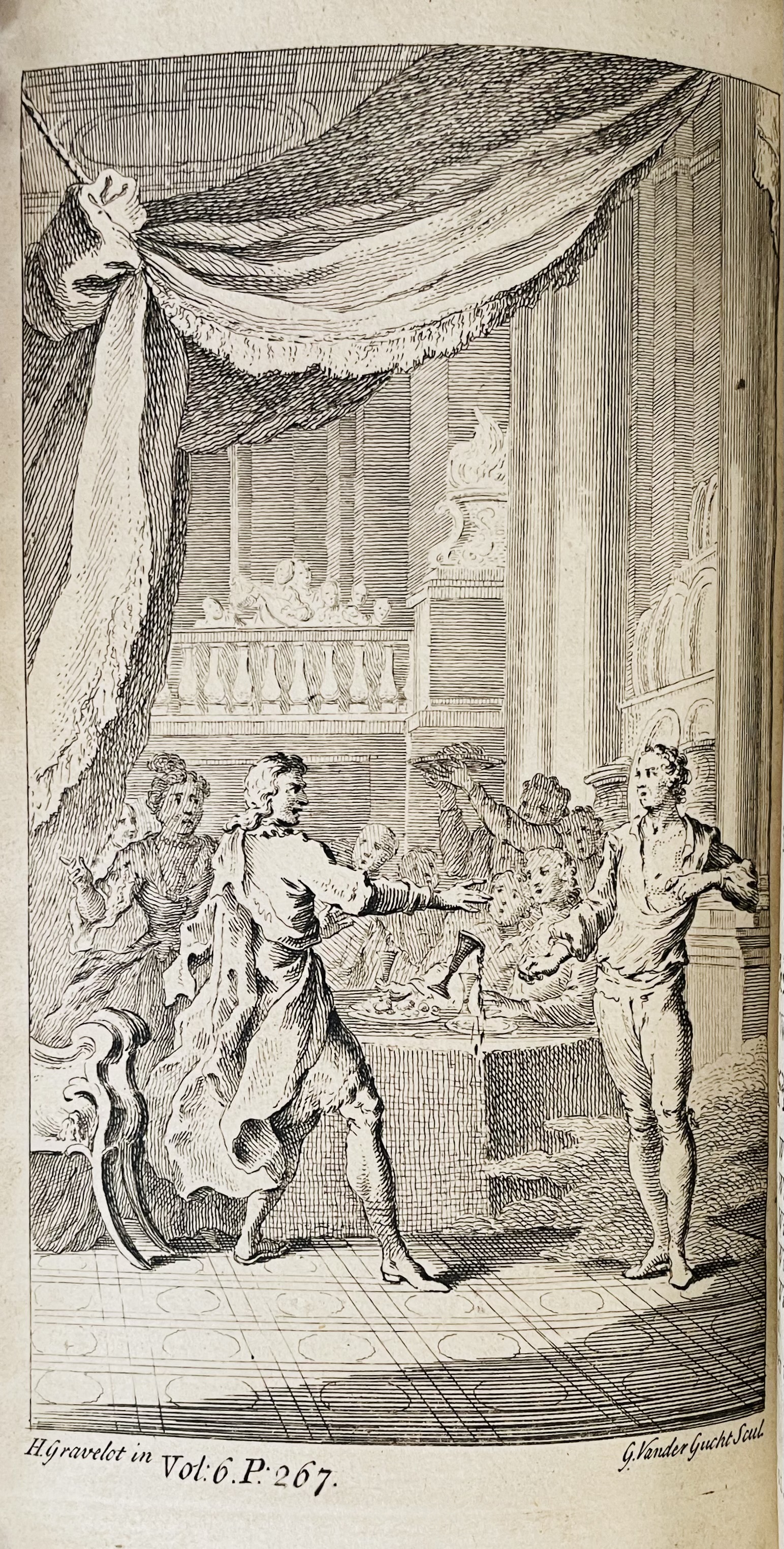
Engraving of a feast scene in which Macbeth confronts the ghost of Banquo

Plate from The Works of Shakespeare, edited by Mr Theobald, London, 1762 (Keynes.P.13.24)


Title page of 1762 edition of the works of Shakespeare

Title page of volume six of The works of Shakespeare, [edited] by Mr Theobald, London, 1762 (Keynes.P.13.24)

First page of Macbeth.

First page of Macbeth from The works of Shakespeare, [edited] by Mr Theobald, London, 1762 (Keynes.P.13.24)


The second eighteenth-century edition is, like the First Folio, part of the Thackeray Collection. This fifteen-volume set, which dates from 1793, is an expanded version of an eight-volume edition of Shakespeare’s plays which originally appeared in 1765, and which was co-edited by the eminent writer Samuel Johnson (1709-1784).  Johnson had an abiding love of Shakespeare and had long wished to produce his own edition of the plays. He tested the waters in 1745 with the publication of his Miscellaneous Observations on the Tragedy of Macbeth, then spent the next twenty years working towards his goal. The preface to Macbeth in the 1793 edition includes Johnson’s ruminations on the supernatural themes of the play. He states:

A poet who should now make the whole action of his tragedy depend upon enchantment, and produce the chief events by the assistance of supernatural agents, would be censured as transgressing the bounds of probability … and condemned to write fairy tales instead of tragedies; but a survey of the notions that prevailed at the time when this play was written, will prove that Shakspeare [sic] was in no danger of such censures, since he only turned the system that was then universally admitted, to his advantage, and was far from overburdening the credulity of his audience.

Speaking of the prevailing atmosphere of the late 15th and early 16th centuries, he writes evocatively:

The Reformation did not immediately arrive at its meridian, and though day was gradually increasing upon us, the goblins of witchcraft still continued to hover in the twilight.

Having touched upon on James I’s preoccupation with witchcraft and its effect on the population, he goes on to say:

Thus the doctrine of witchcraft was very powerfully inculeated [sic]; and as the greatest part of mankind have no other reason for their opinions than that they are in fashion, it cannot be doubted but this persuasion made a rapid progress, since vanity and credulity co-operated in its favour.

Image of the title page of Johnson's edition of the plays

Title page of The Plays of William Shakspeare, edited by Samuel Johnson and George Steevens, London, 1793 (Thackeray.J.62.1)

Image of the first page of Macbeth from Johnson's edition of the plays

First page of Macbeth from volume 7 of The Plays of William Shakspeare, edited by Samuel Johnson and George Steevens, London, 1793 (Thackeray.J.62.7)

Black and white illustration of three witches huddled in an old shack

Three witches from a story called “The witches’ frolic”. Plate facing page 106 of The Ingoldsby Legends

An old bent-over woman with a black hat and a cat standing outside a hovel on a wild moor

“There’s an old woman dwells upon Tappington Moor”. Plate facing page 26 of The Ingoldsby Legends


In 1807, Charles Lamb (1775-1834) and his sister Mary (1764-1847) produced a prose version of some of Shakespeare’s plays, modified to be suitable for children. More adult elements and complicated subplots were removed, but care was taken to adhere to the spirit of the originals, and to keep as much of the language as they could. The Library has a copy of the sixth edition, dating from 1838, which is the first edition to credit Mary Lamb on the title page. Macbeth appears in this volume, and the witches are described as follows:

… three figures like women, except that they had beards, and their withered skins and wild attire made them look not like any earthly creatures.
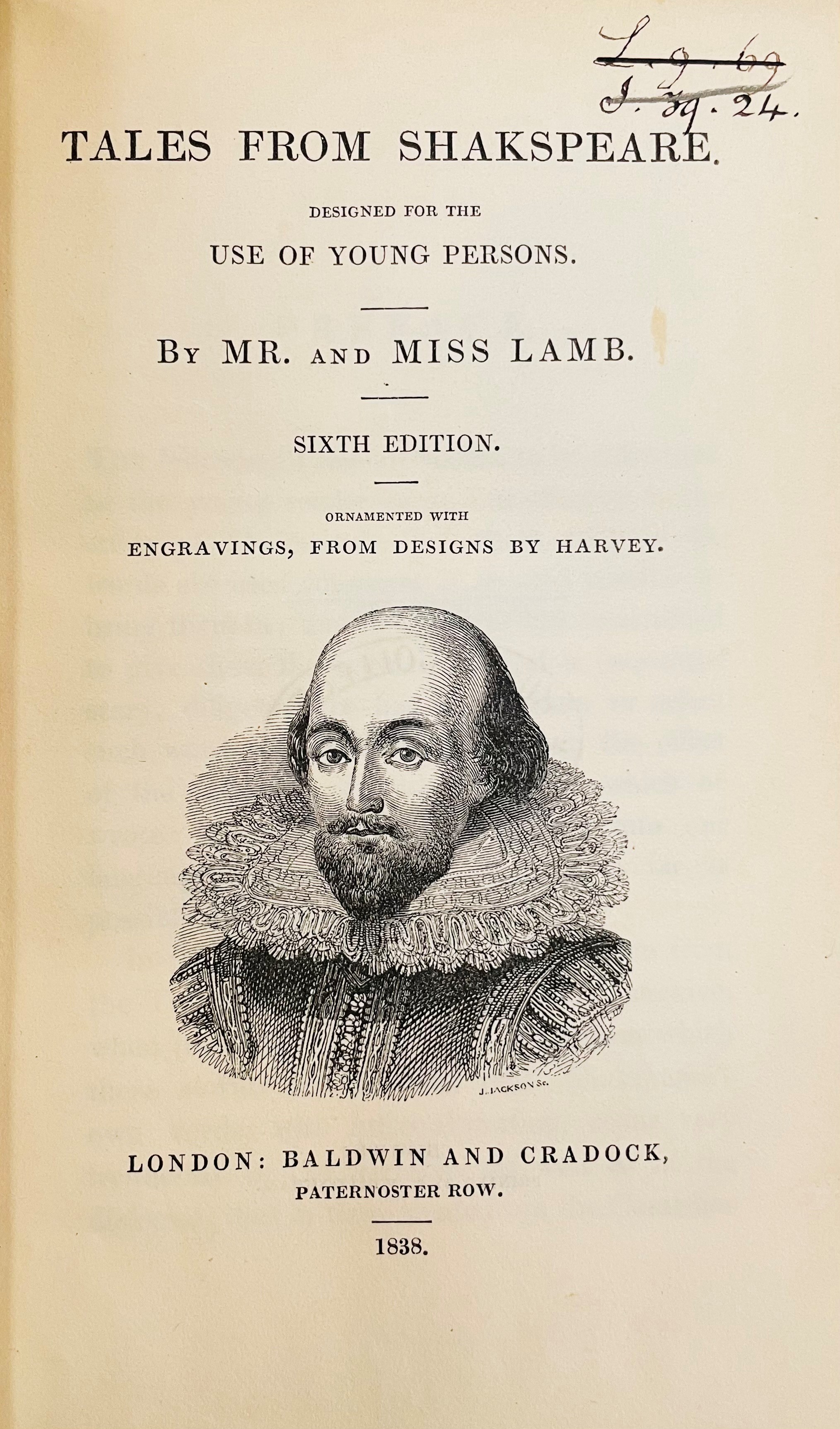
Title page of Tales from Shakspeare, which features an engraving of Shakespeare

Title page of Tales from Shakspeare, by Mr and Miss Lamb, London, 1838 (YHK LAM X 4)

First page of text from the prose version of Macbeth

Opening page of Macbeth from Tales from Shakspeare, by Mr and Miss Lamb, London, 1838 (YHK LAM X 4)


An illustration, pictured below, accompanies the tale, showing Macbeth and Banquo encountering these strange beings.

Macbeth and Banquo in armour, confronting three cloaked and bearded figures

Engraving of Macbeth and Banquo encountering the three witches. Plate from Tales from Shakspeare, by Mr and Miss Lamb, London, 1838 (YHK LAM X 4)

We leave you with a final dose of the supernatural via another wonderful  illustration by Arthur Rackham (1867-1939) from The Ingoldsby Legends. Originally serialised in the 1830s, the legends comprised ghost stories, myths and poems written by clergyman Richard Harris Barham (1788-1845) under the pen-name Thomas Ingoldsby. They were later published in book form and were hugely popular for decades. An edition featuring Rackham’s glorious illustrations was first published in 1898.

A gathering of witches, goblins and ghouls seemingly having a friendly chat amongst themselves

“Witches and warlocks, ghosts, goblins and ghouls”. Plate facing page 396 of The Ingoldsby Legends

Stay safe and watch out for whatever might be lurking out there in the dark this Halloween!

References

Julian Goodare, A royal obsession with black magic started Europe’s most brutal witch hunts   [accessed 10/10/23]

Emma Smith, The Making of Shakespeare’s First Folio, Oxford, 2015

You can browse King’s College’s First Folio on the Cambridge University Digital Library here and it also features on the First Folios Compared website where you can compare it side by side with other digitised copies of the First Folio.

AC

Conjuring tricks for Elizabethans

The Library holds a first edition of Reginald Scott’s Discoverie of Witchcraft (1584), an important early work on the subject, which attacked contemporary received opinion. Scott (d.1599) believed there were no such thing as witches, arguing that those accused were very often beggar women who, having “cursed” those who refused them assistance, were then blamed for anything that subsequently went wrong in the lives of the uncharitable. He claimed that anyone who confessed to being a witch likely did so as a result of delusion or coercion.

Title-page of The discovery of Witchcraft

Title-page of The discoverie of witchcraft, 1584, Shelfmark M.18.65

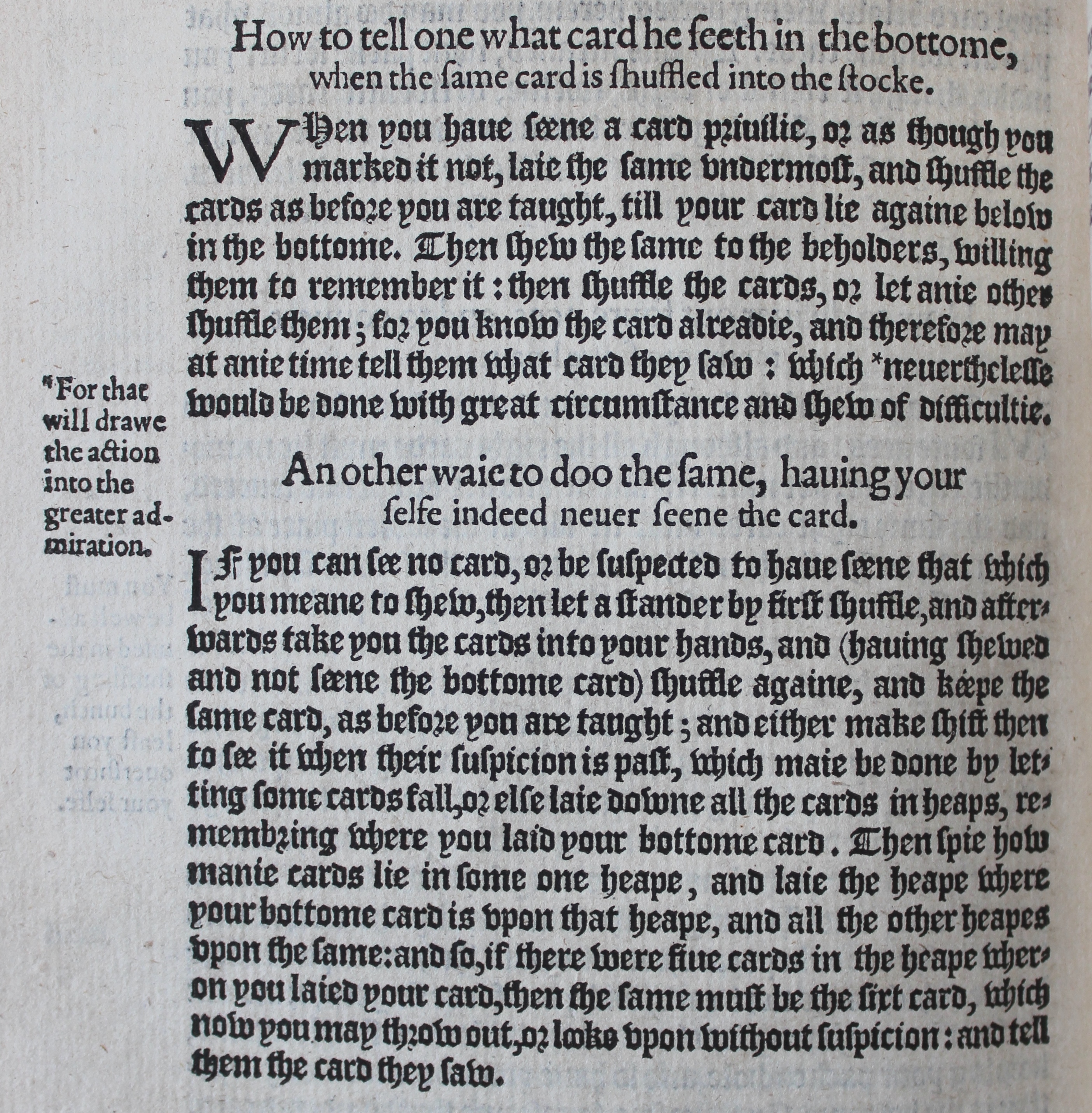
Scott also sought to debunk other forms of magic and superstition, devoting part of his book to an explanation of how easy it was to deceive people with sleight of hand and other trickery. This section stands as the first major exposé of the fakery behind conjuring tricks, influencing subsequent works on this topic for centuries to come. This mini blog post highlights a few of those tricks, some weird and wonderful, some bearing very close resemblance to simple card tricks still performed today. An example of the latter is shown below:

“How to tell one what card he seeth in the bottom, when the same card is shuffled into the stocke” (page 334)

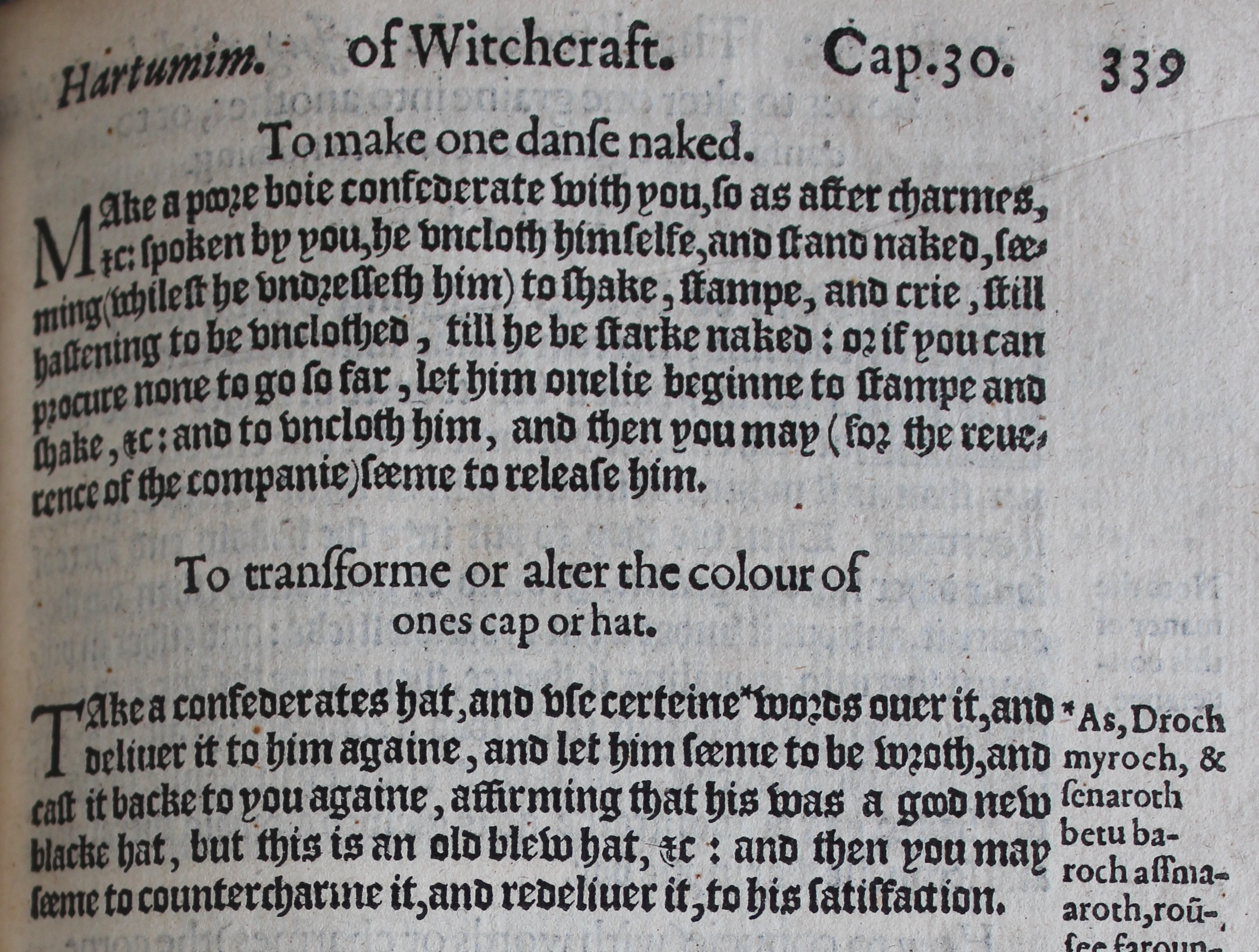
Other tricks simply relied upon having a paid accomplice in the audience:

Tricks with paid accomplices

“To make one dance naked” and “To transforme or alter the colour of ones cap or hat” (page 339)

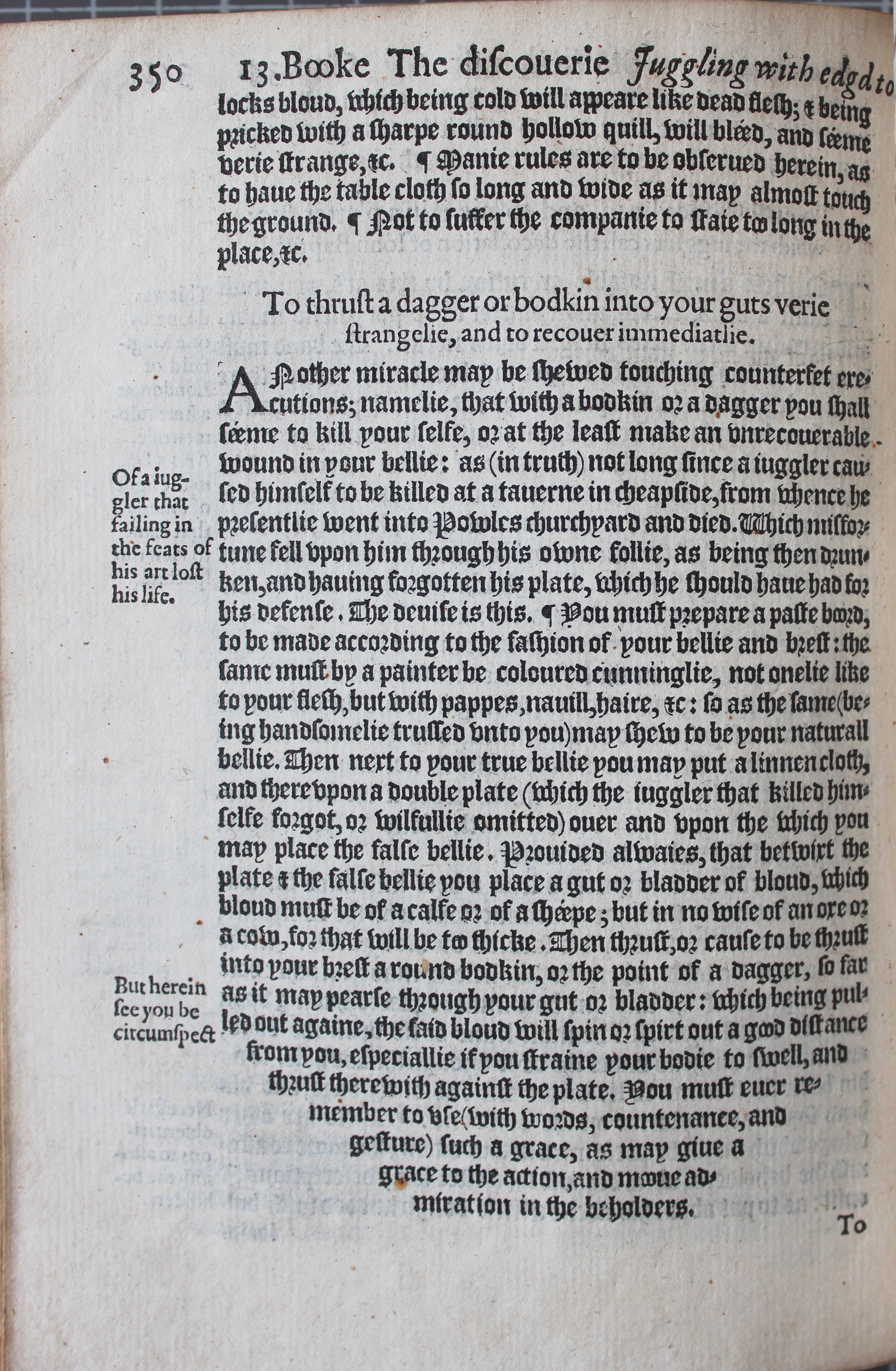
Scott then explains how to perform more gruesome tricks, involving feigned bodily mutilation:

Tricks involving apparent mutilation of the body

“To thrust a piece of lead into one eie, and to drive it about (with a sticke) betweene the skin and flesh of the forehead, until it be brought to the other eie and there thrust out”, “To cut half your nose asunder, and to heal it againe presently without anie salve”, and “To put a ring through your cheeke” (page 348)

These even include stabbing yourself in the guts and simulated decapitation!

A trick involving decapitation

“To cut off ones head, and to laie it on a platter, &c: which the jugglers call the decollation of John Baptist” (page  349)

“To thrust a dagger or bodkin into your guts verie stranglie, and to recover immediatelie” (page 350)

It is amusing to imagine avid Elizabethan readers of this tome rushing off to try out some of these tricks on their unsuspecting friends and family. Hopefully none of these would-be conjurors were subsequently burnt as witches or warlocks!

AC

References:

David Wootton “Scott [Scot], Reginald” Oxford Dictionary of National Biography. 23 Sep. 2004; Accessed 3rd March. 2020.

Demonology!

On this, the spookiest day of the year, we thought we’d share some images and text from books which tackle the subject of demons, devils, spirits and witches; all creatures regarded as a serious threat to body and soul in times past.

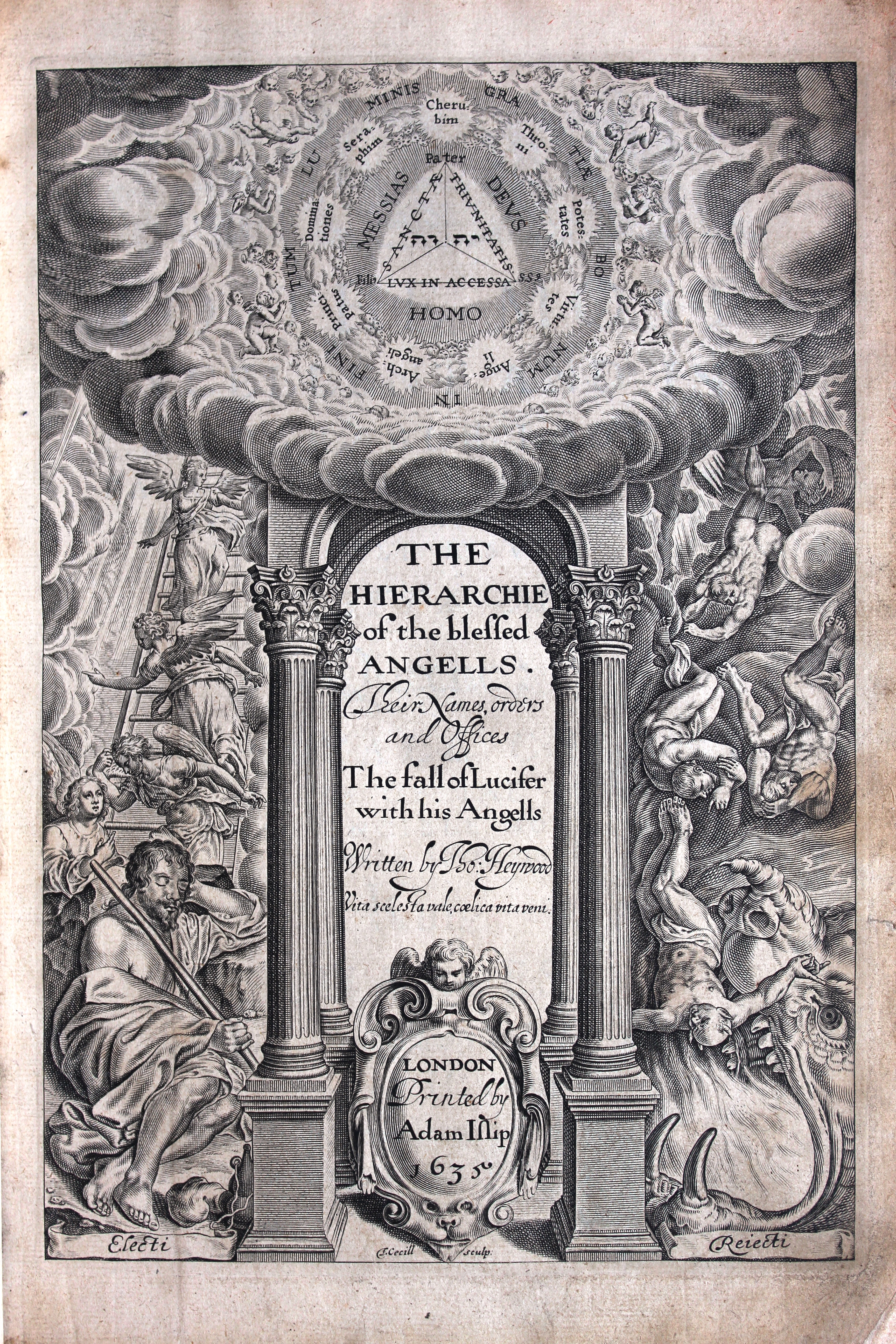
Our first tome is The hierarchie of the blessed angels, a long didactic poem by  the playwright Thomas Heywood (ca. 1570-1641) which also features Lucifer and his fallen angels, and includes many folkloric anecdotes and tales of demonic creatures engaged in spreading dread and devilment. Note the tumbling angels falling towards a demonic mouth on the right hand side of the title page below.

Keynes.C.10.01 title page

The hierarchie of the blessed angels. Their names,orders and offices. The fall of Lucifer with his angels by Thomas Heywood: London, 1635. Keynes.C.10.01

One illustration within the volume depicts the Archangel Michael standing victorious over the defeated Satan and his minions:

The Archangel Michael
Page 494 of Keynes.C.10.01

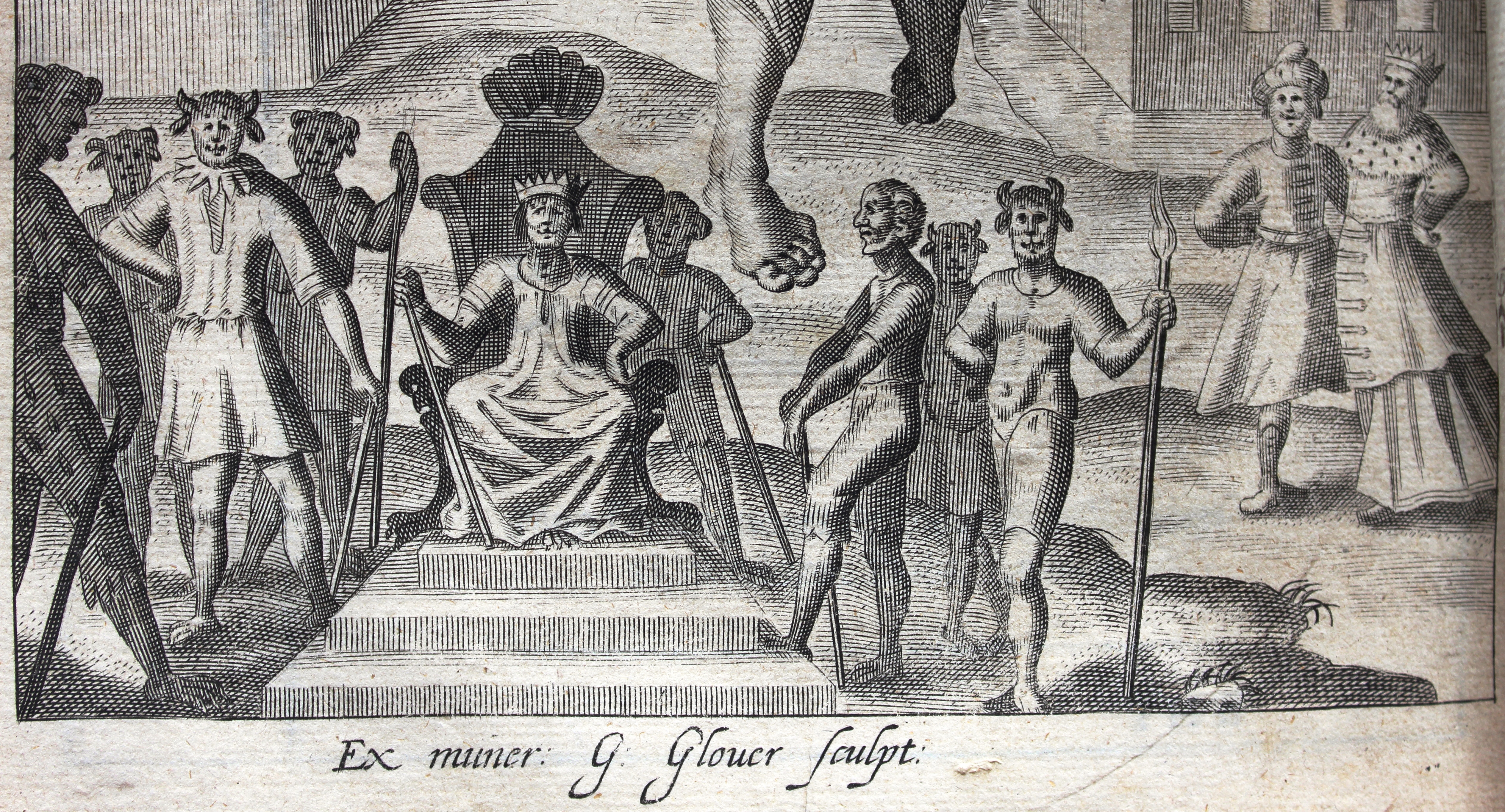
A detail from another appears to show a court of horned demons in hell:

Demons in hell. A detail from Keynes.C.10.01 page 406

Elsewhere, men of God try to ward off the forces of evil:

Detail from page 462 of Keynes.C.10.01

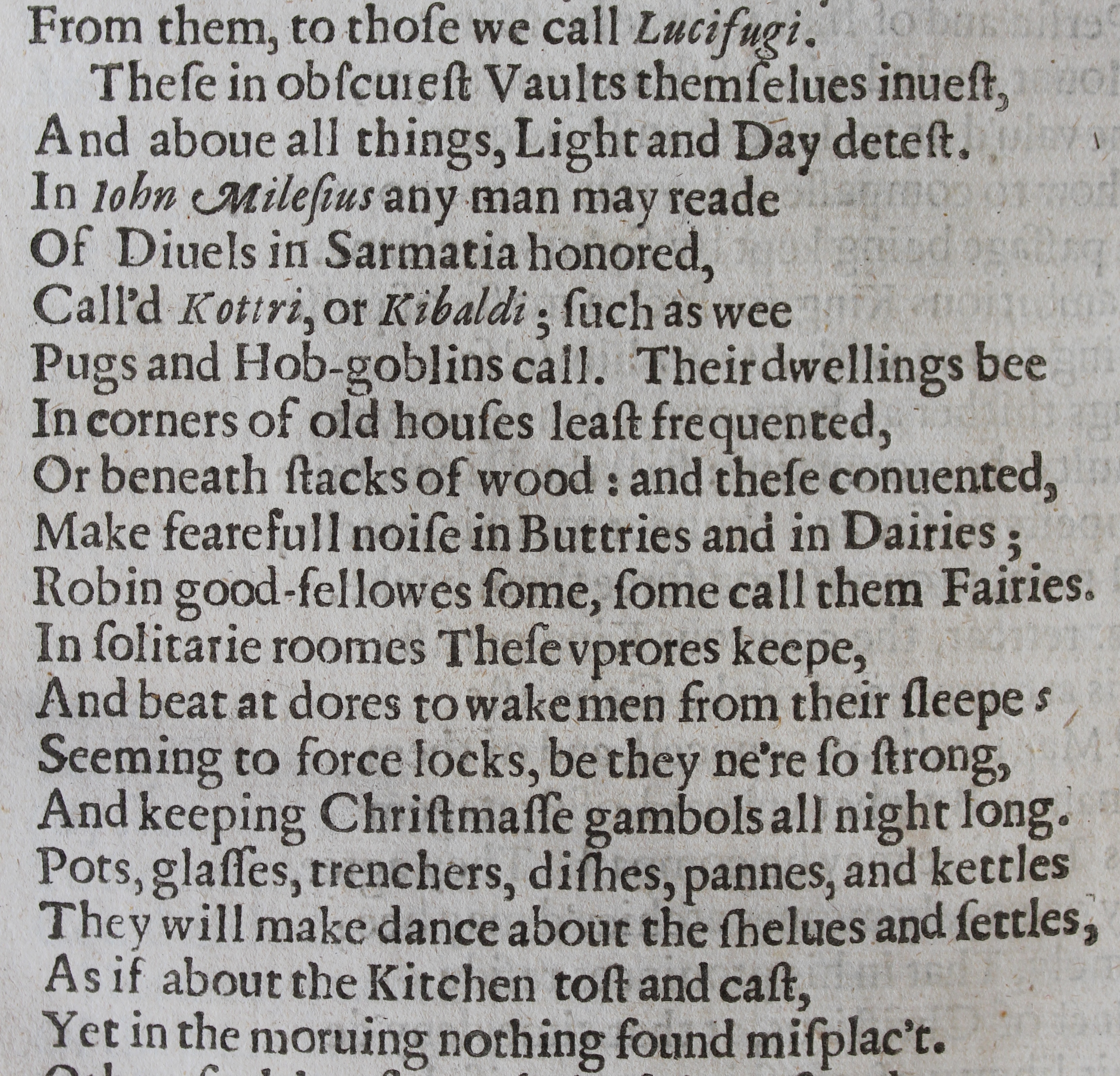
The poem has many evocative descriptions of various creatures up to the kind of  mischief and mayhem you might associate with Halloween:

Pugs and hob-goblins disturbing people’s sleep with their revels. Extract from page 574 of Keynes.C.10.01

Spooky inhabitants of church yards. Extract from page 505 of Keynes.C.10.01

Another passage vividly describes the marks by which evil creatures may be identified, including hooked noses and flaming eyes:

Extract from page 581 of Keynes.C.10.01

One of the anecdotes later in the text tells of a German illusionist who performed an aerial display with a woman and child in tow, only to end his life being burned at the stake as a witch:

Extract from page 613 of Keynes.C.10.01

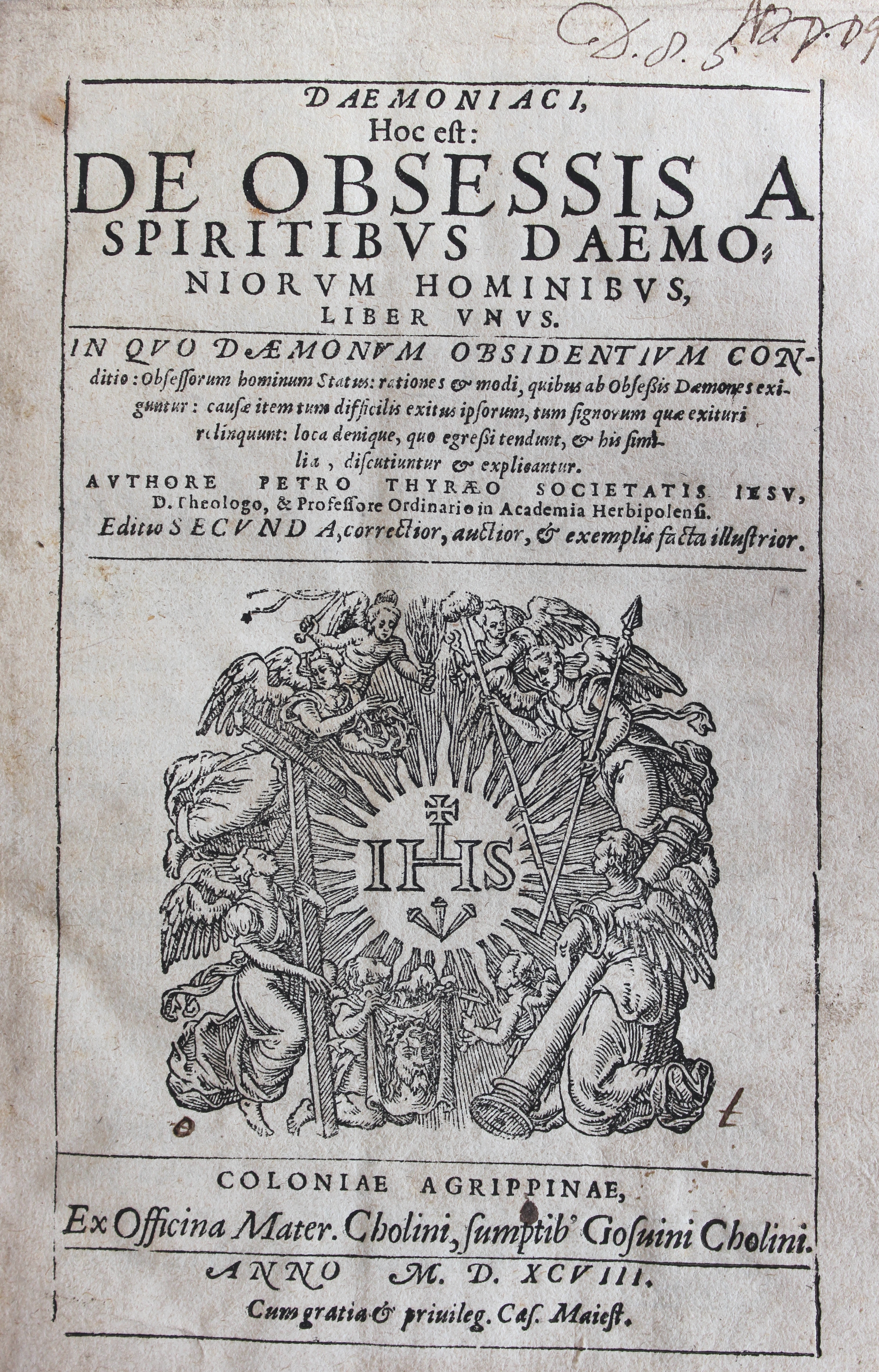
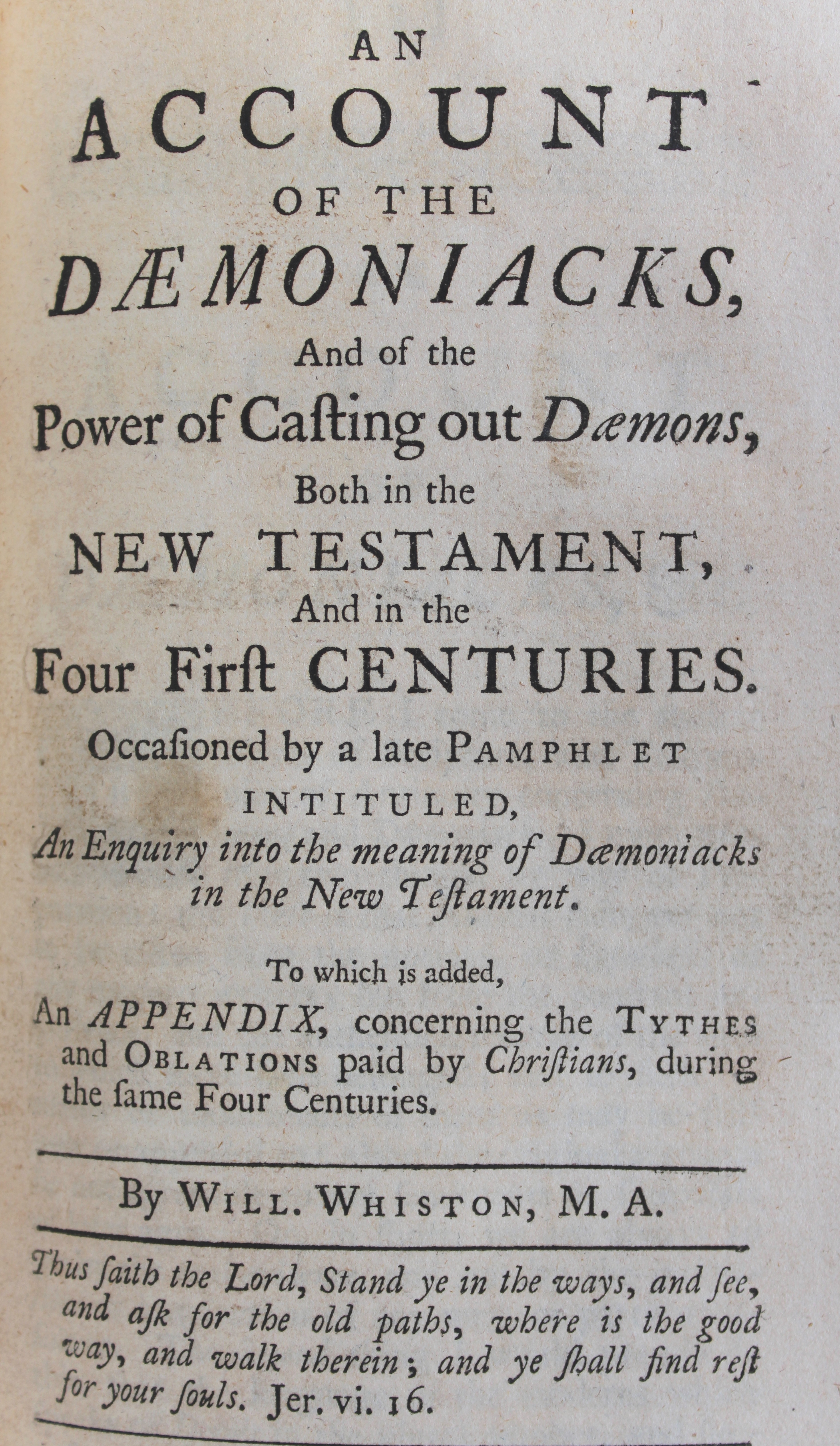
Other works on demonology held in the Library include a late 16th-century Latin tome by a German theologian, Peter Thyraeus (1546-1601) and an 18th-century pamphlet by theologian William Whiston (1667-1752):

Title page of Daemoniaci, hoc est: De obsessis a spiritibvs daemoniorvm hominibvs by Peter Thyraeus, Cologne, 1598. D.8.5/1

Title page of An account of the daemoniacks, and of the power of casting out demons … by William Whiston: London, 1737. Keynes.F.10.14/8

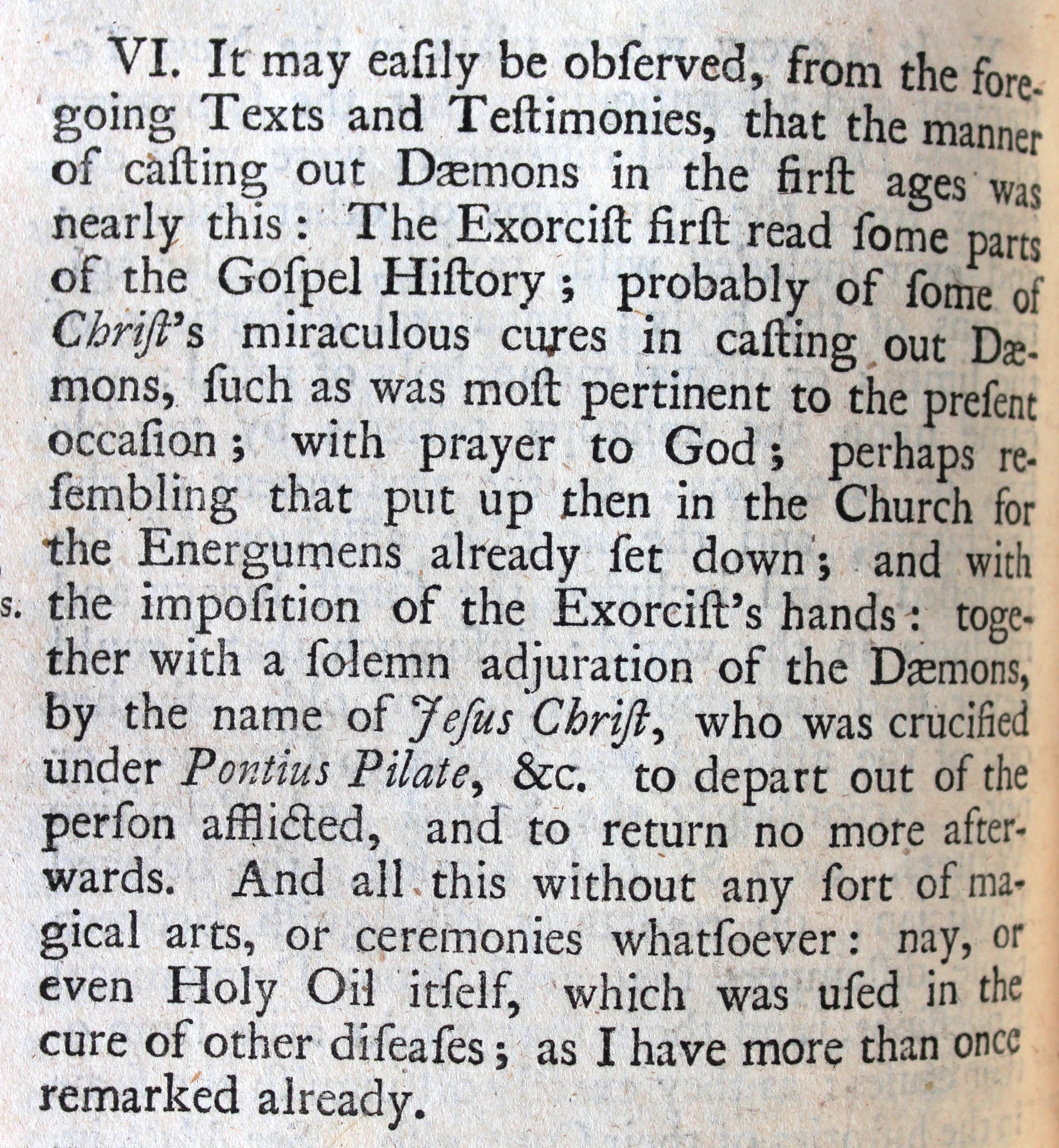
The latter work describes the manner in which demons were cast out in the early years of Christianity:

Extract from page 56 of Keynes.F.10.14/8

Whatever you are doing this Halloween, stay safe out there, and watch out for things that go bump in the night!

AC

Hocus Pocus

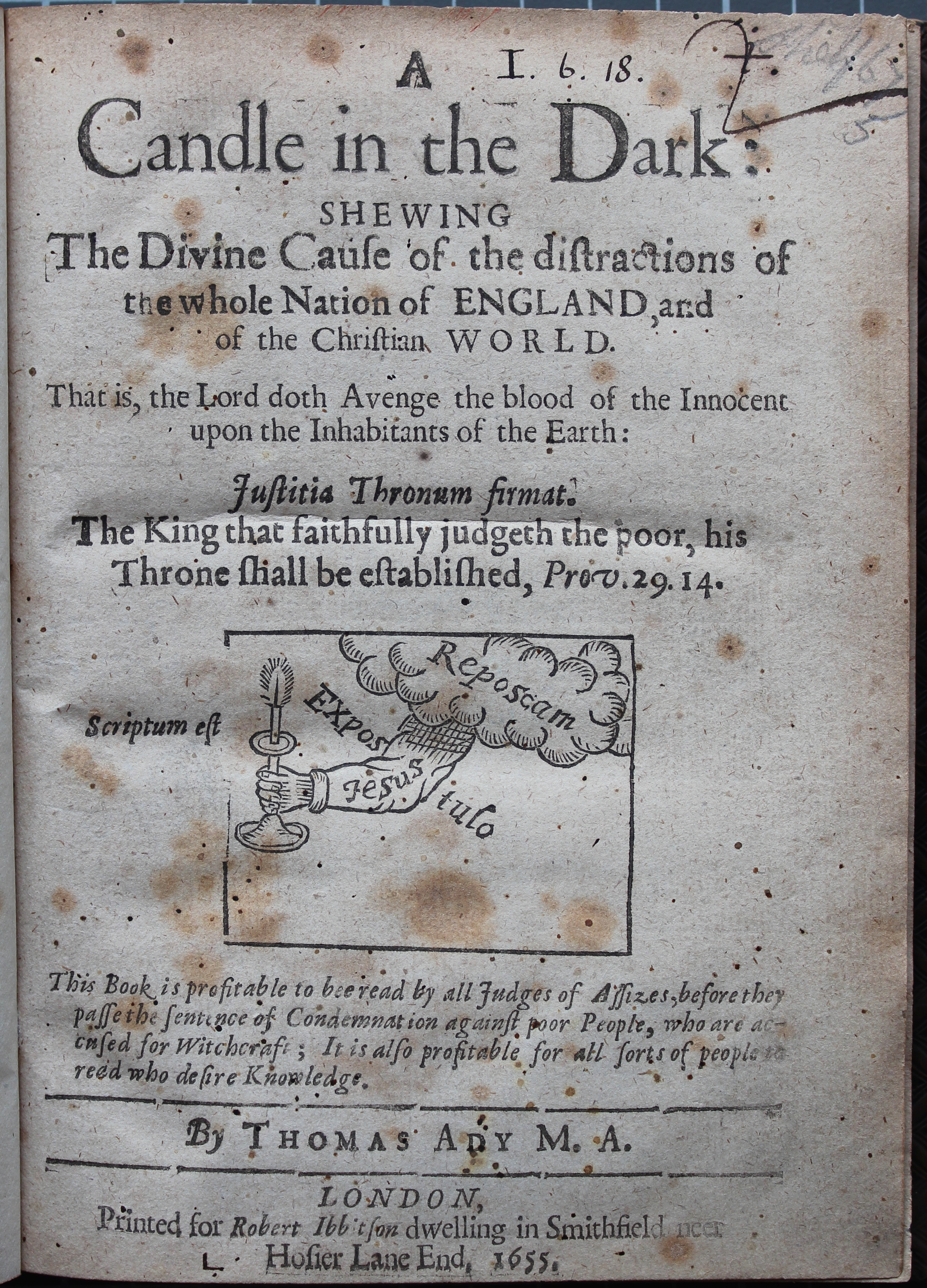
A dilemma that cannot be answered by witch-mongersGiven that today many are celebrating Halloween it seems fitting to showcase a rare seventeenth-century book we’ve recently discovered in the Thackeray Collection on the subject of witchcraft. The book is the first edition of A Candle in the Dark, shewing the Divine Cause of the distractions of the whole Nation of England and of the Christian world written by Thomas Ady, of which only a handful of copies are extant. A Cambridge graduate, Ady was a physician, humanist and author of three books about witchcraft. He was a critical exposer of both persecutions for alleged witchcraft and practices such as fortune-telling which often led to witchcraft trials during the seventeenth century. It is estimated that 40,000-60,000 people were condemned to death as witches in Europe during the late-sixteenth and seventeenth centuries.

Title page

Thomas Ady, A Candle in the Dark (London, 1655), title page. (Shelfmark: Thackeray.I.6.18)

Published in London in 1655, A Candle in the Dark makes clear its intended audience through the following description on its title page: ‘this book is profitable to be read by all judges of assizes, before they passe the sentence of condemnation against poor people, who are accused for witchcraft; it is also profitable for all sorts of people to read who desire knowledge’. Like his opponents, Ady supported his arguments through reference to scripture in order to prove that it was both impossible for witches to exist and that it was indeed unchristian to accuse someone of witchcraft.

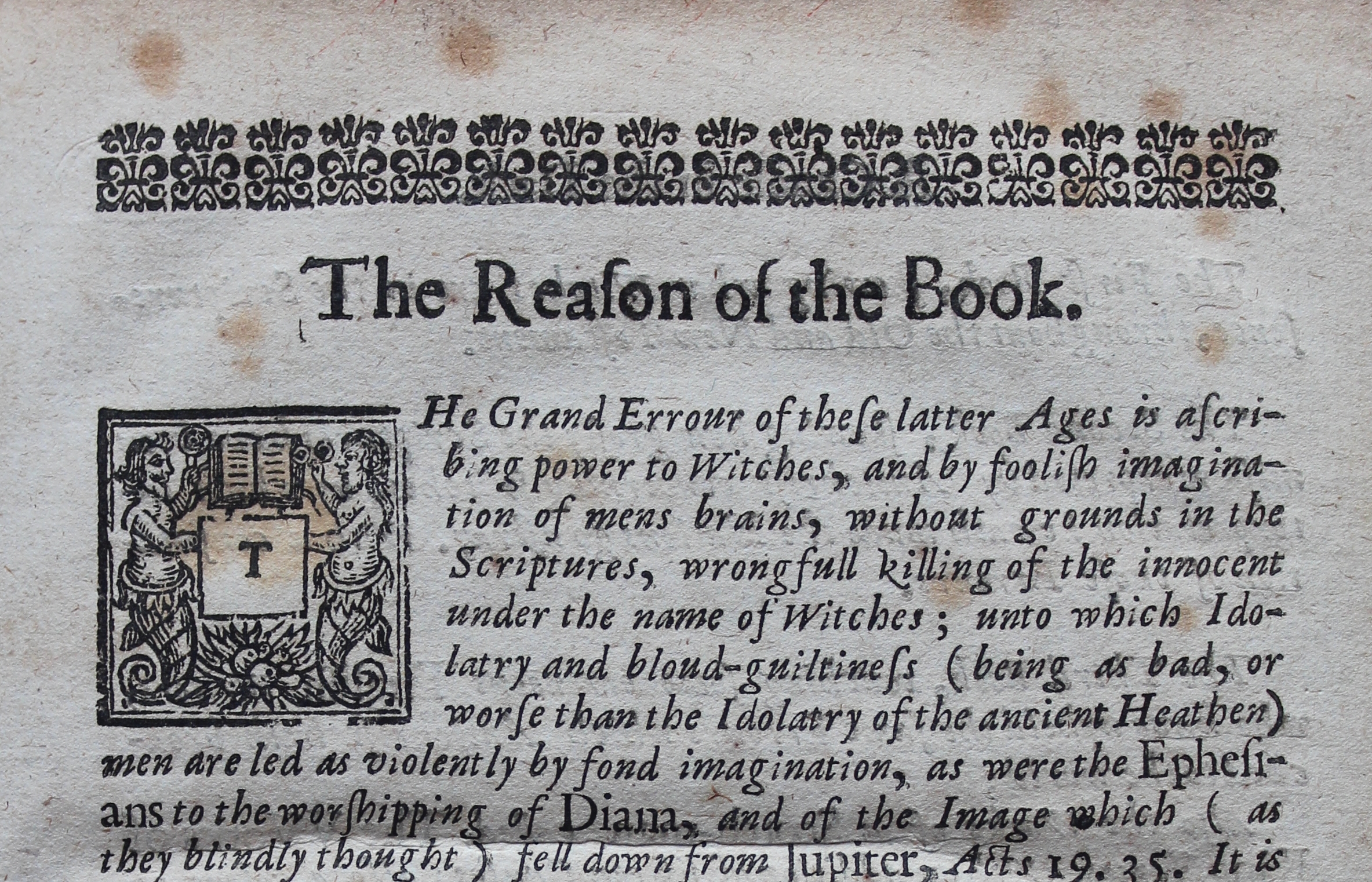
A Candle in the Dark, 'The Reason of the Book'.

Thomas Ady, A Candle in the Dark (1655), ‘The Reason of the Book’.

Ady’s volume begins with a section entitled ‘The Reason of the Book’ in which he laments: ‘the grand errour of these latter ages is ascribing power to witches, and by foolish imagination of mens brains, without grounds in the scriptures, wrongfull killing of the innocent under the name of witches; unto which idolatry and bloud-guiltiness (being as bad, or worse than the idolatry of the ancient Heathen) men are led as violently by fond imagination, as were the Ephesians to the worshipping of Diana …’ The volume is then divided into three books, the first ‘shewing what witches are in scripture-sense’, the second ‘shewing how grossly the scriptures have been mis-interpreted by antichrist concerning witches’, and the third ‘touching some erroneous English writers, who have upheld the same errors which antichrist hath broached to the world’. The volume includes discussions of divination, astrology, conjuring, the use of charms, oracles, soothsayers and necromancers.

Thomas Ady, A Candle in the Dark (London, 1655). ADD TO THIS

Thomas Ady, A Candle in the Dark (London, 1655). Ady discusses the various means of examination and torture in order to make people confess to witchcraft.

One particularly interesting facet of this book is that it contains one of the earliest known references to the phrase hocus pocus, a term used by magicians nowadays in much the same way as abracadabra, but when it was first coined conjurors perhaps could have expected such phrases to fool the audience into thinking mysterious forces were at work. Ady’s description is as follows:

The first [feature that juggling (i.e. conjuring) consists of] is profitably seen in our common juglers, that go up and down to play their tricks in fayrs and markets, I will speak of one man more excelling in that craft than others, that went about in King James his time, and long since, who called himself, The Kings Majesties most excellent Hocus Pocus, and so was he called, because that at the playing of every trick, he used to say, Hocus pocus, tontus talontus, vade celeriter jubeo, a dark composure of words, to blinde the eyes of the beholders, to make his Trick pass the more currantly without discovery…

hocus-pocus

Thomas Ady, A Candle in the Dark (1655). Ady discusses the use of the phrase hocus pocus by a seventeenth-century juglar (conjurer).

The arguments presented in this volume travelled far beyond the shores or our small island. One George Burroughs (c.1652-1692), who was originally born in Suffolk before being taken to Massachusetts where he was raised by his mother, was familiar with Ady’s work. An American congregational pastor, Burroughs became minister in Salem Village in 1680, a position he held until 1683 following a dispute with some of his parishioners. Based on the accusation of some personal enemies from his former congregation who had sued him for debt, Burroughs was arrested in April 1692 and accused of witchcraft. At his trial he used A Candle in the Dark in his defence, but, alas, to no avail as he was hanged on 19 August in that year in Salem, and was the only minister to suffer this fate. Shortly before his execution, Burroughs made a speech stating his innocence with such solemnity and to the admiration of so many present that his accusers claimed the devil was standing beside him dictating.

book-1

Thomas Ady, A Candle in the Dark (1655), p. 9.

Happy Halloween, everyone!

english_landscape_pantone

JC