Tag Archives: JC

John Wilmot, Earl of Rochester: an online exhibition

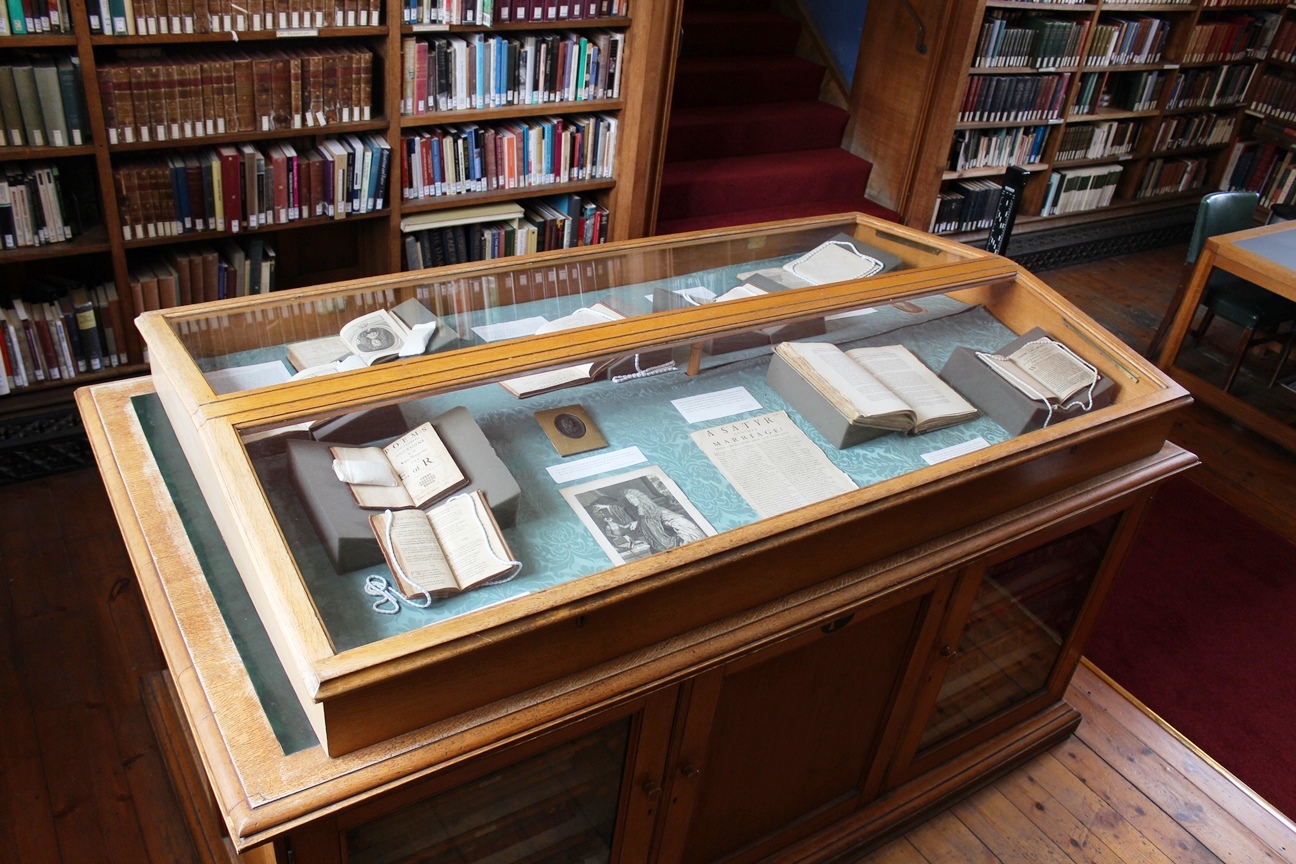
Exhibition case

Last Friday King’s College Library and Archives hosted an exhibition for the Open Cambridge weekend, focusing partly on Kingsman John Davy Hayward (1905-1965) and his collection of early editions of the works of John Wilmot, Second Earl of Rochester (1647-1680). These are some selected highlights of the exhibition.

H.14.1

Poems on Several Occasions by the Right Honourable the E. of R- – – (Printed at Antwerp, 1680). Hayward Bequest, H.14.1

Poems on Several Occasions was the first anthology of Rochester’s poems published after his death in July 1680. The false imprint (it was printed in London) and lack of a publisher’s name permitted unrestrained lewdness of content. By November of that year Samuel Pepys had a copy which he kept in the right-hand drawer of his writing desk as he considered it ‘unfit to mix with my other books’, adding ‘pray let it remain there, for as he is past writing any more so bad in one sense, so I despair of any man surviving him to write so good in another’.

H.10.5

A Satyr against Marriage ([London], undated). Hayward Bequest, H.10.5

Only a handful of Rochester’s works were printed during his lifetime, mainly satires published as broadsides. The most famous was his ‘A Satyr against Mankind’ (1679) which is a scathing denunciation of rationalism and optimism that contrasts human wickedness with animal wisdom. His ‘A Satyr against Marriage’ is written in a similar vein.
H.14.17 and H.14.16

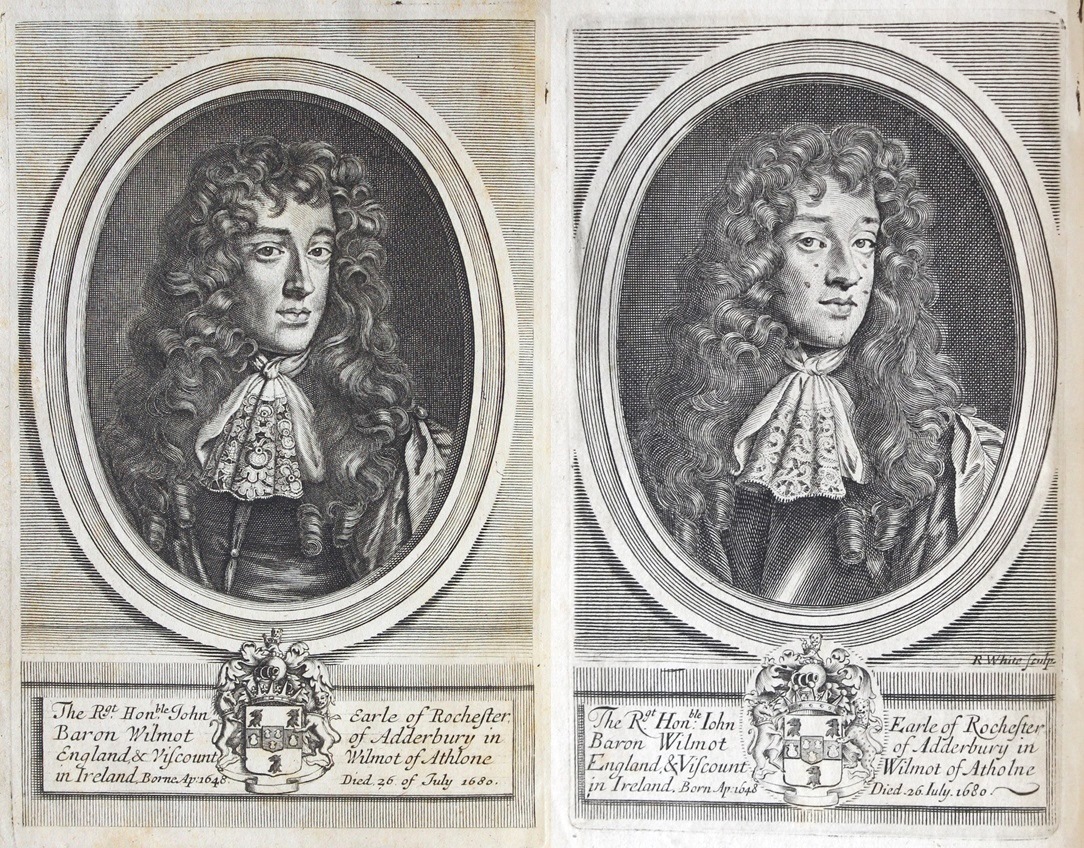
Frontispiece portraits from two editions of The Miscellaneous Works of the Right Honourable the late Earls of Rochester and Roscommon . . . by Mons. St. Evremont (London, 1707). Hayward Bequest, H.14.16 & H.14.17

Spot the difference: numerous editions of Rochester’s works appeared during the late seventeenth and eighteenth centuries, and their salacious content was gradually rewritten to reflect ‘respectable’ tastes. One of these portraits has been doctored, perhaps to suggest the venereal disease that would eventually lead to Rochester’s demise.

H.12.7

A Genuine Letter from the Earl of Rochester to Nell Gwyn. Copied from an Original Manuscript in the French King’s Library. Hayward Bequest, H.12.7

The actress Nell Gwyn, a long-time mistress of Charles II, is also believed to have been Rochester’s mistress, perhaps demonstrating his prominent position at court as well as his interest in the theatre. In 1673 Rochester had begun training Elizabeth Barry as an actress. She went on to become the most famous actress of her age and her relationship with Rochester produced a daughter. Whilst bearing all the hallmarks of Rochester’s style, some doubt the authenticity of this explicit (and anonymously published) letter from Rochester to Nell.

Engraving

Engraving of Rochester crowning his monkey. Hayward Bequest, no shelfmark

Monkey business: this engraving is one of the best known images of Rochester, and provided the title for Graham Greene’s biography of the author, Lord Rochester’s Monkey. In ‘A Satyr against Mankind’ Rochester writes:

Were I, who to my Cost already am
One of those strange, prodigious Creatures Man,
A Spirit free, to choose for my own Share,
What sort of Flesh and Blood I pleas’d to wear,
I’d be a Dog, a Monkey, or a Bear,
Or any thing, but that vain Animal,
Who is so proud of being Rational.

H.12.15

Broadside circular ([London], ca. 1676), Hayward Bequest, H.12.15

In 1676 Rochester fell into disfavour with the King and fled this time to Tower Hill where he impersonated a physician, one ‘Dr Alexander Bendo’. Under this persona he claimed skill in treating many conditions including ‘barrenness’, apparently gaining him access to many young ladies.

WARNING: This blog post was not suitable for children.

GB/JC/IJ
Michael Mills: ‘Keeper of the Publick Library’

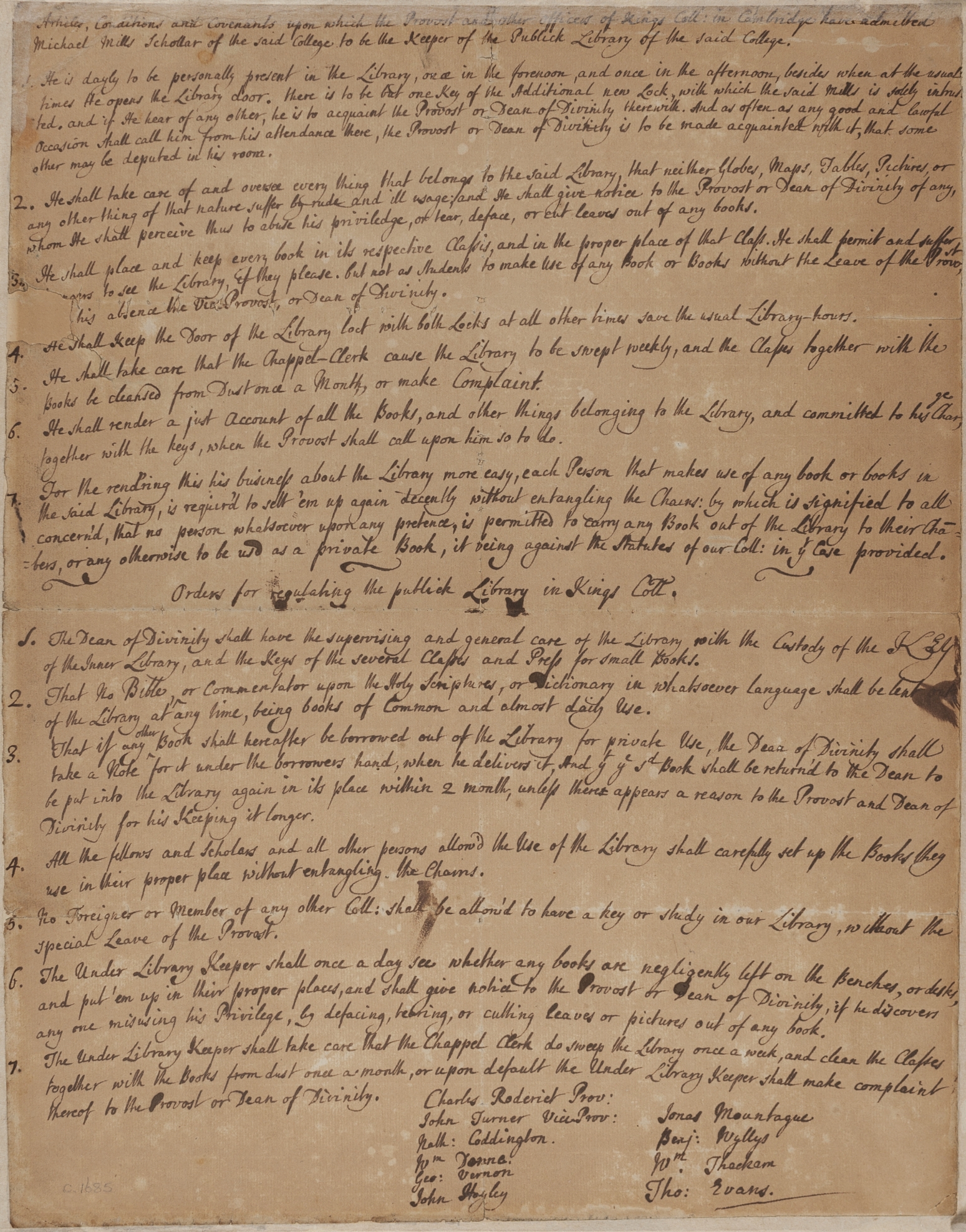
King’s College Library, which has been in continuous existence since the College’s foundation in 1441, is housed in a purpose-built building designed by William Wilkins (1778–1839), and completed in 1828. Prior to this the Library was housed in various other buildings in College, and from 1570 until 1828 the Library occupied a number of side chapels in the College’s magnificent Chapel. This is where the library was housed when, in ca. 1685, one Michael Mills (KC 1683) was appointed ‘Keeper of the Publick Library’, and a copy of what might be considered his job description survives today in the College Archives (KCAC/6/1/1). The full title of that document is: ‘Articles, Conditions and Covenants upon which the Provost and other officers of King’s Coll: in Cambridge have admitted Michael Mills Schollar of the said College to be the Keeper of the Publick Library of the said College’. The second half of the same document sets out a copy of the rules for those who used the library, thought to date from ca. 1709–10.

Create text to go here

‘Articles, Conditions and Covenants’ (ca. 1685) and ‘Orders for Regulating the Publick Library’ (ca. 1709-10) (KCAC/6/1/1). (Photograph: Adrian Boutel and Elizabeth Upper)

Born in Windrush (Gloucestershire), Mills took up his role around 1685 whilst still a scholar (he became a fellow in 1687), and this document offers an interesting insight into the College’s Library in the late seventeenth century. Reporting directly to the Provost and Dean of Divinity, Mills had ‘dayly to be personally present in the Library, once in the forenoon, and once in the afternoon, besides when at the usual times He opens the Library door’. In addition to keeping the books in good order, he also had to ‘take care and oversee every thing that belongs to the said Library, that neither Globes, Maps, Tables, Pictures, or any other thing of that nature suffer by rude and ill usage.’

Lib I Cover_25

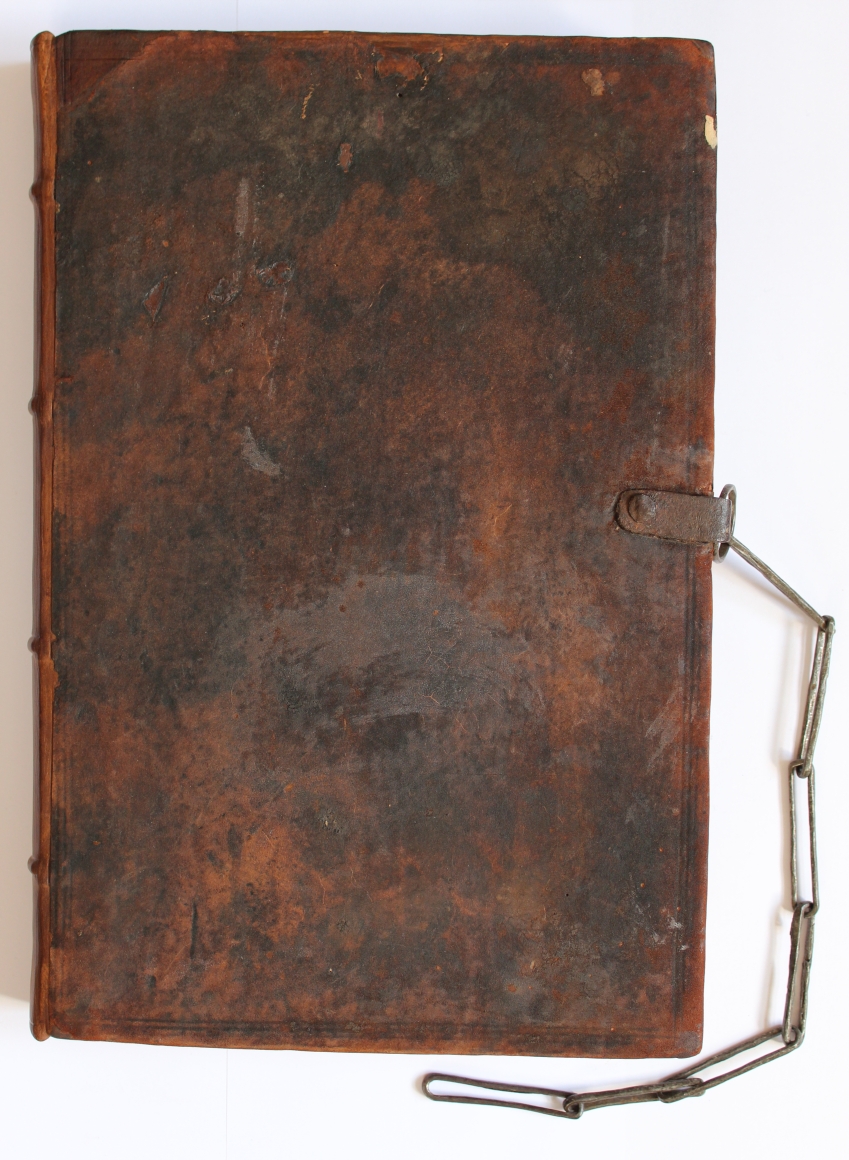
Index Bibliothecae Regalis Colegii (Donors’ Book). Original calf binding, with chain (KCAC/6/2/1/1)

Mills was allowed to ‘permit and suffer Strangers to see the Library, if they please, but not as Students to make Use of any Book or Books without the Leave of the Provost.’ Any member of College reading books in the library was ‘requir’d to sett ‘em up again decently without entangling the Chains: by which is signified to all concern’d, that no person whatsoever upon any pretence is permitted to carry any Book out of the Library to their Chambers’.


Hobart Bookcase_25

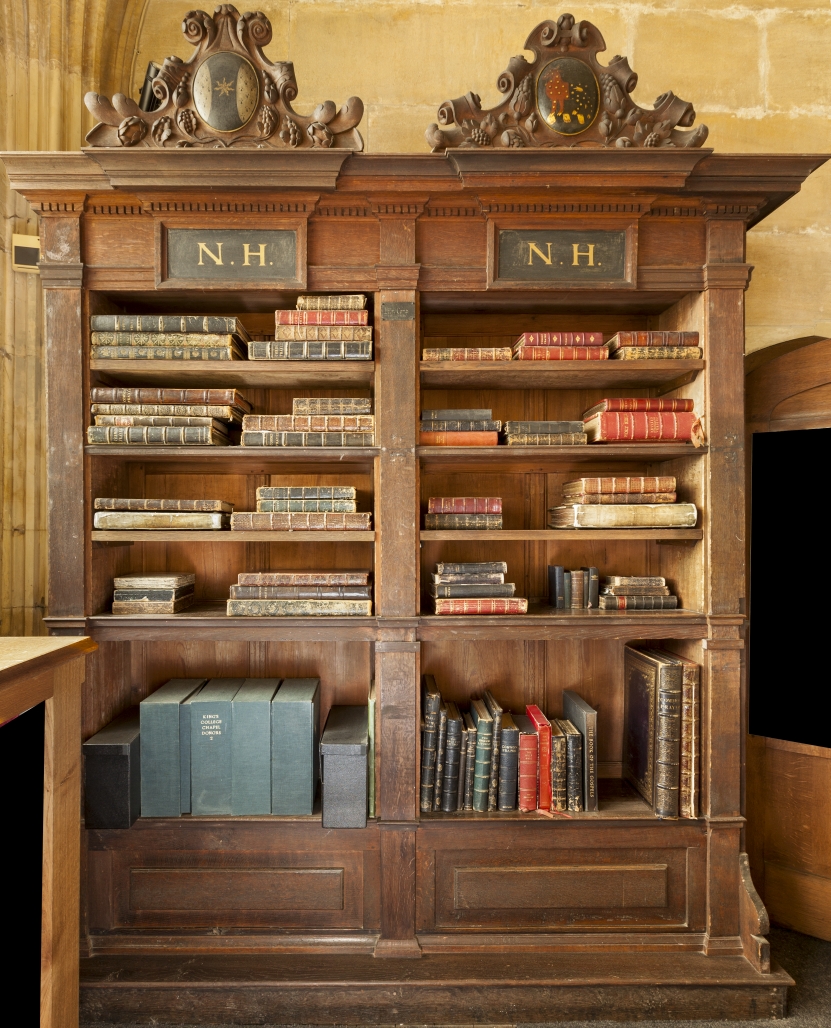
Bookcase (made in 1659) with money bequeathed by Nicholas Hobart (NH). It no longer has its chains or the chaining mechanisms attached (Photograph: Adrian Boutel and Elizabeth Upper)

As this shows, King’s Library at that time (like many libraries) was a chained library, that is, a chain was attached to the front board of each book which was attached in turn to the bookcase which housed it to prevent it from being removed. It was not until 1777 that the College finally paid someone for nine days’ work to remove the remaining chains from all the books. One book in King’s Library which still has its chain attached is a splendid calf-bound donors’ book in which donations of books were recorded along with the name of each donor from 1612 onwards (KCAC/6/2/1/1), and three of the magnificent bookcases which housed such books and which were constructed during the second half of the seventeenth century—and would therefore have been kept in order by Michael Mills—remain in the Chapel to this day.

Add text here

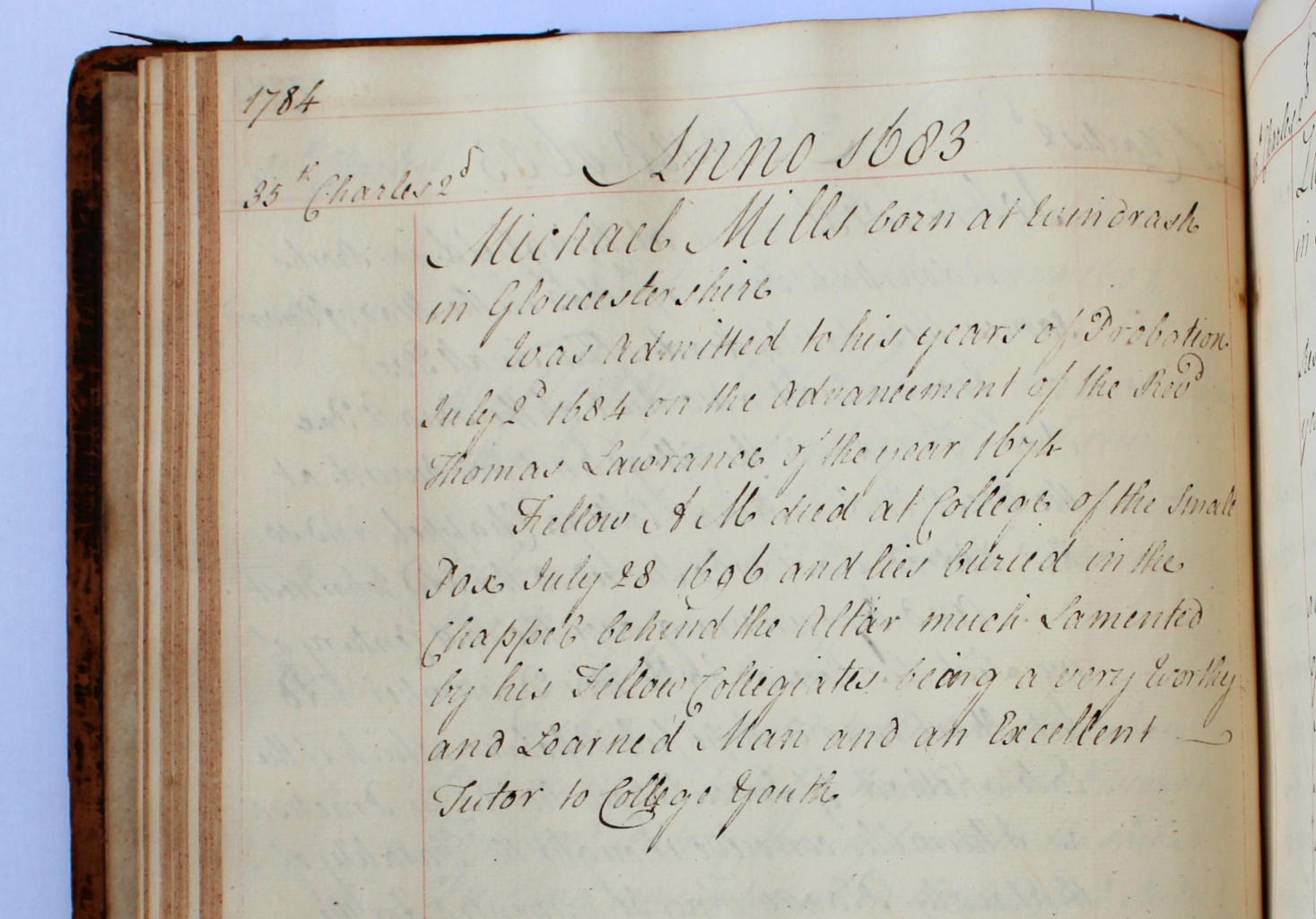
Extract from: Anthony Allen, Skeleton … or A Catalogue of all the Provosts, Fellows and Scholars, of the King’s College

Michael Mills died at a young age on 28th July 1696 and according to one eighteenth-century biographer of Kingsmen (Anthony Allen, 1685–1754), his passing was ‘much lamented by his Fellow Collegiates being a very Worthy and Learned Man and an excellent tutor to College youth’. Mills had succumbed to smallpox and was buried behind the altar in the Chapel: two fates unlikely to befall present-day College librarians.

JC

Munby Cataloguing Project (Rare Books)

Title page

The title page of Keynes.D.1.9

In June 2013 King’s College held a conference to mark the centenary of the birth of A.N.L. (Tim) Munby, Librarian at King’s from 1947 to 1974. The conference was a great success, with a distinguished panel of speakers from the world of bibliography and the history of books, and over 120 registered participants. As a follow-up to the conference, and as a permanent tribute to Tim Munby, King’s College inaugurated a fund in his name—The Munby Centenary Fund.  Donations to the fund support projects initiated by Munby, or related closely to his interests and achievements.

Spine detail

The gold tooling on the book’s spine.

The initial objective is to complete the online cataloguing of all of the books in the collection of John Maynard Keynes and generous donations have already made it possible to hire Dr Iman Javadi as ‘Munby Project Cataloguer (Rare Books)’ to begin this work. Iman joined the library team in November 2014, and has so far catalogued over 200 books.

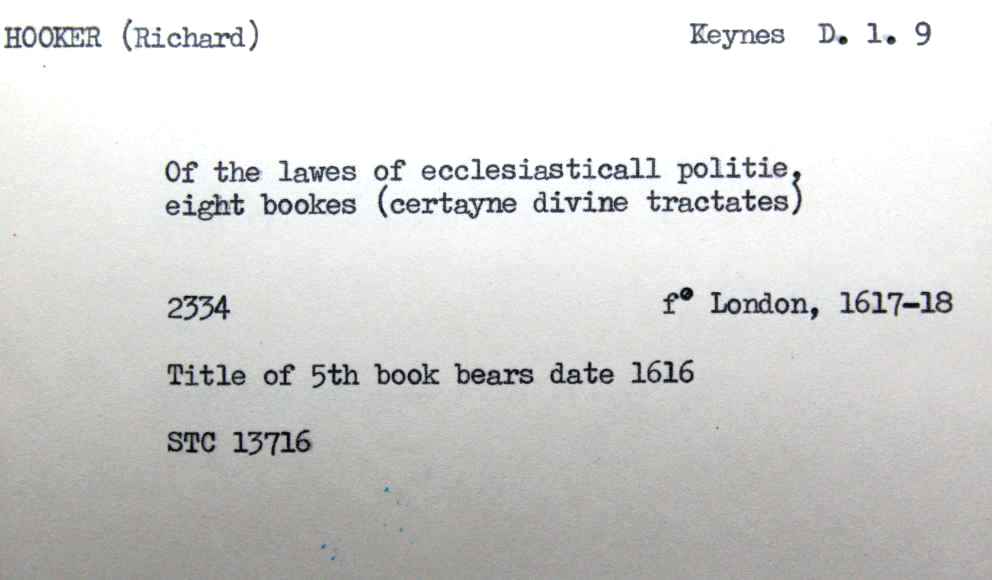
Tim Munby began his career at King’s as the first cataloguer of Keynes’s collection, although cataloguing in those days was very different. Catalogue cards often included little more than author, title and imprint details.

Index card2

Tim Munby’s original catalogue card.

Front pastedown1

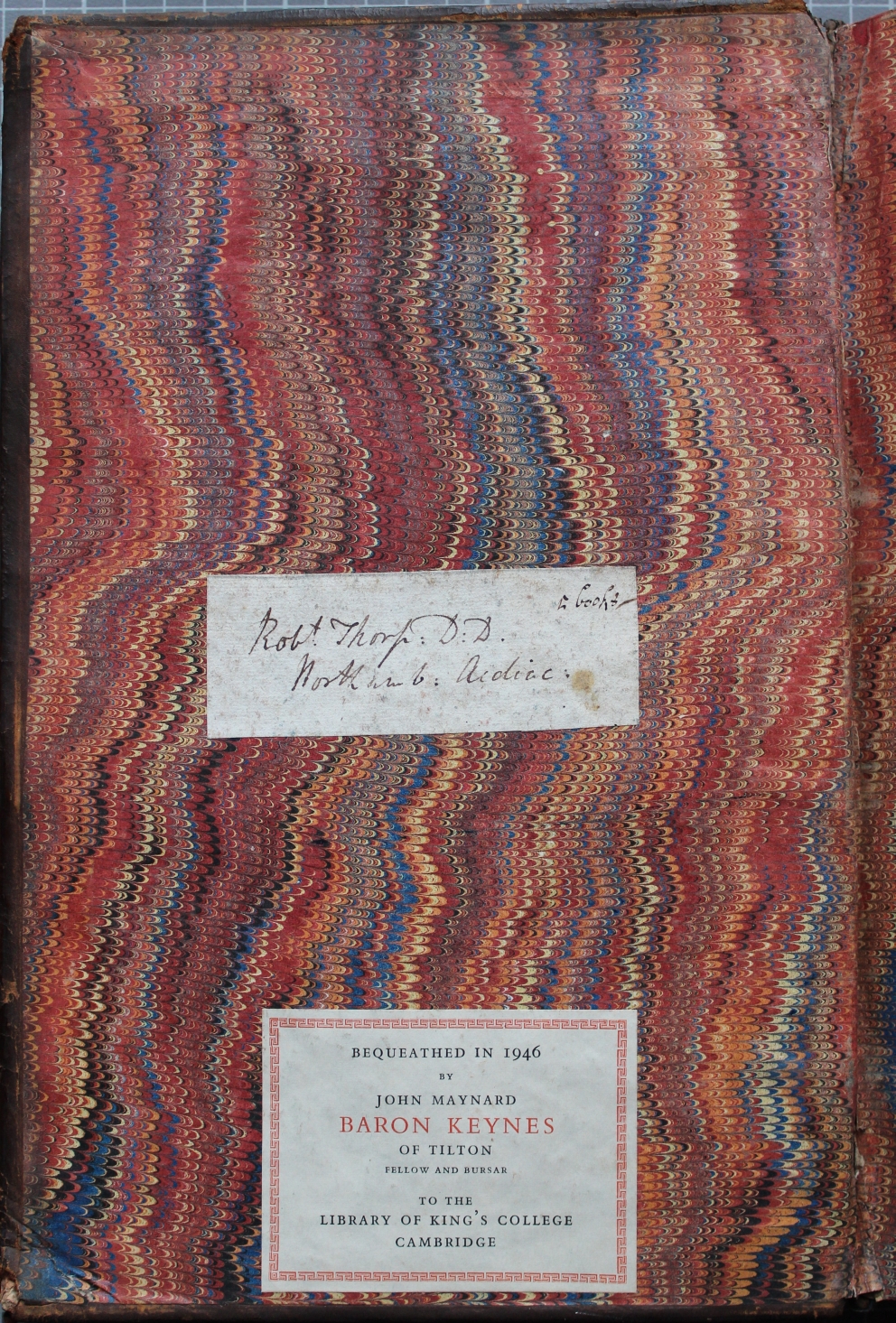
Inside front pastedown showing Keynes’s bookplate.

These days catalogue records for rare books typically include a wealth of copy-specific information such as binding descriptions, provenance information and information relating to former owners and detailed physical descriptions of the book as an object. This change not only reflects changes in research interests in bibliography, but also assists librarians in collection management, and the availability of these descriptions online improves access to the collections.

The newly created online record for this  item can be viewed here: MARC record (opens a .docx file)

Further updates about the project will be posted on this blog.

JC